
 Deutschland
 France
 Nederland
 Great Britain
 Italia
 Polska
 España
VS
Hyundai i10 VS Micro Microlino – Specs, Efficiency & Price Comparison
Which model is the better choice – the Hyundai i10 or the Micro Microlino? We compare performance (90 HP vs 17 HP), boot capacity (252 L vs 230 L), efficiency (4.90 L vs ), and of course, the price (14600 £ vs 15400 £).
Find out now which car fits your needs better!
Find out now which car fits your needs better!
The Hyundai i10 (Hatchback) is powered by a Petrol engine and comes with a Manuel or Automatic transmission. In comparison, the Micro Microlino (Hatchback) features a Electric engine and a Automatic gearbox.
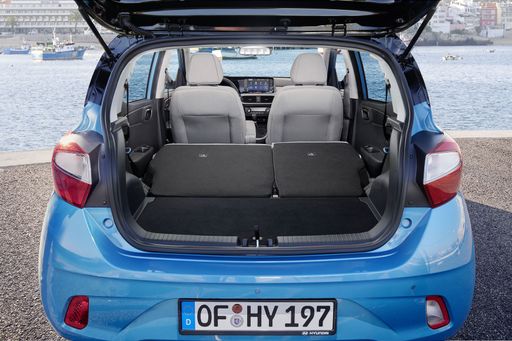
When it comes to boot capacity, the Hyundai i10 offers 252 L, while the Micro Microlino provides 230 L – depending on what matters most to you. If you’re looking for more power, you’ll need to decide whether the 90 HP of the Hyundai i10 or the 17 HP of the Micro Microlino suits your needs better.
There are also differences in efficiency: 4.90 L vs . In terms of price, the Hyundai i10 starts at 14600 £, while the Micro Microlino is available from 15400 £.
Compare all the key specs now and find out which model fits your lifestyle best!
Hyundai i10
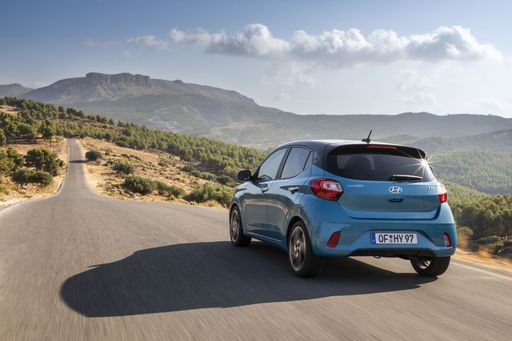
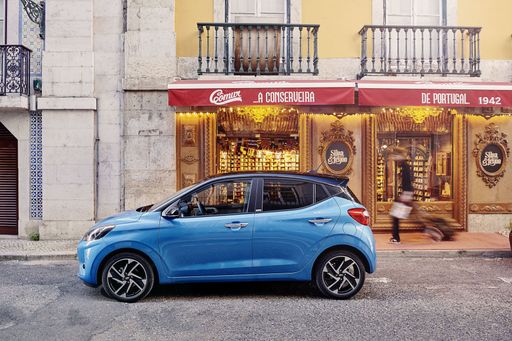
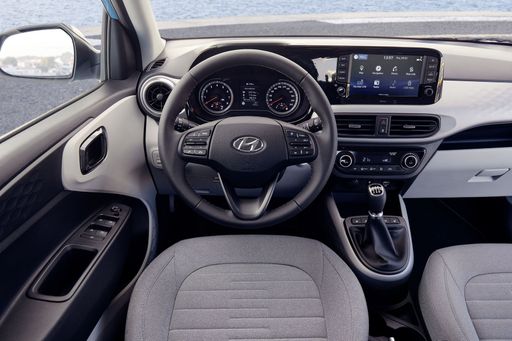
The Hyundai i10 impresses with its compact design, making it an ideal choice for navigating through busy urban environments. Its interior is surprisingly spacious, offering drivers and passengers comfort beyond what one might expect from a city car. The model combines efficiency and practicality, making it an attractive option for those seeking both economy and functionality in their daily commute.
details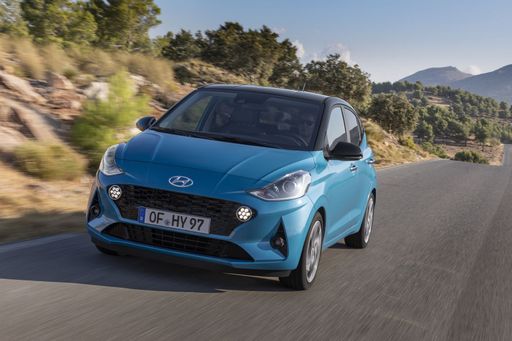 @ hyundai.news
 @ hyundai.news
 @ hyundai.news
 @ hyundai.news
 @ hyundai.news
Micro Microlino
The Micro Microlino stands out as a charming urban microcar, seamlessly blending retro design with modern functionality. Its compact size makes it perfect for navigating busy city streets, while the environmentally friendly electric drive offers a sustainable alternative to traditional vehicles. Inside, drivers will find a surprisingly spacious and minimalist interior, designed for comfort and ease of use.
details
Hyundai i10
Micro Microlino
|
|
|
|
|
|
Costs and Consumption |
|
|---|---|
|
Price
14600 - 19000 £
|
Price
15400 - 19300 £
|
|
Consumption L/100km
4.9 - 5.5 L
|
Consumption L/100km
-
|
|
Consumption kWh/100km
-
|
Consumption kWh/100km
-
|
|
Electric Range
-
|
Electric Range
93 - 228 km
|
|
Battery Capacity
-
|
Battery Capacity
-
|
|
co2
110 - 124 g/km
|
co2
0 g/km
|
|
Fuel tank capacity
36 L
|
Fuel tank capacity
-
|
Dimensions and Body |
|
|---|---|
|
Body Type
Hatchback
|
Body Type
Hatchback
|
|
Seats
4 - 5
|
Seats
2
|
|
Doors
5
|
Doors
2
|
|
Curb weight
996 - 1099 kg
|
Curb weight
496 - 530 kg
|
|
Trunk capacity
252 L
|
Trunk capacity
230 L
|
|
Length
3670 - 3675 mm
|
Length
2519 mm
|
|
Width
1680 mm
|
Width
1473 mm
|
|
Height
1480 - 1483 mm
|
Height
1501 mm
|
|
Payload
344 - 423 kg
|
Payload
220 - 254 kg
|
Engine and Performance |
|
|---|---|
|
Engine Type
Petrol
|
Engine Type
Electric
|
|
Transmission
Manuel, Automatic
|
Transmission
Automatic
|
|
Transmission Detail
Schaltgetriebe, Automatisiertes Schaltgetriebe
|
Transmission Detail
-
|
|
Drive Type
Front-Wheel Drive
|
Drive Type
Rear-Wheel Drive
|
|
Power HP
63 - 90 HP
|
Power HP
8 - 17 HP
|
|
Acceleration 0-100km/h
11.4 - 18.4 s
|
Acceleration 0-100km/h
-
|
|
Max Speed
143 - 175 km/h
|
Max Speed
45 - 90 km/h
|
|
Torque
93 - 172 Nm
|
Torque
89 Nm
|
|
Number of Cylinders
3 - 4
|
Number of Cylinders
-
|
|
Power kW
46 - 66 kW
|
Power kW
6 - 12 kW
|
|
Engine capacity
998 - 1197 cm3
|
Engine capacity
-
|
General |
|
|---|---|
|
Model Year
2024
|
Model Year
2024
|
|
CO2 Efficiency Class
C, D
|
CO2 Efficiency Class
A
|
|
Brand
Hyundai
|
Brand
Micro
|
Hyundai i10
Introduction to the Hyundai i10
The Hyundai i10 has consistently proven to be a dependable and stylish companion for urban driving. Known for its compact design and efficiency, this hatchback offers a perfect blend of modern aesthetics and practicality, making it a popular choice for city dwellers and small families alike.
Performance and Efficiency
The Hyundai i10 is available with both manual and automatic transmissions, catering to various driving preferences. Engine power ranges from 63 to 90 PS, providing a versatile driving experience for both novice and seasoned drivers. The fuel consumption varies between an impressive 4.9 to 5.4 litres per 100 kilometres, fitting for those looking to minimise fuel costs while also reducing their carbon footprint.
Engine and Transmission
Equipped with a choice of 1.0-litre or 1.2-litre engines, the i10 offers up to 172 Nm of torque, ensuring lively performance. The models feature front-wheel-drive configurations, allowing for smooth handling and reliable road performance. The car excels in city driving but is equally capable on longer journeys.
Interior and Comfort
Despite its compact size, the Hyundai i10 does not compromise on interior space and comfort. It accommodates four to five occupants comfortably, offering sufficient legroom and headroom. Its flexible seating arrangement and a 252-litre boot make it ideal for both quick trips and weekend getaways.
Safety and Technology
Safety remains a priority with Hyundai, and the i10 is no exception. It comes equipped with multiple airbags, stability control, and advanced braking systems. Technology-wise, the i10 features a user-friendly infotainment system with smartphone connectivity, ensuring a pleasant and connected drive.
Design and Style
The Hyundai i10’s design is both modern and sleek, making it stand out in the compact hatchback segment. With a length ranging from 3670 to 3675 mm, a width of 1680 mm, and a height of 1480 to 1483 mm, the i10 strikes a perfect balance between style and functionality.
Affordable Pricing and Value
The i10 is available in several trims including the Select, N Line, and Prime, among others, with prices ranging from €16,990 to €22,190. Considering its features and low running costs — with monthly expenses estimated between €694 to €793 — the Hyundai i10 offers substantial value for those seeking an economical yet stylish hatchback.
Conclusion
The Hyundai i10 combines efficiency, modern design, and practicality in a compact package. Whether you are seeking a reliable city car or an economical daily driver, the Hyundai i10 is a strong contender worth considering in the compact car market of 2024.
Micro Microlino
Introducing the Micro Microlino: A Revolutionary Electric Vehicle
The Micro Microlino is a groundbreaking addition to the world of electric vehicles. Combining vintage charm with modern innovation, this compact car has captured the imagination of eco-conscious drivers. With its unique design, impressive performance statistics, and commitment to sustainability, the Microlino offers a bold new direction for urban transport.
Compact Design with Maximum Efficiency
The Microlino features a distinctive hatchback body style and ultra-compact dimensions, measuring just 2,519 mm in length, 1,473 mm in width, and 1,501 mm in height. This allows it to navigate tight urban spaces with ease, making it an ideal choice for city dwellers.
Despite its compact size, the Microlino offers a surprising amount of interior space, comfortably seating two passengers and providing 230 litres of cargo capacity. This efficient use of space is one of the many ways the Microlino innovates over traditional vehicle designs.
Innovative Electric Performance
The Microlino is designed with sustainability in mind, featuring a fully electric powertrain and a range of battery options to suit different needs. Offering a power output between 12 and 17 PS, the car is available with various battery capacities, affording a maximum electric range of up to 228 km on a single charge.
With a torque of 89 Nm and a top speed varying between 45 and 90 km/h, the Microlino ensures lively city driving without compromising on efficiency. The availability of a simple automatic transmission with a reduction gear adds to the ease of driving this innovative vehicle.
A Commitment to Sustainability
The Microlino is at the forefront of sustainable mobility, boasting a CO2 efficiency class of A and producing zero emissions during operation. This aligns with the broader shift towards reducing environmental impact through innovative vehicle technologies.
The vehicle’s lightweight construction, with a weight ranging from 496 to 530 kg, contributes to its efficiency, enhancing battery performance and extending its usable range. It’s a vehicle that doesn't just promise sustainability but delivers on it.
Affordability Meets Modern Features
With a price range of €17,990 to €22,490, the Microlino is competitively positioned, offering affordability alongside its pioneering features. The Microlino comes in different trims, including the Lite and Pioneer Series, each offering a rich set of features that ensure comfort and convenience while prioritising sustainability.
Advanced safety features and modern comforts are built into the Microlino, providing peace of mind alongside a pleasurable driving experience tailored to modern urban needs.
A Modern Icon for Urban Mobility
The Micro Microlino is more than just a car; it's a statement of forward-thinking design merging with practical urban mobility. By focusing on innovative design, sustainable performance, and urban utility, the Microlino represents the future of personal urban transport.
As cities across the globe continue to grow and evolve, the Microlino stands ready as a solution to modern challenges, offering an eco-friendly alternative without sacrificing style or function. It's truly an icon for today’s environmentally conscious driver, combining the best of the past with the promise of the future.
The prices and data displayed are estimates based on German list prices and may vary by country. This information is not legally binding.