VS

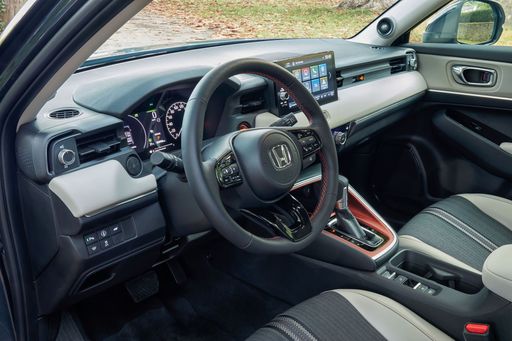
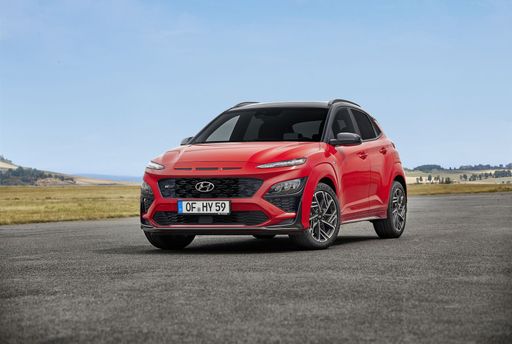
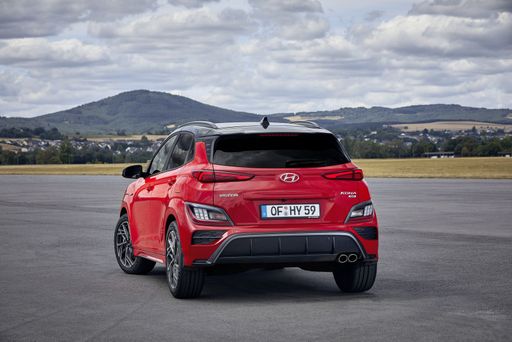
Hyundai Kona vs Honda HR-V comparison

Compare performance (218 HP vs 131 HP), boot space and price (23,100 £ vs 29,700 £ ) at a glance. Find out which car is the better choice for you – Hyundai Kona or Honda HR-V?

Hyundai Kona vs Honda HR-V: Key differences

Hyundai Kona

5 (1 Reviews)
rate
  • noticeably cheaper
  • clearly more power
  • a bit more efficient
  • visibly quicker 0–100 km/h
  • marginally lighter
  • markedly more trunk space

Honda HR-V

4.2 (13 Reviews)
rate
Overall, owners tend to find the Honda HR‑V a practical, reliable and economical compact SUV that’s easy to live with in town and for family duties, offering predictable handling and a comfortable ride. Common positives include good fuel economy, roomy/intuive packaging and reassuring manners; common negatives some owners mention are noticeable noise under brisk acceleration or low‑speed maneuvers and a tendency to feel underpowered on sustained highway runs. So while feedback is broadly favorable for city and everyday use, opinions are more mixed on long‑distance refinement — worth a motorway run during your test drive if that’s your regular terrain.

All details on performance, efficiency, range and trunk space can be found in the technical comparison below – including user reviews for both models.

Kona

Honda HR-V vs Hyundai Kona: A Detailed Comparison

In the competitive landscape of compact SUVs, the Honda HR-V and Hyundai Kona stand out as two enticing options for automobile enthusiasts. Both vehicles offer unique features and performance specifications that cater to diverse driving demands. Let's dive into the technical aspects and innovations of these popular SUVs to help you make an informed decision.

Engine and Performance

The Honda HR-V sports a full hybrid engine combined with a continuously variable transmission (CVT), delivering a solid performance with 130 HP (96 kW). The vehicle achieves 0-100 km/h acceleration in approximately 10.7 seconds, with a maximum speed of 170 km/h. Notably, it boasts a fuel economy of 5.4 L/100km, making it an appealing choice for eco-conscious drivers.

Meanwhile, the Hyundai Kona offers a variety of engine options, ranging from petrol and full hybrid to electric powertrains. The full hybrid version provides a comparable 129 HP (95 kW) and can accelerate from 0-100 km/h in around 10.2 seconds. The Kona excels with multiple transmission choices, including manual, dual-clutch automatic, and reduction gearboxes. With a maximum speed reaching 201 km/h in certain configurations, the Kona caters to speed enthusiasts as well.

Environmental Impact and Efficiency

Honda HR-V has a CO2 efficiency class of D, emitting 122 g/km of CO2, emphasizing its full hybrid technology to balance power and environmental impact. Hyundai Kona offers broader CO2 efficiency classes, from D to a standout A for its electric model, which generates zero emissions. The electric variant of the Kona also provides an impressive range of up to 514 km, meeting the needs of those prioritizing sustainability.

Interior Comfort and Space

Both the HR-V and Kona promise comfort with seating for five passengers. The Honda HR-V provides a trunk capacity of 320 to 335 liters, suitable for everyday cargo needs. Its dimensions (4340 mm length and 1582 mm height) lend a compact profile without compromising on space.

The Hyundai Kona offers a slightly larger trunk space of 466 liters, thanks to its slightly larger frame with a length of up to 4385 mm. This feature makes it ideal for families or travelers requiring additional storage capacity.

Customization and Drive Options

When it comes to drive options, the Honda HR-V is available exclusively with front-wheel drive, ensuring a steady and straightforward driving experience. The Hyundai Kona, however, offers both front-wheel drive and all-wheel drive, providing more flexibility for those who might need enhanced traction and control across varying terrains.

Conclusion

The decision between the Honda HR-V and Hyundai Kona ultimately comes down to personal preference and individual requirements. The HR-V appeals to drivers seeking a reliable, eco-friendly hybrid experience with straightforward drive options. Conversely, the Kona offers a broader spectrum of engine types and drive configurations, including an all-electric version for zero emissions. Whatever your choice, both models epitomize modern automotive innovation, providing unmatched quality in the compact SUV segment.
Here’s where it gets real: The technical differences in detail

Kona

Costs and Efficiency:

Looking at overall running costs, both models reveal some interesting differences in everyday economy.

Hyundai Kona is noticeably cheaper – starting at 23,100 £ , while the Honda HR-V costs 29,700 £ . That’s a price difference of around 6,685 £.

Fuel consumption also shows a difference: the Hyundai Kona uses 4.6 L/100km and is a bit more efficient than the Honda HR-V with 5.4 L/100km. The difference is about 0.8 L/100km.

HR-V

Engine and Performance:

Power, torque and acceleration say a lot about how a car feels on the road. This is where you see which model delivers more driving dynamics.

When it comes to engine power, the Hyundai Kona offers clearly more power – delivering 218 HP compared to 131 HP. That’s roughly 87 HP more horsepower.

When accelerating from 0 to 100 km/h, the Hyundai Kona is visibly quicker – completing the sprint in 7.8 s, while the Honda HR-V takes 10.6 s. That’s about 2.8 s quicker.

There’s also a difference in torque: the Hyundai Kona delivers only slightly more torque with 265 Nm compared to 253 Nm. That’s about 12 Nm more.

Kona

Space and Everyday Use:

Beyond pure performance, interior space and usability matter most in daily life. This is where you see which car is more practical and versatile.

Both vehicles offer seating for 5 people.

In terms of curb weight, Hyundai Kona is marginally lighter – 1,370 kg compared to 1,452 kg. The difference is around 82 kg.

Looking at boot space, the Hyundai Kona offers markedly more boot space – 466 L compared to 319 L. That’s a difference of about 147 L.

When it comes to payload, the Hyundai Kona carries somewhat more – 490 kg compared to 418 kg. That’s a difference of about 72 kg.

Who wins the race in the data check?

The Hyundai Kona holds a decisive overall lead in the objective data comparison.
This result only shows which model scores more points on paper – not which of the two cars feels right for you.

from £23,100
Kona

Hyundai Kona

  • Engine Type : Electric, Petrol, Full Hybrid
  • Transmission : Automatic, Manuel
  • Drive Type : Front-Wheel Drive, All-Wheel Drive
  • Power HP : 115 - 218 HP
  • Consumption L/100km : 4.6 - 7 L/100km
  • Consumption kWh/100km : 14.6 - 16.8 kWh/100km
  • Electric Range : 377 - 514 km
Hyundai Kona
Honda HR-V

Costs and Consumption

View detailed analysis

Engine and Performance

View detailed analysis

Dimensions and Body

View detailed analysis

Hyundai Kona

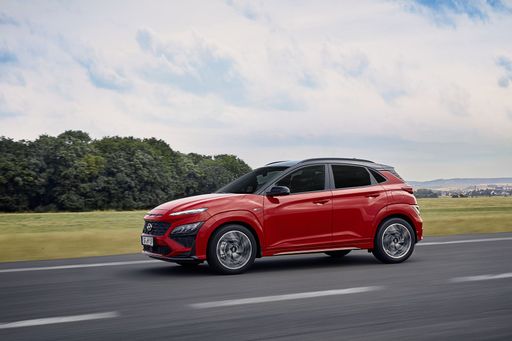
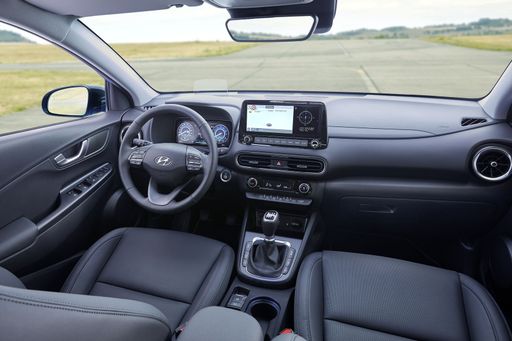
The Hyundai Kona wears its personality on the outside with bold styling and sprightly handling that turns city driving into something a little more fun than a commute. It blends practical space, modern tech and sensible running costs into a compact, stylish package — a smart pick if you want flair without paying luxury prices.

details

Honda HR-V

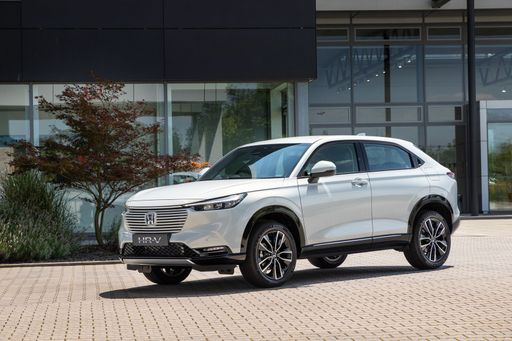
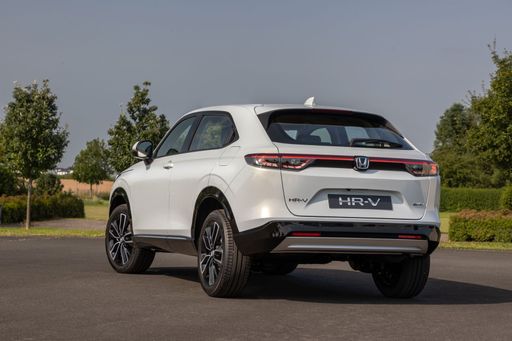
The Honda HR-V is the sensible compact crossover that blends roomy practicality with a composed, friendly drive, making it an easy pick for buyers who want everyday usability without fuss. It won’t thrill hardcore enthusiasts, but its clever packaging, comfortable cabin and low-key styling make life simpler — and that’s exactly the point.

details
Hyundai Kona
Honda HR-V

Costs and Consumption

Price
23,100 - 41,600 £
Price
29,700 - 35,400 £
Consumption L/100km
4.6 - 7 L/100km
Consumption L/100km
5.4 L/100km
Consumption kWh/100km
14.6 - 16.8 kWh/100km
Consumption kWh/100km
-
Electric Range
377 - 514 km
Electric Range
-
Battery Capacity
48.4 - 65.4 kWh
Battery Capacity
-
co2
0 - 163 g/km
co2
122 g/km
Fuel tank capacity
-
Fuel tank capacity
-

Dimensions and Body

Body Type
SUV
Body Type
SUV
Seats
5
Seats
5
Doors
5
Doors
-
Curb weight
1,370 - 1,773 kg
Curb weight
1,452 kg
Trunk capacity
466 L
Trunk capacity
319 L
Length
4,355 - 4,385 mm
Length
-
Width
1,825 mm
Width
-
Height
1,580 mm
Height
-
Max trunk capacity
1,300 L
Max trunk capacity
-
Payload
420 - 490 kg
Payload
418 kg

Engine and Performance

Engine Type
Electric, Petrol, Full Hybrid
Engine Type
Full Hybrid
Transmission
Automatic, Manuel
Transmission
Automatic
Transmission Detail
Reduction Gearbox, Manual Gearbox, Dual-Clutch Automatic
Transmission Detail
CVT
Drive Type
Front-Wheel Drive, All-Wheel Drive
Drive Type
Front-Wheel Drive
Power HP
115 - 218 HP
Power HP
131 HP
Acceleration 0-100km/h
7.8 - 11.9 s
Acceleration 0-100km/h
10.6 - 10.8 s
Max Speed
162 - 172 km/h
Max Speed
-
Torque
200 - 265 Nm
Torque
253 Nm
Number of Cylinders
3 - 4
Number of Cylinders
4
Power kW
85 - 160 kW
Power kW
96 kW
Engine capacity
998 - 1,598 cm3
Engine capacity
1,498 cm3

General

Model Year
2,024 - 2,025
Model Year
2,025
CO2 Efficiency Class
A, D, C, E, F
CO2 Efficiency Class
D
Brand
Hyundai
Brand
Honda
DriveDuel uses data analysis and artificial intelligence to evaluate vehicle data and create content. Content is regularly reviewed and improved. The displayed prices are estimates based on German list prices, adjusted to the respective country’s VAT. Country-specific registration taxes are not included. This information is not legally binding.