VS

Hyundai Kona vs Hyundai Tucson comparison

Compare performance (218 HP vs 288 HP), boot space and price (23,100 £ vs 20,900 £ ) at a glance. Find out which car is the better choice for you – Hyundai Kona or Hyundai Tucson?

Hyundai Kona vs Hyundai Tucson: Key differences

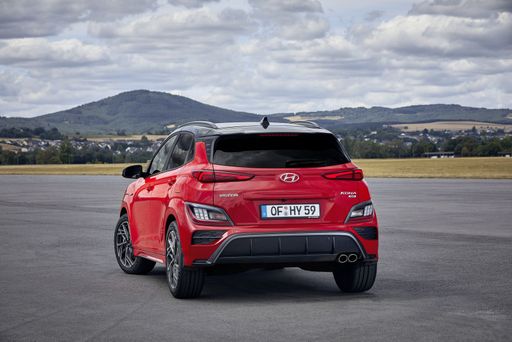
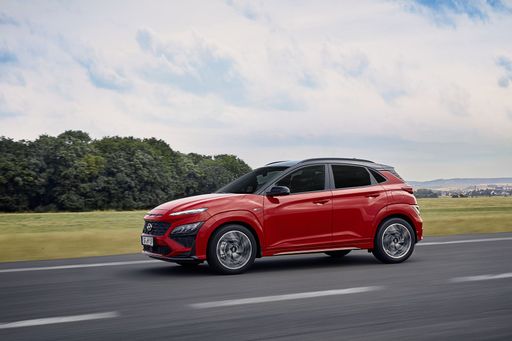
Hyundai Kona

5 (1 Reviews)
rate
  • considerably more electric range
  • somewhat lighter

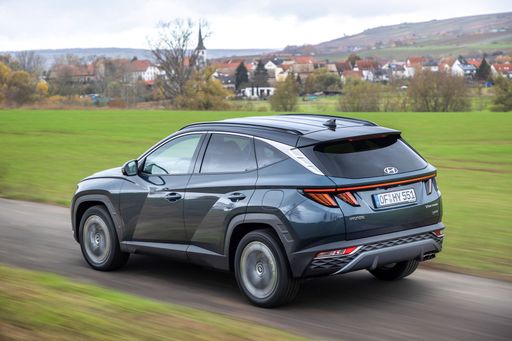
Hyundai Tucson

4.6 (4 Reviews)
rate
  • somewhat cheaper
  • clearly more power
  • substantially more efficient
  • only slightly quicker 0–100 km/h
  • noticeably more trunk space

All details on performance, efficiency, range and trunk space can be found in the technical comparison below – including user reviews for both models.

Kona

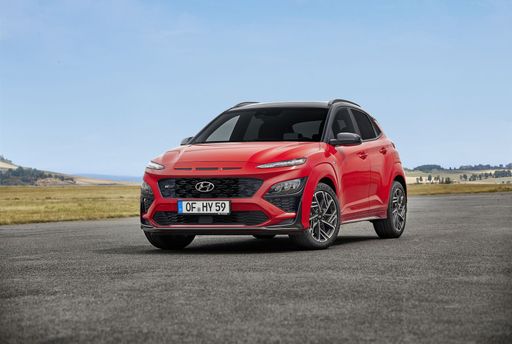
In the ever-evolving world of compact SUVs, two prominent contenders from Hyundai stand out: the Kona and the Tucson. As both models embrace modern technology and environmental considerations, potential buyers often find themselves at a crossroads. In this comparison, we will delve into the technical aspects, innovations, and distinctive characteristics that separate these two remarkable SUVs.
Tucson

Engine Options and Performance

The Hyundai Kona offers a versatile range of engine types, including petrol, full hybrid, and electric variants. Power outputs range from 100 HP to a powerful 218 HP, allowing for a dynamic driving experience tailored to different user needs. In terms of acceleration, the Kona can sprint from 0-100 km/h in as little as 7.8 seconds, showcasing its sporty potential.

In contrast, the Tucson may have fewer engine options but focuses on efficient performance with diesel mild-hybrid, petrol mild-hybrid, and hybrid technologies. The Tucson's power options span up to 252 HP, with impressive acceleration figures reaching 0-100 km/h in just 7.9 seconds for its most powerful variant. This flexibility makes both vehicles appealing depending on whether a driver prioritizes efficiency or raw power.

Kona

Fuel Efficiency and Environmental Impact

When crunching the numbers on fuel consumption, the Kona demonstrates commendable efficiency. With consumption figures varying between 4.5 and 6.7 L/100km depending on the variant, it carves a space for environmentally conscious motorists. For its electric version, the Kona allows for an extended electric range of up to 514 km, providing an impressive alternative for those looking to go green.

The Tucson, while slightly less fuel-efficient with consumption varying between 5.1 and 6.8 L/100km, cleverly integrates mild-hybrid technology to enhance performance alongside eco-friendliness. Its electric range, though shorter, provides flexibility for urban commuting, amounting to around 70 km.

Tucson

Interior Comfort and Technology

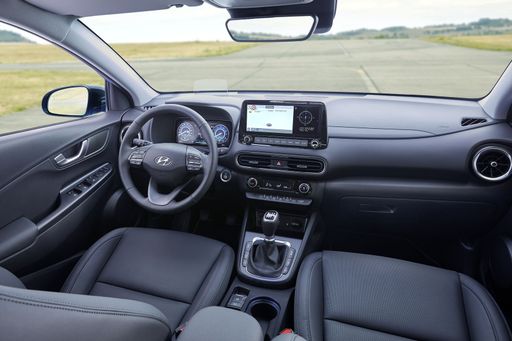
Inside the Kona, Hyundai's commitment to user-centric design is evident. Comfortably seating five passengers, the Kona's interior emphasizes modern convenience with an intuitive infotainment system. Its trunk capacity of up to 466 liters offers ample storage for daily activities or weekend getaways.

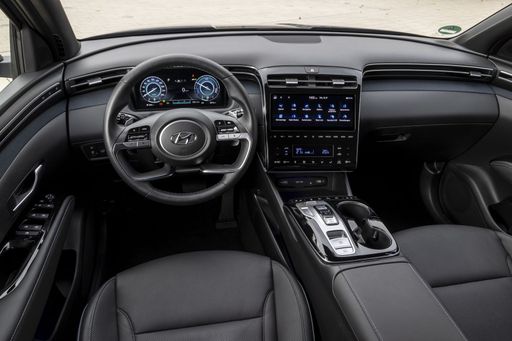
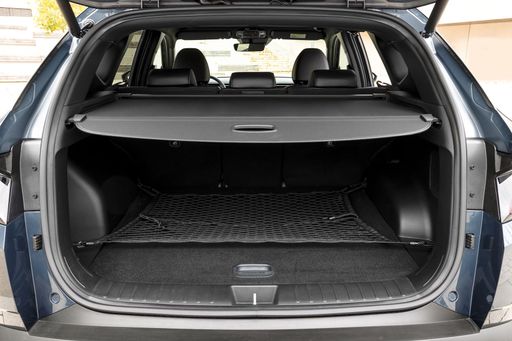
The Tucson, however, raises the bar with greater interior dimensions. With a trunk capacity reaching 620 liters, it not only offers more space but also features advanced technology integrations, including larger touchscreens and enhanced driver-assistance features. This makes the Tucson a more suitable option for families or those looking for additional cargo space.

Kona

Safety Features and Driver Assistance

Safety remains paramount in both models, with the Kona and Tucson equipped with state-of-the-art driver assistance technologies. The Kona includes Hyundai's SmartSense, featuring forward collision-avoidance assist, lane-keeping assist, and driver attention warning, fostering a safer driving experience.

The Tucson builds on this with even more advanced safety features such as highway driving assist and blind-spot view monitor. These innovations highlight Tucson’s focus on advanced safety, making it an excellent choice for tech-savvy buyers looking for reassurance on the road.

Tucson

Conclusion: Which One to Choose?

Ultimately, the choice between the Hyundai Kona and Hyundai Tucson comes down to personal preference and priorities. If you seek a compact SUV that's efficient, highly customizable, and fun to drive, the Kona may be your best bet. Conversely, if you require more space, advanced technology, and higher performance, the Tucson stands out as an excellent option.

Both models reflect Hyundai's commitment to innovation and customer satisfaction, making them worthy contenders in the competitive SUV market. Whichever model you choose, rest assured that you will be driving a capable and stylish vehicle that meets the demands of modern life.

Here’s where it gets real: The technical differences in detail

Kona

Costs and Efficiency:

Looking at overall running costs, both models reveal some interesting differences in everyday economy.

Hyundai Tucson is somewhat cheaper – starting at 20,900 £ , while the Hyundai Kona costs 23,100 £ . That’s a price difference of around 2,160 £.

Fuel consumption also shows a difference: the Hyundai Tucson uses 2.7 L/100km and is substantially more efficient than the Hyundai Kona with 4.6 L/100km. The difference is about 1.9 L/100km.

As for electric range, the Hyundai Kona offers considerably more range – reaching up to 514 km, about 444 km more than the Hyundai Tucson.

Tucson

Engine and Performance:

Power, torque and acceleration are the classic benchmarks for car enthusiasts – and here, some clear differences start to show.

When it comes to engine power, the Hyundai Tucson offers clearly more power – delivering 288 HP compared to 218 HP. That’s roughly 70 HP more horsepower.

When accelerating from 0 to 100 km/h, the Hyundai Tucson is only slightly quicker – completing the sprint in 7.5 s, while the Hyundai Kona takes 7.8 s. That’s about 0.3 s quicker.

Looking at top speed, the Hyundai Tucson is moderately faster – reaching 204 km/h, while the Hyundai Kona tops out at 172 km/h. The difference is around 32 km/h.

There’s also a difference in torque: the Hyundai Tucson delivers noticeably more torque with 379 Nm compared to 265 Nm. That’s about 114 Nm more.

Kona

Space and Everyday Use:

Whether family car or daily driver – which one offers more room, flexibility and comfort?

Both vehicles offer seating for 5 people.

In terms of curb weight, Hyundai Kona is somewhat lighter – 1,370 kg compared to 1,542 kg. The difference is around 172 kg.

Looking at boot space, the Hyundai Tucson offers noticeably more boot space – 620 L compared to 466 L. That’s a difference of about 154 L.

For maximum load capacity, the Hyundai Tucson offers clearly more capacity – up to 1,799 L, about 499 L more than the Hyundai Kona.

When it comes to payload, the Hyundai Tucson carries moderately more – 545 kg compared to 490 kg. That’s a difference of about 55 kg.

Who wins the race in the data check?

The Hyundai Tucson is clearly ahead overall in the objective data comparison.
This result only shows which model scores more points on paper – not which of the two cars feels right for you.

from £20,900
Tucson

Hyundai Tucson

  • Engine Type : Petrol, Full Hybrid, Plugin Hybrid, Diesel MHEV
  • Transmission : Manuel, Automatic
  • Drive Type : Front-Wheel Drive, All-Wheel Drive
  • Power HP : 136 - 288 HP
  • Consumption L/100km : 2.7 - 7.6 L/100km
  • Electric Range : 63 - 70 km
Hyundai Kona
Hyundai Tucson

Costs and Consumption

View detailed analysis

Engine and Performance

View detailed analysis

Dimensions and Body

View detailed analysis

Hyundai Kona

The Hyundai Kona wears its personality on the outside with bold styling and sprightly handling that turns city driving into something a little more fun than a commute. It blends practical space, modern tech and sensible running costs into a compact, stylish package — a smart pick if you want flair without paying luxury prices.

details

Hyundai Tucson

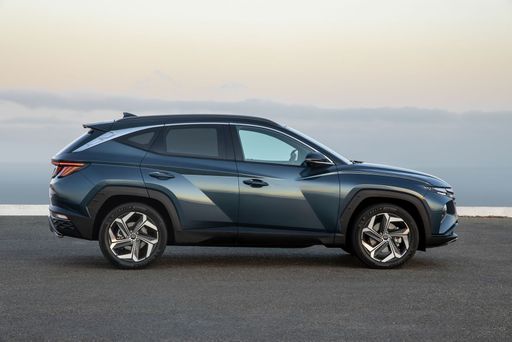
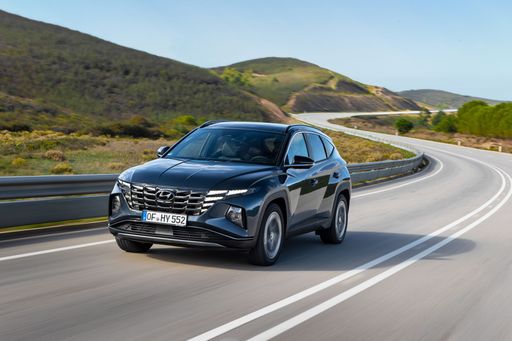
Hyundai Tucson marries bold, sculpted looks with a clever, roomy cabin that feels smarter than its price tag suggests. It's composed on the road, easy to live with day-to-day, and a sensible choice for buyers who want SUV style without the showroom theatrics.

details
Hyundai Kona
Hyundai Tucson

Costs and Consumption

Price
23,100 - 41,600 £
Price
20,900 - 47,900 £
Consumption L/100km
4.6 - 7 L/100km
Consumption L/100km
2.7 - 7.6 L/100km
Consumption kWh/100km
14.6 - 16.8 kWh/100km
Consumption kWh/100km
-
Electric Range
377 - 514 km
Electric Range
63 - 70 km
Battery Capacity
48.4 - 65.4 kWh
Battery Capacity
-
co2
0 - 163 g/km
co2
62 - 172 g/km
Fuel tank capacity
-
Fuel tank capacity
52 - 54 L

Dimensions and Body

Body Type
SUV
Body Type
SUV
Seats
5
Seats
5
Doors
5
Doors
5
Curb weight
1,370 - 1,773 kg
Curb weight
1,542 - 1,893 kg
Trunk capacity
466 L
Trunk capacity
546 - 620 L
Length
4,355 - 4,385 mm
Length
4,525 - 4,535 mm
Width
1,825 mm
Width
1,865 mm
Height
1,580 mm
Height
1,650 mm
Max trunk capacity
1,300 L
Max trunk capacity
1,795 - 1,799 L
Payload
420 - 490 kg
Payload
518 - 545 kg

Engine and Performance

Engine Type
Electric, Petrol, Full Hybrid
Engine Type
Petrol, Full Hybrid, Plugin Hybrid, Diesel MHEV
Transmission
Automatic, Manuel
Transmission
Manuel, Automatic
Transmission Detail
Reduction Gearbox, Manual Gearbox, Dual-Clutch Automatic
Transmission Detail
Manual Gearbox, Dual-Clutch Automatic, Automatic Gearbox
Drive Type
Front-Wheel Drive, All-Wheel Drive
Drive Type
Front-Wheel Drive, All-Wheel Drive
Power HP
115 - 218 HP
Power HP
136 - 288 HP
Acceleration 0-100km/h
7.8 - 11.9 s
Acceleration 0-100km/h
7.5 - 11.6 s
Max Speed
162 - 172 km/h
Max Speed
196 - 204 km/h
Torque
200 - 265 Nm
Torque
250 - 379 Nm
Number of Cylinders
3 - 4
Number of Cylinders
4
Power kW
85 - 160 kW
Power kW
100 - 212 kW
Engine capacity
998 - 1,598 cm3
Engine capacity
1,598 cm3

General

Model Year
2,024 - 2,025
Model Year
2,025
CO2 Efficiency Class
A, D, C, E, F
CO2 Efficiency Class
F, D, E, B
Brand
Hyundai
Brand
Hyundai
DriveDuel uses data analysis and artificial intelligence to evaluate vehicle data and create content. Content is regularly reviewed and improved. The displayed prices are estimates based on German list prices, adjusted to the respective country’s VAT. Country-specific registration taxes are not included. This information is not legally binding.