
 Deutschland
 France
 Nederland
 Great Britain
 Sverige
 Norge
Norge Danmark
 Suomi
Suomi Italia
 Polska
 España
VS
Hyundai Kona vs Land Rover Range Rover Sport - Differences and prices compared
Kona
@ Hyundai Motor Company
Costs and Efficiency:
When it comes to price and running costs, the biggest differences usually appear. This is often where you see which car fits your budget better in the long run.
Hyundai Kona has a significantly advantage in terms of price – it starts at 23100 £, while the Land Rover Range Rover Sport costs 78600 £. That’s a price difference of around 55543 £.
Fuel consumption also shows a difference: Land Rover Range Rover Sport manages with 2.70 L and is therefore decisively more efficient than the Hyundai Kona with 4.60 L. The difference is about 1.90 L per 100 km.
As for range, the Hyundai Kona performs clearly better – achieving up to 514 km, about 396 km more than the Land Rover Range Rover Sport.
Range Rover Sport
@ Jaguar Land Rover Media
Engine and Performance:
Power, torque and acceleration say a lot about how a car feels on the road. This is where you see which model delivers more driving dynamics.
When it comes to engine power, the Land Rover Range Rover Sport has a convincingly edge – offering 635 HP compared to 218 HP. That’s roughly 417 HP more horsepower.
In acceleration from 0 to 100 km/h, the Land Rover Range Rover Sport is clearly quicker – completing the sprint in 3.80 s, while the Hyundai Kona takes 7.80 s. That’s about 4 s faster.
In terms of top speed, the Land Rover Range Rover Sport performs clearly perceptible better – reaching 290 km/h, while the Hyundai Kona tops out at 210 km/h. The difference is around 80 km/h.
There’s also a difference in torque: Land Rover Range Rover Sport pulls clearly stronger with 800 Nm compared to 265 Nm. That’s about 535 Nm difference.
Kona
@ Hyundai Motor Company
Space and Everyday Use:
Whether family car or daily driver – which one offers more room, flexibility and comfort?
Seats: offers more seating capacity – vs .
In curb weight, Hyundai Kona is convincingly lighter – 1370 kg compared to 2390 kg. The difference is around 1020 kg.
In terms of boot space, the Land Rover Range Rover Sport offers noticeable more room – 647 L compared to 466 L. That’s a difference of about 181 L.
In maximum load capacity, the Land Rover Range Rover Sport performs somewhat better – up to 1491 L, which is about 191 L more than the Hyundai Kona.
When it comes to payload, Land Rover Range Rover Sport convincingly takes the win – 830 kg compared to 490 kg. That’s a difference of about 340 kg.
Who wins the race?
The Land Rover Range Rover Sport proves to be wins the duel decisively and therefore becomes our DriveDuel Champion!
Land Rover Range Rover Sport is the better all-rounder in this comparison.
from about £78,600
 @ Jaguar Land Rover Media
Land Rover Range Rover Sport
Hyundai Kona
Land Rover Range Rover Sport
Costs and Consumption
View detailed analysis
View detailed analysis
Engine and Performance
View detailed analysis
View detailed analysis
Dimensions and Body
View detailed analysis
View detailed analysis
Hyundai Kona
5 (1 Reviews)
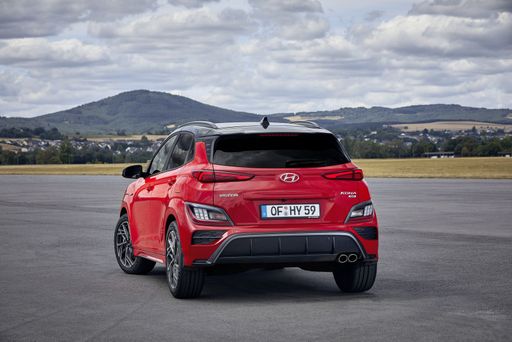
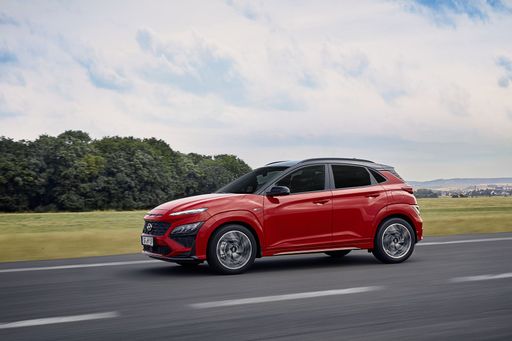
The Hyundai Kona wears its personality on the outside with bold styling and sprightly handling that turns city driving into something a little more fun than a commute. It blends practical space, modern tech and sensible running costs into a compact, stylish package — a smart pick if you want flair without paying luxury prices.
details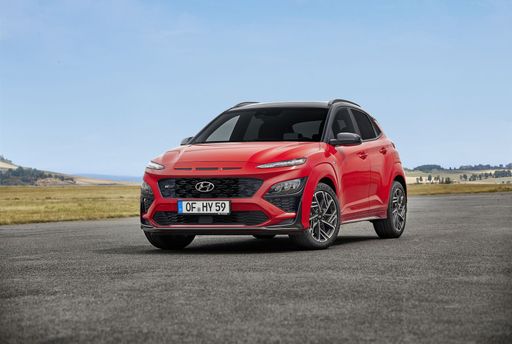 @ Hyundai Motor Company
 @ Hyundai Motor Company
 @ Hyundai Motor Company
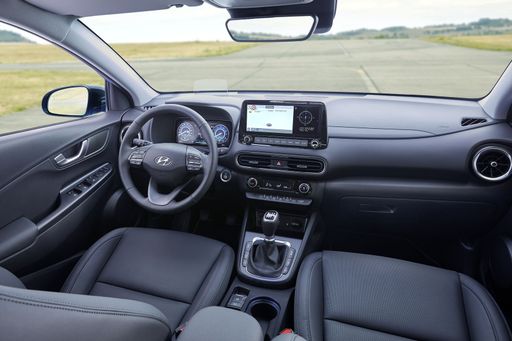 @ Hyundai Motor Company
Land Rover Range Rover Sport
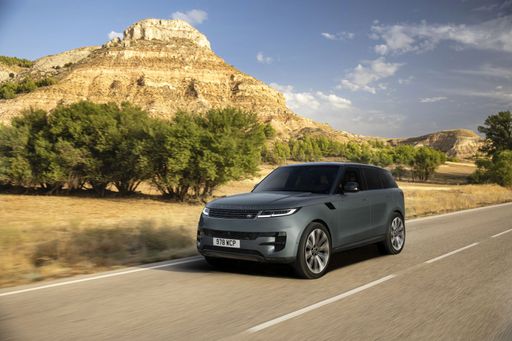
The Range Rover Sport pairs unapologetic presence with genuine capability, looking like it belongs on a red carpet while quietly promising to tackle rough tracks when called upon. Inside, the cabin pampers with plush materials and thoughtful tech, making it an irresistible choice for buyers who want luxury, confidence and a touch of adventure.
details
@ Jaguar Land Rover Media
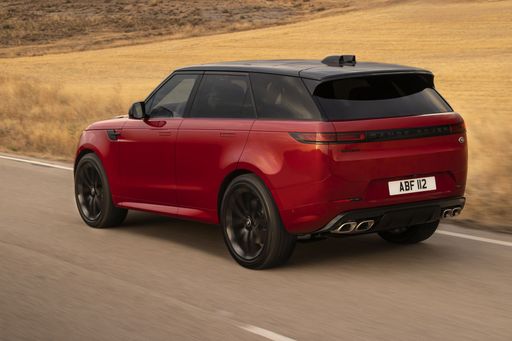 @ Jaguar Land Rover Media
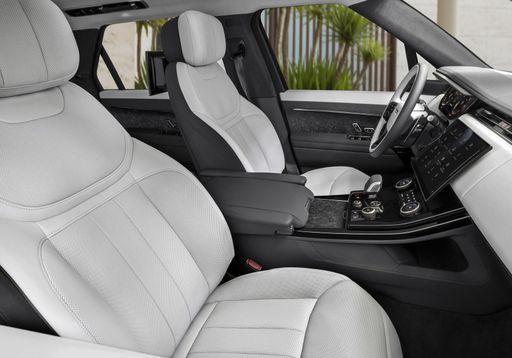 @ Jaguar Land Rover Media
Hyundai Kona
Land Rover Range Rover Sport
|
@ Hyundai Motor Company
|
@ Jaguar Land Rover Media
|
|
|
|
Costs and Consumption |
|
|---|---|
|
Price
23100 - 41600 £
|
Price
78600 - 175700 £
|
|
Consumption L/100km
4.6 - 7 L
|
Consumption L/100km
2.7 - 11.7 L
|
|
Consumption kWh/100km
14.6 - 16.8 kWh
|
Consumption kWh/100km
-
|
|
Electric Range
377 - 514 km
|
Electric Range
116 - 118 km
|
|
Battery Capacity
1.3 - 65.4 kWh
|
Battery Capacity
31.80 kWh
|
|
co2
0 - 163 g/km
|
co2
61 - 266 g/km
|
|
Fuel tank capacity
38 - 47 L
|
Fuel tank capacity
71 - 90 L
|
Dimensions and Body |
|
|---|---|
|
Body Type
SUV
|
Body Type
SUV
|
|
Seats
5
|
Seats
5
|
|
Doors
5
|
Doors
5
|
|
Curb weight
1370 - 1773 kg
|
Curb weight
2390 - 2810 kg
|
|
Trunk capacity
466 L
|
Trunk capacity
647 L
|
|
Length
4350 - 4385 mm
|
Length
4946 - 4970 mm
|
|
Width
1825 mm
|
Width
2043 mm
|
|
Height
1580 - 1585 mm
|
Height
1814 - 1820 mm
|
|
Max trunk capacity
1300 L
|
Max trunk capacity
1491 L
|
|
Payload
420 - 490 kg
|
Payload
640 - 830 kg
|
Engine and Performance |
|
|---|---|
|
Engine Type
Electric, Petrol, Full Hybrid
|
Engine Type
Plugin Hybrid, Petrol MHEV, Diesel MHEV
|
|
Transmission
Automatic, Manuel
|
Transmission
Automatic
|
|
Transmission Detail
Reduction Gearbox, Manual Gearbox, Dual-Clutch Automatic
|
Transmission Detail
Automatic Gearbox
|
|
Drive Type
Front-Wheel Drive, All-Wheel Drive
|
Drive Type
All-Wheel Drive
|
|
Power HP
115 - 218 HP
|
Power HP
249 - 635 HP
|
|
Acceleration 0-100km/h
7.8 - 11.9 s
|
Acceleration 0-100km/h
3.8 - 7.7 s
|
|
Max Speed
162 - 210 km/h
|
Max Speed
206 - 290 km/h
|
|
Torque
200 - 265 Nm
|
Torque
570 - 800 Nm
|
|
Number of Cylinders
3 - 4
|
Number of Cylinders
6 - 8
|
|
Power kW
85 - 160 kW
|
Power kW
183 - 467 kW
|
|
Engine capacity
998 - 1598 cm3
|
Engine capacity
2997 - 4395 cm3
|
General |
|
|---|---|
|
Model Year
2024 - 2025
|
Model Year
2025
|
|
CO2 Efficiency Class
A, D, C, E, F
|
CO2 Efficiency Class
B, G
|
|
Brand
Hyundai
|
Brand
Land Rover
|
Is the Hyundai Kona offered with different drivetrains?
Available configurations include Front-Wheel Drive or All-Wheel Drive.
The prices and data displayed are estimates based on German list prices and may vary by country. This information is not legally binding.