VS

Isuzu D-Max vs Ford Ranger comparison

Compare performance (163 HP vs 292 HP), boot space and price (34,300 £ vs 45,600 £ ) at a glance. Find out which car is the better choice for you – Isuzu D-Max or Ford Ranger?

Isuzu D-Max vs Ford Ranger: Key differences

Isuzu D-Max

4.3 (1 Reviews)
rate
  • clearly cheaper
  • noticeably lighter

Ford Ranger

  • considerably more power
  • significantly more efficient
  • substantially quicker 0–100 km/h

All details on performance, efficiency, range and trunk space can be found in the technical comparison below – including user reviews for both models.

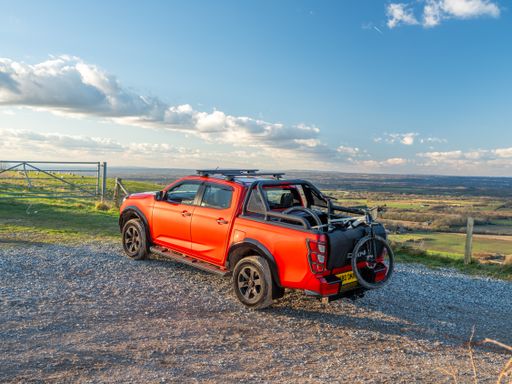
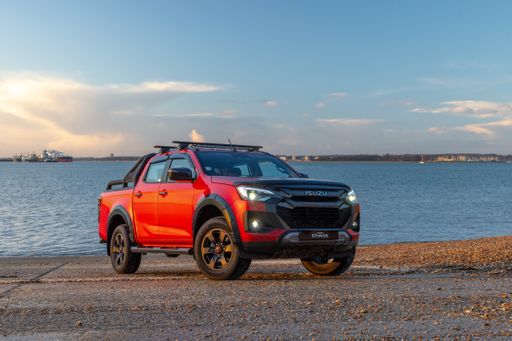
D-Max

When it comes to rugged pickup trucks, two names frequently stand out: the Ford Ranger and the Isuzu D-Max. Both vehicles offer robust capabilities, innovative features, and a reputation for enduring performance. However, they cater to different preferences and needs within the truck segment. This article dives into the technical aspects and innovations of these two popular models to help potential buyers make an informed choice.
Ranger

Design and Dimensions

From a design perspective, both the Ford Ranger and Isuzu D-Max showcase a muscular appearance typical of modern pickups. The Ranger measures approximately 5370 mm in length, 1918 mm in width, and stands at a height of 1884 mm. In contrast, the D-Max is slightly shorter, measuring around 5310 mm in length, 1810 mm in width, and 1770 mm in height. This variance in dimensions might affect maneuverability and load capacity, depending on user requirements.

D-Max

Engine Performance and Efficiency

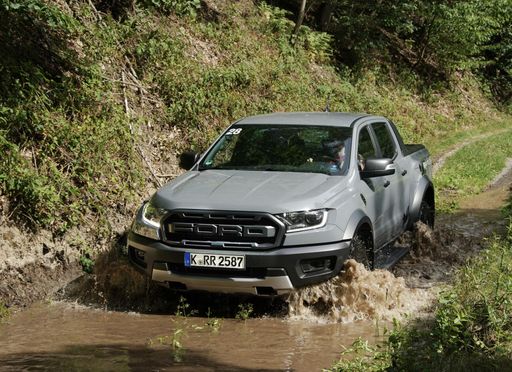
The Ford Ranger offers several engine options, including diesel and petrol varieties, with power outputs ranging from 170 HP to a commanding 292 HP. This diverse range allows consumers to select a model tailored to their performance expectations. On the other hand, the Isuzu D-Max features a single diesel engine producing a maximum of 163 HP. While the D-Max provides respectable power, the Ranger's superior horsepower options cater to those needing more robust towing and hauling performance.

In terms of fuel efficiency, the Ranger's consumption ranges from 8.4 to 10.6 L/100km, while the D-Max sits at a slightly more economical 8.1 to 9.2 L/100km. Though the D-Max generally offers better fuel economy, this trade-off must be weighed against the higher performance potential of the Ranger.

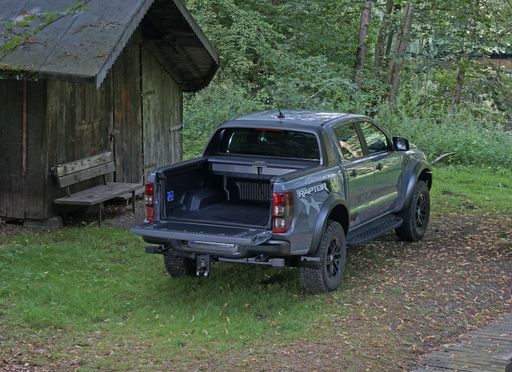
Ranger

Transmission and Drive Type

Both vehicles come equipped with a choice of manual or automatic transmissions. The Ford Ranger features an all-wheel-drive system that enhances traction and stability in variable terrains, making it ideal for adventurous drivers. In contrast, the D-Max offers both rear-wheel drive and all-wheel drive options, allowing buyers to select a configuration that best suits their driving habits and usage scenarios.

D-Max

Acceleration and Speed

The Ford Ranger displays impressive acceleration figures, with some variants reaching 0-100 km/h in as little as 7.9 seconds. Conversely, the D-Max, with an acceleration time of 12.6 seconds, lags behind the Ranger in this aspect. However, both trucks share a top speed of 180 km/h, indicating that they are suitable for both highway cruising and off-road adventures.

Payload Capacity and Practicality

When it comes to load-carrying capacity, the D-Max takes the edge with a payload configuration reaching up to 1130 kg in some variants, compared to the Ranger's maximum payload of 1108 kg. This aspect makes the D-Max a solid choice for users looking for maximum hauling capabilities.

Innovative Features

Innovation plays a crucial role in the modern pickup segment. The Ford Ranger is equipped with advanced safety features, including adaptive cruise control, lane-keeping assist, and a comprehensive infotainment system featuring Ford's SYNC technology. These options enhance safety and connectivity for drivers and passengers alike.

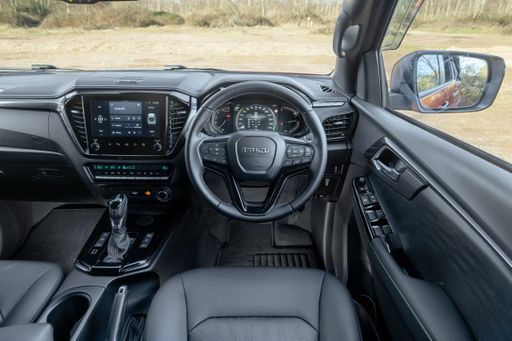
On the other hand, the Isuzu D-Max emphasizes reliability and ruggedness within its design, incorporating essential features like advanced braking systems and a robust chassis that endures tough conditions. While it may not boast the same level of high-tech gadgets as the Ranger, it appeals to those who prioritize durability over extravagance.

Conclusion

Choosing between the Ford Ranger and Isuzu D-Max ultimately depends on your needs and preferences. If you seek a vehicle with a range of powerful engine options, cutting-edge technology, and superior performance metrics, the Ranger is an excellent choice. However, if your priority is a dependable workhorse with impressive payload capacity and effective fuel efficiency, the D-Max shines brightly. Both vehicles have their strengths, making them worthy contenders in the competitive pickup market.

Here’s where it gets real: The technical differences in detail

D-Max

Costs and Efficiency:

When it comes to price and running costs, the biggest differences usually appear. This is often where you see which car fits your budget better in the long run.

Isuzu D-Max is clearly cheaper – starting at 34,300 £ , while the Ford Ranger costs 45,600 £ . That’s a price difference of around 11,306 £.

Fuel consumption also shows a difference: the Ford Ranger uses 3.1 L/100km and is significantly more efficient than the Isuzu D-Max with 8.7 L/100km. The difference is about 5.6 L/100km.

Ranger

Engine and Performance:

Under the bonnet, it becomes clear which model is tuned for sportiness and which one takes the lead when you hit the accelerator.

When it comes to engine power, the Ford Ranger offers considerably more power – delivering 292 HP compared to 163 HP. That’s roughly 129 HP more horsepower.

When accelerating from 0 to 100 km/h, the Ford Ranger is substantially quicker – completing the sprint in 7.9 s, while the Isuzu D-Max takes 12.6 s. That’s about 4.7 s quicker.

There’s also a difference in torque: the Ford Ranger delivers considerably more torque with 697 Nm compared to 360 Nm. That’s about 337 Nm more.

D-Max

Space and Everyday Use:

Whether family car or daily driver – which one offers more room, flexibility and comfort?

Both vehicles offer seating for 5 people.

In terms of curb weight, Isuzu D-Max is noticeably lighter – 1,905 kg compared to 2,405 kg. The difference is around 500 kg.

When it comes to payload, the Isuzu D-Max carries only slightly more – 1,095 kg compared to 989 kg. That’s a difference of about 106 kg.

Who wins the race in the data check?

The Ford Ranger holds a decisive overall lead in the objective data comparison.
This result only shows which model scores more points on paper – not which of the two cars feels right for you.

from £45,600
Ranger

Ford Ranger

  • Engine Type : Diesel, Petrol, Plugin Hybrid
  • Transmission : Automatic
  • Drive Type : All-Wheel Drive
  • Power HP : 210 - 292 HP
  • Consumption L/100km : 3.1 - 13.8 L/100km
  • Electric Range : 42 km
Isuzu D-Max
Ford Ranger

Costs and Consumption

View detailed analysis

Engine and Performance

View detailed analysis

Dimensions and Body

View detailed analysis

Isuzu D-Max

The Isuzu D-Max wears its workhorse credentials with quiet confidence, delivering rugged practicality and a cabin that keeps things simple and sensible. If you want a dependable truck that gets on with the job without fuss—and even manages a bit of comfort on the road—the D-Max is a smart, no-nonsense pick.

details

Ford Ranger

The Ford Ranger is a workhorse with the manners of a grown-up pickup—practical, tough, and surprisingly civilized on the road. It’s the sort of truck that laughs at mud on the weekend and performs like a sensible daily driver during the week, making it an easy sell for buyers who want capability without theatrics.

details
Isuzu D-Max
Ford Ranger

Costs and Consumption

Price
34,300 - 50,100 £
Price
45,600 - 71,900 £
Consumption L/100km
8.7 - 9 L/100km
Consumption L/100km
3.1 - 13.8 L/100km
Consumption kWh/100km
-
Consumption kWh/100km
-
Electric Range
-
Electric Range
42 km
Battery Capacity
-
Battery Capacity
11.8 kWh
co2
228 - 235 g/km
co2
70 - 315 g/km
Fuel tank capacity
-
Fuel tank capacity
80 L

Dimensions and Body

Body Type
Pickup
Body Type
Pickup
Seats
2 - 5
Seats
4 - 5
Doors
-
Doors
4
Curb weight
1,905 - 2,110 kg
Curb weight
2,405 - 2,511 kg
Trunk capacity
-
Trunk capacity
-
Length
-
Length
5,370 - 5,381 mm
Width
1,810 - 1,870 mm
Width
1,918 - 1,968 mm
Height
-
Height
1,884 - 1,922 mm
Max trunk capacity
-
Max trunk capacity
-
Payload
990 - 1,095 kg
Payload
676 - 989 kg

Engine and Performance

Engine Type
Diesel
Engine Type
Diesel, Petrol, Plugin Hybrid
Transmission
Automatic
Transmission
Automatic
Transmission Detail
Automatic Gearbox
Transmission Detail
Automatic Gearbox
Drive Type
All-Wheel Drive
Drive Type
All-Wheel Drive
Power HP
163 HP
Power HP
210 - 292 HP
Acceleration 0-100km/h
12.6 s
Acceleration 0-100km/h
7.9 - 9.2 s
Max Speed
-
Max Speed
180 - 190 km/h
Torque
360 Nm
Torque
491 - 697 Nm
Number of Cylinders
4
Number of Cylinders
4 - 6
Power kW
120 kW
Power kW
154 - 215 kW
Engine capacity
1,898 cm3
Engine capacity
1,996 - 2,993 cm3

General

Model Year
2,024 - 2,025
Model Year
2,022 - 2,025
CO2 Efficiency Class
G
CO2 Efficiency Class
G, B
Brand
Isuzu
Brand
Ford
DriveDuel uses data analysis and artificial intelligence to evaluate vehicle data and create content. Content is regularly reviewed and improved. The displayed prices are estimates based on German list prices, adjusted to the respective country’s VAT. Country-specific registration taxes are not included. This information is not legally binding.