VS

Jaguar E-Pace vs Audi Q3 comparison

Compare performance (269 HP vs 272 HP), boot space and price (32,400 £ vs 38,200 £ ) at a glance. Find out which car is the better choice for you – Jaguar E-Pace or Audi Q3?

Jaguar E-Pace vs Audi Q3: Key differences

Jaguar E-Pace

  • a bit cheaper
  • visibly more efficient
  • marginally more trunk space

Audi Q3

5 (1 Reviews)
rate
  • very slightly more power
  • substantially more electric range
  • visibly quicker 0–100 km/h
  • only slightly lighter

All details on performance, efficiency, range and trunk space can be found in the technical comparison below – including user reviews for both models.

E-Pace

In the growing segment of compact luxury SUVs, the Audi Q3 and Jaguar E-Pace are two standout offerings that cater to those seeking a balance of performance, comfort, and cutting-edge technology. This article delves into a detailed comparison of these two vehicles, covering their technical specs, innovations, and what sets them apart.
Q3

Design and Dimensions

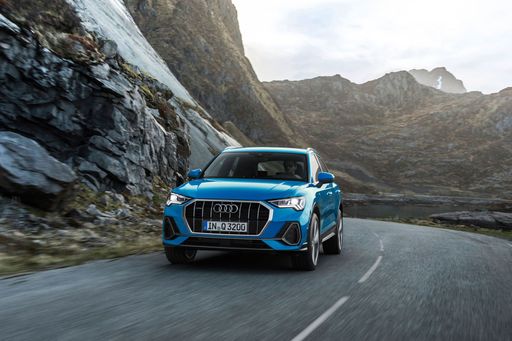
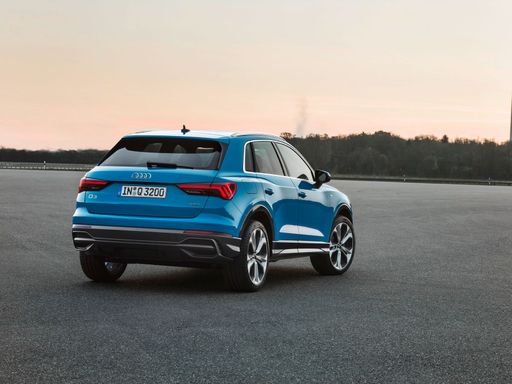
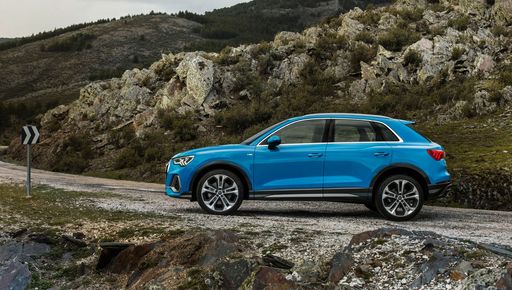
The Audi Q3 measures 4484 mm in length, 1849 mm in width, and stands at a height of 1585 mm. It’s a quintessential Audi with a bold front grille and sharp lines, making it an eye-catching choice for luxury SUV buyers. The Q3's trunk capacity is impressive at 530 liters, offering practicality alongside its stylish demeanor.

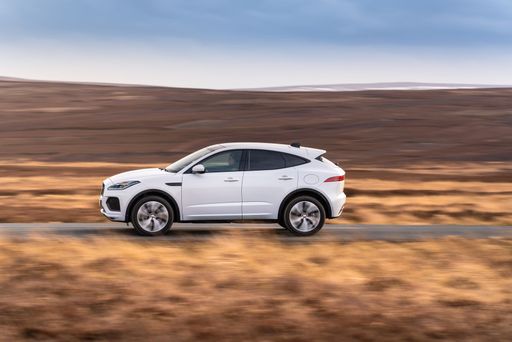
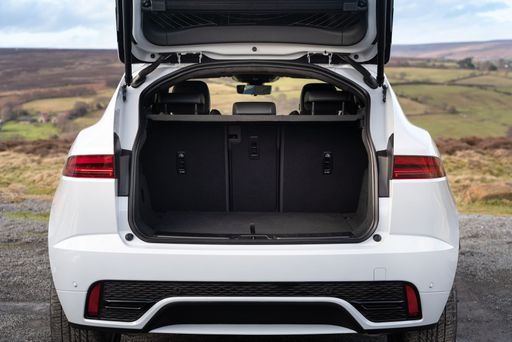
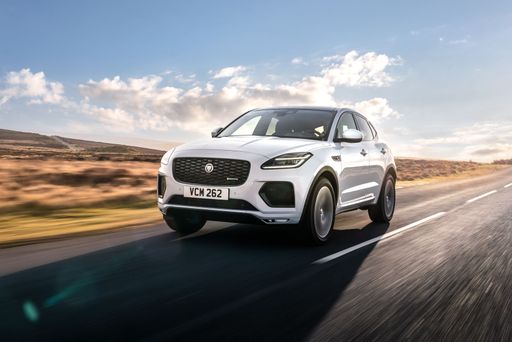
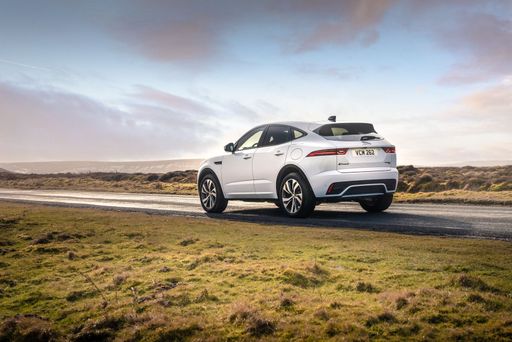
On the other hand, the Jaguar E-Pace is slightly more compact, with a length of 4395 mm, width of 1984 mm, and a height of 1648 mm. Its aggressive stance and sleek silhouette are quintessentially Jaguar. The E-Pace boasts a trunk capacity of 494 liters, which, while slightly smaller than the Q3, still provides ample storage for everyday needs.

E-Pace

Engine Options and Performance

The Audi Q3 provides a variety of engine options, including both petrol and diesel engines, with power outputs ranging from 150 HP to 245 HP. The 2.0-liter petrol engine variant can sprint from 0-100 km/h in just 5.8 seconds, showcasing its sporty prowess. The Q3 also features both front-wheel drive and all-wheel drive configurations, catering to different driving preferences.

In comparison, the Jaguar E-Pace offers a more hybrid-focused lineup with options including plug-in hybrid, diesel MHEV, and petrol MHEV. Power outputs range from 160 HP to 269 HP, with the performance-oriented model achieving 0-100 km/h in just 7.3 seconds. The E-Pace is predominantly all-wheel drive, enhancing its capability in varied driving conditions.

Q3

Fuel Efficiency and Environmental Impact

In terms of fuel efficiency, the Audi Q3 shows consumption figures between 5.5 L/100km to 8.5 L/100km, depending on engine variant, while emitting CO2 levels ranging from 143 to 192 g/km. This efficiency makes it a suitable option for daily commutes as well as weekend getaways.

In contrast, the Jaguar E-Pace’s plug-in hybrid variant stands out with a remarkable fuel consumption of just 1.4 L/100km and CO2 emissions as low as 33 g/km. This efficiency promotes a greener footprint, particularly appealing to environmentally-conscious consumers.

E-Pace

Interior and Technology

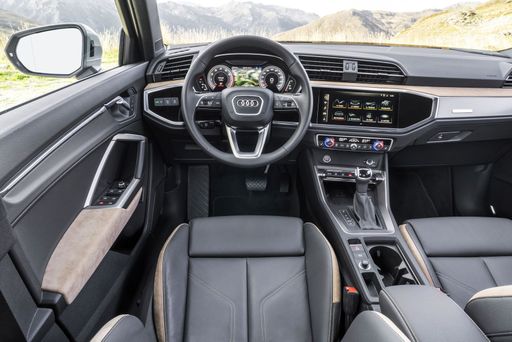
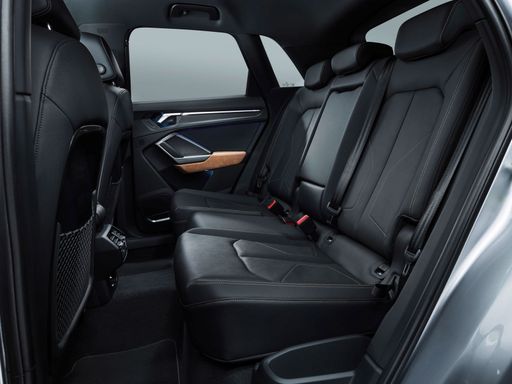
Interior quality in the Audi Q3 is undeniably premium, featuring high-quality materials, a driver-focused cockpit, and the brand's latest MMI infotainment system. The Q3 integrates a digital cockpit that displays all essential driving data and navigation in high definition, ensuring a connected and modern driving experience.

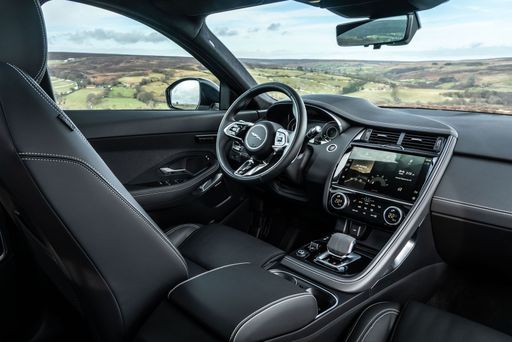
Meanwhile, the Jaguar E-Pace incorporates a contemporary infotainment system with a touch-screen interface that boasts numerous connectivity options. The interior design is completed with quality finishes and a unique layout that emphasizes a sporty driving ambiance.

Q3

Safety and Innovations

Both vehicles come equipped with extensive safety features. The Audi Q3 includes advanced driver assistance systems such as adaptive cruise control, lane departure warning, and parking assist, enhancing overall driving safety and convenience.

The Jaguar E-Pace also prioritizes safety with its array of smart technologies, including emergency braking, lane keep assist, and a 360-degree camera system. This ensures a secure driving environment for both drivers and passengers.

E-Pace

Final Verdict

The Audi Q3 excels with its robust engine options, luxurious interior, and a strong focus on technology and performance. Its practicality and impressive fuel efficiency make it a versatile choice for families and individuals alike.

On the flip side, the Jaguar E-Pace impresses with its hybrid options, lower environmental impact, and sporty design. It caters to a different segment that values both performance and eco-friendliness.

Ultimately, the choice between the Audi Q3 and Jaguar E-Pace will depend on personal preferences regarding performance, design, and technological features. Both vehicles present compelling arguments in the compact luxury SUV landscape, making it tough to go wrong with either choice.

Here’s where it gets real: The technical differences in detail

E-Pace

Costs and Efficiency:

Looking at overall running costs, both models reveal some interesting differences in everyday economy.

Jaguar E-Pace is a bit cheaper – starting at 32,400 £ , while the Audi Q3 costs 38,200 £ . That’s a price difference of around 5,828 £.

Fuel consumption also shows a difference: the Jaguar E-Pace uses 1.4 L/100km and is visibly more efficient than the Audi Q3 with 1.7 L/100km. The difference is about 0.3 L/100km.

As for electric range, the Audi Q3 offers substantially more range – reaching up to 119 km, about 50 km more than the Jaguar E-Pace.

Q3

Engine and Performance:

Power, torque and acceleration are the classic benchmarks for car enthusiasts – and here, some clear differences start to show.

When it comes to engine power, the Audi Q3 offers very slightly more power – delivering 272 HP compared to 269 HP. That’s roughly 3 HP more horsepower.

When accelerating from 0 to 100 km/h, the Audi Q3 is visibly quicker – completing the sprint in 5.7 s, while the Jaguar E-Pace takes 7.3 s. That’s about 1.6 s quicker.

There’s also a difference in torque: the Jaguar E-Pace delivers clearly more torque with 540 Nm compared to 400 Nm. That’s about 140 Nm more.

E-Pace

Space and Everyday Use:

Cabin size, boot volume and payload all play a role in everyday practicality. Here, comfort and flexibility make the difference.

Both vehicles offer seating for 5 people.

In terms of curb weight, Audi Q3 is only slightly lighter – 1,635 kg compared to 1,783 kg. The difference is around 148 kg.

Looking at boot space, the Jaguar E-Pace offers marginally more boot space – 494 L compared to 488 L. That’s a difference of about 6 L.

When it comes to payload, the Jaguar E-Pace carries only slightly more – 554 kg compared to 535 kg. That’s a difference of about 19 kg.

Who wins the race in the data check?

The Jaguar E-Pace is barely ahead in the objective data comparison.
This result only shows which model scores more points on paper – not which of the two cars feels right for you.

from £32,400
E-Pace

Jaguar E-Pace

  • Engine Type : Plugin Hybrid, Diesel MHEV, Petrol MHEV
  • Transmission : Automatic
  • Drive Type : All-Wheel Drive, Front-Wheel Drive
  • Power HP : 160 - 269 HP
  • Consumption L/100km : 1.4 - 8.2 L/100km
  • Electric Range : 69 km
Jaguar E-Pace
Audi Q3

Costs and Consumption

View detailed analysis

Engine and Performance

View detailed analysis

Dimensions and Body

View detailed analysis

Jaguar E-Pace

The Jaguar E-Pace brings compact SUV practicality together with taut, sporty design and unmistakable British charm, helping it stand out in a crowded class. Inside, the cabin feels premium and the driving manners are engaging enough to keep a grin on your face, making it a tempting choice for buyers who want Jaguar style without the bulk.

details

Audi Q3

The Audi Q3 feels like a grown-up compact SUV with premium polish and city-friendly agility, the sort of car that makes weekend escapes and daily commutes equally satisfying. Inside, you get quality materials and smart packaging that keep things practical without skimping on style, so it’s an easy pick for buyers who want luxury without the drama.

details
Jaguar E-Pace
Audi Q3

Costs and Consumption

Price
32,400 - 56,100 £
Price
38,200 - 52,900 £
Consumption L/100km
1.4 - 8.2 L/100km
Consumption L/100km
1.7 - 8.6 L/100km
Consumption kWh/100km
-
Consumption kWh/100km
-
Electric Range
69 km
Electric Range
118 - 119 km
Battery Capacity
11.5 kWh
Battery Capacity
-
co2
33 - 185 g/km
co2
39 - 195 g/km
Fuel tank capacity
56 - 67 L
Fuel tank capacity
-

Dimensions and Body

Body Type
SUV
Body Type
SUV
Seats
5
Seats
5
Doors
5
Doors
-
Curb weight
1,783 - 2,173 kg
Curb weight
1,635 - 1,900 kg
Trunk capacity
494 L
Trunk capacity
375 - 488 L
Length
4,395 mm
Length
-
Width
1,984 mm
Width
1,859 mm
Height
1,648 mm
Height
-
Max trunk capacity
1,170 L
Max trunk capacity
-
Payload
497 - 554 kg
Payload
505 - 535 kg

Engine and Performance

Engine Type
Plugin Hybrid, Diesel MHEV, Petrol MHEV
Engine Type
Petrol MHEV, Petrol, Plugin Hybrid, Diesel
Transmission
Automatic
Transmission
Automatic
Transmission Detail
Automatic Gearbox
Transmission Detail
Dual-Clutch Automatic
Drive Type
All-Wheel Drive, Front-Wheel Drive
Drive Type
Front-Wheel Drive, All-Wheel Drive
Power HP
160 - 269 HP
Power HP
150 - 272 HP
Acceleration 0-100km/h
7.3 - 10.5 s
Acceleration 0-100km/h
5.7 - 9.2 s
Max Speed
190 - 211 km/h
Max Speed
-
Torque
260 - 540 Nm
Torque
250 - 400 Nm
Number of Cylinders
3 - 4
Number of Cylinders
4
Power kW
118 - 198 kW
Power kW
110 - 200 kW
Engine capacity
1,498 - 1,998 cm3
Engine capacity
1,498 - 1,984 cm3

General

Model Year
2,024
Model Year
2,025
CO2 Efficiency Class
B, G
CO2 Efficiency Class
E, G, B
Brand
Jaguar
Brand
Audi
DriveDuel uses data analysis and artificial intelligence to evaluate vehicle data and create content. Content is regularly reviewed and improved. The displayed prices are estimates based on German list prices, adjusted to the respective country’s VAT. Country-specific registration taxes are not included. This information is not legally binding.