VS

Audi Q3 vs Audi Q4 e-tron comparison

Compare performance (272 HP vs 340 HP), boot space and price (38,200 £ vs 39,600 £ ) at a glance. Find out which car is the better choice for you – Audi Q3 or Audi Q4 e-tron?

Audi Q3 vs Audi Q4 e-tron: Key differences

Audi Q3

5 (1 Reviews)
rate
  • barely cheaper
  • markedly lighter

Audi Q4 e-tron

4.9 (2 Reviews)
rate
  • moderately more power
  • significantly more electric range
  • barely quicker 0–100 km/h
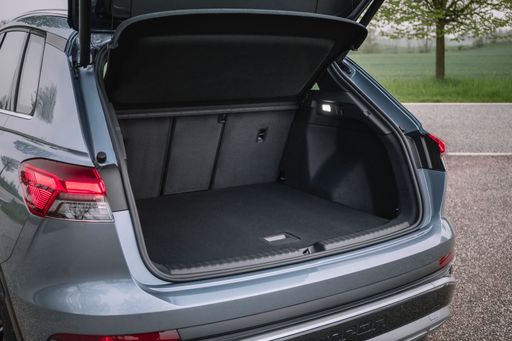
  • barely more trunk space

All details on performance, efficiency, range and trunk space can be found in the technical comparison below – including user reviews for both models.

Q3

The automotive landscape continues to evolve, and Audi is at the forefront with its impressive lineup of SUVs. Among these, the Audi Q3 and the Audi Q4 e-tron stand out as compelling choices for drivers seeking a blend of luxury, technology, and performance. In this comparison, we delve into the intricate details of both models to help you decide which Audi SUV best suits your needs.
Q4 e-tron

Design and Dimensions

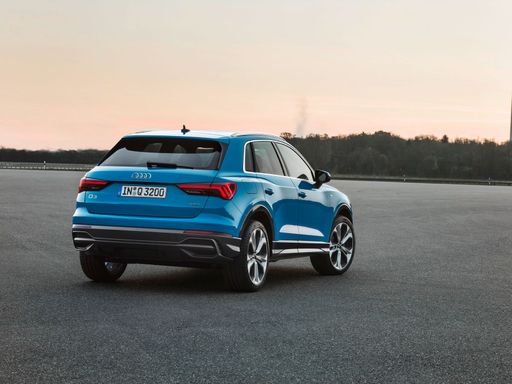
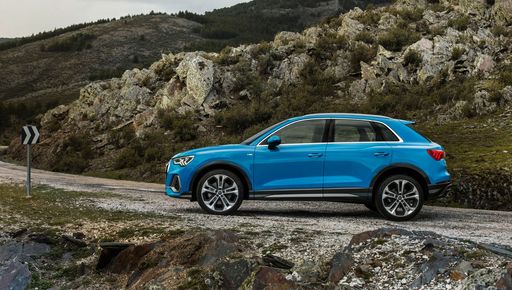
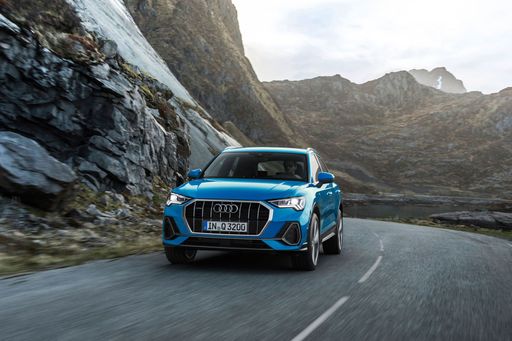
The Audi Q3 is a compact SUV that boasts a sporty and aggressive design. Measuring 4484 mm in length, 1849 mm in width, and 1585 mm in height, it’s designed to offer both style and practicality. The Q3's streamlined silhouette is complemented by its bold front grille and striking LED headlights.

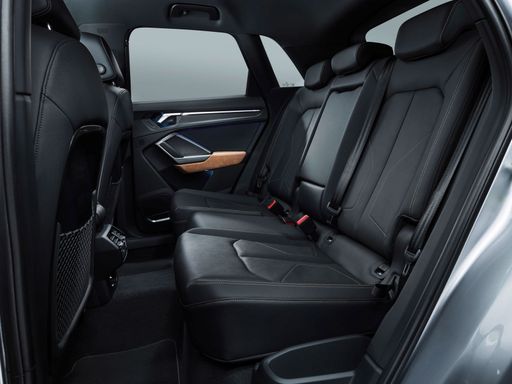
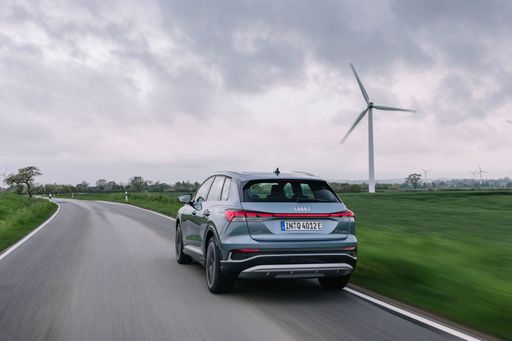
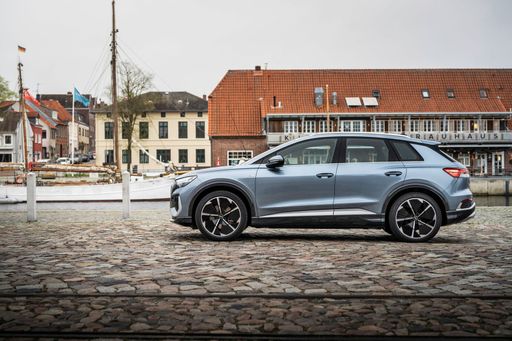
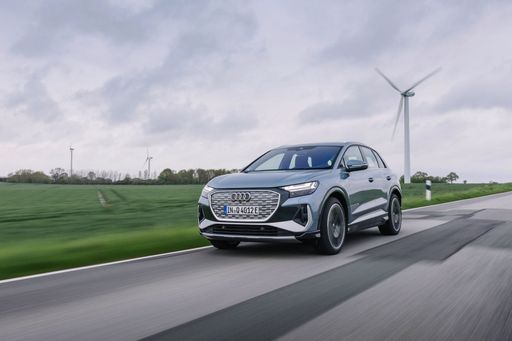
On the other hand, the Audi Q4 e-tron is a slightly larger SUV, measuring 4588 mm in length and 1865 mm in width, with a height of 1632 mm. The Q4 e-tron's design is futuristic, featuring sharp lines and a more geometric shape that emphasizes its electric powertrain. Both models accommodate five passengers comfortably, making them ideal for families or individuals who value space.

Q3

Performance and Powertrains

Under the hood, the Audi Q3 offers a range of petrol and diesel engines, providing power outputs between 150 HP and 245 HP. With options for manual or automatic transmission and front-wheel or all-wheel drive, the Q3 delivers a driving experience that can be tailored to various preferences. The acceleration from 0 to 100 km/h ranges from a respectable 9.5 seconds all the way down to an exhilarating 5.8 seconds, depending on the engine choice.

In contrast, the Audi Q4 e-tron showcases Audi's commitment to electrification with its fully electric powertrains. The Q4 e-tron is available in rear-wheel and all-wheel drive configurations, with power outputs ranging from 170 HP to an impressive 340 HP. It accelerates from 0 to 100 km/h in as little as 5.4 seconds, showcasing the agility and responsiveness of electric drivetrains.

Q4 e-tron

Efficiency and Range

When it comes to fuel efficiency, the Audi Q3’s petrol and diesel motors demonstrate competitive consumption figures, with some variants achieving as low as 5.5 L/100 km. However, for those prioritizing eco-friendliness, the Q4 e-tron shines with its electric powertrain. Depending on the battery size, it offers an electric range of up to 551 km on a single charge, making it suitable for both urban commuting and longer journeys.

Q3

Interior and Technology

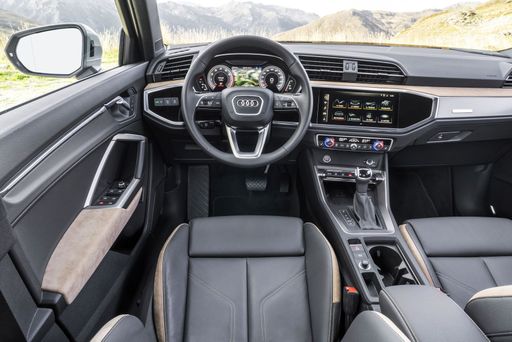
Inside, both the Q3 and Q4 e-tron offer a premium cabin experience that Audi is known for. The Q3 boasts high-quality materials and an intuitive MMI infotainment system with a digital cockpit. Features like ambient lighting add to the luxurious feel.

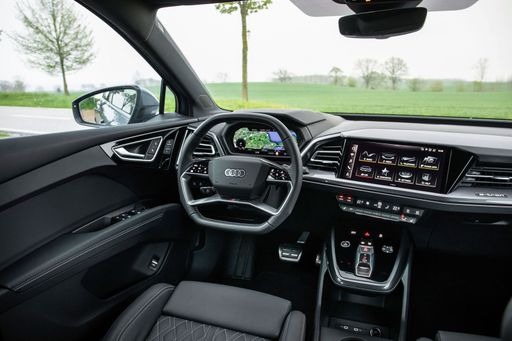
The Q4 e-tron, meanwhile, elevates the tech experience with an extensive suite of connectivity options, including Audi's latest MMI Touch system, voice recognition, and an optional augmented reality head-up display. It also integrates features like wireless smartphone charging, further enhancing the user experience.

Q4 e-tron

Safety and Assistance Features

Safety is paramount in both models, with advanced driver-assistance systems present in both the Q3 and Q4 e-tron. Features such as adaptive cruise control, lane departure warning, and emergency braking assist are standard or available, ensuring peace of mind on the road.

Q3

Conclusion: Which Audi SUV to Choose?

Choosing between the Audi Q3 and Q4 e-tron ultimately depends on your particular needs. The Q3 is an excellent choice for drivers who appreciate a traditional SUV with versatile engine options and engaging driving dynamics. Meanwhile, the Q4 e-tron is perfect for those looking to embrace electric mobility without compromising on luxury or performance.

As the automotive world moves towards electrification, the Audi Q4 e-tron sets a benchmark in the electric SUV segment, while the Q3 remains a stalwart in the compact SUV category. Both models reflect Audi's commitment to innovation, quality, and performance, making either choice a worthy investment in luxury driving.

Here’s where it gets real: The technical differences in detail

Q3

Costs and Efficiency:

Price and efficiency are key factors when choosing a car – and this is often where the real differences emerge.

Audi Q3 is barely cheaper – starting at 38,200 £ , while the Audi Q4 e-tron costs 39,600 £ . That’s a price difference of around 1,329 £.

As for electric range, the Audi Q4 e-tron offers significantly more range – reaching up to 554 km, about 435 km more than the Audi Q3.

Q4 e-tron

Engine and Performance:

Under the bonnet, it becomes clear which model is tuned for sportiness and which one takes the lead when you hit the accelerator.

When it comes to engine power, the Audi Q4 e-tron offers moderately more power – delivering 340 HP compared to 272 HP. That’s roughly 68 HP more horsepower.

When accelerating from 0 to 100 km/h, the Audi Q4 e-tron is barely quicker – completing the sprint in 5.4 s, while the Audi Q3 takes 5.7 s. That’s about 0.3 s quicker.

There’s also a difference in torque: the Audi Q4 e-tron delivers significantly more torque with 679 Nm compared to 400 Nm. That’s about 279 Nm more.

Q3

Space and Everyday Use:

Cabin size, boot volume and payload all play a role in everyday practicality. Here, comfort and flexibility make the difference.

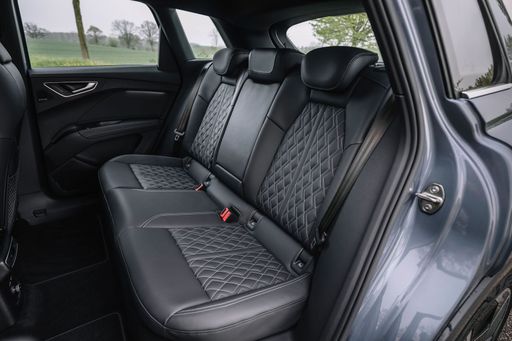
Both vehicles offer seating for 5 people.

In terms of curb weight, Audi Q3 is markedly lighter – 1,635 kg compared to 2,035 kg. The difference is around 400 kg.

Looking at boot space, the Audi Q4 e-tron offers barely more boot space – 535 L compared to 488 L. That’s a difference of about 47 L.

When it comes to payload, the Audi Q3 carries marginally more – 535 kg compared to 515 kg. That’s a difference of about 20 kg.

Who wins the race in the data check?

The Audi Q4 e-tron is clearly superior overall in the objective data comparison.
This result only shows which model scores more points on paper – not which of the two cars feels right for you.

from £39,600
Q4 e-tron

Audi Q4 e-tron

  • Engine Type : Electric
  • Transmission : Automatic
  • Drive Type : Rear-Wheel Drive, All-Wheel Drive
  • Power HP : 204 - 340 HP
  • Consumption kWh/100km : 15.9 - 17.4 kWh/100km
  • Electric Range : 406 - 554 km
Audi Q3
Audi Q4 e-tron

Costs and Consumption

View detailed analysis

Engine and Performance

View detailed analysis

Dimensions and Body

View detailed analysis

Audi Q3

The Audi Q3 feels like a grown-up compact SUV with premium polish and city-friendly agility, the sort of car that makes weekend escapes and daily commutes equally satisfying. Inside, you get quality materials and smart packaging that keep things practical without skimping on style, so it’s an easy pick for buyers who want luxury without the drama.

details

Audi Q4 e-tron

The Audi Q4 e-tron brings Audi polish into the electric crossover scene, pairing a sleek exterior with a refined, airy interior that makes everyday driving feel distinctly premium. It’s an easy-to-live-with EV that balances comfort and real-world usability with intuitive tech, making it a smart choice for buyers who want electric mobility without giving up Audi character — and yes, it still looks good in the driveway.

details
Audi Q3
Audi Q4 e-tron

Costs and Consumption

Price
38,200 - 52,900 £
Price
39,600 - 58,800 £
Consumption L/100km
1.7 - 8.6 L/100km
Consumption L/100km
-
Consumption kWh/100km
-
Consumption kWh/100km
15.9 - 17.4 kWh/100km
Electric Range
118 - 119 km
Electric Range
406 - 554 km
Battery Capacity
-
Battery Capacity
77 kWh
co2
39 - 195 g/km
co2
0 g/km
Fuel tank capacity
-
Fuel tank capacity
-

Dimensions and Body

Body Type
SUV
Body Type
SUV
Seats
5
Seats
5
Doors
-
Doors
5
Curb weight
1,635 - 1,900 kg
Curb weight
2,035 - 2,235 kg
Trunk capacity
375 - 488 L
Trunk capacity
520 - 535 L
Length
-
Length
4,588 mm
Width
1,859 mm
Width
1,865 mm
Height
-
Height
1,614 - 1,632 mm
Max trunk capacity
-
Max trunk capacity
1,460 - 1,490 L
Payload
505 - 535 kg
Payload
505 - 515 kg

Engine and Performance

Engine Type
Petrol MHEV, Petrol, Plugin Hybrid, Diesel
Engine Type
Electric
Transmission
Automatic
Transmission
Automatic
Transmission Detail
Dual-Clutch Automatic
Transmission Detail
Reduction Gearbox
Drive Type
Front-Wheel Drive, All-Wheel Drive
Drive Type
Rear-Wheel Drive, All-Wheel Drive
Power HP
150 - 272 HP
Power HP
204 - 340 HP
Acceleration 0-100km/h
5.7 - 9.2 s
Acceleration 0-100km/h
5.4 - 8.1 s
Max Speed
-
Max Speed
180 km/h
Torque
250 - 400 Nm
Torque
310 - 679 Nm
Number of Cylinders
4
Number of Cylinders
-
Power kW
110 - 200 kW
Power kW
150 - 250 kW
Engine capacity
1,498 - 1,984 cm3
Engine capacity
-

General

Model Year
2,025
Model Year
2,023 - 2,025
CO2 Efficiency Class
E, G, B
CO2 Efficiency Class
A
Brand
Audi
Brand
Audi
DriveDuel uses data analysis and artificial intelligence to evaluate vehicle data and create content. Content is regularly reviewed and improved. The displayed prices are estimates based on German list prices, adjusted to the respective country’s VAT. Country-specific registration taxes are not included. This information is not legally binding.