VS

Jaguar E-Pace vs Hyundai Tucson comparison

Compare performance (269 HP vs 288 HP), boot space and price (32,400 £ vs 31,300 £ ) at a glance. Find out which car is the better choice for you – Jaguar E-Pace or Hyundai Tucson?

Jaguar E-Pace vs Hyundai Tucson: Key differences

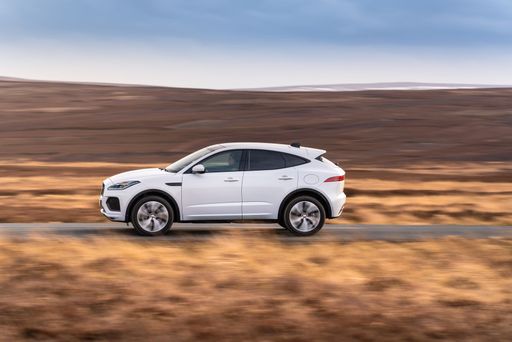
Jaguar E-Pace

  • significantly more efficient
  • marginally quicker 0–100 km/h
details

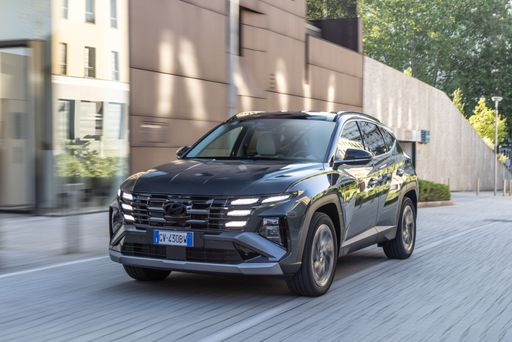
Hyundai Tucson

4.8 (6 Reviews)
rate
  • marginally cheaper
  • only slightly more power
  • barely more electric range
  • a bit lighter
  • noticeably more trunk space
details

All details on performance, efficiency, range and trunk space can be found in the technical comparison below – including user reviews for both models.

By Achim Sedelmaier

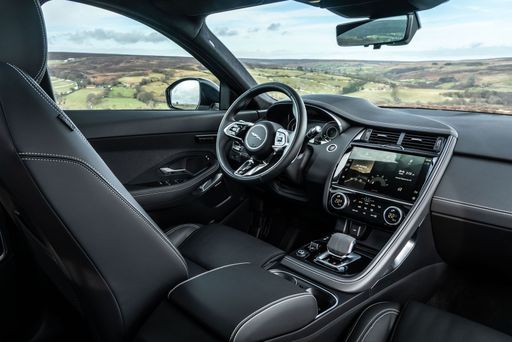
E-Pace

Hyundai Tucson vs. Jaguar E-Pace: A Comprehensive Comparison

The 2024 automotive season brings a striking comparison between two popular SUVs: the Hyundai Tucson and the Jaguar E-Pace. These vehicles promise innovation, stylish design, and practical performance. In this feature, we delve into their technical aspects, powertrains, and what makes them stand out in the ever-evolving SUV market.
Tucson

Performance and Engine Options

The Hyundai Tucson offers a broad spectrum of engine types, with options ranging from Diesel MHEV, Petrol MHEV, Petrol, Full Hybrid, to a PHEV. The power output varies from 136 to 252 HP, fueled by engines with a capacity of 1598 cm³. The Tucson's power curves adapt to different driver needs with the availability of both automatic and manual transmissions.

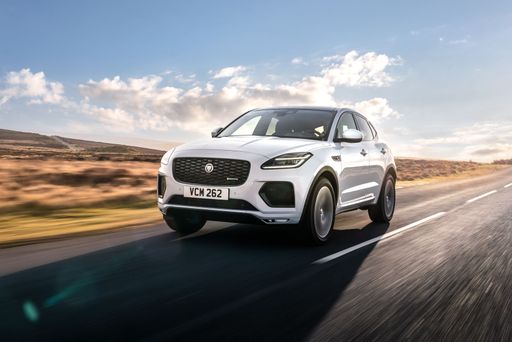
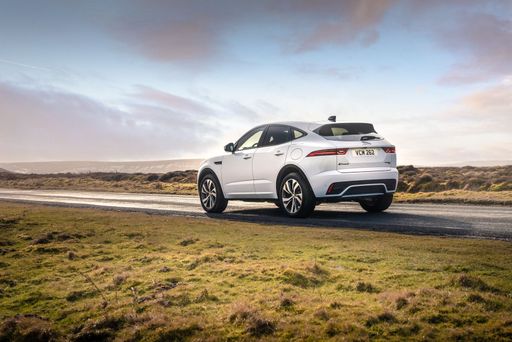
On the other hand, the Jaguar E-Pace provides a dynamic ride with its Plugin Hybrid, Diesel MHEV, and Petrol MHEV engines. Its powerful PHEV variant pushes out 269 HP, backed by a robust 540 Nm of torque. Unlike its competitor, the E-Pace is available exclusively with an automatic transmission, ensuring a smooth driving experience.

E-Pace

Efficiency and Environmental Considerations

Fuel efficiency is a cornerstone for both SUVs. The Tucson boasts a consumption range between 1.2 and 6.8 L/100km, highlighting its eco-friendly PHEV variant with an impressive CO2 emission as low as 22 g/km. Additionally, the PHEV offers an electric range of up to 70 km.

The E-Pace challenges the Tucson with a competitive fuel consumption starting at 1.4 L/100km for the PHEV, with CO2 emissions of 33 g/km. Its electric range is slightly behind the Tucson's, at 69 km, but still offers a solid performance for city commutes.

Tucson

Interior and Practicality

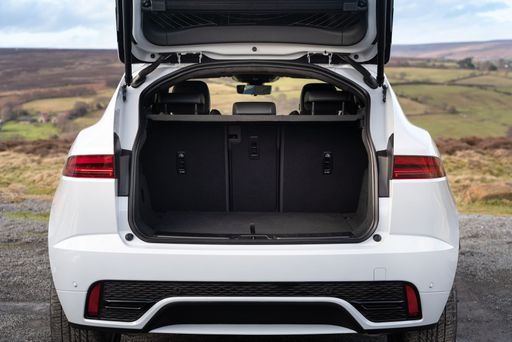
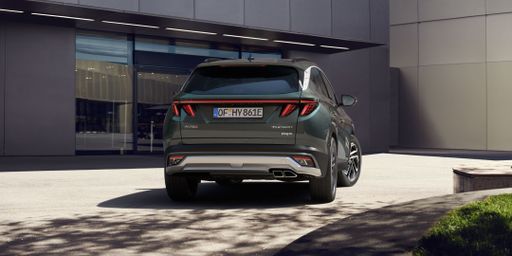
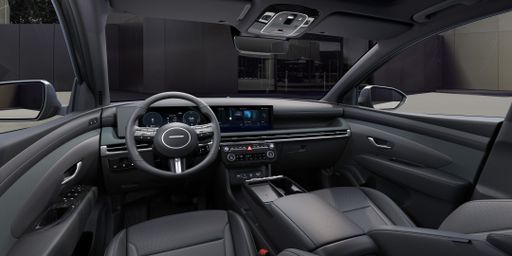
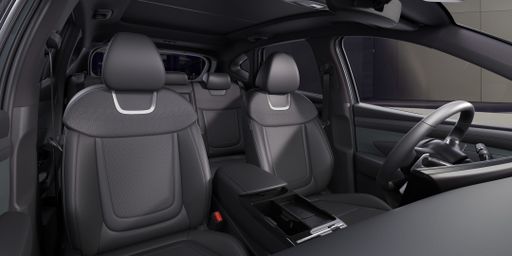
Inside, both SUVs accommodate five passengers, emphasizing comfort and functionality. However, the Tucson edges forward with trunk capacities ranging from 546 to 620 liters, whereas the E-Pace offers a singular trunk capacity of 494 liters. This variation might sway buyers prioritizing cargo space.

The curb weight is another critical factor, with the Tucson's weight starting at 1520 kg, culminating at 1889 kg for heavier trims, versus the E-Pace's broader range from 1783 kg to 2173 kg. It's important to note that a lighter vehicle not only can contribute to better fuel efficiency but might also sport a more agile handling.

E-Pace

Dimensions and Exterior Design

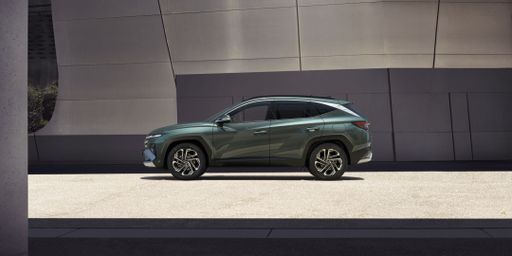
Design and dimension play significant roles in a vehicle's road presence. The Tucson's length stretches between 4510 to 4520 mm, with a width of 1865 mm and a height of 1650 mm, encapsulating its refined yet versatile architecture.

Meanwhile, the E-Pace, slightly shorter at 4395 mm in length but wider at 1984 mm, presents a bold stance paired with a slightly lower height of 1648 mm. This design lends a sporty aesthetic appeal complemented by Jaguar’s signature styling cues.

Tucson

Conclusion

Choosing between the Hyundai Tucson and the Jaguar E-Pace depends on personal preference and priorities. Prospective buyers must weigh factors such as powertrain versatility, fuel efficiency, interior space, and design. The Tucson presents itself as a multifaceted, practical choice with a wide engine offer and spacious interiors. Conversely, the E-Pace brandishes a touch of luxury and sportiness intrinsic to Jaguar's brand DNA.

Ultimately, both models encapsulate the essence of modern SUVs, promising to be excellent companions for urban commuting and adventures beyond.

Here’s where it gets real: The technical differences in detail

E-Pace

Costs and Efficiency:

When it comes to price and running costs, the biggest differences usually appear. This is often where you see which car fits your budget better in the long run.

Hyundai Tucson is marginally cheaper – starting at 31,300 £ , while the Jaguar E-Pace costs 32,400 £ . That’s a price difference of around 1,123 £.

Fuel consumption also shows a difference: the Jaguar E-Pace uses 1.4 L/100km and is significantly more efficient than the Hyundai Tucson with 2.7 L/100km. The difference is about 1.3 L/100km.

As for electric range, the Hyundai Tucson offers barely more range – reaching up to 70 km, about 1 km more than the Jaguar E-Pace.

Tucson

Engine and Performance:

Under the bonnet, it becomes clear which model is tuned for sportiness and which one takes the lead when you hit the accelerator.

When it comes to engine power, the Hyundai Tucson offers only slightly more power – delivering 288 HP compared to 269 HP. That’s roughly 19 HP more horsepower.

When accelerating from 0 to 100 km/h, the Jaguar E-Pace is marginally quicker – completing the sprint in 7.3 s, while the Hyundai Tucson takes 7.5 s. That’s about 0.2 s quicker.

There’s also a difference in torque: the Jaguar E-Pace delivers visibly more torque with 540 Nm compared to 379 Nm. That’s about 161 Nm more.

E-Pace

Space and Everyday Use:

Beyond pure performance, interior space and usability matter most in daily life. This is where you see which car is more practical and versatile.

Both vehicles offer seating for 5 people.

In terms of curb weight, Hyundai Tucson is a bit lighter – 1,542 kg compared to 1,783 kg. The difference is around 241 kg.

Looking at boot space, the Hyundai Tucson offers noticeably more boot space – 620 L compared to 494 L. That’s a difference of about 126 L.

When it comes to payload, the Jaguar E-Pace carries only slightly more – 554 kg compared to 545 kg. That’s a difference of about 9 kg.

Who wins the race in the data check?

The Jaguar E-Pace is far ahead overall in the objective data comparison.
This result only shows which model scores more points on paper – not which of the two cars feels right for you.

from £32,400
E-Pace

Jaguar E-Pace

  • Engine Type Plugin Hybrid, Diesel MHEV, Petrol MHEV
  • Transmission Automatic
  • Drive Type All-Wheel Drive, Front-Wheel Drive
  • Power HP 160 - 269 HP
  • Consumption L/100km 1.4 - 8.2 L/100km
  • Electric Range 69 km
Jaguar E-Pace
Hyundai Tucson

Costs and Consumption

View detailed analysis

Engine and Performance

View detailed analysis

Dimensions and Body

View detailed analysis

Jaguar E-Pace

The Jaguar E-Pace brings compact SUV practicality together with taut, sporty design and unmistakable British charm, helping it stand out in a crowded class. Inside, the cabin feels premium and the driving manners are engaging enough to keep a grin on your face, making it a tempting choice for buyers who want Jaguar style without the bulk.

details

Hyundai Tucson

The Hyundai Tucson is a well-rounded compact SUV that blends modern styling with a comfortable, thoughtfully laid-out interior, making it appealing for daily driving and family use. It delivers a calm ride, a generous level of equipment for the price, and sensible practicality, so it's a smart choice if you want a straightforward, dependable crossover without fuss.

details
Jaguar E-Pace
Hyundai Tucson

Costs and Consumption

Price
32,400 - 56,100 £
Price
31,300 - 48,800 £
Consumption L/100km
1.4 - 8.2 L/100km
Consumption L/100km
2.7 - 7.6 L/100km
Consumption kWh/100km
-
Consumption kWh/100km
-
Electric Range
69 km
Electric Range
63 - 70 km
Battery Capacity
11.5 kWh
Battery Capacity
-
co2
33 - 185 g/km
co2
62 - 172 g/km
Fuel tank capacity
56 - 67 L
Fuel tank capacity
-

Dimensions and Body

Body Type
SUV
Body Type
SUV
Seats
5
Seats
5
Doors
5
Doors
-
Curb weight
1,783 - 2,173 kg
Curb weight
1,542 - 1,893 kg
Trunk capacity
494 L
Trunk capacity
546 - 620 L
Length
4,395 mm
Length
-
Width
1,984 mm
Width
1,865 mm
Height
1,648 mm
Height
-
Max trunk capacity
1,170 L
Max trunk capacity
-
Payload
497 - 554 kg
Payload
518 - 545 kg

Engine and Performance

Engine Type
Plugin Hybrid, Diesel MHEV, Petrol MHEV
Engine Type
Petrol, Full Hybrid, Plugin Hybrid, Diesel MHEV
Transmission
Automatic
Transmission
Manuel, Automatic
Transmission Detail
Automatic Gearbox
Transmission Detail
Manual Gearbox, Dual-Clutch Automatic, Automatic Gearbox
Drive Type
All-Wheel Drive, Front-Wheel Drive
Drive Type
Front-Wheel Drive, All-Wheel Drive
Power HP
160 - 269 HP
Power HP
136 - 288 HP
Acceleration 0-100km/h
7.3 - 10.5 s
Acceleration 0-100km/h
7.5 - 11.6 s
Max Speed
190 - 211 km/h
Max Speed
-
Torque
260 - 540 Nm
Torque
250 - 379 Nm
Number of Cylinders
3 - 4
Number of Cylinders
4
Power kW
118 - 198 kW
Power kW
100 - 212 kW
Engine capacity
1,498 - 1,998 cm3
Engine capacity
1,598 cm3

General

Model Year
2024
Model Year
2025
CO2 Efficiency Class
B, G
CO2 Efficiency Class
F, D, E, B
Brand
Jaguar
Brand
Hyundai
DriveDuel uses data analysis and artificial intelligence to evaluate vehicle data and create content. Content is regularly reviewed and improved. The displayed prices are estimates based on German list prices, adjusted to the respective country’s VAT. Country-specific registration taxes are not included. This information is not legally binding.