VS

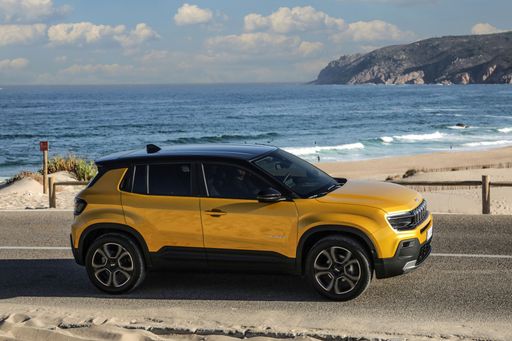
Jeep Compass vs Jeep Avenger comparison

Compare performance (225 HP vs 156 HP), boot space and price (34,200 £ vs 22,500 £ ) at a glance. Find out which car is the better choice for you – Jeep Compass or Jeep Avenger?

Jeep Compass vs Jeep Avenger: Key differences

Jeep Compass

2.4 (4 Reviews)
rate
  • noticeably more power
  • substantially more efficient
  • slightly more electric range
  • moderately quicker 0–100 km/h
  • markedly more trunk space
details

Jeep Avenger

4 (8 Reviews)
rate
  • considerably cheaper
  • moderately more efficient
  • substantially lighter
details

All details on performance, efficiency, range and trunk space can be found in the technical comparison below – including user reviews for both models.

By Achim Sedelmaier

Compass

Jeep Avenger vs Jeep Compass: the right Jeep for your everyday

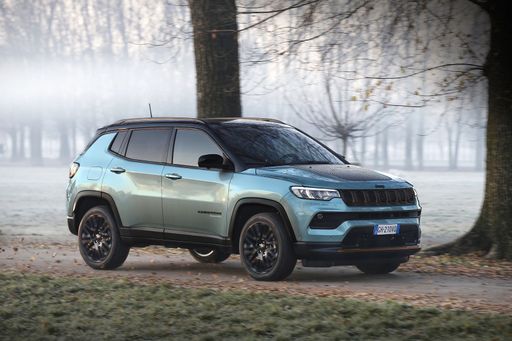
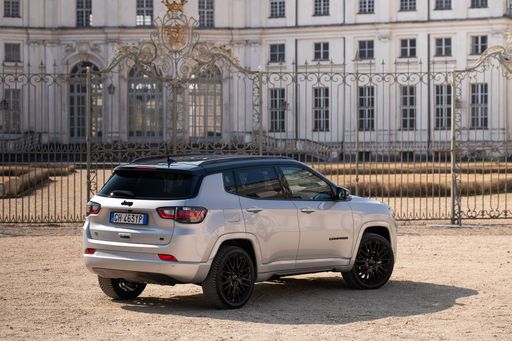
The Jeep Avenger and Jeep Compass bring the Jeep look to two very different everyday roles, and this is the Jeep Avenger VS Jeep Compass comparison buyers actually feel on the road. The Avenger is smaller, lighter and easier to live with in tight streets, while the Compass feels like the calmer, roomier choice for family mileage. Both are relaxed rather than sporty, but the Compass carries more punch and cruises with greater ease, especially as a full EV. The Avenger counters with a friendlier price tag and a genuinely city-friendly character that makes every errand simpler.
Avenger

Space and practicality: compact cool vs family-ready

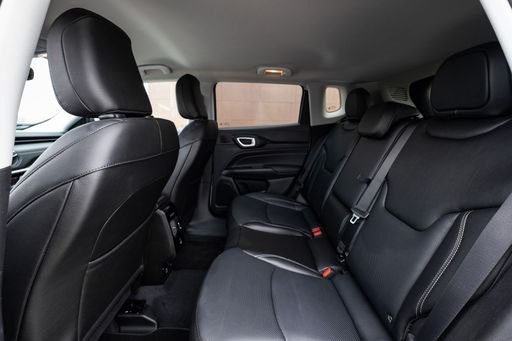
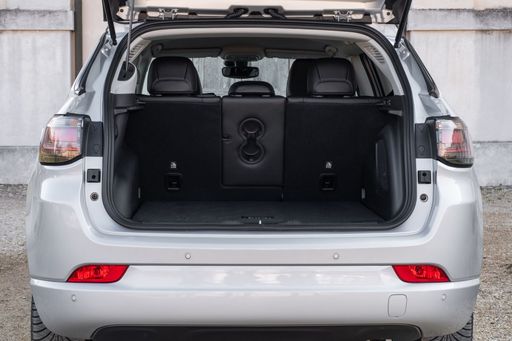
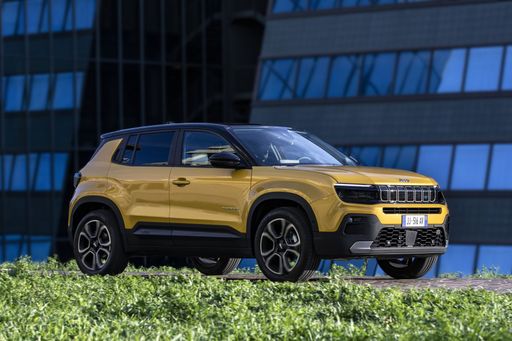
The Jeep Avenger makes clever use of its footprint with generous front space and lots of useful cubbies, but the back seat is tight for adults and three across is optimistic for more than short hops. Its boot opening is nicely square, yet overall capacity sits on the modest side, so buggies and big dogs ask for compromises. The Jeep Compass, by contrast, offers noticeably more legroom in the rear and a larger, more flexible cargo area with a split-fold bench that swallows family gear with less fuss. If school runs, child seats and weekend luggage are routine, the Compass simply feels less squeezed.

Compass

Ride comfort and long-distance manners

In town, the Jeep Avenger is softly sprung and unflustered by speed bumps and patched tarmac, delivering that easygoing glide many buyers want. Stretch its legs and it’s stable enough, but wind noise can creep in and the EV versions feel tuned for calm, not for high-speed pounding. The Jeep Compass settles into a quieter, more planted cruise, and as a BEV it’s impressively serene, while the e‑Hybrid can feel a touch firmer over sharp edges. For frequent motorway runs the Compass is the more relaxing companion; for urban commuting the Avenger’s cushy low-speed ride is the sweeter fit.

Avenger

Driving feel: oomph, agility and traction options

The Jeep Compass delivers stronger shove and easier overtakes, though its steering and body control lean toward safe and undramatic rather than engaging. The Jeep Avenger feels more eager in the city thanks to its smaller size and light controls, slipping into gaps and parking bays with far less stress. If you want extra traction for winter lanes or a gravel driveway now, the Avenger’s 4xe option answers that brief today, while the Compass’ fuller all‑wheel‑drive solutions arrive later in its lifecycle. Think of the Compass as the quiet, muscular cruiser and the Avenger as the nimble urbanist with a handy rugged streak.

Compass

Cabin feel, visibility and tech usability

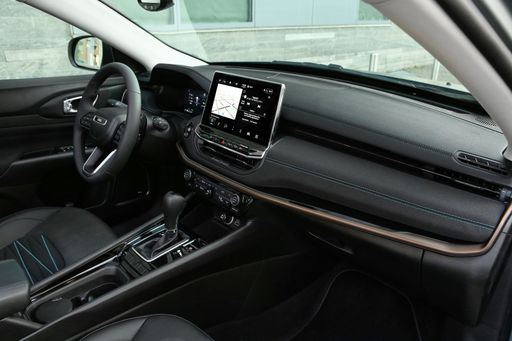
The Jeep Compass cabin looks modern and upmarket at first glance, with a very wide central screen, wireless phone mirroring and a handy row of real buttons, though some plastics and the distant screen placement undercut the premium vibe. Its built-in navigation can lag and the driver-monitoring module may distract, and rearward visibility is compromised by thick pillars. The Jeep Avenger goes for a tougher, more functional feel with plenty of hard-wearing plastics, clear climate buttons and straightforward menus that can still be a beat slow at times. Forward visibility is excellent in the Avenger thanks to a squared-off bonnet, while the Compass feels a touch richer overall but less easy to judge at the back.

Avenger

Costs, city-friendliness and who should buy which

The Jeep Avenger undercuts the Compass on purchase price and keeps day-to-day costs in check with easy parking and thrifty city/regional efficiency, but its recent safety score and assistance tuning may give cautious buyers pause. The Jeep Compass asks more upfront, yet pays it back with greater space, a calmer highway temperament and an EV setup that goes further between charges and offers strong charging convenience. Go Avenger if you’re an urban couple or solo driver who values compact size, relaxed comfort and the option of occasional extra traction without upsizing. Choose Compass if you routinely carry people and kit, want a quieter long-haul partner and prefer a larger cabin that simply takes life in its stride. With those roles clear, the technical comparison below shows how each Jeep’s hardware underpins these everyday differences.

Here’s where it gets real: The technical differences in detail

Compass

Costs and Efficiency:

Price and efficiency are key factors when choosing a car – and this is often where the real differences emerge.

Jeep Avenger is considerably cheaper – starting at 22,500 £ , while the Jeep Compass costs 34,200 £ . That’s a price difference of around 11,658 £.

Fuel consumption also shows a difference: the Jeep Compass uses 3 L/100km and is substantially more efficient than the Jeep Avenger with 4.9 L/100km. The difference is about 1.9 L/100km.

In terms of energy consumption, the Jeep Avenger is moderately more efficient: consuming 15.5 kWh/100km compared to 17.5 kWh/100km for the Jeep Compass. That’s a difference of about 2 kWh/100km.

As for electric range, the Jeep Compass offers slightly more range – reaching up to 500 km, about 100 km more than the Jeep Avenger.

Avenger

Engine and Performance:

Under the bonnet, it becomes clear which model is tuned for sportiness and which one takes the lead when you hit the accelerator.

When it comes to engine power, the Jeep Compass offers noticeably more power – delivering 225 HP compared to 156 HP. That’s roughly 69 HP more horsepower.

When accelerating from 0 to 100 km/h, the Jeep Compass is moderately quicker – completing the sprint in 8 s, while the Jeep Avenger takes 9 s. That’s about 1 s quicker.

There’s also a difference in torque: the Jeep Compass delivers clearly more torque with 345 Nm compared to 260 Nm. That’s about 85 Nm more.

Compass

Space and Everyday Use:

Whether family car or daily driver – which one offers more room, flexibility and comfort?

Both vehicles offer seating for 5 people.

In terms of curb weight, Jeep Avenger is substantially lighter – 1,180 kg compared to 1,667 kg. The difference is around 487 kg.

Looking at boot space, the Jeep Compass offers markedly more boot space – 550 L compared to 380 L. That’s a difference of about 170 L.

When it comes to payload, the Jeep Avenger carries very slightly more – 502 kg compared to 473 kg. That’s a difference of about 29 kg.

Who wins the race in the data check?

The Jeep Compass holds a decisive overall lead in the objective data comparison.
This result only shows which model scores more points on paper – not which of the two cars feels right for you.

from £34,200
Compass

Jeep Compass

  • Engine Type : Petrol MHEV, Electric, Plugin Hybrid
  • Transmission : Automatic
  • Drive Type : Front-Wheel Drive
  • Power HP : 145 - 225 HP
  • Consumption L/100km : 3 - 5.8 L/100km
  • Consumption kWh/100km : 17.5 kWh/100km
  • Electric Range : 95 - 500 km
Jeep Compass
Jeep Avenger

Costs and Consumption

View detailed analysis

Engine and Performance

View detailed analysis

Dimensions and Body

View detailed analysis

Jeep Compass

The Jeep Compass packs classic Jeep styling with a surprisingly composed demeanor, equally at home turning heads in the city or tackling a weekend dirt track. Inside it's a pragmatic, user-friendly compact SUV that prioritizes comfort and versatility — a smart pick if you want a dose of adventure without giving up everyday sense.

details

Jeep Avenger

The Jeep Avenger shrinks Jeep's boxy, adventurous styling into a city-friendly electric crossover that looks just as at home on tight streets as it does on muddy weekend lanes. It's a savvy pick for drivers who want go-anywhere attitude without the truck-size ego — practical inside, lively around town and ready to tackle a bit of rough stuff when the mood strikes.

details
Jeep Compass
Jeep Avenger

Costs and Consumption

Price
34,200 - 43,200 £
Price
22,500 - 35,000 £
Consumption L/100km
3 - 5.8 L/100km
Consumption L/100km
4.9 - 5.7 L/100km
Consumption kWh/100km
17.5 kWh/100km
Consumption kWh/100km
15.5 kWh/100km
Electric Range
95 - 500 km
Electric Range
400 km
Battery Capacity
-
Battery Capacity
-
co2
0 - 130 g/km
co2
0 - 129 g/km
Fuel tank capacity
-
Fuel tank capacity
-

Dimensions and Body

Body Type
SUV
Body Type
SUV
Seats
5
Seats
5
Doors
-
Doors
-
Curb weight
1,667 - 2,198 kg
Curb weight
1,180 - 1,520 kg
Trunk capacity
550 L
Trunk capacity
355 - 380 L
Length
-
Length
-
Width
1,928 mm
Width
1,776 mm
Height
-
Height
-
Max trunk capacity
-
Max trunk capacity
-
Payload
472 - 473 kg
Payload
494 - 502 kg

Engine and Performance

Engine Type
Petrol MHEV, Electric, Plugin Hybrid
Engine Type
Petrol MHEV, Electric, Petrol
Transmission
Automatic
Transmission
Automatic, Manuel
Transmission Detail
Dual-Clutch Automatic, Reduction Gearbox
Transmission Detail
Dual-Clutch Automatic, Reduction Gearbox, Manual Gearbox
Drive Type
Front-Wheel Drive
Drive Type
Front-Wheel Drive
Power HP
145 - 225 HP
Power HP
100 - 156 HP
Acceleration 0-100km/h
8 - 10.3 s
Acceleration 0-100km/h
9 - 10.6 s
Max Speed
-
Max Speed
-
Torque
230 - 345 Nm
Torque
205 - 260 Nm
Number of Cylinders
3 - 4
Number of Cylinders
3
Power kW
107 - 165 kW
Power kW
74 - 115 kW
Engine capacity
1,199 - 1,596 cm3
Engine capacity
1,199 cm3

General

Model Year
2,025 - 2,026
Model Year
2026
CO2 Efficiency Class
D, A, B
CO2 Efficiency Class
C, A, D
Brand
Jeep
Brand
Jeep
DriveDuel uses data analysis and artificial intelligence to evaluate vehicle data and create content. Content is regularly reviewed and improved. The displayed prices are estimates based on German list prices, adjusted to the respective country’s VAT. Country-specific registration taxes are not included. This information is not legally binding.