VS

Jeep Compass vs Peugeot 5008 comparison

Compare performance (225 HP vs 325 HP), boot space and price (34,200 £ vs 37,600 £ ) at a glance. Find out which car is the better choice for you – Jeep Compass or Peugeot 5008?

Jeep Compass vs Peugeot 5008: Key differences

Jeep Compass

2.4 (4 Reviews)
rate
  • only slightly cheaper
  • marginally more efficient
  • only slightly lighter
  • clearly more trunk space
details

Peugeot 5008

4.7 (1 Reviews)
rate
  • markedly more power
  • a bit more efficient
  • markedly more electric range
  • clearly quicker 0–100 km/h
details

All details on performance, efficiency, range and trunk space can be found in the technical comparison below – including user reviews for both models.

By Achim Sedelmaier

Compass

Two Titans of the Urban Jungle: Jeep Compass vs Peugeot 5008

In the ever-evolving landscape of SUVs, the battle between the Jeep Compass and the Peugeot 5008 draws attention in 2024. Both renowned for their functionality and style, these models cater to different driving needs while showcasing innovative technology. Let's delve into the intricacies of each vehicle and discover which one might become your next favorite four-wheeled companion.
5008

Design and Dimension: Making an Impression

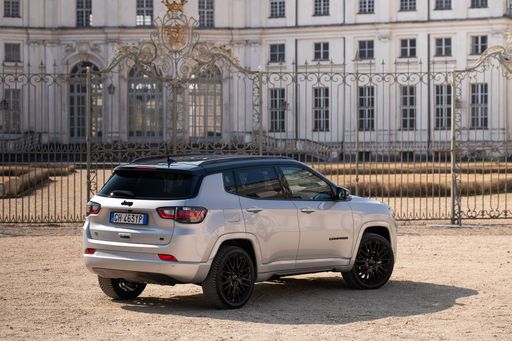
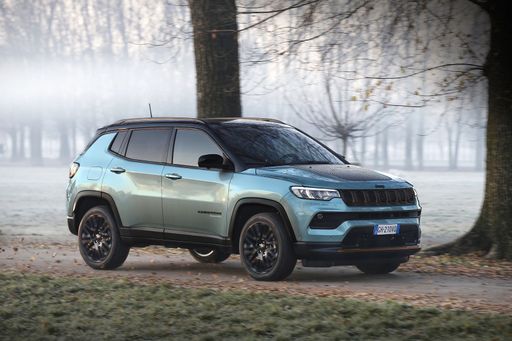
When it comes to aesthetics and dimensions, the Jeep Compass stands at an overall length of 4,404 mm, width of 1,819 mm, and a height range between 1,629 and 1,649 mm. It offers a compact yet robust design appealing for urban drives and weekend getaways.

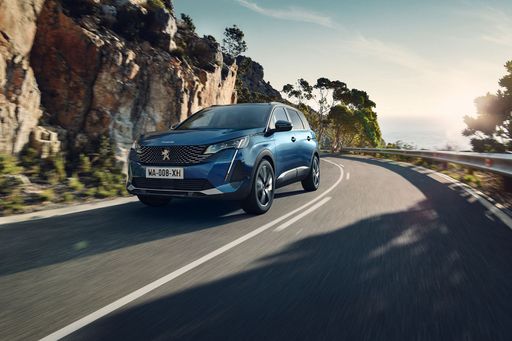
On the other hand, the Peugeot 5008 boasts a more elongated body at 4,791 mm in length, a wider profile at 1,895 mm, and a slightly taller presence at 1,694 mm. The 5008 design leans towards elegance and family utility, providing more space for passengers and cargo—a defining feature for those needing a seven-seater.

Compass

Engine and Performance: Power Under the Hood

For the Jeep Compass, the powertrain is diverse with options ranging from a 130 HP petrol MHEV to a potent 240 HP plugin hybrid. The acceleration varies, with the top-performing model sprinting from 0 to 100 km/h in 7.3 seconds. The configuration fosters versatility with front-wheel and all-wheel drive options, suitable for navigating diverse terrains.

The Peugeot 5008 does not lag in performance, offering a spectrum from a 136 HP petrol MHEV up to a robust 231 HP in its plugin hybrid version. Furthermore, the electric variant shines with an impressive electric range up to 664 km, making it a compelling choice in today’s eco-conscious environment. Notably, the top acceleration reaches 100 km/h in a respectable 8.8 seconds.

5008

Interior and Cargo: Space and Comfort

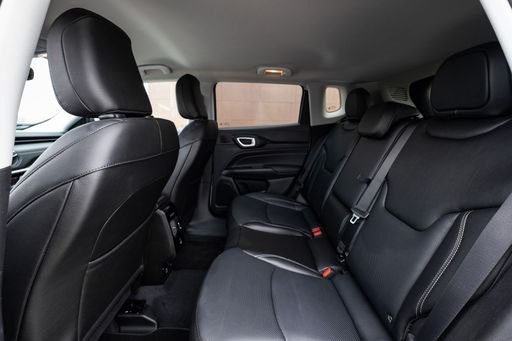
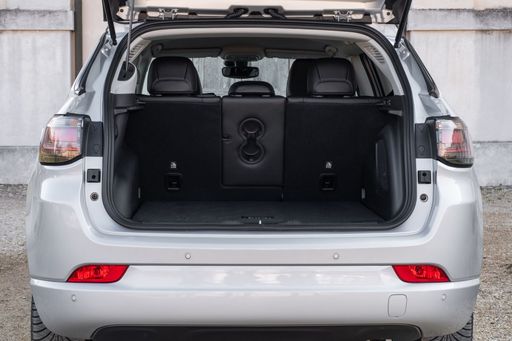
Inside the Jeep Compass, the trunk accommodates 438 liters of cargo, with seating for five. This configuration suits couples and small families looking for urban comfort and occasional adventure driving.

The Peugeot 5008, however, caters to larger families or groups with its seven-seat layout and a generous trunk capacity of 748 liters. It ensures that every journey is comfortable, whether it’s for a daily commute or a long road trip.

Compass

Efficiency and Eco-Friendliness: Ahead of the Curve

Environmental impact is increasingly critical, and here, both SUVs strive to impress. The Jeep Compass boasts a Plugin Hybrid model with a fuel consumption of only 2.0 L/100km and CO2 emissions as low as 48 g/km, pushing for an efficient urban ride.

The 5008 duplexes with its electrified models, offering similar efficiencies with consumption as low as 1.0 L/100km and pure electric variants producing zero emissions. The hybrid approach in the 5008 represents Peugeot’s commitment to reducing ecological footprints.

5008

Final Thoughts

Whether it's the all-terrain readiness of the Jeep Compass or the spacious sophistication of the Peugeot 5008, both models deliver outstanding features for different preferences and needs. The Compass promises versatility and rugged performance, while the 5008 offers practicality with an eco-friendly touch. Ultimately, the choice rests upon a buyer's lifestyle requirements, making this comparison a tale of preferences rather than a simple win or lose. Drive safe and choose wisely!

Here’s where it gets real: The technical differences in detail

Compass

Costs and Efficiency:

Price and efficiency are often the first things buyers look at. Here it becomes clear which model has the long-term edge – whether at the pump, the plug, or in purchase price.

Jeep Compass is only slightly cheaper – starting at 34,200 £ , while the Peugeot 5008 costs 37,600 £ . That’s a price difference of around 3,394 £.

Fuel consumption also shows a difference: the Peugeot 5008 uses 2.7 L/100km and is a bit more efficient than the Jeep Compass with 3 L/100km. The difference is about 0.3 L/100km.

In terms of energy consumption, the Jeep Compass is marginally more efficient: consuming 17.5 kWh/100km compared to 17.8 kWh/100km for the Peugeot 5008. That’s a difference of about 0.3 kWh/100km.

As for electric range, the Peugeot 5008 offers markedly more range – reaching up to 669 km, about 169 km more than the Jeep Compass.

5008

Engine and Performance:

Power, torque and acceleration say a lot about how a car feels on the road. This is where you see which model delivers more driving dynamics.

When it comes to engine power, the Peugeot 5008 offers markedly more power – delivering 325 HP compared to 225 HP. That’s roughly 100 HP more horsepower.

When accelerating from 0 to 100 km/h, the Peugeot 5008 is clearly quicker – completing the sprint in 6.5 s, while the Jeep Compass takes 8 s. That’s about 1.5 s quicker.

Looking at top speed, the Peugeot 5008 is only slightly faster – reaching 198 km/h, while the Jeep Compass tops out at 188 km/h. The difference is around 10 km/h.

There’s also a difference in torque: the Peugeot 5008 delivers noticeably more torque with 511 Nm compared to 345 Nm. That’s about 166 Nm more.

Compass

Space and Everyday Use:

Whether family car or daily driver – which one offers more room, flexibility and comfort?

Seats: Peugeot 5008 offers more seats – 7 vs 5.

In terms of curb weight, Jeep Compass is only slightly lighter – 1,667 kg compared to 1,700 kg. The difference is around 33 kg.

Looking at boot space, the Jeep Compass offers clearly more boot space – 550 L compared to 348 L. That’s a difference of about 202 L.

For maximum load capacity, the Peugeot 5008 offers visibly more capacity – up to 2,232 L, about 671 L more than the Jeep Compass.

Who wins the race in the data check?

The Peugeot 5008 holds a decisive overall lead in the objective data comparison.
This result only shows which model scores more points on paper – not which of the two cars feels right for you.

from £37,600
5008

Peugeot 5008

  • Engine Type : Electric, Petrol MHEV, Plugin Hybrid
  • Transmission : Automatic
  • Drive Type : Front-Wheel Drive, All-Wheel Drive
  • Power HP : 145 - 325 HP
  • Consumption L/100km : 2.7 - 5.6 L/100km
  • Consumption kWh/100km : 17.8 - 18.6 kWh/100km
  • Electric Range : 78 - 669 km
Jeep Compass
Peugeot 5008

Costs and Consumption

View detailed analysis

Engine and Performance

View detailed analysis

Dimensions and Body

View detailed analysis

Jeep Compass

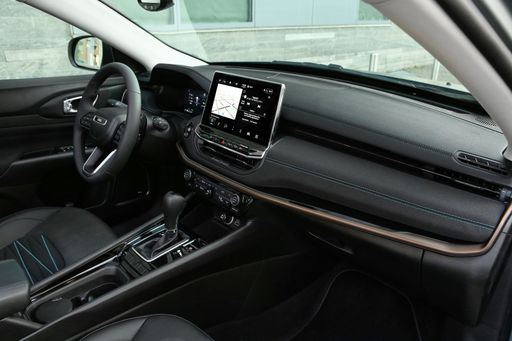
The Jeep Compass packs classic Jeep styling with a surprisingly composed demeanor, equally at home turning heads in the city or tackling a weekend dirt track. Inside it's a pragmatic, user-friendly compact SUV that prioritizes comfort and versatility — a smart pick if you want a dose of adventure without giving up everyday sense.

details

Peugeot 5008

The Peugeot 5008 blends Peugeot's sharp design with the space and versatility families actually need, wrapping clever packaging and a premium-feeling cabin in a crisp, SUV-like silhouette. It drives with more poise than you'd expect from a people carrier, serves up practical touches and flexible seating for everyday chaos, and still looks good when parked outside the school gates.

details
Jeep Compass
Peugeot 5008

Costs and Consumption

Price
34,200 - 43,200 £
Price
37,600 - 54,200 £
Consumption L/100km
3 - 5.8 L/100km
Consumption L/100km
2.7 - 5.6 L/100km
Consumption kWh/100km
17.5 kWh/100km
Consumption kWh/100km
17.8 - 18.6 kWh/100km
Electric Range
95 - 500 km
Electric Range
78 - 669 km
Battery Capacity
74 kWh
Battery Capacity
0.4 - 96.9 kWh
co2
0 - 130 g/km
co2
0 - 127 g/km
Fuel tank capacity
55 L
Fuel tank capacity
55 L

Dimensions and Body

Body Type
SUV
Body Type
SUV
Seats
5
Seats
7
Doors
5
Doors
5
Curb weight
1,667 - 2,198 kg
Curb weight
1,700 - 2,344 kg
Trunk capacity
550 L
Trunk capacity
294 - 348 L
Length
4,552 mm
Length
4,791 mm
Width
1,928 mm
Width
1,895 mm
Height
1,675 mm
Height
1,694 mm
Max trunk capacity
1,561 L
Max trunk capacity
2,178 - 2,232 L
Payload
-
Payload
596 - 640 kg

Engine and Performance

Engine Type
Petrol MHEV, Electric, Plugin Hybrid
Engine Type
Electric, Petrol MHEV, Plugin Hybrid
Transmission
Automatic
Transmission
Automatic
Transmission Detail
Dual-Clutch Automatic, Reduction Gearbox
Transmission Detail
Reduction Gearbox, Dual-Clutch Automatic
Drive Type
Front-Wheel Drive
Drive Type
Front-Wheel Drive, All-Wheel Drive
Power HP
145 - 225 HP
Power HP
145 - 325 HP
Acceleration 0-100km/h
8 - 10.3 s
Acceleration 0-100km/h
6.5 - 10.2 s
Max Speed
180 - 188 km/h
Max Speed
170 - 198 km/h
Torque
230 - 345 Nm
Torque
230 - 511 Nm
Number of Cylinders
3 - 4
Number of Cylinders
3 - 4
Power kW
107 - 165 kW
Power kW
107 - 239 kW
Engine capacity
1,199 - 1,596 cm3
Engine capacity
1,199 - 1,598 cm3

General

Model Year
2,025 - 2,026
Model Year
2,024 - 2,026
CO2 Efficiency Class
D, A, B
CO2 Efficiency Class
A, D, B
Brand
Jeep
Brand
Peugeot
DriveDuel uses data analysis and artificial intelligence to evaluate vehicle data and create content. Content is regularly reviewed and improved. The displayed prices are estimates based on German list prices, adjusted to the respective country’s VAT. Country-specific registration taxes are not included. This information is not legally binding.