
 Deutschland
 France
 Nederland
 Great Britain
 Sverige
 Danmark
 Suomi
Suomi Italia
 Polska
 Česko
Česko España
VS
Jeep Renegade vs Peugeot Rifter comparison
Compare performance (240 HP vs 130 HP), boot space and price (26,700 £ vs 22,900 £ ) at a glance. Find out which car is the better choice for you – Jeep Renegade or Peugeot Rifter?
Jeep Renegade vs Peugeot Rifter: Key differences
All details on performance, efficiency, range and trunk space can be found in the technical comparison below – including user reviews for both models.
Renegade
Costs and Efficiency:
Looking at overall running costs, both models reveal some interesting differences in everyday economy.
Peugeot Rifter is a bit cheaper – starting at 22,900 £ , while the Jeep Renegade costs 26,700 £ . That’s a price difference of around 3,797 £.
Fuel consumption also shows a difference: the Jeep Renegade uses 2.1 L/100km and is significantly more efficient than the Peugeot Rifter with 5.4 L/100km. The difference is about 3.3 L/100km.
Rifter
Engine and Performance:
Power, torque and acceleration are the classic benchmarks for car enthusiasts – and here, some clear differences start to show.
When it comes to engine power, the Jeep Renegade offers clearly more power – delivering 240 HP compared to 130 HP. That’s roughly 110 HP more horsepower.
When accelerating from 0 to 100 km/h, the Jeep Renegade is significantly quicker – completing the sprint in 7.1 s, while the Peugeot Rifter takes 11.3 s. That’s about 4.2 s quicker.
There’s also a difference in torque: the Peugeot Rifter delivers moderately more torque with 300 Nm compared to 240 Nm. That’s about 60 Nm more.
Renegade
Space and Everyday Use:
Beyond pure performance, interior space and usability matter most in daily life. This is where you see which car is more practical and versatile.
Seats: Peugeot Rifter offers more seats – 7 vs 5.
In terms of curb weight, Jeep Renegade is very slightly lighter – 1,420 kg compared to 1,498 kg. The difference is around 78 kg.
When it comes to payload, the Peugeot Rifter carries noticeably more – 814 kg compared to 570 kg. That’s a difference of about 244 kg.
Who wins the race in the data check?
The Jeep Renegade is far ahead overall in the objective data comparison.
This result only shows which model scores more points on paper – not which of the two cars feels right for you.
from £26,700
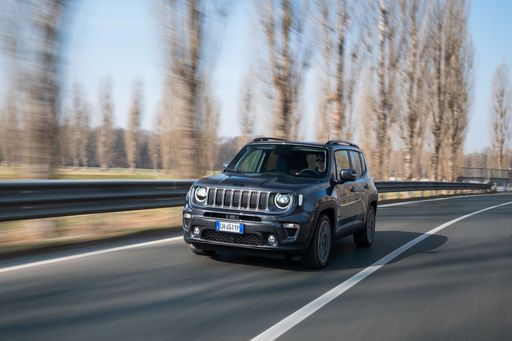
Jeep Renegade
Jeep Renegade
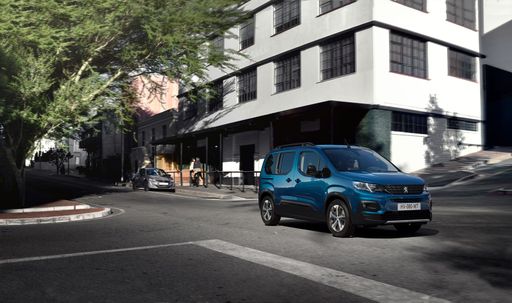
Peugeot Rifter
Costs and Consumption
View detailed analysis
View detailed analysis
Engine and Performance
View detailed analysis
View detailed analysis
Dimensions and Body
View detailed analysis
View detailed analysis
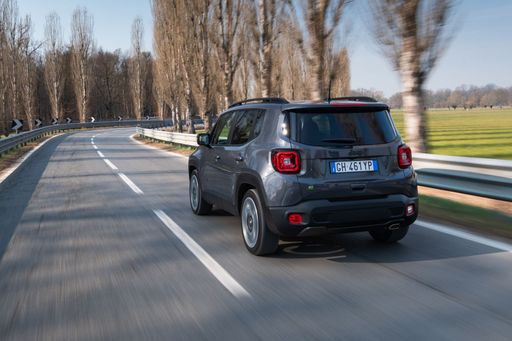
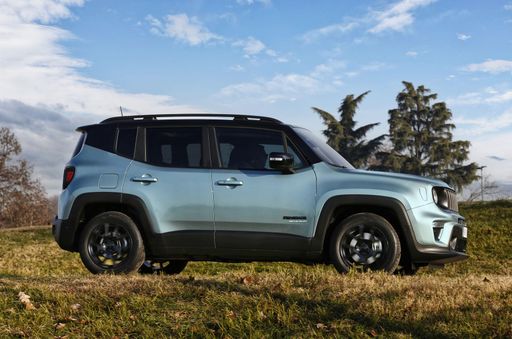
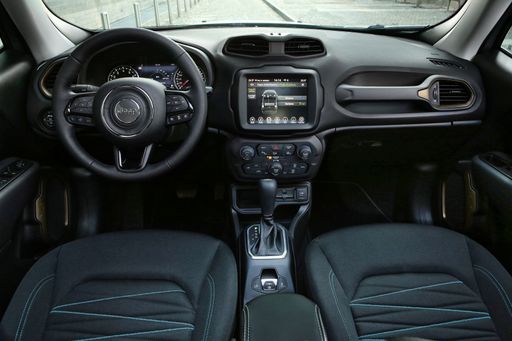
Jeep Renegade
The Jeep Renegade wears its chunky, boxy looks like a badge of character, blending genuine off-road swagger with city-friendly manners so it feels at home on a muddy trail or a tight urban lane. Inside you'll find a surprisingly practical cabin with rugged touches and clever storage, making it a sensible choice for buyers who want a compact SUV with personality rather than just another anonymous crossover.
details

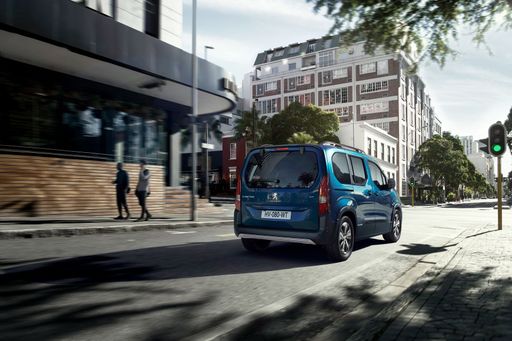
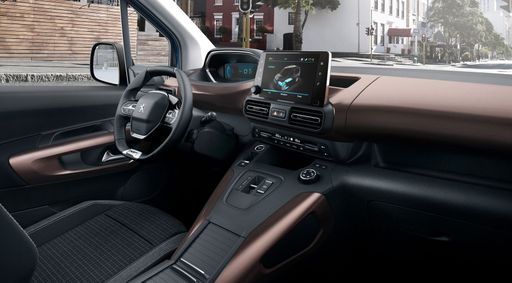
Peugeot Rifter
The Peugeot Rifter is a practical, family-friendly people carrier that makes everyday errands and weekend escapes feel effortless thanks to its airy cabin and clever, flexible interior. With chunky, purposeful styling and storage solutions everywhere, the Rifter manages to be both unashamedly useful and unexpectedly likeable.
details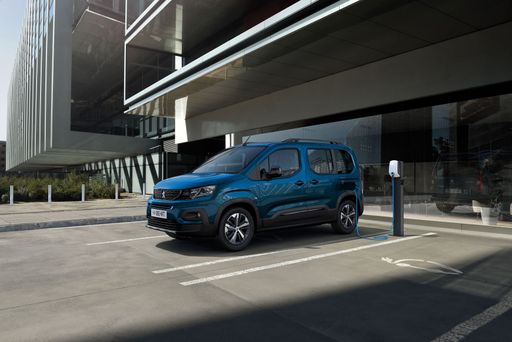
Jeep Renegade
Peugeot Rifter
Costs and Consumption |
|
|---|---|
|
Price
26,700 - 39,200 £
|
Price
22,900 - 30,100 £
|
|
Consumption L/100km
2.1 - 5.5 L/100km
|
Consumption L/100km
5.4 - 6.5 L/100km
|
|
Consumption kWh/100km
-
|
Consumption kWh/100km
-
|
|
Electric Range
36 km
|
Electric Range
-
|
|
Battery Capacity
-
|
Battery Capacity
-
|
|
co2
48 - 125 g/km
|
co2
142 - 157 g/km
|
|
Fuel tank capacity
36 - 48 L
|
Fuel tank capacity
-
|
Dimensions and Body |
|
|---|---|
|
Body Type
SUV
|
Body Type
High Roof Estate
|
|
Seats
5
|
Seats
5 - 7
|
|
Doors
5
|
Doors
-
|
|
Curb weight
1,420 - 1,770 kg
|
Curb weight
1,498 - 1,694 kg
|
|
Trunk capacity
330 - 351 L
|
Trunk capacity
-
|
|
Length
4,236 mm
|
Length
-
|
|
Width
1,805 mm
|
Width
1,848 mm
|
|
Height
1,684 - 1,718 mm
|
Height
-
|
|
Max trunk capacity
1,277 - 1,297 L
|
Max trunk capacity
-
|
|
Payload
545 - 570 kg
|
Payload
518 - 814 kg
|
Engine and Performance |
|
|---|---|
|
Engine Type
Petrol MHEV, Plugin Hybrid
|
Engine Type
Petrol, Diesel
|
|
Transmission
Automatic
|
Transmission
Manuel, Automatic
|
|
Transmission Detail
Dual-Clutch Automatic, Automatic Gearbox
|
Transmission Detail
Manual Gearbox, Automatic Gearbox
|
|
Drive Type
Front-Wheel Drive, All-Wheel Drive
|
Drive Type
Front-Wheel Drive
|
|
Power HP
130 - 240 HP
|
Power HP
102 - 130 HP
|
|
Acceleration 0-100km/h
7.1 - 9.7 s
|
Acceleration 0-100km/h
11.3 - 13.5 s
|
|
Max Speed
191 - 199 km/h
|
Max Speed
-
|
|
Torque
240 Nm
|
Torque
205 - 300 Nm
|
|
Number of Cylinders
4
|
Number of Cylinders
3 - 4
|
|
Power kW
96 - 177 kW
|
Power kW
75 - 96 kW
|
|
Engine capacity
1,332 - 1,469 cm3
|
Engine capacity
1,199 - 1,499 cm3
|
General |
|
|---|---|
|
Model Year
2024
|
Model Year
2026
|
|
CO2 Efficiency Class
D, B
|
CO2 Efficiency Class
E, F
|
|
Brand
Jeep
|
Brand
Peugeot
|
DriveDuel uses data analysis and artificial intelligence to evaluate vehicle data and create content. Content is regularly reviewed and improved.
The displayed prices are estimates based on German list prices, adjusted to the respective country’s VAT. Country-specific registration taxes are not included. This information is not legally binding.