VS

Kia Ceed vs Hyundai i20 comparison

Compare performance (140 HP vs 90 HP), boot space and price (23,500 £ vs 18,600 £ ) at a glance. Find out which car is the better choice for you – Kia Ceed or Hyundai i20?

Kia Ceed vs Hyundai i20: Key differences

Kia Ceed

  • noticeably more power
  • markedly quicker 0–100 km/h

Hyundai i20

4 (1 Reviews)
rate
  • markedly cheaper
  • barely more efficient
  • slightly lighter

All details on performance, efficiency, range and trunk space can be found in the technical comparison below – including user reviews for both models.

Ceed

Hyundai i20 vs Kia Ceed: A Comprehensive Comparison

In the world of compact hatchbacks, the Hyundai i20 and the Kia Ceed stand out as formidable contenders. Both vehicles offer a blend of style, practicality, and advanced technology, making them popular choices among urban drivers. In this article, we will explore the technical aspects, innovations, and overall capabilities of these two impressive models to determine which might be the better choice for you.
i20

Design and Dimensions

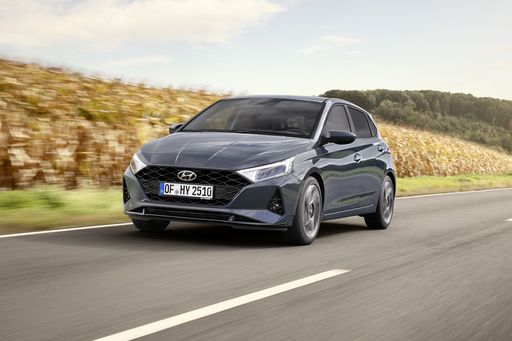
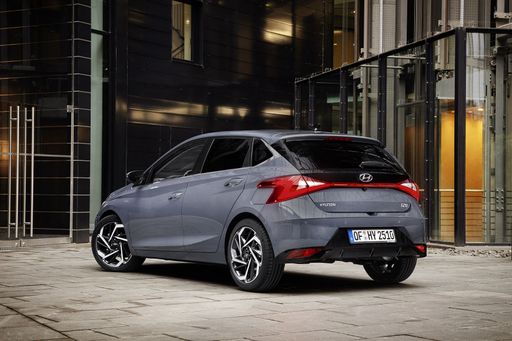
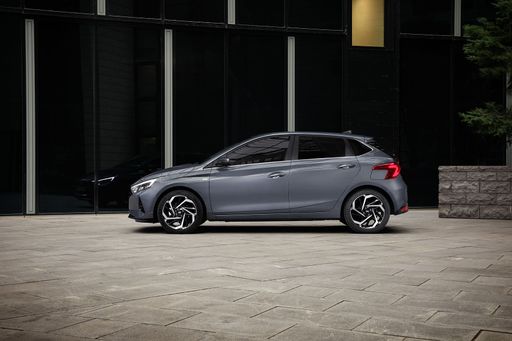
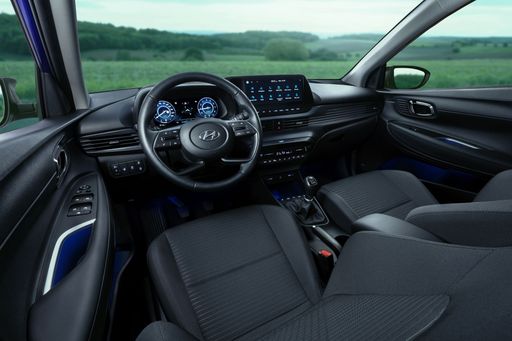
The Hyundai i20 boasts a sporty and distinctive design with a length of 4,075 mm, a width of 1,775 mm, and a height of 1,455 mm. This hatchback embodies a modern aesthetic with sharp lines and a bold front grille that captures attention on the road. It offers a trunk capacity of 352 liters, which is adequate for day-to-day needs.

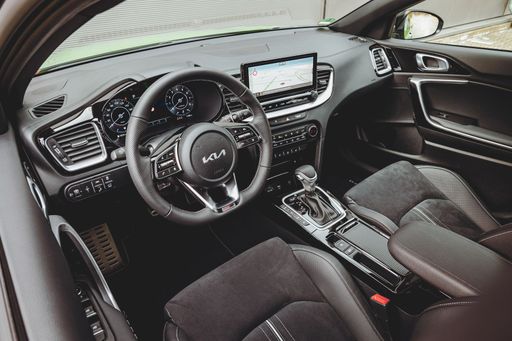
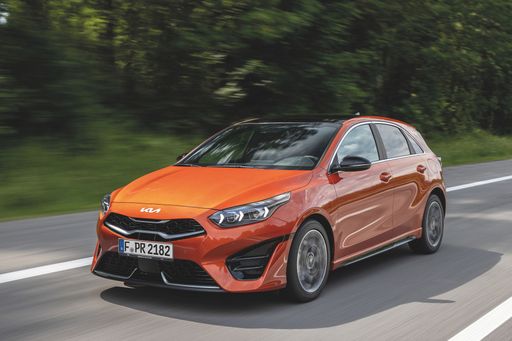
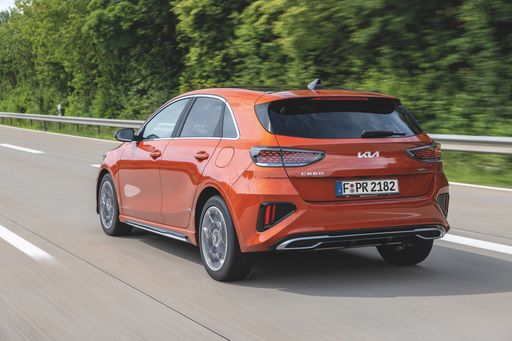
On the other hand, the Kia Ceed is slightly larger, measuring between 4,315 mm to 4,325 mm in length, 1,800 mm in width, and standing between 1,442 to 1,447 mm tall. Its sleek profile and wide stance give it a robust road presence. The trunk space is more generous, ranging from 357 liters to 395 liters, providing additional room for luggage or shopping.

Ceed

Engine Options and Performance

Under the hood, the Hyundai i20 offers two petrol engine options: a 1.0-liter MHEV producing 100 HP and a 1.2-liter engine with 79 HP. This powertrain enables a solid performance, with a 0-100 km/h acceleration time of just 11.1 seconds, and a top speed of 183 km/h. The i20 presents impressive efficiency, achieving a fuel consumption of 5.1 to 5.3 L/100 km.

Conversely, the Kia Ceed comes equipped with a range of engines, including a 1.0-liter MHEV with 100 HP and a more powerful 1.5-liter engine churning out 140 HP. The acceleration performance is notably impressive, with the 1.5-liter variant capable of reaching 0-100 km/h in just 9.5 seconds. The Ceed’s consumption varies from 6.0 to 6.4 L/100 km, which is slightly higher than the i20 but corresponds with its higher performance capabilities.

i20

Transmission and Handling

Both vehicles feature front-wheel drive and offer a choice between manual and automatic transmissions. The i20’s automatic transmission utilizes dual-clutch technology, providing smooth gear shifts and an engaging driving experience. The manual gearbox option also maintains a fun driving appeal for enthusiasts.

The Kia Ceed mirrors this setup with its automatic and manual gear choices. Its handling benefits from a well-tuned suspension system, ensuring responsive maneuverability and comfort on various road conditions, making it an excellent choice for those who enjoy spirited driving.

Ceed

Technology and Innovations

Both the Hyundai i20 and Kia Ceed are equipped with comprehensive technological features. The i20 comes with a modern infotainment system that includes a touchscreen interface, smartphone connectivity, and an array of driver-assistance features aimed at enhancing safety and convenience.

Meanwhile, the Kia Ceed showcases a similar technological array, featuring a high-resolution display, intuitive interface, and robust connectivity options. Advanced safety features such as lane-keeping assist and adaptive cruise control are present in both models, ensuring peace of mind on the road.

i20

Final Thoughts

In summary, both the Hyundai i20 and Kia Ceed offer compelling choices in the hatchback segment. The i20 excels in fuel efficiency and size, making it a great urban companion. On the other hand, the Ceed stands out with its performance capabilities and spaciousness. Ultimately, the choice may boil down to personal preferences regarding style, driving dynamics, and specific needs. Whichever you choose, both vehicles represent solid options in the competitive hatchback market.

Here’s where it gets real: The technical differences in detail

Ceed

Costs and Efficiency:

Looking at overall running costs, both models reveal some interesting differences in everyday economy.

Hyundai i20 is markedly cheaper – starting at 18,600 £ , while the Kia Ceed costs 23,500 £ . That’s a price difference of around 4,877 £.

Fuel consumption also shows a difference: the Hyundai i20 uses 5.7 L/100km and is barely more efficient than the Kia Ceed with 6 L/100km. The difference is about 0.3 L/100km.

i20

Engine and Performance:

Power, torque and acceleration say a lot about how a car feels on the road. This is where you see which model delivers more driving dynamics.

When it comes to engine power, the Kia Ceed offers noticeably more power – delivering 140 HP compared to 90 HP. That’s roughly 50 HP more horsepower.

When accelerating from 0 to 100 km/h, the Kia Ceed is markedly quicker – completing the sprint in 9.5 s, while the Hyundai i20 takes 11.5 s. That’s about 2 s quicker.

There’s also a difference in torque: the Kia Ceed delivers noticeably more torque with 253 Nm compared to 172 Nm. That’s about 81 Nm more.

Ceed

Space and Everyday Use:

Beyond pure performance, interior space and usability matter most in daily life. This is where you see which car is more practical and versatile.

Both vehicles offer seating for 5 people.

In terms of curb weight, Hyundai i20 is slightly lighter – 1,145 kg compared to 1,298 kg. The difference is around 153 kg.

When it comes to payload, the Kia Ceed carries marginally more – 490 kg compared to 465 kg. That’s a difference of about 25 kg.

Who wins the race in the data check?

The Kia Ceed holds a decisive overall lead in the objective data comparison.
This result only shows which model scores more points on paper – not which of the two cars feels right for you.

from £23,500
Ceed

Kia Ceed

  • Engine Type : Petrol, Petrol MHEV
  • Transmission : Manuel, Automatic
  • Drive Type : Front-Wheel Drive
  • Power HP : 100 - 140 HP
  • Consumption L/100km : 6 - 6.4 L/100km
Kia Ceed
Hyundai i20

Costs and Consumption

View detailed analysis

Engine and Performance

View detailed analysis

Dimensions and Body

View detailed analysis

Kia Ceed

The Kia Ceed is a sensible, stylish hatchback that gives buyers more than they'd expect for the money, blending practical space with crisp, modern looks. It drives with measured confidence and comes loaded with user-friendly kit, so you can enjoy daily life behind the wheel without breaking into a sweat.

details

Hyundai i20

The Hyundai i20 is a cheeky small car that mixes smart styling with sensible practicality, feeling more polished and roomy than you might expect for the money. It’s an easy car to live with, offering engaging handling, a comfy cabin and useful equipment that make daily commutes and weekend errands notably less dull.

details
Kia Ceed
Hyundai i20

Costs and Consumption

Price
23,500 - 26,300 £
Price
18,600 - 24,000 £
Consumption L/100km
6 - 6.4 L/100km
Consumption L/100km
5.7 L/100km
Consumption kWh/100km
-
Consumption kWh/100km
-
Electric Range
-
Electric Range
-
Battery Capacity
-
Battery Capacity
-
co2
137 - 146 g/km
co2
128 - 129 g/km
Fuel tank capacity
-
Fuel tank capacity
-

Dimensions and Body

Body Type
Hatchback
Body Type
Hatchback
Seats
5
Seats
5
Doors
-
Doors
-
Curb weight
1,298 - 1,372 kg
Curb weight
1,145 - 1,170 kg
Trunk capacity
-
Trunk capacity
352 L
Length
-
Length
-
Width
1,800 mm
Width
1,775 mm
Height
-
Height
-
Max trunk capacity
-
Max trunk capacity
-
Payload
478 - 490 kg
Payload
455 - 465 kg

Engine and Performance

Engine Type
Petrol, Petrol MHEV
Engine Type
Petrol
Transmission
Manuel, Automatic
Transmission
Manuel, Automatic
Transmission Detail
Manual Gearbox, Dual-Clutch Automatic
Transmission Detail
Manual Gearbox, Dual-Clutch Automatic
Drive Type
Front-Wheel Drive
Drive Type
Front-Wheel Drive
Power HP
100 - 140 HP
Power HP
90 HP
Acceleration 0-100km/h
9.5 - 13.2 s
Acceleration 0-100km/h
11.5 - 12.8 s
Max Speed
-
Max Speed
-
Torque
172 - 253 Nm
Torque
172 Nm
Number of Cylinders
3 - 4
Number of Cylinders
3
Power kW
74 - 103 kW
Power kW
66 kW
Engine capacity
998 - 1,482 cm3
Engine capacity
998 cm3

General

Model Year
2,024
Model Year
2,025
CO2 Efficiency Class
E
CO2 Efficiency Class
D
Brand
Kia
Brand
Hyundai
DriveDuel uses data analysis and artificial intelligence to evaluate vehicle data and create content. Content is regularly reviewed and improved. The displayed prices are estimates based on German list prices, adjusted to the respective country’s VAT. Country-specific registration taxes are not included. This information is not legally binding.