VS

Kia EV2 vs Ford Puma comparison

Compare performance (147 HP vs 168 HP), boot space and price (22,800 £ vs 23,900 £ ) at a glance. Find out which car is the better choice for you – Kia EV2 or Ford Puma?

Kia EV2 vs Ford Puma: Key differences

Kia EV2

3.8 (1 Reviews)
rate
  • marginally cheaper
  • only slightly more electric range
details

Ford Puma

3 (11 Reviews)
rate
  • moderately more power
  • slightly more efficient
  • slightly quicker 0–100 km/h
  • clearly lighter
details

All details on performance, efficiency, range and trunk space can be found in the technical comparison below – including user reviews for both models.

By Achim Sedelmaier

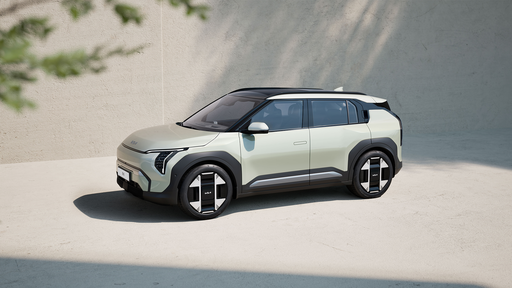
EV2

Ford Puma VS Kia EV2 — a quick take

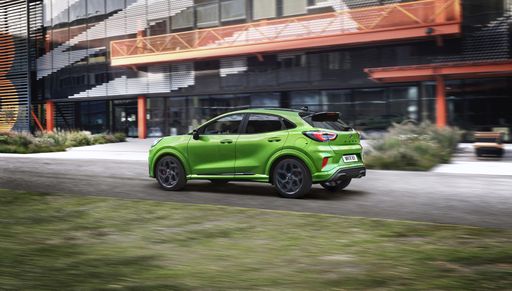
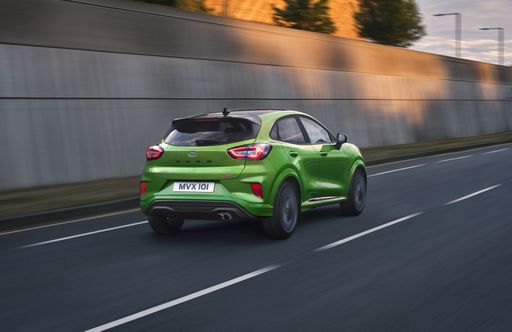
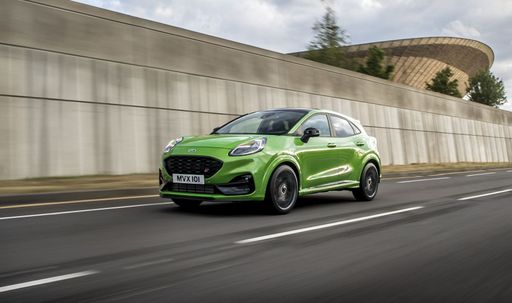
Ford Puma VS Kia EV2 pits a lively, characterful compact crossover against a calm, efficiency-minded electric newcomer. The Ford Puma plays to drivers who want engagement and clever cargo tricks, while the Kia EV2 favors quiet, spacious daily usability and simple controls. That division — sporty practicality versus serene efficiency — runs through cabin feel, highway manners and everyday ergonomics. Read on to see which trade-offs matter for your day-to-day driving.
Puma

Character and driving dynamics

Driving the Ford Puma feels like a small hot‑hatch in SUV clothing: sharp turn‑in, precise steering and a chassis tuned for direction changes, whereas the Kia EV2 prefers to glide rather than provoke, trading immediacy for composure. The Puma rewards those who enjoy cornering and a connected driving experience, but the Kia EV2 gives you confidence through quietness and predictable behaviour rather than steering feedback. If you expect sporty responses around town or on back roads, the Ford Puma will satisfy; if you value relaxed, effortless progress and low fuss, the Kia EV2 will feel better. Both deliver confidence, just in fundamentally different ways — one lively and tactile, the other calm and reassuring.

Comfort and long‑distance behavior

The Kia EV2 is the more comfortable companion for long runs: its supple suspension and hushed electric drive make motorway hours less fatiguing than the firmer, sometimes choppier ride of the Ford Puma. The Puma does offer supportive front seats that hold you in place on spirited drives, but its rear passengers will notice tighter head- and legroom and some engine grumble at lower revs. On long trips the Kia EV2’s serenity and lower cabin noise feel more grown‑up, while the Puma’s sharper setup keeps the driver engaged at the cost of a firmer ride for occupants. If you routinely cover high mileages or carry adults in the rear, the Kia EV2 leans toward comfort; for shorter, dynamic drives the Puma keeps the journey entertaining.

Practicality, cargo and everyday usability

Practicality is a strength for both, but in different registers: the Ford Puma’s clever MegaBox and wide, easy‑loading boot opening make hauling odd‑shaped items simple, while the Kia EV2 trades a shallower but more flexible interior with optional sliding seats and an available front trunk in some trims. The Puma’s load solutions feel immediate and workshop‑practical — great for muddy kit, bikes or a grocery haul — whereas the Kia EV2’s cabin flexibility and usable floor area favour passenger comfort and modular packing. Note the Kia EV2 can have a higher loading lip and a flatter but less deep cargo bay, which changes how bulky items sit. Pick the Puma if you prioritise loading convenience; choose the Kia EV2 if interior adaptability and passenger space are the priority.

Cabin feel, controls and perceived quality

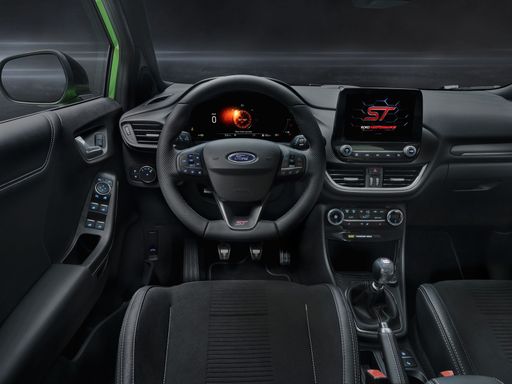
Inside, the Ford Puma projects sporty intent with large screens and a driver‑centric cockpit, but that modern look comes with fewer physical controls and some simpler plastics that can feel less premium than expected. The Kia EV2 presents a quieter, more restrained cabin with physical climate buttons and a clear layout that reduces distraction and gives a more composed impression of quality. Both cars offer strong infotainment connectivity, yet in practice the Puma’s touchscreen‑led approach demands more attention, while the Kia EV2’s tactile controls make routine adjustments easier on the move. If you prefer an engaging, tech‑heavy cockpit accept the trade‑off in materials and buttonless operation in the Puma; if you want straightforward ergonomics and a calm interior, the Kia EV2 will feel more natural day to day.

Who should pick which car — buyer fit and what to check next

Choose the Ford Puma if you’re a driver who values dynamic handling, clever cargo tricks and a compact, fun‑to‑drive personality — it suits solo drivers, couples and active urbanites who occasionally tackle twisty roads. Opt for the Kia EV2 if your priority is low‑stress commuting, passenger comfort and straightforward usability, especially for families or those wanting an electric daily with sensible interior space. Where your typical journeys lean — short, busy urban trips versus longer, quieter motorway miles — will point you to one or the other, and equipment choices will further tilt the balance. Next, the technical comparison breaks down range, charging, power and dimensions that make these practical trade‑offs concrete for your purchase decision.

Here’s where it gets real: The technical differences in detail

EV2

Costs and Efficiency:

Price and efficiency are key factors when choosing a car – and this is often where the real differences emerge.

Kia EV2 is marginally cheaper – starting at 22,800 £ , while the Ford Puma costs 23,900 £ . That’s a price difference of around 1,114 £.

In terms of energy consumption, the Ford Puma is slightly more efficient: consuming 13 kWh/100km compared to 15.1 kWh/100km for the Kia EV2. That’s a difference of about 2.1 kWh/100km.

As for electric range, the Kia EV2 offers only slightly more range – reaching up to 453 km, about 36 km more than the Ford Puma.

Puma

Engine and Performance:

Power, torque and acceleration are the classic benchmarks for car enthusiasts – and here, some clear differences start to show.

When it comes to engine power, the Ford Puma offers moderately more power – delivering 168 HP compared to 147 HP. That’s roughly 21 HP more horsepower.

When accelerating from 0 to 100 km/h, the Ford Puma is slightly quicker – completing the sprint in 7.4 s, while the Kia EV2 takes 8.7 s. That’s about 1.3 s quicker.

There’s also a difference in torque: the Ford Puma delivers somewhat more torque with 290 Nm compared to 250 Nm. That’s about 40 Nm more.

Space and Everyday Use:

Whether family car or daily driver – which one offers more room, flexibility and comfort?

Both vehicles offer seating for 5 people.

In terms of curb weight, Ford Puma is clearly lighter – 1,316 kg compared to 1,620 kg. The difference is around 304 kg.

When it comes to payload, the Kia EV2 carries marginally more – 475 kg compared to 469 kg. That’s a difference of about 6 kg.

Who wins the race in the data check?

The Ford Puma holds a decisive overall lead in the objective data comparison.
This result only shows which model scores more points on paper – not which of the two cars feels right for you.

from £23,900
Puma

Ford Puma

  • Engine Type Petrol MHEV, Electric
  • Transmission Manuel, Automatic
  • Drive Type Front-Wheel Drive
  • Power HP 125 - 168 HP
  • Consumption L/100km 5.4 - 5.9 L/100km
  • Consumption kWh/100km 13 - 13.9 kWh/100km
  • Electric Range 404 - 417 km
Kia EV2
Ford Puma

Costs and Consumption

View detailed analysis

Engine and Performance

View detailed analysis

Dimensions and Body

View detailed analysis

Kia EV2

The Kia EV2 is a compact electric crossover aimed at buyers who want a practical, affordable EV with a modern, well-appointed cabin. It combines comfortable, predictable handling with straightforward tech and efficient everyday usability, making it a sensible choice for daily driving.

details

Ford Puma

The Ford Puma blends sporty styling with practical everyday usability, making it a smart choice for drivers who want flair without sacrificing versatility. Its engaging driving character and clever interior packaging give it a more dynamic and useful feel than many rivals.

details
Kia EV2
Ford Puma

Costs and Consumption

Price
22,800 - 31,600 £
Price
23,900 - 36,300 £
Consumption L/100km
-
Consumption L/100km
5.4 - 5.9 L/100km
Consumption kWh/100km
15.1 - 16.3 kWh/100km
Consumption kWh/100km
13 - 13.9 kWh/100km
Electric Range
317 - 453 km
Electric Range
404 - 417 km
Battery Capacity
-
Battery Capacity
-
co2
0 g/km
co2
0 - 135 g/km
Fuel tank capacity
-
Fuel tank capacity
-

Dimensions and Body

Body Type
SUV
Body Type
SUV
Seats
4 - 5
Seats
5
Doors
-
Doors
-
Curb weight
1,620 - 1,625 kg
Curb weight
1,316 - 1,563 kg
Trunk capacity
-
Trunk capacity
456 - 523 L
Length
-
Length
-
Width
1,800 mm
Width
1,805 mm
Height
-
Height
-
Max trunk capacity
-
Max trunk capacity
-
Payload
400 - 475 kg
Payload
367 - 469 kg

Engine and Performance

Engine Type
Electric
Engine Type
Petrol MHEV, Electric
Transmission
Automatic
Transmission
Manuel, Automatic
Transmission Detail
Reduction Gearbox
Transmission Detail
Manual Gearbox, Dual-Clutch Automatic, Reduction Gearbox
Drive Type
Front-Wheel Drive
Drive Type
Front-Wheel Drive
Power HP
135 - 147 HP
Power HP
125 - 168 HP
Acceleration 0-100km/h
8.7 - 9.7 s
Acceleration 0-100km/h
7.4 - 9.8 s
Max Speed
-
Max Speed
-
Torque
250 Nm
Torque
170 - 290 Nm
Number of Cylinders
-
Number of Cylinders
3
Power kW
100 - 108 kW
Power kW
92 - 124 kW
Engine capacity
-
Engine capacity
999 cm3

General

Model Year
2026
Model Year
2,025 - 2,026
CO2 Efficiency Class
A
CO2 Efficiency Class
D, A
Brand
Kia
Brand
Ford
DriveDuel uses data analysis and artificial intelligence to evaluate vehicle data and create content. Content is regularly reviewed and improved. The displayed prices are estimates based on German list prices, adjusted to the respective country’s VAT. Country-specific registration taxes are not included. This information is not legally binding.