VS

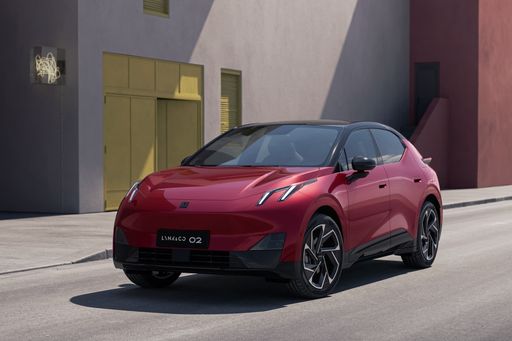
Kia EV3 vs Lynk & Co 02 comparison

Compare performance (204 HP vs 272 HP), boot space and price (30800 £ vs 30900 £ ) at a glance. Find out which car is the better choice for you – Kia EV3 or Lynk & Co 02?

EV3

Electric Showdown: Kia EV3 vs. Lynk & Co 02

The electric vehicle landscape is rapidly evolving, bringing to the forefront two contenders that have struck a chord with eco-conscious drivers craving versatility and performance: the Kia EV3 and the Lynk & Co 02. Both 2024 models, these SUVs are designed to combine cutting-edge technology with impressive driving dynamics. Let’s delve into a detailed comparison to see how they stack up against each other.
02

Design & Dimensions

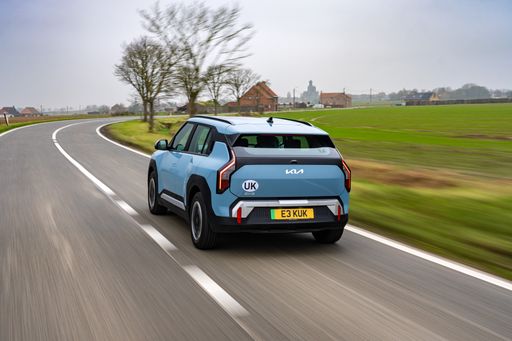
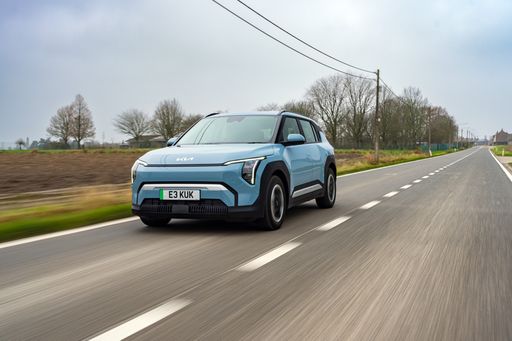
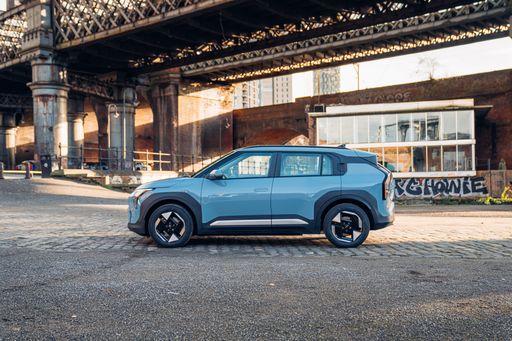
In the design stakes, the Kia EV3 stands out with its compact yet muscular build, measuring between 4300mm and 4310mm in length, and 1850mm wide. It is slightly shorter than its rival, standing between 1560mm and 1570mm tall. These dimensions ensure a comfortable urban maneuverability while still providing ample cabin space.

On the flip side, the Lynk & Co 02 embraces a more elongated silhouette at 4460mm in length, with a similar width of 1845mm. It’s marginally higher at a height of 1573mm, adding to its distinctive presence. Though more substantial, it maintains a sleek profile that appeals to those who prefer a grander exterior.

EV3

Power & Performance

The heart of any electric SUV lies in its performance. The Kia EV3 offers front-wheel drive with a power output of 204 HP, translating to a maximum of 150 kW. It features various battery capacities, leading to ranges between 436 km and an impressive 605 km, depending on the configuration. The acceleration from 0 to 100 km/h varies from 7.5 to 7.9 seconds, showcasing its spirited performance spectrum with a top speed of 170 km/h.

In contrast, the Lynk & Co 02 boasts rear-wheel drive and a more powerful motor with 272 HP, peaking at 200 kW. This allows it to accelerate from 0 to 100 km/h in just 5.5 seconds, catering to thrill-seekers. Its range is slightly less expansive, at 435 km to 445 km, and achieves a top speed of 180 km/h, emphasizing a blend of speed and thrill.

Efficiency & Sustainability

Both vehicles excel in sustainability, holding a CO2 efficiency class of A and producing zero emissions. The Kia EV3 shines with a lower energy consumption rate of 14.9 to 16.2 kWh/100km based on the model variant selected, underscoring its efficiency credentials.

Lynk & Co 02, though slightly heavier on consumption between 17.1 and 17.6 kWh/100km, doesn’t lag far behind and compensates with higher performance metrics. Both manufacturers have succeeded in creating models that align with modern environmental norms.

Interior & Cargo Space

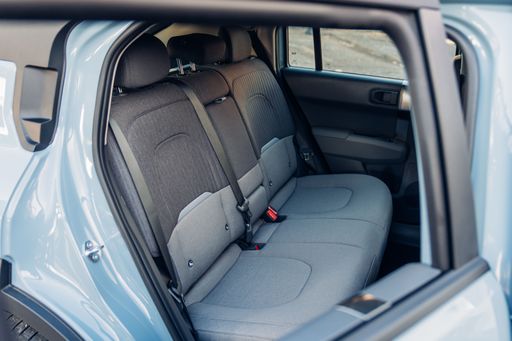
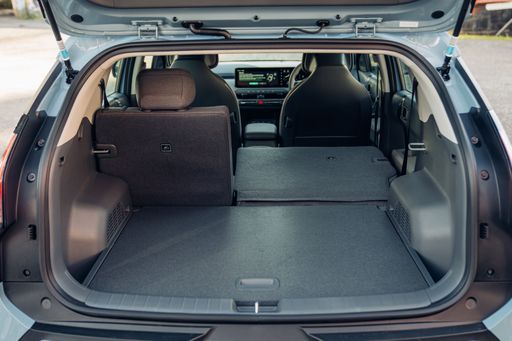
When it comes to interior space, both cars offer seating for five. The Kia EV3, with a trunk capacity of 460 liters, marginally surpasses the Lynk & Co 02’s 410 liters, providing more room for luggage and gear, making it a potentially better option for family travel and long road trips.

While both fall into the SUV category, the difference in trunk space and payload capacities—Kia's 470 kg versus Lynk & Co’s 375 kg—might sway the choice depending on your everyday needs.

Conclusion

Deciding between the Kia EV3 and the Lynk & Co 02 will largely depend on personal preferences and priorities. The EV3 is the epitome of a practical, efficient electric SUV, catering to those who prioritize range and space. Conversely, the 02 presents itself as a more performance-oriented option, targeting enthusiasts who value speed and dynamic driving characteristics.

Ultimately, both models deliver exceptional value in the burgeoning EV market, offering a modern driving experience that aligns with the trends of tomorrow.

Kia EV3 vs Lynk & Co 02: Key differences

Kia EV3

4.7 (3 Reviews)
rate
  • hardly perceptible cheaper
  • a bit more efficient
  • evident more electric range
  • barely noticeable lighter
  • a bit more trunk space

Lynk & Co 02

5 (1 Reviews)
rate
  • distinct more power
  • evident quicker from 0–100 km/h

All details on performance, efficiency, range and trunk space can be found in the technical comparison below – including user reviews for both models.

Here’s where it gets real: The technical differences in detail

Costs and Efficiency:

Price and efficiency are often the first things buyers look at. Here it becomes clear which model has the long-term edge – whether at the pump, the plug, or in purchase price.

Kia EV3 has a hardly perceptible advantage in terms of price – it starts at 30800 £ , while the Lynk & Co 02 costs 30900 £ . That’s a price difference of around 4 £.

In terms of energy consumption, the advantage goes to the Kia EV3: with 14.90 kWh per 100 km, it’s a bit more efficient than the Lynk & Co 02 with 17.10 kWh. That’s a difference of about 2.20 kWh.

As for electric range, the Kia EV3 performs evident better – achieving up to 605 km, about 160 km more than the Lynk & Co 02.

Engine and Performance:

Power, torque and acceleration say a lot about how a car feels on the road. This is where you see which model delivers more driving dynamics.

When it comes to engine power, the Lynk & Co 02 has a distinct edge – offering 272 HP compared to 204 HP. That’s roughly 68 HP more horsepower.

In acceleration from 0 to 100 km/h, the Lynk & Co 02 is evident quicker – completing the sprint in 5.50 s, while the Kia EV3 takes 7.50 s. That’s about 2 s faster.

In terms of top speed, the Lynk & Co 02 performs slight better – reaching 180 km/h, while the Kia EV3 tops out at 170 km/h. The difference is around 10 km/h.

There’s also a difference in torque: Lynk & Co 02 pulls somewhat stronger with 323 Nm compared to 283 Nm. That’s about 40 Nm difference.

Space and Everyday Use:

Cabin size, boot volume and payload all play a role in everyday practicality. Here, comfort and flexibility make the difference.

Both vehicles offer seating for 5 people.

In curb weight, Kia EV3 is barely noticeable lighter – 1800 kg compared to 1895 kg. The difference is around 95 kg.

In terms of boot space, the Kia EV3 offers a bit more room – 460 L compared to 410 L. That’s a difference of about 50 L.

In maximum load capacity, the Lynk & Co 02 performs hardly perceptible better – up to 1349 L, which is about 98 L more than the Kia EV3.

When it comes to payload, Kia EV3 noticeable takes the win – 470 kg compared to 375 kg. That’s a difference of about 95 kg.

Who wins the race in the data check?

The Lynk & Co 02 comes out modestly ahead in the objective data comparison.
This result only shows which model scores more points on paper – not which of the two cars feels right for you.

Kia EV3
Lynk & Co 02

Costs and Consumption

View detailed analysis

Engine and Performance

View detailed analysis

Dimensions and Body

View detailed analysis
from about £30,900
02

Lynk & Co 02

  • Engine Type : Electric
  • Transmission : Automatic
  • Drive Type : Rear-Wheel Drive
  • Power HP : 272 HP
  • Consumption kWh/100km : 17.1 - 17.6 kWh
  • Electric Range : 435 - 445 km

Kia EV3

4.7 (3 Reviews)
rate

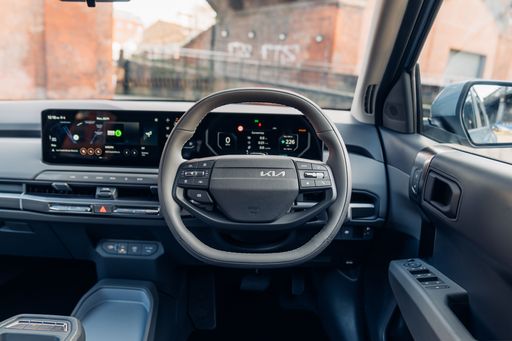
The Kia EV3 arrives as a cheeky, practical electric compact that manages to feel both premium and playful, delivering crisp handling and a roomy cabin that's perfect for urban life. With smart tech, friendly styling and sensible pricing, the EV3 is the kind of car that makes switching to electric feel like a no-brainer without asking you to give anything important up.

details

Lynk & Co 02

5 (1 Reviews)
rate

The Lynk & Co 02 wears its attitude like a leather jacket—bold styling and a youthful cabin that punches above its class, appealing to buyers who want personality as well as practicality. It's a genuinely engaging compact with everyday usability, offering enough flair and refinement to stand out in a crowded market without trying too hard.

details
Kia EV3
Lynk & Co 02

Costs and Consumption

Price
30800 - 41700 £
Price
30900 - 34300 £
Consumption L/100km
-
Consumption L/100km
-
Consumption kWh/100km
14.9 - 16.2 kWh
Consumption kWh/100km
17.1 - 17.6 kWh
Electric Range
436 - 605 km
Electric Range
435 - 445 km
Battery Capacity
58.3 - 81.4 kWh
Battery Capacity
-
co2
0 g/km
co2
0 g/km
Fuel tank capacity
-
Fuel tank capacity
-

Dimensions and Body

Body Type
SUV
Body Type
SUV
Seats
5
Seats
5
Doors
5
Doors
5
Curb weight
1800 - 1885 kg
Curb weight
1895 kg
Trunk capacity
460 L
Trunk capacity
410 L
Length
4300 - 4310 mm
Length
4460 mm
Width
1850 mm
Width
1845 mm
Height
1560 - 1570 mm
Height
1573 mm
Max trunk capacity
1251 L
Max trunk capacity
1349 L
Payload
470 kg
Payload
375 kg

Engine and Performance

Engine Type
Electric
Engine Type
Electric
Transmission
Automatic
Transmission
Automatic
Transmission Detail
Reduction Gearbox
Transmission Detail
Reduction Gearbox
Drive Type
Front-Wheel Drive
Drive Type
Rear-Wheel Drive
Power HP
204 HP
Power HP
272 HP
Acceleration 0-100km/h
7.5 - 7.9 s
Acceleration 0-100km/h
5.50 s
Max Speed
170 km/h
Max Speed
180 km/h
Torque
283 Nm
Torque
323 Nm
Number of Cylinders
-
Number of Cylinders
-
Power kW
150 kW
Power kW
200 kW
Engine capacity
-
Engine capacity
-

General

Model Year
2024
Model Year
2024
CO2 Efficiency Class
A
CO2 Efficiency Class
A
Brand
Kia
Brand
Lynk & Co
What drive types are available for the Kia EV3?

The Kia EV3 is offered with Front-Wheel Drive.

The prices shown are estimates based on German list prices, adjusted for local VAT. Local registration taxes (e.g. NoVA, BPM or CO2 malus) are not included. This information is not legally binding.