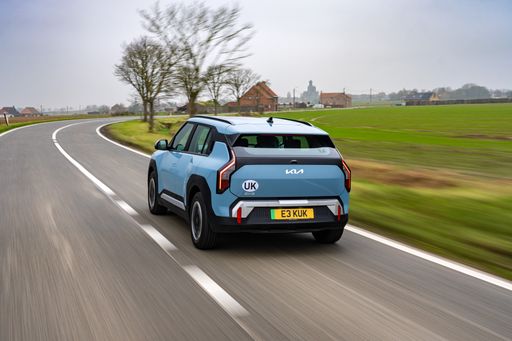
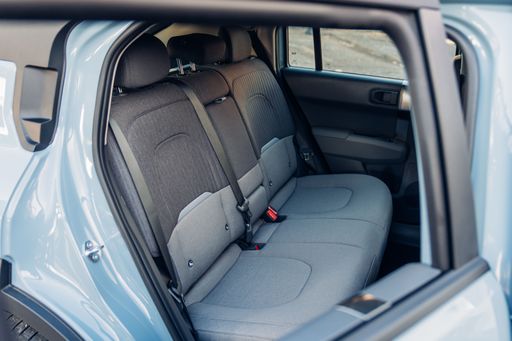
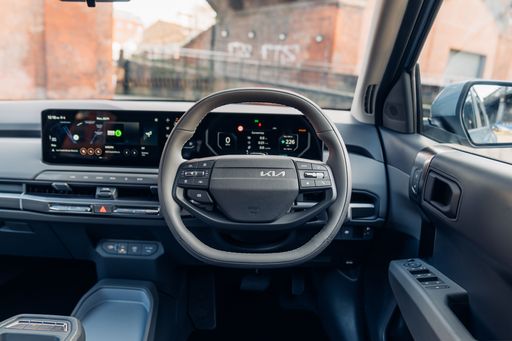
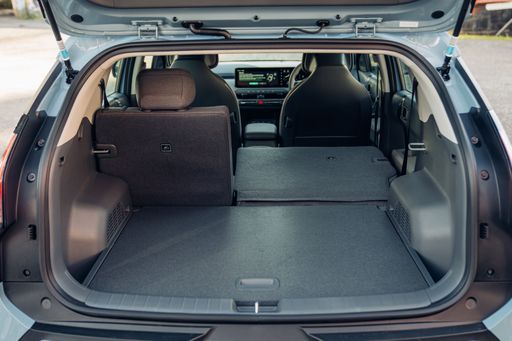
@ Kia Corporation
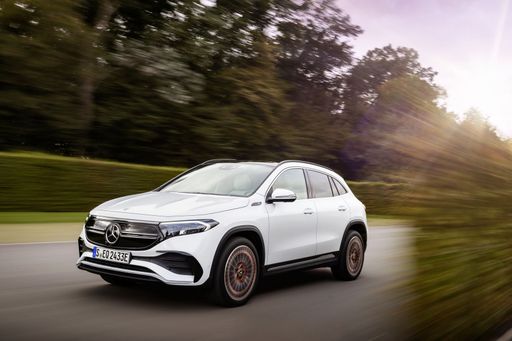
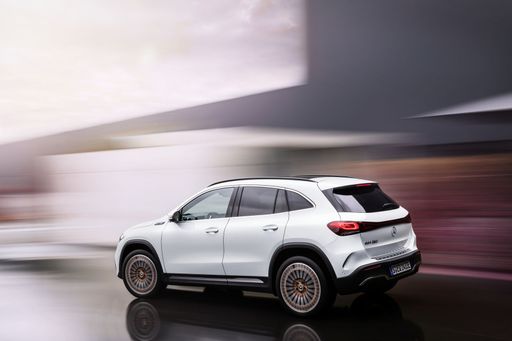
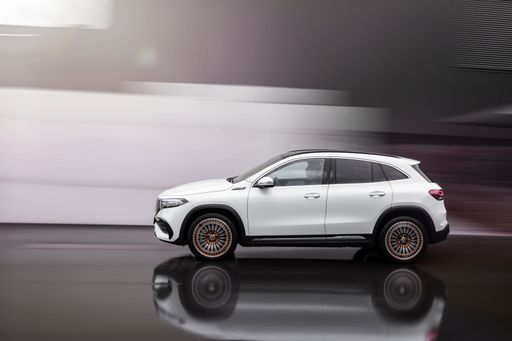
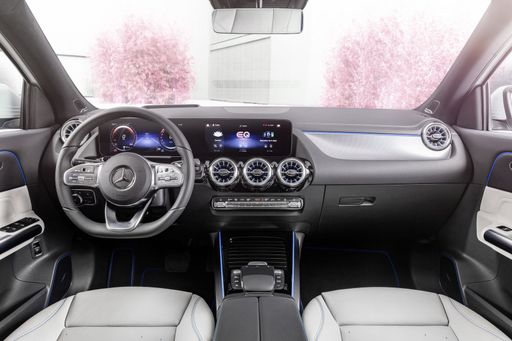
@ Mercedes-Benz Group Media
VS

Kia EV3 vs Mercedes EQA – Which one offers the better deal?

Everyday use, family trips or long-distance drives – here’s where the differences show.
Discover whether Kia EV3 or Mercedes EQA fits your lifestyle better.

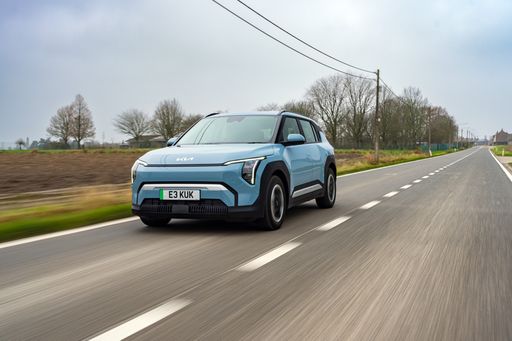
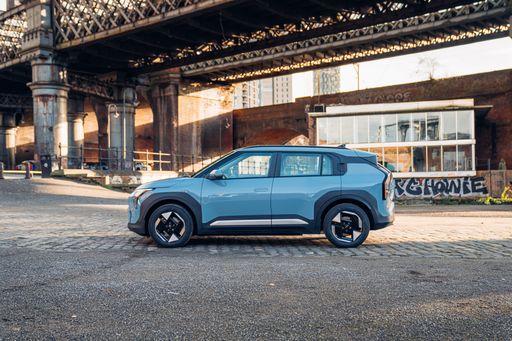
EV3 @ Kia Corporation

As electric vehicles continue to reshape the automotive landscape, two models are making noise in the compact SUV segment: the Kia EV3 and the Mercedes EQA. This head-to-head comparison outlines the key features, performance metrics, and innovations that set these electric SUVs apart.
EQA @ Mercedes-Benz Group Media

Powertrain and Performance

The Kia EV3 offers commendable performance with up to 204 horsepower and a torque rating of 283 Nm. It utilizes a front-wheel-drive layout and is equipped with an automatic transmission featuring a reduction gearbox. The EV3 can accelerate from 0 to 100 km/h in a swift 7.5 seconds and has a maximum speed of 170 km/h.

In contrast, the Mercedes EQA, with variations ranging from 190 to an impressive 292 horsepower, boasts a torque output that can reach 520 Nm in its most powerful configuration. The EQA is available in both front-wheel and all-wheel-drive variants, providing versatility and enhanced traction. Acceleration varies by model, with the quickest option reaching 0 to 100 km/h in a mere 6 seconds. However, it is limited to a top speed of 160 km/h.

EV3 @ Kia Corporation

Battery and Range Efficiency

The EV3 has two battery options: a 58.3 kWh and a larger 81.4 kWh, offering electric ranges of 436 km and 605 km, respectively. Its energy consumption is quite efficient, ranging between 14.9 kWh/100 km and 16.2 kWh/100 km, depending on the model.

The EQA, on the other hand, comes with a choice of battery capacities of 66.5 kWh or 70.5 kWh, delivering a range between 458 km and 561 km. Its energy consumption is also competitive, with ratings from 14.4 kWh/100 km up to 16.9 kWh/100 km. While both SUVs showcase remarkable ranges, the Kia EV3 has a slight edge with its higher capacity battery offering a longer range.

EQA @ Mercedes-Benz Group Media

Interior Space and Comfort

Both models accommodate five passengers, but the configurations differ when it comes to interior space and cargo capacity. The Kia EV3 sports a trunk capacity of 460 liters, providing ample room for luggage and groceries. Its dimensions of 4300 mm in length and 1850 mm in width ensure a spacious feel inside.

The EQA, with its slightly larger dimensions at 4463 mm in length and 1834 mm in width, offers a trunk capacity of 340 liters. While the Mercedes-Benz SUV delivers luxury and advanced features, it falls short in cargo space compared to its Kia counterpart, making the EV3 more practical for family and leisure activities.

EV3 @ Kia Corporation

Innovative Technology and Features

In terms of technology, both the Kia EV3 and the Mercedes EQA are equipped with state-of-the-art features. The EV3 comes with a user-friendly infotainment system and offers advanced driver-assistance features, aimed at enhancing safety and convenience.

The Mercedes EQA stands out with its luxurious interior, high-quality materials, and a sophisticated infotainment system featuring the MBUX interface. It brings to the table intelligent navigation systems, voice control, and a suite of driver-assistance technologies. While the EQA embodies a more premium experience, the EV3 provides a functional and reliable tech suite without compromising on comfort.

EQA @ Mercedes-Benz Group Media

Conclusion

The battle between the Kia EV3 and Mercedes EQA showcases two distinct approaches to electric SUVs. The EV3 impresses with its practicality, longer electric range, and slightly more powerful setup, while the EQA presents a premium experience with advanced technology and luxury features. Ultimately, the choice hinges on the buyer’s preferences—whether prioritizing performance, practicality, or luxury. Both models stand as formidable contenders in the burgeoning electric vehicle market, paving the way for a more sustainable driving future.

Here’s where it gets real: The technical differences in detail

Costs and Efficiency:

When it comes to price and running costs, the biggest differences usually appear. This is often where you see which car fits your budget better in the long run.

Kia EV3 has a significantly advantage in terms of price – it starts at 30800 £, while the Mercedes EQA costs 44200 £. That’s a price difference of around 13389 £.

In terms of energy consumption, the advantage goes to the Mercedes EQA: with 14.40 kWh per 100 km, it’s barely noticeable more efficient than the Kia EV3 with 14.90 kWh. That’s a difference of about 0.50 kWh.

As for range, the Kia EV3 performs hardly perceptible better – achieving up to 605 km, about 44 km more than the Mercedes EQA.

Engine and Performance:

Power, torque and acceleration are the classic benchmarks for car enthusiasts – and here, some clear differences start to show.

When it comes to engine power, the Mercedes EQA has a clearly perceptible edge – offering 292 HP compared to 204 HP. That’s roughly 88 HP more horsepower.

In acceleration from 0 to 100 km/h, the Mercedes EQA is clearly perceptible quicker – completing the sprint in 6 s, while the Kia EV3 takes 7.50 s. That’s about 1.50 s faster.

In terms of top speed, the Kia EV3 performs barely noticeable better – reaching 170 km/h, while the Mercedes EQA tops out at 160 km/h. The difference is around 10 km/h.

There’s also a difference in torque: Mercedes EQA pulls decisively stronger with 520 Nm compared to 283 Nm. That’s about 237 Nm difference.

Space and Everyday Use:

Whether family car or daily driver – which one offers more room, flexibility and comfort?

Both vehicles offer seating for 5 people.

In curb weight, Kia EV3 is a bit lighter – 1800 kg compared to 2045 kg. The difference is around 245 kg.

In terms of boot space, the Kia EV3 offers distinct more room – 460 L compared to 340 L. That’s a difference of about 120 L.

In maximum load capacity, the Mercedes EQA performs minimal better – up to 1320 L, which is about 69 L more than the Kia EV3.

When it comes to payload, Kia EV3 barely noticeable takes the win – 470 kg compared to 425 kg. That’s a difference of about 45 kg.

Who wins the race?

The Mercedes EQA proves to be edges ahead and therefore becomes our DriveDuel Champion!
Mercedes EQA is the better all-rounder in this comparison.

from about £44,200
EQA @ Mercedes-Benz Group Media

Mercedes EQA

  • Engine Type : Electric
  • Transmission : Automatic
  • Drive Type : Front-Wheel Drive, All-Wheel Drive
  • Power HP : 190 - 292 HP
  • Consumption kWh/100km : 14.4 - 16.9 kWh
  • Electric Range : 476 - 561 km

Kia EV3

5 (1)
rate

The Kia EV3 arrives as a cheeky, practical electric compact that manages to feel both premium and playful, delivering crisp handling and a roomy cabin that's perfect for urban life. With smart tech, friendly styling and sensible pricing, the EV3 is the kind of car that makes switching to electric feel like a no-brainer without asking you to give anything important up.

details

Mercedes EQA

5 (1)
rate

The Mercedes EQA slips into the electric crossover ranks with the brand’s familiar luxury polish, offering a quiet, fuss-free drive that feels perfectly at home in the city or on a country escape. Inside it’s neatly finished and tech-forward, projecting grown-up refinement even if it plays things a bit safe for anyone chasing outright excitement.

details
Kia EV3
Mercedes EQA
EV3 @ Kia Corporation
EQA @ Mercedes-Benz Group Media

Costs and Consumption

Price
30800 - 41700 £
Price
44200 - 57400 £
Consumption L/100km
-
Consumption L/100km
-
Consumption kWh/100km
14.9 - 16.2 kWh
Consumption kWh/100km
14.4 - 16.9 kWh
Electric Range
436 - 605 km
Electric Range
476 - 561 km
Battery Capacity
58.3 - 81.4 kWh
Battery Capacity
70.50 kWh
co2
0 g/km
co2
0 g/km
Fuel tank capacity
-
Fuel tank capacity
-

Dimensions and Body

Body Type
SUV
Body Type
SUV
Seats
5
Seats
5
Doors
5
Doors
5
Curb weight
1800 - 1885 kg
Curb weight
2045 - 2115 kg
Trunk capacity
460 L
Trunk capacity
340 L
Length
4300 - 4310 mm
Length
4463 mm
Width
1850 mm
Width
1834 mm
Height
1560 - 1570 mm
Height
1608 - 1613 mm
Max trunk capacity
1251 L
Max trunk capacity
1320 L
Payload
470 kg
Payload
425 kg

Engine and Performance

Engine Type
Electric
Engine Type
Electric
Transmission
Automatic
Transmission
Automatic
Transmission Detail
Reduction Gearbox
Transmission Detail
Reduction Gearbox
Drive Type
Front-Wheel Drive
Drive Type
Front-Wheel Drive, All-Wheel Drive
Power HP
204 HP
Power HP
190 - 292 HP
Acceleration 0-100km/h
7.5 - 7.9 s
Acceleration 0-100km/h
6 - 8.6 s
Max Speed
170 km/h
Max Speed
160 km/h
Torque
283 Nm
Torque
385 - 520 Nm
Number of Cylinders
-
Number of Cylinders
-
Power kW
150 kW
Power kW
140 - 215 kW
Engine capacity
-
Engine capacity
-

General

Model Year
2024
Model Year
2024 - 2025
CO2 Efficiency Class
A
CO2 Efficiency Class
A
Brand
Kia
Brand
Mercedes-Benz
What drive types are available for the Kia EV3?

The Kia EV3 is offered with Front-Wheel Drive.

The prices and data displayed are estimates based on German list prices and may vary by country. This information is not legally binding.