VS

Kia EV6 vs Peugeot 3008 comparison

Compare performance (609 HP vs 325 HP), boot space and price (38,600 £ vs 35,100 £ ) at a glance. Find out which car is the better choice for you – Kia EV6 or Peugeot 3008?

Kia EV6 vs Peugeot 3008: Key differences

Kia EV6

5 (3 Reviews)
rate
  • considerably more power
  • very slightly more efficient
  • considerably quicker 0–100 km/h

Peugeot 3008

3 (6 Reviews)
rate
  • only slightly cheaper
  • slightly more electric range
  • a bit lighter
  • very slightly more trunk space

All details on performance, efficiency, range and trunk space can be found in the technical comparison below – including user reviews for both models.

By Achim Sedelmaier

EV6

Electrifying Matchup: Kia EV6 vs Peugeot 3008

The automotive industry is rapidly shifting towards electrification, and two SUVs making waves in this transition are the Kia EV6 and the Peugeot 3008. This article delves into their technical aspects, innovations, and what these vehicles offer to potential buyers. Let's break down their features to see how they stack up against each other in the battle of electrified SUVs.
3008

Performance and Power

The Kia EV6 is a powerhouse in the electric vehicle domain, boasting multiple power outputs ranging from 170 HP to a staggering 609 HP. With an acceleration of 0-100 km/h in just 3.5 seconds in its top variant, the EV6 demonstrates impressive performance akin to sports cars. The torque ranges from 350 Nm to 770 Nm, providing rapid acceleration and a thrilling drive.

On the other hand, the Peugeot 3008 offers diverse engine types, including petrol MHEV, plug-in hybrid, and fully electric options. Power outputs range from 136 HP to 231 HP, with the plug-in hybrid variant offering a decent acceleration time of 8.4 seconds for 0-100 km/h. While not as swift as the EV6, the 3008 still delivers capable performance tailored for a variety of driving conditions.

EV6

Range and Efficiency

The Kia EV6 excels in range, with its variants offering between 428 km to 582 km on a single charge. This makes it a formidable contender for long-distance travelers. It achieves this with a consumption rate of between 15.9 kWh/100 km and 20.9 kWh/100 km, showcasing Kia's commitment to efficiency in a powerful package.

The Peugeot 3008's electric variant is revolutionary in its class, offering an impressive electric range of up to 698 km, setting new benchmarks for efficiency. The hybrid versions deliver an economical performance with consumption figures as low as 5.7 L/100 km for petrol engines and 0.9 L/100 km for hybrids, making it an attractive option for environmentally-conscious consumers.

3008

Design and Dimensions

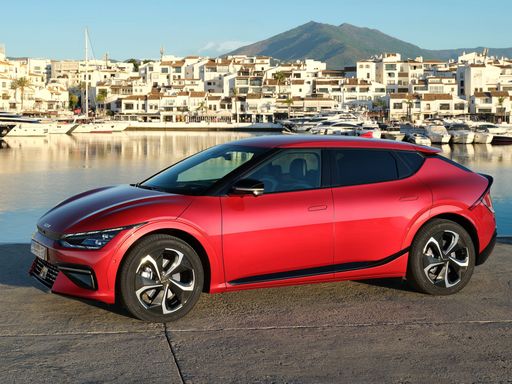
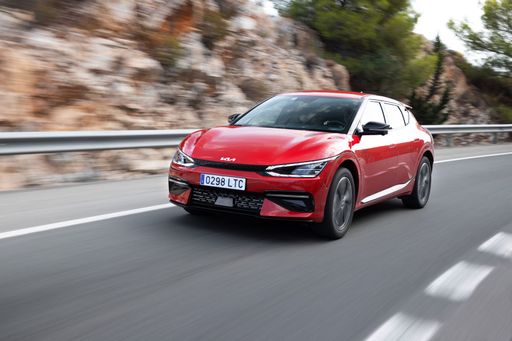
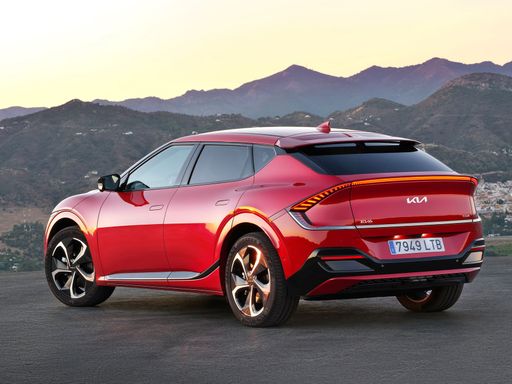
The Kia EV6 has a sleek, futuristic design with dimensions featuring a length of 4695 mm, width of 1880 mm to 1890 mm, and a height of 1545 mm to 1550 mm. Its striking appearance is complemented by its spacious interior accommodating up to five passengers.

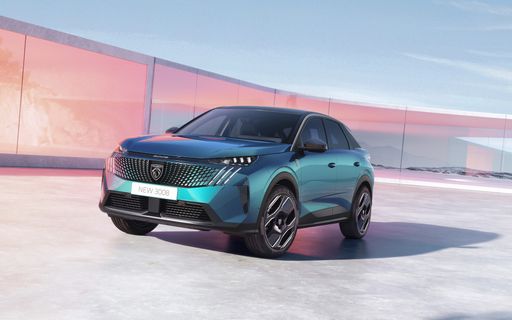
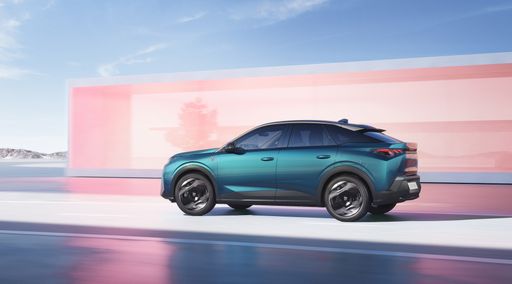
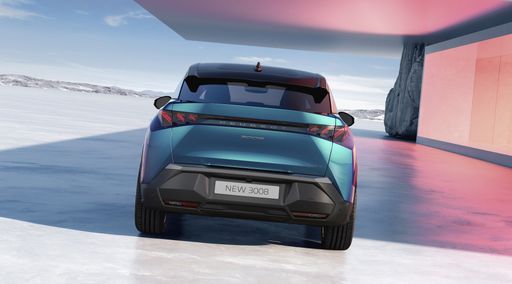
Meanwhile, the Peugeot 3008 presents a bold and robust SUV presence with a length of 4542 mm, a width of 1895 mm, and a taller height of 1641 mm. It also features ample space for passengers and cargo, with a trunk capacity of 520 L, underscoring its practicality.

EV6

Innovations and Technology

The Kia EV6 is equipped with the latest in automotive technology, featuring a reduction gearbox-transmission, rear-wheel drive or all-wheel drive options, and advanced safety features. Its futuristic interior design houses digital displays and connectivity options, enhancing the driving experience.

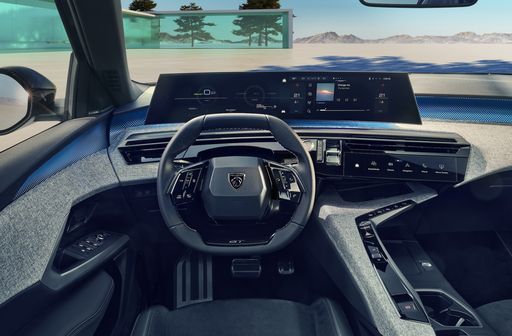
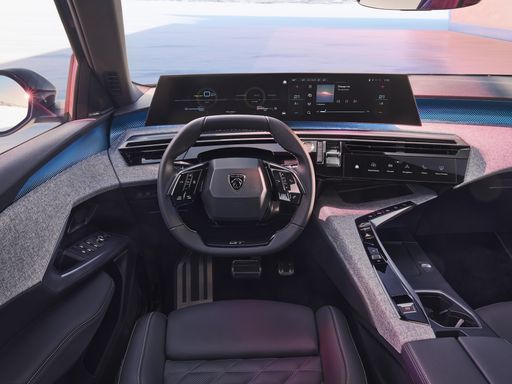
The Peugeot 3008, with its choice of dual-clutch automatic and reduction gearbox transmission, enhances drivability and fuel efficiency. The car is packed with innovations such as its i-Cockpit, offering a driver-focused experience with its digital dashboard and modern connectivity options that meet the demands of today's tech-savvy drivers.

3008

Conclusion

Both the Kia EV6 and the Peugeot 3008 offer substantial contributions to the electric SUV market. The EV6 excels in power and performance, appealing to those seeking exhilarating driving experiences. Meanwhile, the 3008 is ideal for those prioritizing efficiency and versatility in their daily drives. Ultimately, the choice between these two will depend on personal preferences, with each model bringing unique strengths to the table in the evolving landscape of automotive innovation.

Here’s where it gets real: The technical differences in detail

EV6

Costs and Efficiency:

Looking at overall running costs, both models reveal some interesting differences in everyday economy.

Peugeot 3008 is only slightly cheaper – starting at 35,100 £ , while the Kia EV6 costs 38,600 £ . That’s a price difference of around 3,420 £.

In terms of energy consumption, the Kia EV6 is very slightly more efficient: consuming 15.9 kWh/100km compared to 16.9 kWh/100km for the Peugeot 3008. That’s a difference of about 1 kWh/100km.

As for electric range, the Peugeot 3008 offers slightly more range – reaching up to 698 km, about 116 km more than the Kia EV6.

3008

Engine and Performance:

Power, torque and acceleration say a lot about how a car feels on the road. This is where you see which model delivers more driving dynamics.

When it comes to engine power, the Kia EV6 offers considerably more power – delivering 609 HP compared to 325 HP. That’s roughly 284 HP more horsepower.

When accelerating from 0 to 100 km/h, the Kia EV6 is considerably quicker – completing the sprint in 3.5 s, while the Peugeot 3008 takes 6 s. That’s about 2.5 s quicker.

Looking at top speed, the Peugeot 3008 is barely faster – reaching 201 km/h, while the Kia EV6 tops out at 188 km/h. The difference is around 13 km/h.

There’s also a difference in torque: the Kia EV6 delivers clearly more torque with 770 Nm compared to 511 Nm. That’s about 259 Nm more.

EV6

Space and Everyday Use:

Cabin size, boot volume and payload all play a role in everyday practicality. Here, comfort and flexibility make the difference.

Both vehicles offer seating for 5 people.

In terms of curb weight, Peugeot 3008 is a bit lighter – 1,648 kg compared to 1,955 kg. The difference is around 307 kg.

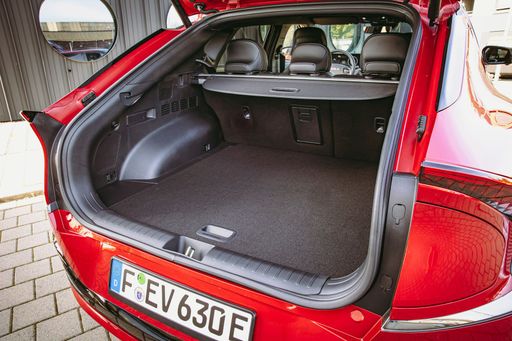
Looking at boot space, the Peugeot 3008 offers very slightly more boot space – 520 L compared to 490 L. That’s a difference of about 30 L.

For maximum load capacity, the Peugeot 3008 offers slightly more capacity – up to 1,480 L, about 190 L more than the Kia EV6.

When it comes to payload, the Peugeot 3008 carries very slightly more – 467 kg compared to 450 kg. That’s a difference of about 17 kg.

Who wins the race in the data check?

The Kia EV6 is clearly superior overall in the objective data comparison.
This result only shows which model scores more points on paper – not which of the two cars feels right for you.

from £38,600
EV6

Kia EV6

  • Engine Type : Electric
  • Transmission : Automatic
  • Drive Type : Rear-Wheel Drive, All-Wheel Drive
  • Power HP : 170 - 609 HP
  • Consumption kWh/100km : 15.9 - 20.9 kWh/100km
  • Electric Range : 428 - 582 km
Kia EV6
Peugeot 3008

Costs and Consumption

View detailed analysis

Engine and Performance

View detailed analysis

Dimensions and Body

View detailed analysis

Kia EV6

The Kia EV6 looks like it sprinted off a concept stage, its bold, futuristic lines wrapping a surprisingly spacious and grown-up cabin. On the road it delivers crisp, immediate thrust and composed handling, with enough everyday practicality and slick tech to make ditching petrol feel like an upgrade rather than a compromise.

details

Peugeot 3008

The Peugeot 3008 blends bold French styling with a surprisingly grown-up interior that makes even dull commutes feel a little bit special. Practical enough for family life yet lively to drive, it’s a clever all‑rounder that stands out from the crossover crowd without shouting for attention.

details
Kia EV6
Peugeot 3008

Costs and Consumption

Price
38,600 - 60,000 £
Price
35,100 - 52,000 £
Consumption L/100km
-
Consumption L/100km
2.4 - 5.4 L/100km
Consumption kWh/100km
15.9 - 20.9 kWh/100km
Consumption kWh/100km
16.9 - 17.6 kWh/100km
Electric Range
428 - 582 km
Electric Range
81 - 698 km
Battery Capacity
63 - 84 kWh
Battery Capacity
0.4 - 96.9 kWh
co2
0 g/km
co2
0 - 121 g/km
Fuel tank capacity
-
Fuel tank capacity
55 L

Dimensions and Body

Body Type
SUV
Body Type
SUV
Seats
5
Seats
5
Doors
5
Doors
5
Curb weight
1,955 - 2,220 kg
Curb weight
1,648 - 2,266 kg
Trunk capacity
480 - 490 L
Trunk capacity
470 - 520 L
Length
4,695 mm
Length
4,542 mm
Width
1,880 - 1,890 mm
Width
1,895 mm
Height
1,550 mm
Height
1,641 mm
Max trunk capacity
1,290 L
Max trunk capacity
1,430 - 1,480 L
Payload
440 - 450 kg
Payload
432 - 467 kg

Engine and Performance

Engine Type
Electric
Engine Type
Electric, Petrol MHEV, Plugin Hybrid
Transmission
Automatic
Transmission
Automatic
Transmission Detail
Reduction Gearbox
Transmission Detail
Reduction Gearbox, Dual-Clutch Automatic
Drive Type
Rear-Wheel Drive, All-Wheel Drive
Drive Type
Front-Wheel Drive, All-Wheel Drive
Power HP
170 - 609 HP
Power HP
145 - 325 HP
Acceleration 0-100km/h
3.5 - 8.7 s
Acceleration 0-100km/h
6 - 10.2 s
Max Speed
185 - 188 km/h
Max Speed
170 - 201 km/h
Torque
350 - 770 Nm
Torque
230 - 511 Nm
Number of Cylinders
-
Number of Cylinders
3 - 4
Power kW
125 - 448 kW
Power kW
107 - 239 kW
Engine capacity
-
Engine capacity
1,199 - 1,598 cm3

General

Model Year
2,024 - 2,025
Model Year
2,024 - 2,026
CO2 Efficiency Class
A
CO2 Efficiency Class
A, D, B
Brand
Kia
Brand
Peugeot
DriveDuel uses data analysis and artificial intelligence to evaluate vehicle data and create content. Content is regularly reviewed and improved. The displayed prices are estimates based on German list prices, adjusted to the respective country’s VAT. Country-specific registration taxes are not included. This information is not legally binding.