VS

Kia EV9 vs Audi Q6 e-tron comparison

Compare performance (508 HP vs 490 HP), boot space and price (54,200 £ vs 54,400 £ ) at a glance. Find out which car is the better choice for you – Kia EV9 or Audi Q6 e-tron?

Kia EV9 vs Audi Q6 e-tron: Key differences

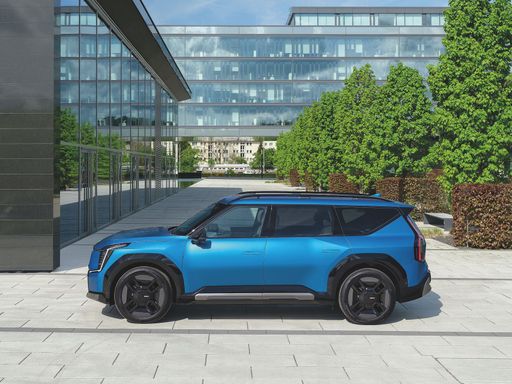
Kia EV9

5 (1 Reviews)
rate
  • barely cheaper
  • barely more power

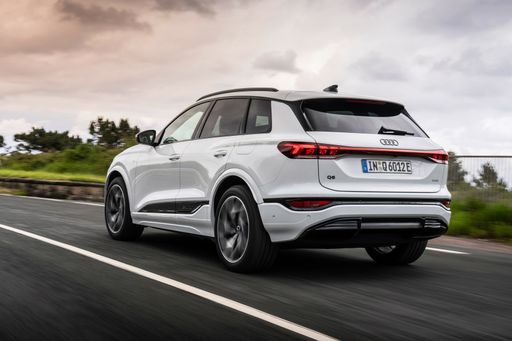
Audi Q6 e-tron

4.9 (3 Reviews)
rate
  • markedly more efficient
  • somewhat more electric range
  • marginally quicker 0–100 km/h
  • only slightly lighter
  • visibly more trunk space

All details on performance, efficiency, range and trunk space can be found in the technical comparison below – including user reviews for both models.

EV9

Audi Q6 e-tron vs. Kia EV9: A Battle of Electric SUVs

The electric vehicle (EV) market is rapidly evolving, with several manufacturers introducing impressive models that combine technology, design, and sustainability. Among them, the Audi Q6 e-tron and Kia EV9 stand out as strong contenders in the electric SUV segment. This article provides a comprehensive comparison of these two innovative vehicles, focusing on their technical aspects and innovations.
Q6 e-tron

Performance and Powertrain

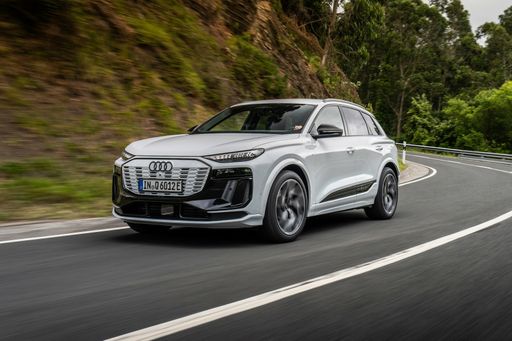
The Audi Q6 e-tron offers a range of power options, boasting electric motors that deliver between 292 and 516 HP, depending on the configuration. This allows for impressive acceleration times ranging from 4.3 seconds for the top variants to 7 seconds for the entry models. In contrast, the Kia EV9's power ranges from 204 HP to a robust 385 HP, with acceleration times peaking at an impressive 5.3 seconds.

Both vehicles feature automatic transmissions with a reduction gearbox, ensuring smooth gear transitions. The Q6 e-tron’s dual drive options, including rear-wheel and all-wheel drive, grant it versatility on various terrains. Meanwhile, the EV9 is available in similar configurations, allowing drivers significant control over their driving experience.

EV9

Battery Capacity and Electric Range

Charging infrastructure and battery efficiency are critical factors in EV ownership. The Audi Q6 e-tron comes with battery capacities of 75.8 kWh to 94.9 kWh, providing an electric range that varies from approximately 484 km to an impressive 656 km. This range makes it suitable for long trips without frequent recharging stops.

On the other hand, the Kia EV9 features a larger battery capacity of 99.8 kWh, allowing for a maximum electric range of up to 563 km. While the EV9's range is slightly lower than the Q6 e-tron’s maximum, it still offers ample distance for daily commuting and weekend getaways.

Q6 e-tron

Efficiency and Environmental Impact

The Audi Q6 e-tron excels in energy efficiency, consuming between 15.6 kWh to 18.9 kWh per 100 km, demonstrating Audi's commitment to sustainability without compromising performance. The Kia EV9, while slightly less efficient, still shows competitive consumption rates of between 20.2 kWh to 22.8 kWh per 100 km, aligning with its spacious design and performance demands.

Both models fall under CO2 efficiency class A, reinforcing their eco-friendly profiles by producing zero emissions during operation.

EV9

Dimensions and Interior Space

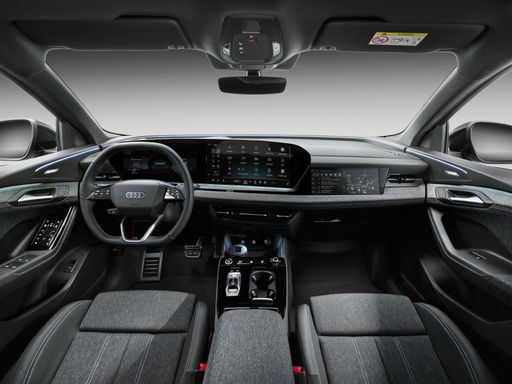
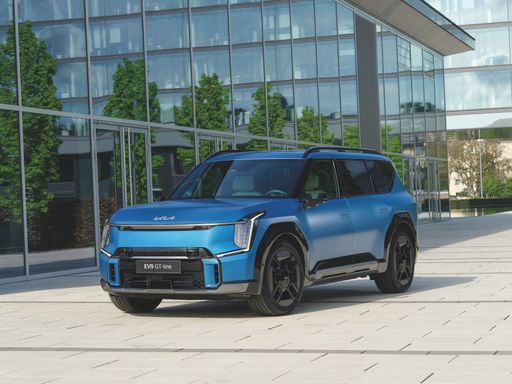
The Q6 e-tron is more compact, measuring 4771 mm in length, while the EV9 stretches out to 5010 mm, accommodating up to seven passengers compared to the Q6 e-tron’s five-seat configuration. This difference translates into diverse interior accommodations; the EV9's spaciousness is ideal for larger families, while the Q6 e-tron emphasizes style and agility.

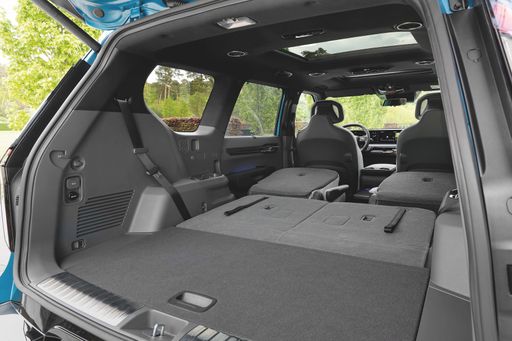
In terms of trunk space, the Q6 e-tron offers up to 526 liters, allowing for practical cargo capacity. Meanwhile, the EV9 presents a smaller trunk at 333 liters, tailored more for passengers than cargo.

Q6 e-tron

Technological Innovations

Technology is at the heart of both vehicles. The Audi Q6 e-tron features a sophisticated infotainment system equipped with advanced driver assistance features, providing seamless connectivity and interaction. Audi's Matrix LED headlights and advanced safety systems ensure a safer driving experience.

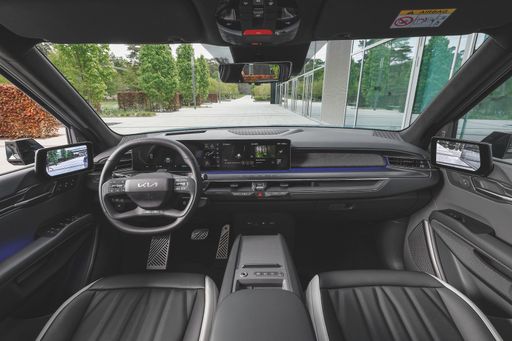
Conversely, the Kia EV9 showcases an equally impressive technological suite with a stunning infotainment setup and an array of driver assistance technologies. Its sleek design, combined with comfort features like heated and ventilated seating, sets a high standard for user experience in electric vehicles.

EV9

Conclusion: Choosing Your Electric SUV

Both the Audi Q6 e-tron and Kia EV9 bring forth exciting possibilities in the electric SUV market, with each offering unique strengths. The Q6 e-tron excels in performance, range, and energy efficiency, making it an excellent choice for those seeking exhilarating drives and practicality. Meanwhile, the Kia EV9 offers spaciousness and modern technology, positioning it as a great option for larger families looking to transition to electric mobility.

Ultimately, the decision will depend on individual preferences regarding space, performance, and brand loyalty. As the electric vehicle landscape continues to develop, both models are poised to be influential players leading the charge into an electrified future.

Here’s where it gets real: The technical differences in detail

EV9

Costs and Efficiency:

When it comes to price and running costs, the biggest differences usually appear. This is often where you see which car fits your budget better in the long run.

Kia EV9 is barely cheaper – starting at 54,200 £ , while the Audi Q6 e-tron costs 54,400 £ . That’s a price difference of around 266 £.

In terms of energy consumption, the Audi Q6 e-tron is markedly more efficient: consuming 15.6 kWh/100km compared to 19.5 kWh/100km for the Kia EV9. That’s a difference of about 3.9 kWh/100km.

As for electric range, the Audi Q6 e-tron offers somewhat more range – reaching up to 656 km, about 93 km more than the Kia EV9.

Q6 e-tron

Engine and Performance:

Under the bonnet, it becomes clear which model is tuned for sportiness and which one takes the lead when you hit the accelerator.

When it comes to engine power, the Kia EV9 offers barely more power – delivering 508 HP compared to 490 HP. That’s roughly 18 HP more horsepower.

When accelerating from 0 to 100 km/h, the Audi Q6 e-tron is marginally quicker – completing the sprint in 4.4 s, while the Kia EV9 takes 4.6 s. That’s about 0.2 s quicker.

Looking at top speed, the Audi Q6 e-tron is somewhat faster – reaching 230 km/h, while the Kia EV9 tops out at 200 km/h. The difference is around 30 km/h.

There’s also a difference in torque: the Audi Q6 e-tron delivers moderately more torque with 855 Nm compared to 740 Nm. That’s about 115 Nm more.

EV9

Space and Everyday Use:

Beyond pure performance, interior space and usability matter most in daily life. This is where you see which car is more practical and versatile.

Seats: Kia EV9 offers more seats – 7 vs 5.

In terms of curb weight, Audi Q6 e-tron is only slightly lighter – 2,200 kg compared to 2,392 kg. The difference is around 192 kg.

Looking at boot space, the Audi Q6 e-tron offers visibly more boot space – 526 L compared to 333 L. That’s a difference of about 193 L.

For maximum load capacity, the Kia EV9 offers visibly more capacity – up to 2,393 L, about 864 L more than the Audi Q6 e-tron.

When it comes to payload, the Kia EV9 carries somewhat more – 615 kg compared to 540 kg. That’s a difference of about 75 kg.

Who wins the race in the data check?

The Audi Q6 e-tron is slightly ahead in the objective data comparison.
This result only shows which model scores more points on paper – not which of the two cars feels right for you.

from £54,400
Q6 e-tron

Audi Q6 e-tron

  • Engine Type : Electric
  • Transmission : Automatic
  • Drive Type : Rear-Wheel Drive, All-Wheel Drive
  • Power HP : 252 - 490 HP
  • Consumption kWh/100km : 15.6 - 18.4 kWh/100km
  • Electric Range : 529 - 656 km
Kia EV9
Audi Q6 e-tron

Costs and Consumption

View detailed analysis

Engine and Performance

View detailed analysis

Dimensions and Body

View detailed analysis

Kia EV9

The Kia EV9 is a bold, boxy electric SUV that looks like it could swallow your luggage and the in‑laws, with an interior that feels more lounge than cockpit and a presence that makes smaller rivals suddenly feel shy. On the road it delivers calm long‑distance composure with enough shove to keep overtakes effortless, and its tech and practicality make it an easy, sensible choice for buyers who want electric without compromise.

details

Audi Q6 e-tron

The Audi Q6 e-tron balances sleek, coupe-like styling with a roomy, upscale interior that feels modern without being showy. It delivers refined electric performance and smart tech that make daily driving effortless — the sort of EV that might make petrolheads grudgingly admit they fancy the future.

details
Kia EV9
Audi Q6 e-tron

Costs and Consumption

Price
54,200 - 78,000 £
Price
54,400 - 82,500 £
Consumption L/100km
-
Consumption L/100km
-
Consumption kWh/100km
19.5 - 22.8 kWh/100km
Consumption kWh/100km
15.6 - 18.4 kWh/100km
Electric Range
443 - 563 km
Electric Range
529 - 656 km
Battery Capacity
99.8 kWh
Battery Capacity
75.8 - 94.9 kWh
co2
0 g/km
co2
0 g/km
Fuel tank capacity
-
Fuel tank capacity
-

Dimensions and Body

Body Type
SUV
Body Type
SUV
Seats
6 - 7
Seats
5
Doors
5
Doors
5
Curb weight
2,392 - 2,664 kg
Curb weight
2,200 - 2,425 kg
Trunk capacity
333 L
Trunk capacity
499 - 526 L
Length
5,015 mm
Length
4,771 mm
Width
1,980 mm
Width
1,939 - 1,965 mm
Height
1,780 mm
Height
1,665 - 1,685 mm
Max trunk capacity
2,318 - 2,393 L
Max trunk capacity
1,361 - 1,529 L
Payload
542 - 615 kg
Payload
540 kg

Engine and Performance

Engine Type
Electric
Engine Type
Electric
Transmission
Automatic
Transmission
Automatic
Transmission Detail
Reduction Gearbox
Transmission Detail
Reduction Gearbox
Drive Type
All-Wheel Drive, Rear-Wheel Drive
Drive Type
Rear-Wheel Drive, All-Wheel Drive
Power HP
204 - 508 HP
Power HP
252 - 490 HP
Acceleration 0-100km/h
4.6 - 9.4 s
Acceleration 0-100km/h
4.4 - 7.6 s
Max Speed
200 km/h
Max Speed
210 - 230 km/h
Torque
350 - 740 Nm
Torque
450 - 855 Nm
Number of Cylinders
-
Number of Cylinders
-
Power kW
150 - 374 kW
Power kW
185 - 360 kW
Engine capacity
-
Engine capacity
-

General

Model Year
2,023 - 2,025
Model Year
2,024 - 2,025
CO2 Efficiency Class
A
CO2 Efficiency Class
A
Brand
Kia
Brand
Audi
DriveDuel uses data analysis and artificial intelligence to evaluate vehicle data and create content. Content is regularly reviewed and improved. The displayed prices are estimates based on German list prices, adjusted to the respective country’s VAT. Country-specific registration taxes are not included. This information is not legally binding.