VS

Kia Niro vs Hyundai Kona comparison

Compare performance (138 HP vs 218 HP), boot space and price (29,100 £ vs 23,100 £ ) at a glance. Find out which car is the better choice for you – Kia Niro or Hyundai Kona?

Kia Niro vs Hyundai Kona: Key differences

Kia Niro

4.5 (2 Reviews)
rate
  • very slightly more efficient

Hyundai Kona

5 (1 Reviews)
rate
  • noticeably cheaper
  • clearly more power
  • significantly quicker 0–100 km/h
  • marginally lighter

All details on performance, efficiency, range and trunk space can be found in the technical comparison below – including user reviews for both models.

Niro

As the compact SUV segment grows in popularity, the comparison between competitors becomes increasingly crucial for potential buyers. Two standout models in this category are the Hyundai Kona and the Kia Niro. While both brands fall under the umbrella of the Hyundai Motor Group, they offer unique features and capabilities that appeal to different types of drivers.

Kona

Design and Dimensions

Starting with exterior dimensions, the Hyundai Kona boasts a length of 4,350 mm and a height of 1,585 mm, making it slightly more substantial than the Kia Niro, which measures 4,420 mm in length and 1,545 mm in height. Both vehicles have a width of 1,825 mm, providing a stable stance on the road.

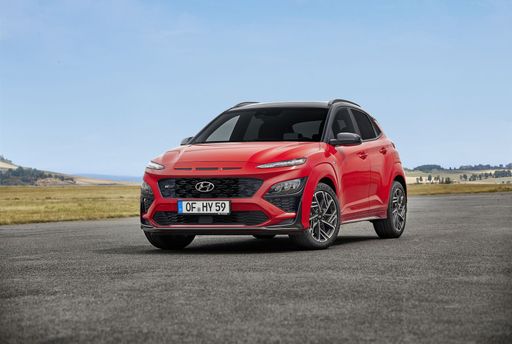
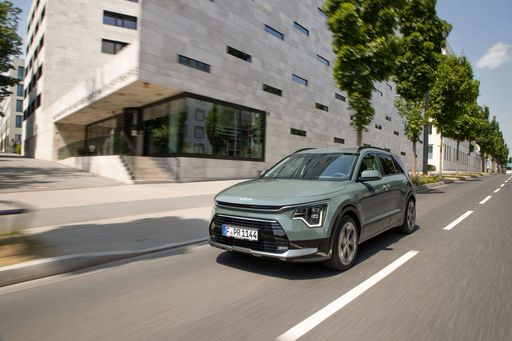
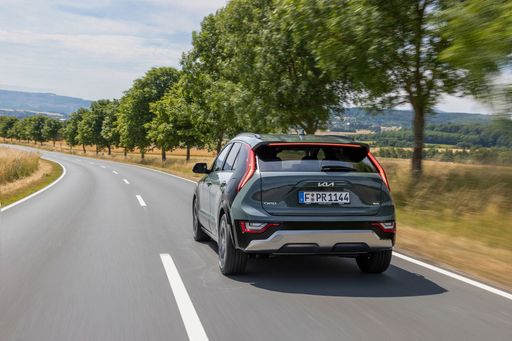
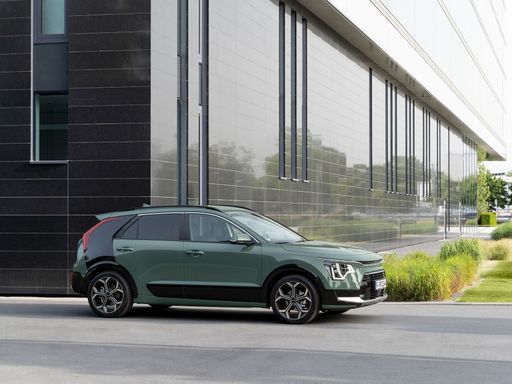
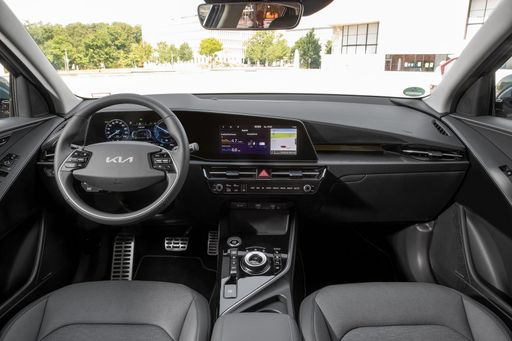
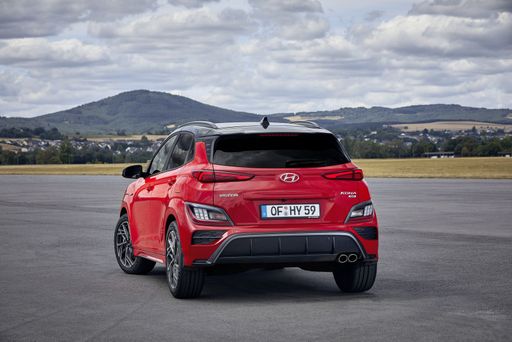
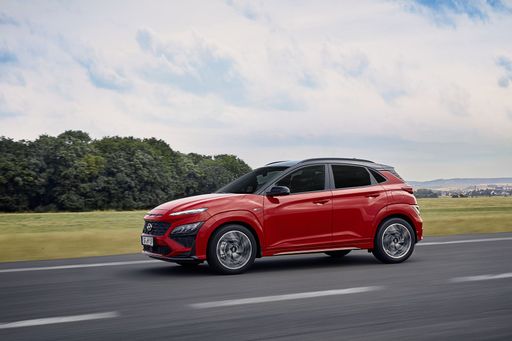
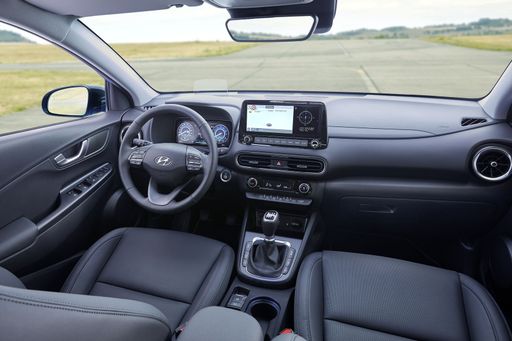
In terms of aesthetic appeal, the Kona carries a bold and sporty design with aggressive lines and a distinct front fascia, aimed at drivers seeking a more dynamic look. The Niro, however, adopts a more streamlined appearance that emphasizes efficiency and eco-friendliness, highlighting its hybrid and plug-in hybrid capabilities.

Niro

Powertrains and Performance

The Hyundai Kona offers a broader range of engine options, including petrol, full hybrid, and electric variants. Power outputs range from 100 HP to a robust 218 HP in the electric model, catering to a wider audience. The Kona's acceleration performance is impressive, with certain models achieving 0-100 km/h in as little as 7.8 seconds, demonstrating strong performance across the board.

On the other hand, the Kia Niro is more focused on hybrid technology, offering full hybrid and plug-in hybrid configurations with power outputs up to 171 HP. It accelerates from 0-100 km/h in 10.4 seconds at its quickest, which is decent yet reflective of its hybrid nature. The Niro excels in fuel efficiency, achieving consumption figures as low as 0.8 L/100km in its plug-in hybrid variant.

Kona

Electric Range and Battery Capacity

When it comes to electric capabilities, the Kia Niro’s plug-in hybrid offers an electric range of approximately 65 km, enabling limited all-electric driving. However, the Hyundai Kona outshines in this area, with its electric variant providing up to 514 km on a single charge—making it a more appealing choice for those seeking longer ranges and electric driving.

The battery capacity of the Kona also surpasses that of the Niro, with options reaching up to 65.4 kWh compared to the Niro’s 11.1 kWh in its hybrid variants. This difference significantly impacts overall efficiency and driving range.

Niro

Interior Features and Comfort

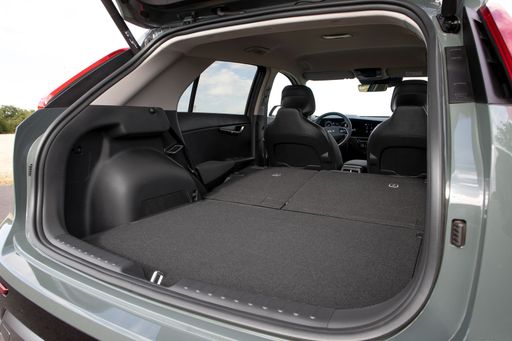
Inside, both models provide rooms for five passengers with spaciousness conducive to comfort. The Kona offers a trunk capacity of 466 liters, slightly outpacing the Niro's 451 liters. However, the Niro's interior leans heavily into eco-conscious materials and innovative tech, aligning with its green image.

Infotainment systems in both vehicles are user-friendly, equipped with modern connectivity options such as Android Auto and Apple CarPlay. The Niro boasts advanced driver assistance features that advocate safety and convenience, including adaptive cruise control and lane-keeping assist.

Kona

Conclusion: Choosing the Right Fit

The choice between the Hyundai Kona and Kia Niro ultimately lies in the buyer's needs and preferences. The Kona stands out for those desiring versatility in powertrains and a sporty aesthetic. Conversely, the Kia Niro caters to eco-conscious consumers looking for hybrid efficiency and cutting-edge technological features.

Both vehicles exemplify the quality and innovation of their respective brands, making them excellent contenders in the compact SUV market. Regardless of the choice, prospective buyers will find satisfaction in the performance, comfort, and technology these models have to offer.

Here’s where it gets real: The technical differences in detail

Niro

Costs and Efficiency:

Price and efficiency are key factors when choosing a car – and this is often where the real differences emerge.

Hyundai Kona is noticeably cheaper – starting at 23,100 £ , while the Kia Niro costs 29,100 £ . That’s a price difference of around 6,077 £.

Fuel consumption also shows a difference: the Kia Niro uses 4.5 L/100km and is very slightly more efficient than the Hyundai Kona with 4.6 L/100km. The difference is about 0.1 L/100km.

Kona

Engine and Performance:

Power, torque and acceleration are the classic benchmarks for car enthusiasts – and here, some clear differences start to show.

When it comes to engine power, the Hyundai Kona offers clearly more power – delivering 218 HP compared to 138 HP. That’s roughly 80 HP more horsepower.

When accelerating from 0 to 100 km/h, the Hyundai Kona is significantly quicker – completing the sprint in 7.8 s, while the Kia Niro takes 11.1 s. That’s about 3.3 s quicker.

Both models offer the same torque – 265 Nm.

Niro

Space and Everyday Use:

Whether family car or daily driver – which one offers more room, flexibility and comfort?

Both vehicles offer seating for 5 people.

In terms of curb weight, Hyundai Kona is marginally lighter – 1,370 kg compared to 1,474 kg. The difference is around 104 kg.

When it comes to payload, the Hyundai Kona carries barely more – 490 kg compared to 466 kg. That’s a difference of about 24 kg.

Who wins the race in the data check?

The Hyundai Kona is decisively ahead in the objective data comparison.
This result only shows which model scores more points on paper – not which of the two cars feels right for you.

from £23,100
Kona

Hyundai Kona

  • Engine Type : Electric, Petrol, Full Hybrid
  • Transmission : Automatic, Manuel
  • Drive Type : Front-Wheel Drive, All-Wheel Drive
  • Power HP : 115 - 218 HP
  • Consumption L/100km : 4.6 - 7 L/100km
  • Consumption kWh/100km : 14.6 - 16.8 kWh/100km
  • Electric Range : 377 - 514 km
Kia Niro
Hyundai Kona

Costs and Consumption

View detailed analysis

Engine and Performance

View detailed analysis

Dimensions and Body

View detailed analysis

Kia Niro

The Kia Niro blends clever packaging and modern styling into a compact crossover that’s refreshingly sensible for daily life. It’s comfortable, economical and packed with user‑friendly tech, so if you want a fuss‑free family car with a touch of green credibility, the Niro is worth a test drive.

details

Hyundai Kona

The Hyundai Kona wears its personality on the outside with bold styling and sprightly handling that turns city driving into something a little more fun than a commute. It blends practical space, modern tech and sensible running costs into a compact, stylish package — a smart pick if you want flair without paying luxury prices.

details
Kia Niro
Hyundai Kona

Costs and Consumption

Price
29,100 - 33,800 £
Price
23,100 - 41,600 £
Consumption L/100km
4.5 - 4.9 L/100km
Consumption L/100km
4.6 - 7 L/100km
Consumption kWh/100km
-
Consumption kWh/100km
14.6 - 16.8 kWh/100km
Electric Range
-
Electric Range
377 - 514 km
Battery Capacity
-
Battery Capacity
48.4 - 65.4 kWh
co2
102 - 111 g/km
co2
0 - 163 g/km
Fuel tank capacity
-
Fuel tank capacity
-

Dimensions and Body

Body Type
SUV
Body Type
SUV
Seats
5
Seats
5
Doors
-
Doors
5
Curb weight
1,474 kg
Curb weight
1,370 - 1,773 kg
Trunk capacity
-
Trunk capacity
466 L
Length
-
Length
4,355 - 4,385 mm
Width
1,825 mm
Width
1,825 mm
Height
-
Height
1,580 mm
Max trunk capacity
-
Max trunk capacity
1,300 L
Payload
466 kg
Payload
420 - 490 kg

Engine and Performance

Engine Type
Full Hybrid
Engine Type
Electric, Petrol, Full Hybrid
Transmission
Automatic
Transmission
Automatic, Manuel
Transmission Detail
Dual-Clutch Automatic
Transmission Detail
Reduction Gearbox, Manual Gearbox, Dual-Clutch Automatic
Drive Type
Front-Wheel Drive
Drive Type
Front-Wheel Drive, All-Wheel Drive
Power HP
138 HP
Power HP
115 - 218 HP
Acceleration 0-100km/h
11.1 - 11.4 s
Acceleration 0-100km/h
7.8 - 11.9 s
Max Speed
-
Max Speed
162 - 172 km/h
Torque
265 Nm
Torque
200 - 265 Nm
Number of Cylinders
4
Number of Cylinders
3 - 4
Power kW
102 kW
Power kW
85 - 160 kW
Engine capacity
1,580 cm3
Engine capacity
998 - 1,598 cm3

General

Model Year
2,025
Model Year
2,024 - 2,025
CO2 Efficiency Class
C
CO2 Efficiency Class
A, D, C, E, F
Brand
Kia
Brand
Hyundai
DriveDuel uses data analysis and artificial intelligence to evaluate vehicle data and create content. Content is regularly reviewed and improved. The displayed prices are estimates based on German list prices, adjusted to the respective country’s VAT. Country-specific registration taxes are not included. This information is not legally binding.