@ Kia Corporation
@ Peugeot / Stellantis Media
VS

Kia Niro vs Peugeot 2008 – Performance, range & efficiency compared

Both models have their strengths – but which one suits you more?
Compare performance, efficiency, price and space directly: Kia Niro or Peugeot 2008?

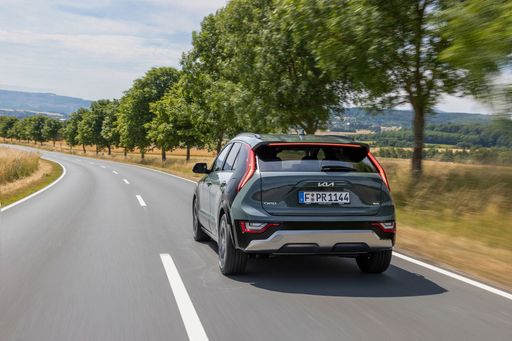
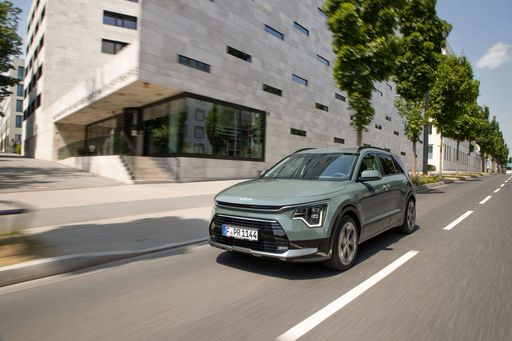
Niro @ Kia Corporation

A Clash of the Compact SUVs: Kia Niro vs. Peugeot 2008

In the ever-evolving landscape of compact SUVs, the competition is fierce. Two noteworthy contenders, the Kia Niro and the Peugeot 2008, have emerged as popular choices for buyers seeking efficiency, style, and innovation. In this comparison, we will explore the technical aspects and innovations that make these vehicles stand out in their category.
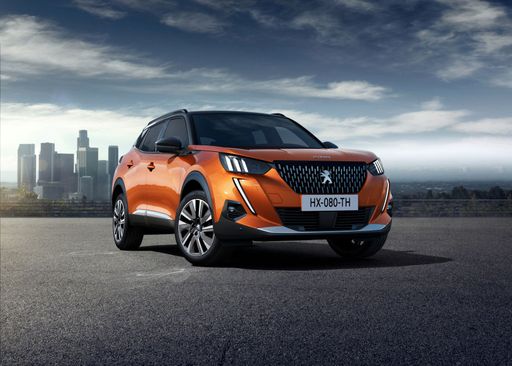
2008 @ Peugeot / Stellantis Media

Design and Dimensions

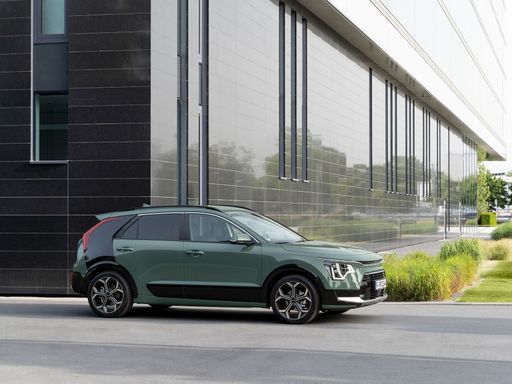
The Kia Niro impresses with its bold and modern design, characterized by a distinctive front grille and sharp lines. With dimensions of 4420 mm in length, 1825 mm in width, and a height of 1545 mm, it projects a robust and confident stance on the road.

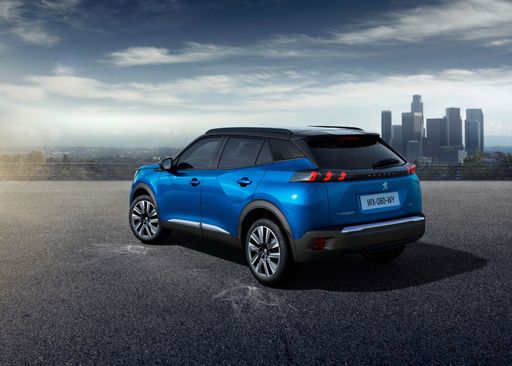
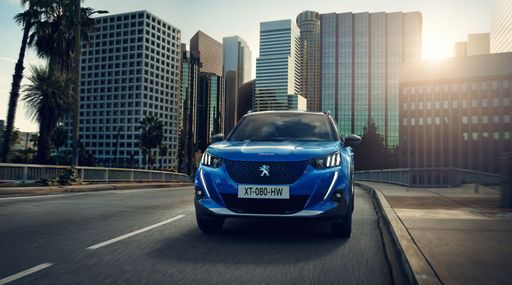
On the other hand, the Peugeot 2008 offers a sleeker profile with a length of 4304 mm, width of 1770 mm, and a height of 1523 mm. Its stylish design features the signature Peugeot front fascia, complete with sleek LED headlights that enhance its contemporary look.

Niro @ Kia Corporation

Powertrains and Performance

The Kia Niro is available in both full hybrid and plug-in hybrid versions, offering a choice between a 129 HP and 171 HP engine. The hybrid versions boast impressive fuel consumption figures, ranging from 0.8 L to 4.4 L per 100 km, making it a winner in terms of efficiency. The Niro also features a good electric range of up to 65 km thanks to its compact battery capacity of 11.1 kWh.

Conversely, the Peugeot 2008 offers multiple powertrain options, including petrol mild-hybrid (MHEV), standard petrol, and electric variants. The highest-powered model amasses an impressive 156 HP, while the electric variants can travel between 343 km and 406 km on a full charge with a battery capacity of 51 kWh. This versatile lineup caters to a variety of driving preferences while still providing commendable fuel efficiency, ranging between 5 L and 5.7 L per 100 km.

2008 @ Peugeot / Stellantis Media

Technology and Innovation

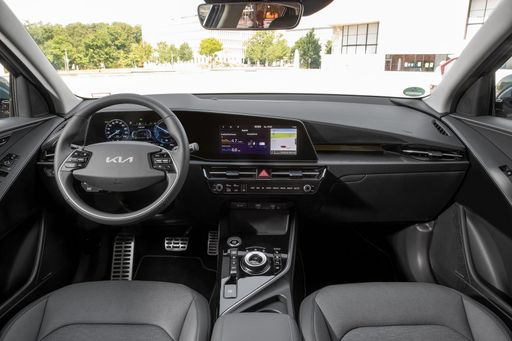
Both vehicles are equipped with a wealth of technological features that enhance the driving experience. The Kia Niro's interior showcases a modern infotainment system with a dual-clutch automatic transmission, providing smooth gear transitions. Additionally, its innovative energy management system optimizes efficiency, especially in hybrid and plug-in hybrid models.

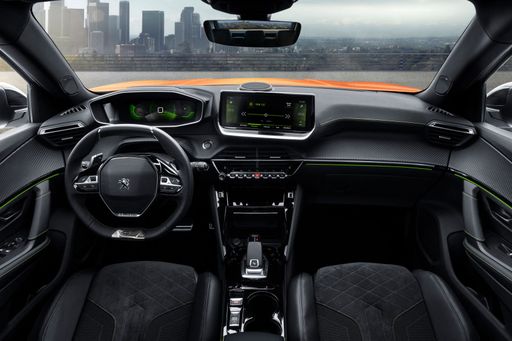
The Peugeot 2008 impresses with its i-Cockpit design, featuring a compact steering wheel and a heads-up display that allows drivers to keep their eyes on the road. It also offers advanced driver-assistance systems (ADAS), enhancing safety and convenience. The dual-clutch automatic and manual gearbox options cater to a broader range of driver preferences, ensuring everyone can find their perfect fit.

Niro @ Kia Corporation

Interior Space and Comfort

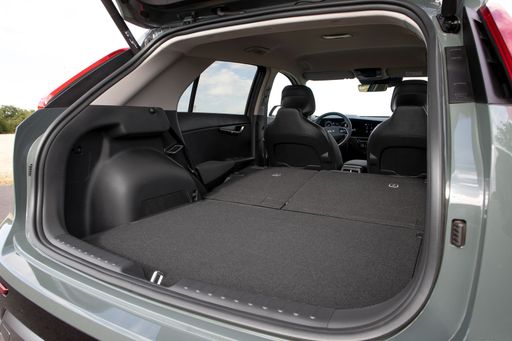
When it comes to interior comfort, the Kia Niro features a spacious cabin designed for five occupants, boasting a trunk capacity of 451 liters, making it practical for families and adventures alike.

Meanwhile, the Peugeot 2008 comfortably accommodates five passengers, with a trunk capacity of 434 liters. The slightly lower capacity still allows for ample storage and convenience, ensuring that both vehicles are well-suited for everyday use.

2008 @ Peugeot / Stellantis Media

Environmental Considerations

In the realm of eco-friendliness, the Kia Niro stands out with a CO2 efficiency class rating as high as B, with emissions as low as 19 g/km in certain configurations. The Peugeot 2008 also performs well, particularly in its electric form, with CO2 emissions reaching as low as 0 g/km, showcasing its commitment to sustainability.

Niro @ Kia Corporation

Conclusion: Which SUV to Choose?

Choosing between the Kia Niro and the Peugeot 2008 ultimately comes down to personal preference and desired features. The Kia Niro excels in hybrid technology with its range of efficient powertrains and spacious interior. In contrast, the Peugeot 2008 shines with its stylish design, comprehensive tech offerings, and multiple powertrain choices, appealing to a diverse audience.

Both vehicles offer innovation, practicality, and an engaging driving experience. Whichever you choose, each model promises to deliver a satisfying compact SUV experience for today’s drivers.

Here’s where it gets real: The technical differences in detail

2008 @ Peugeot / Stellantis Media

Costs and Efficiency:

Looking at overall running costs, both models reveal some interesting differences in everyday economy.

Peugeot 2008 has a a bit advantage in terms of price – it starts at 24500 £, while the Kia Niro costs 29100 £. That’s a price difference of around 4672 £.

Fuel consumption also shows a difference: Kia Niro manages with 2.40 L and is therefore significantly more efficient than the Peugeot 2008 with 4.90 L. The difference is about 2.50 L per 100 km.

As for range, the Peugeot 2008 performs significantly better – achieving up to 406 km, about 344 km more than the Kia Niro.

Niro @ Kia Corporation

Engine and Performance:

Power, torque and acceleration are the classic benchmarks for car enthusiasts – and here, some clear differences start to show.

When it comes to engine power, the Kia Niro has a somewhat edge – offering 180 HP compared to 156 HP. That’s roughly 24 HP more horsepower.

In acceleration from 0 to 100 km/h, the Peugeot 2008 is slightly quicker – completing the sprint in 8.30 s, while the Kia Niro takes 9.90 s. That’s about 1.60 s faster.

In terms of top speed, the Peugeot 2008 performs to a small extent better – reaching 206 km/h, while the Kia Niro tops out at 185 km/h. The difference is around 21 km/h.

There’s also a difference in torque: Peugeot 2008 pulls minimal stronger with 270 Nm compared to 265 Nm. That’s about 5 Nm difference.

Space and Everyday Use:

Beyond pure performance, interior space and usability matter most in daily life. This is where you see which car is more practical and versatile.

Both vehicles offer seating for 5 people.

In curb weight, Peugeot 2008 is to a small extent lighter – 1263 kg compared to 1474 kg. The difference is around 211 kg.

In terms of boot space, the Kia Niro offers barely noticeable more room – 451 L compared to 434 L. That’s a difference of about 17 L.

In maximum load capacity, the Peugeot 2008 performs barely noticeable better – up to 1467 L, which is about 22 L more than the Kia Niro.

When it comes to payload, Kia Niro slight takes the win – 466 kg compared to 447 kg. That’s a difference of about 19 kg.

Who comes out on top?

Overall, the Peugeot 2008 shows itself to be leads convincingly overall and secures the title of DriveDuel Champion.
It convinces with the more balanced overall package and proves to be the more versatile choice for everyday use.

from about £24,500
2008 @ Peugeot / Stellantis Media

Peugeot 2008

  • Engine Type : Petrol, Electric, Petrol MHEV
  • Transmission : Manuel, Automatic
  • Drive Type : Front-Wheel Drive
  • Power HP : 101 - 156 HP
  • Consumption L/100km : 4.9 - 5.7 L
  • Consumption kWh/100km : 15.50 kWh
  • Electric Range : 406 km

Kia Niro

5 (1)
rate

The Kia Niro blends clever packaging and modern styling into a compact crossover that’s refreshingly sensible for daily life. It’s comfortable, economical and packed with user‑friendly tech, so if you want a fuss‑free family car with a touch of green credibility, the Niro is worth a test drive.

details

Peugeot 2008

The Peugeot 2008 is a stylish, city-friendly crossover that packs big character into a compact package, turning mundane errands into a mildly entertaining drive. Its clever interior layout, polished looks and confident ride make it a smart choice for buyers who want practical daily sense with a touch of flair.

details
Kia Niro
Peugeot 2008
Niro @ Kia Corporation
2008 @ Peugeot / Stellantis Media

Costs and Consumption

Price
29100 - 38600 £
Price
24500 - 40300 £
Consumption L/100km
2.4 - 4.9 L
Consumption L/100km
4.9 - 5.7 L
Consumption kWh/100km
-
Consumption kWh/100km
15.50 kWh
Electric Range
57 - 62 km
Electric Range
406 km
Battery Capacity
1.3 - 11.1 kWh
Battery Capacity
51 kWh
co2
53 - 111 g/km
co2
0 - 129 g/km
Fuel tank capacity
37 - 42 L
Fuel tank capacity
44 L

Dimensions and Body

Body Type
SUV
Body Type
SUV
Seats
5
Seats
5
Doors
5
Doors
5
Curb weight
1474 - 1594 kg
Curb weight
1263 - 1623 kg
Trunk capacity
348 - 451 L
Trunk capacity
434 L
Length
4420 mm
Length
4304 mm
Width
1825 mm
Width
1770 mm
Height
1545 mm
Height
1523 mm
Max trunk capacity
1342 - 1445 L
Max trunk capacity
1467 L
Payload
466 kg
Payload
407 - 447 kg

Engine and Performance

Engine Type
Full Hybrid, Plugin Hybrid
Engine Type
Petrol, Electric, Petrol MHEV
Transmission
Automatic
Transmission
Manuel, Automatic
Transmission Detail
Dual-Clutch Automatic
Transmission Detail
Manual Gearbox, Reduction Gearbox, Dual-Clutch Automatic
Drive Type
Front-Wheel Drive
Drive Type
Front-Wheel Drive
Power HP
138 - 180 HP
Power HP
101 - 156 HP
Acceleration 0-100km/h
9.9 - 11.4 s
Acceleration 0-100km/h
8.3 - 10.9 s
Max Speed
170 - 185 km/h
Max Speed
150 - 206 km/h
Torque
265 Nm
Torque
205 - 270 Nm
Number of Cylinders
4
Number of Cylinders
3
Power kW
102 - 132 kW
Power kW
74 - 115 kW
Engine capacity
1580 cm3
Engine capacity
1199 cm3

General

Model Year
2025
Model Year
2023 - 2025
CO2 Efficiency Class
C, B
CO2 Efficiency Class
D, A, C
Brand
Kia
Brand
Peugeot
Is the Kia Niro offered with different drivetrains?

The Kia Niro is available as Front-Wheel Drive.

The prices and data displayed are estimates based on German list prices and may vary by country. This information is not legally binding.