VS

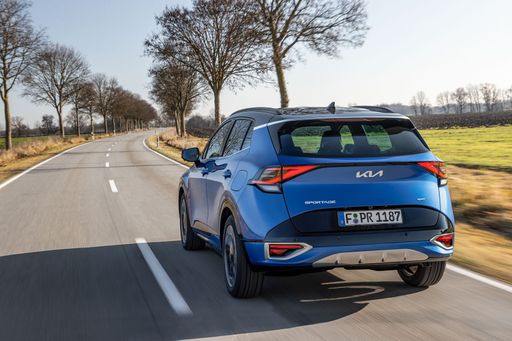
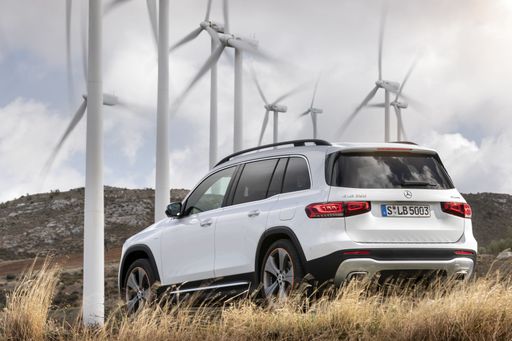
Kia Sportage vs Mercedes GLB comparison

Compare performance (288 HP vs 354 HP), boot space and price (29,100 £ vs 43,200 £ ) at a glance. Find out which car is the better choice for you – Kia Sportage or Mercedes GLB?

Kia Sportage vs Mercedes GLB: Key differences

Kia Sportage

5 (3 Reviews)
rate
  • considerably cheaper
  • significantly more efficient
  • a bit lighter
  • only slightly more trunk space
details

Mercedes GLB

3.6 (4 Reviews)
rate
  • slightly more power
  • substantially more electric range
  • noticeably quicker 0–100 km/h
details

All details on performance, efficiency, range and trunk space can be found in the technical comparison below – including user reviews for both models.

By Achim Sedelmaier

Sportage

Power Meets Practicality: Kia Sportage vs. Mercedes GLB

In the realm of SUVs, the Kia Sportage and Mercedes GLB represent two distinct philosophies: practicality meets prestige. As we delve into a comparison between these modern vehicles, we'll discover how each car holds its ground and which might be the right fit for you.
GLB

Engine Choices and Performance

The Kia Sportage offers a diverse range of engine options to cater to a wide audience. Whether you're seeking efficiency or thrill, the options include Diesel MHEV, Petrol MHEV, Full Hybrid, and even a Plugin Hybrid, with power outputs ranging from 136 HP to 252 HP. Notably, the Sportage can accelerate from 0-100 km/h in as fast as 8.4 seconds, with a top speed of 194 km/h.

On the other hand, the Mercedes GLB is predominantly petrol and diesel-focused, offering engines with up to 320 HP. Its standout performance is a 5.5-second sprint to 100 km/h and a max speed of 250 km/h, making it a powerhouse among compact SUVs. Both vehicles provide the versatility of front-wheel and all-wheel-drive options.

Sportage

Transmission and Drive Dynamics

With various transmission styles, the Kia Sportage offers both Manual and Automatic, including a Dual-Clutch Automatic option. These transmissions coupled with its robust engine options ensure smooth drive dynamics and adaptability on different terrains.

The Mercedes GLB pride itself on the Dual-Clutch Automatic transmission, which is standard across the range. It provides quick gear shifts and helps maintain the car’s powerful performance across both its Front-Wheel and All-Wheel Drive variants.

GLB

Efficiency and Practicality

Fuel efficiency remains a critical consideration for potential buyers. The Kia Sportage showcases impressive fuel consumption figures, with its plugin hybrid achieving a noteworthy 1.2 L/100km and offering an electric range of 64 km. This makes the Sportage an attractive option for those prioritizing efficiency.

The GLB, while leaning heavily on performance, manages respectable efficiency, with some diesel variants offering consumption as low as 5.6 L/100km. Its fuel tank capacity reaches up to 60 liters, allowing for longer journeys with fewer stops.

Sportage

Space and Comfort

The interior of the Kia Sportage is designed with practicality in mind, featuring ample seating for five and trunk capacity ranging from 526 to 587 liters, depending on the model. It's crafted for both family trips and solo adventures, ensuring comfort and convenience.

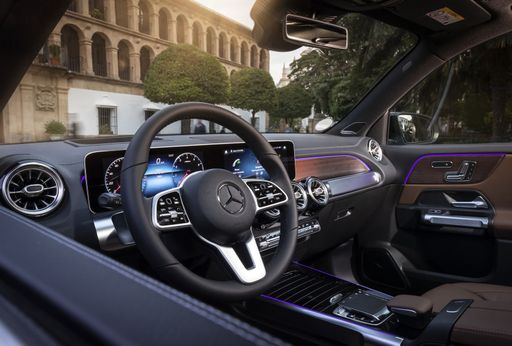
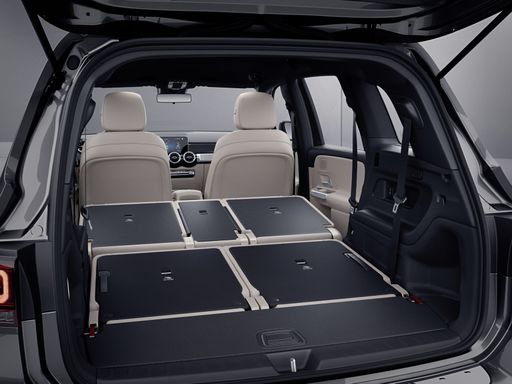
Mercedes GLB, with a similar seating capacity, provides slightly more trunk space at up to 570 liters. Focused on luxury, the GLB does not compromise on comfort, despite its performance-oriented engineering. Its plush interiors make for a refined driving and passenger experience.

GLB

Dimensions and Road Presence

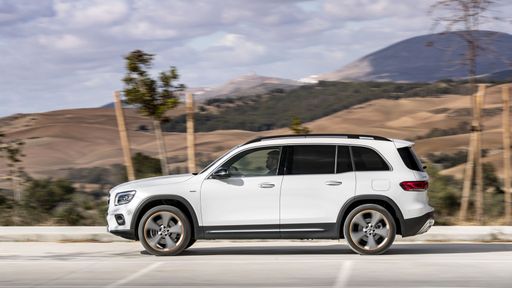
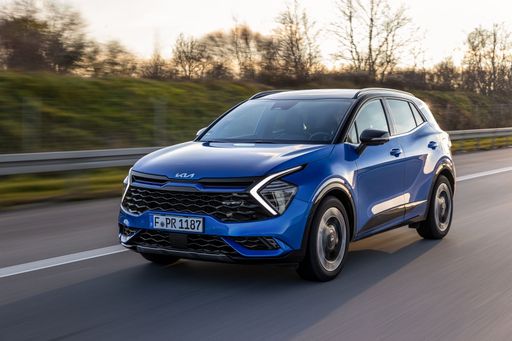
The Kia Sportage measures at 4515 mm in length, with a width and height of 1865 mm and 1650 mm, respectively. Its design is characterized by striking curves and a modern touch, making it a sleek yet assertive presence on the road.

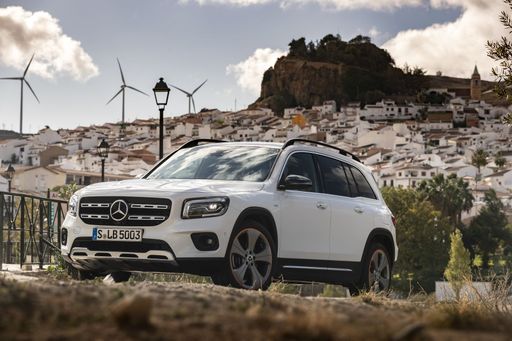
In contrast, the Mercedes GLB is larger, with lengths reaching up to 4650 mm, a width of 1850 mm, and a height of 1665 mm. This larger footprint conveys the luxury and authority associated with the brand while ensuring a spacious interior cabin designed to impress.

Sportage

Conclusion: Choosing Your Perfect SUV

In conclusion, both the Kia Sportage and Mercedes GLB offer unique strengths tailored to different driving preferences. The Kia Sportage shines with its array of engine choices, advanced hybrid technology, and practicality; ideal for those seeking an affordable yet efficient SUV. Meanwhile, the Mercedes GLB stands as a symbol of luxury and performance, perfect for those who desire power and prestige.

Whether your priority is fuel economy, raw performance, or luxurious comforts, both SUVs excel in their respective domains, offering drivers a range of attributes to meet their needs.

Here’s where it gets real: The technical differences in detail

Sportage

Costs and Efficiency:

Price and efficiency are often the first things buyers look at. Here it becomes clear which model has the long-term edge – whether at the pump, the plug, or in purchase price.

Kia Sportage is considerably cheaper – starting at 29,100 £ , while the Mercedes GLB costs 43,200 £ . That’s a price difference of around 14,063 £.

Fuel consumption also shows a difference: the Kia Sportage uses 2.9 L/100km and is significantly more efficient than the Mercedes GLB with 5.7 L/100km. The difference is about 2.8 L/100km.

As for electric range, the Mercedes GLB offers substantially more range – reaching up to 631 km, about 565 km more than the Kia Sportage.

GLB

Engine and Performance:

Power, torque and acceleration say a lot about how a car feels on the road. This is where you see which model delivers more driving dynamics.

When it comes to engine power, the Mercedes GLB offers slightly more power – delivering 354 HP compared to 288 HP. That’s roughly 66 HP more horsepower.

When accelerating from 0 to 100 km/h, the Mercedes GLB is noticeably quicker – completing the sprint in 5.5 s, while the Kia Sportage takes 7.5 s. That’s about 2 s quicker.

There’s also a difference in torque: the Mercedes GLB delivers visibly more torque with 515 Nm compared to 380 Nm. That’s about 135 Nm more.

Sportage

Space and Everyday Use:

Cabin size, boot volume and payload all play a role in everyday practicality. Here, comfort and flexibility make the difference.

Both vehicles offer seating for 5 people.

In terms of curb weight, Kia Sportage is a bit lighter – 1,552 kg compared to 1,840 kg. The difference is around 288 kg.

Looking at boot space, the Kia Sportage offers only slightly more boot space – 587 L compared to 540 L. That’s a difference of about 47 L.

When it comes to payload, the Kia Sportage carries slightly more – 580 kg compared to 505 kg. That’s a difference of about 75 kg.

Who wins the race in the data check?

The Mercedes GLB stands well ahead of its rival in the objective data comparison.
This result only shows which model scores more points on paper – not which of the two cars feels right for you.

from £43,200
GLB

Mercedes GLB

  • Engine Type : Electric, Full Hybrid
  • Transmission : Automatic
  • Drive Type : Rear-Wheel Drive, All-Wheel Drive
  • Power HP : 156 - 354 HP
  • Consumption L/100km : 5.7 - 6.1 L/100km
  • Consumption kWh/100km : 15.4 - 15.9 kWh/100km
  • Electric Range : 431 - 631 km
Kia Sportage
Mercedes GLB

Costs and Consumption

View detailed analysis

Engine and Performance

View detailed analysis

Dimensions and Body

View detailed analysis

Kia Sportage

The Kia Sportage proves you don't have to choose between style and sensible family motoring, wrapping modern, confident looks around a roomy, well-equipped cabin. It's an easy car to live with — comfortable on daily runs, pleasantly engaging when you want a bit of fun, and kind to your wallet so you can keep smiling at the fuel pump.

details

Mercedes GLB

The Mercedes GLB is a practical compact SUV that mixes boxy, family-friendly space with premium German polish, making it an appealing choice for buyers who want usefulness without pretension. It drives with a confident, composed feel and somehow manages to look both rugged and refined — the grown-up SUV that still likes to have fun.

details
Kia Sportage
Mercedes GLB

Costs and Consumption

Price
29,100 - 47,100 £
Price
43,200 - 62,400 £
Consumption L/100km
2.9 - 7.8 L/100km
Consumption L/100km
5.7 - 6.1 L/100km
Consumption kWh/100km
-
Consumption kWh/100km
15.4 - 15.9 kWh/100km
Electric Range
63 - 66 km
Electric Range
431 - 631 km
Battery Capacity
-
Battery Capacity
-
co2
67 - 177 g/km
co2
0 - 138 g/km
Fuel tank capacity
-
Fuel tank capacity
-

Dimensions and Body

Body Type
SUV
Body Type
SUV
Seats
5
Seats
5
Doors
-
Doors
-
Curb weight
1,552 - 1,896 kg
Curb weight
1,840 - 2,280 kg
Trunk capacity
526 - 587 L
Trunk capacity
540 L
Length
-
Length
-
Width
1,865 mm
Width
1,861 mm
Height
-
Height
-
Max trunk capacity
-
Max trunk capacity
-
Payload
533 - 580 kg
Payload
485 - 505 kg

Engine and Performance

Engine Type
Petrol, Full Hybrid, Diesel MHEV, Plugin Hybrid
Engine Type
Electric, Full Hybrid
Transmission
Manuel, Automatic
Transmission
Automatic
Transmission Detail
Manual Gearbox, Dual-Clutch Automatic, Automatic Gearbox
Transmission Detail
Reduction Gearbox
Drive Type
Front-Wheel Drive, All-Wheel Drive
Drive Type
Rear-Wheel Drive, All-Wheel Drive
Power HP
136 - 288 HP
Power HP
156 - 354 HP
Acceleration 0-100km/h
7.5 - 11.6 s
Acceleration 0-100km/h
5.5 - 9.7 s
Max Speed
-
Max Speed
-
Torque
250 - 380 Nm
Torque
280 - 515 Nm
Number of Cylinders
4
Number of Cylinders
4
Power kW
100 - 212 kW
Power kW
115 - 260 kW
Engine capacity
1,598 cm3
Engine capacity
1,499 cm3

General

Model Year
2,025 - 2,026
Model Year
2026
CO2 Efficiency Class
F, D, E, G, B
CO2 Efficiency Class
A, D, E
Brand
Kia
Brand
Mercedes-Benz
DriveDuel uses data analysis and artificial intelligence to evaluate vehicle data and create content. Content is regularly reviewed and improved. The displayed prices are estimates based on German list prices, adjusted to the respective country’s VAT. Country-specific registration taxes are not included. This information is not legally binding.