@ Kia Corporation
@ Volkswagen AG / VW Media
VS

Kia Sportage vs VW Taigo – Which car suits you better?

Both models have their strengths – but which one suits you more?
Compare performance, efficiency, price and space directly: Kia Sportage or VW Taigo?

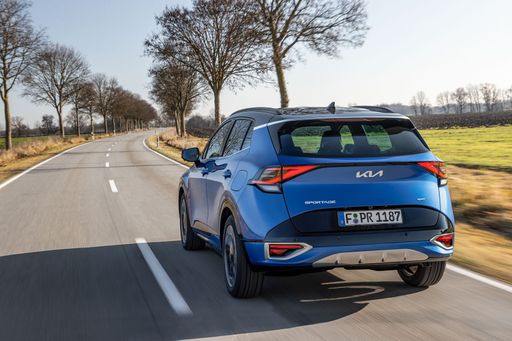
Sportage @ Kia Corporation

In the ever-evolving automotive landscape, the battle between compact SUVs has heated up, with the Kia Sportage and Volkswagen Taigo standing out as formidable contenders for drivers looking for style, performance, and efficiency. Both vehicles are equipped to meet modern expectations, but they appeal to different preferences and needs. Here, we dive into an in-depth comparison, exploring technical specifications, innovations, and overall performance.
Taigo @ Volkswagen AG / VW Media

Kia Sportage: A Multifaceted Performer

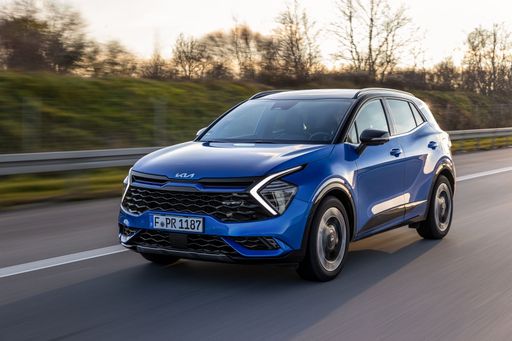
The 2024 Kia Sportage continues to impress with its robust portfolio of engine options. It offers consumers a choice between Diesel MHEV, Petrol MHEV, Full Hybrid, Petrol, and Plug-in Hybrid powertrains, showcasing Kia's commitment to versatility and environmentally friendly technology. With power outputs ranging from 136 HP up to an exhilarating 252 HP, the Sportage caters to a wide range of driving styles.

One of the standout aspects of the Sportage is its acceleration, with certain models capable of reaching 0 to 100 km/h in just 8.3 seconds. Complemented by a well-designed chassis, the model delivers an engaging driving experience, whether equipped with front-wheel or all-wheel drive. Additionally, fuel efficiency figures between 5 - 7.2 L/100km underscore the Sportage's ability to balance performance with economy.

Sportage @ Kia Corporation

Technical Specifications of the Kia Sportage

  • Engine Types: Diesel MHEV, Petrol MHEV, Full Hybrid, Petrol, Plugin Hybrid
  • Power Output: 136 - 252 HP
  • Acceleration (0-100 km/h): 8.3 - 11.6 seconds
  • Fuel Efficiency: 5 - 7.2 L/100km
  • Trunk Capacity: 526 - 587 L
Taigo @ Volkswagen AG / VW Media

Innovations and Features

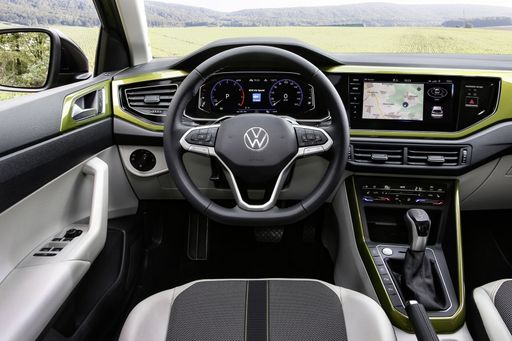
The Sportage is also laden with modern technologies. The interior features large infotainment displays with advanced connectivity options, and safety tech such as adaptive cruise control and lane-keeping assistance is standard across models. Furthermore, the spacious interior comfortably seats five persons, ensuring an enjoyable ride for both the driver and passengers.

Sportage @ Kia Corporation

Volkswagen Taigo: Compact and Efficient

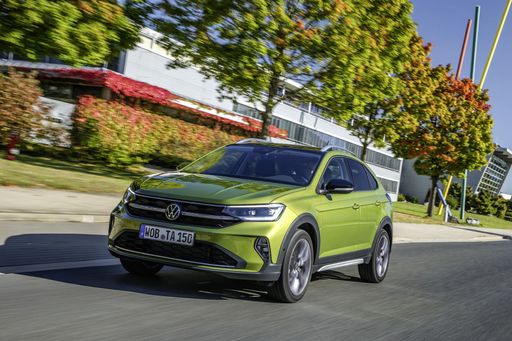
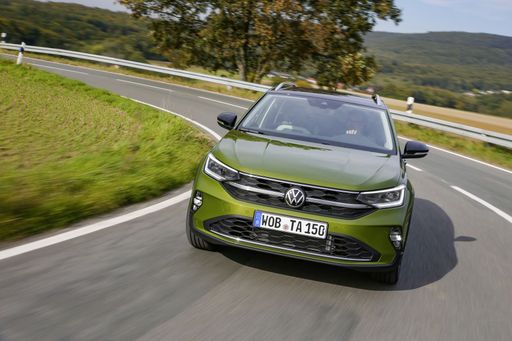
Meanwhile, the 2024 VW Taigo takes a different approach within the SUV segment, known for its sporty styling and compact size. With a narrower range of engine options, the Taigo emphasizes efficiency with petrol engines that peak at 150 HP and offer consumption figures as low as 5.4 L/100km, making it an attractive choice for city drivers.

The Taigo is particularly agile, achieving 0 to 100 km/h in as little as 8.2 seconds, which is commendable for a vehicle in this segment. Its relatively low curb weight ranging from 1229 to 1292 kg enhances its handling and performance, accentuating the stability of its front-wheel drive system.

Taigo @ Volkswagen AG / VW Media

Technical Specifications of the VW Taigo

  • Engine Types: Petrol
  • Power Output: 95 - 150 HP
  • Acceleration (0-100 km/h): 8.2 - 11.1 seconds
  • Fuel Efficiency: 5.4 - 5.8 L/100km
  • Trunk Capacity: 440 L
Sportage @ Kia Corporation

Design and Comfort

The Taigo, while not as spacious as the Sportage, impresses with its stylish edgy exterior and ergonomic interior layout. Despite offering less cargo volume, the compact design makes it ideal for urban environments and parking. The seating configuration still allows for five passengers, ensuring comfort without sacrificing too much space.

Taigo @ Volkswagen AG / VW Media

Conclusion: Which SUV Should You Choose?

Choosing between the Kia Sportage and VW Taigo ultimately boils down to individual preferences. The Sportage offers a broader range of powertrains and features, making it a versatile choice for families or those looking for more performance. On the other hand, the Taigo excels in compact efficiency and sporty dynamics, appealing to those who prioritize style and efficiency in city driving.

In the end, both SUVs serve their respective markets well, combining modern engineering with features designed for the modern driver. Whether you crave the power and space of the Sportage or the agile efficiency of the Taigo, both vehicles represent strong contenders in the compact SUV segment.

Here’s where it gets real: The technical differences in detail

Costs and Efficiency:

Looking at overall running costs, both models reveal some interesting differences in everyday economy.

VW Taigo has a convincingly advantage in terms of price – it starts at 19600 £, while the Kia Sportage costs 30200 £. That’s a price difference of around 10538 £.

Fuel consumption also shows a difference: Kia Sportage manages with 5 L and is therefore slight more efficient than the VW Taigo with 5.30 L. The difference is about 0.30 L per 100 km.

Engine and Performance:

Power, torque and acceleration say a lot about how a car feels on the road. This is where you see which model delivers more driving dynamics.

When it comes to engine power, the Kia Sportage has a distinct edge – offering 239 HP compared to 150 HP. That’s roughly 89 HP more horsepower.

In acceleration from 0 to 100 km/h, the Kia Sportage is minimal quicker – completing the sprint in 7.90 s, while the VW Taigo takes 8.20 s. That’s about 0.30 s faster.

In terms of top speed, the VW Taigo performs hardly perceptible better – reaching 212 km/h, while the Kia Sportage tops out at 203 km/h. The difference is around 9 km/h.

There’s also a difference in torque: Kia Sportage pulls clearly perceptible stronger with 320 Nm compared to 250 Nm. That’s about 70 Nm difference.

Space and Everyday Use:

Cabin size, boot volume and payload all play a role in everyday practicality. Here, comfort and flexibility make the difference.

Both vehicles offer seating for 5 people.

In curb weight, VW Taigo is evident lighter – 1229 kg compared to 1552 kg. The difference is around 323 kg.

In terms of boot space, the Kia Sportage offers clearly perceptible more room – 587 L compared to 440 L. That’s a difference of about 147 L.

In maximum load capacity, the Kia Sportage performs clearly perceptible better – up to 1776 L, which is about 554 L more than the VW Taigo.

When it comes to payload, Kia Sportage noticeable takes the win – 580 kg compared to 457 kg. That’s a difference of about 123 kg.

Who comes out on top?

Overall, the Kia Sportage shows itself to be wins the duel decisively and secures the title of DriveDuel Champion.
It convinces with the more balanced overall package and proves to be the more versatile choice for everyday use.

from about £30,200
Sportage @ Kia Corporation

Kia Sportage

  • Engine Type : Petrol, Full Hybrid, Diesel MHEV
  • Transmission : Manuel, Automatic
  • Drive Type : Front-Wheel Drive, All-Wheel Drive
  • Power HP : 136 - 239 HP
  • Consumption L/100km : 5 - 7.9 L

Kia Sportage

5 (1)
rate

The Kia Sportage proves you don't have to choose between style and sensible family motoring, wrapping modern, confident looks around a roomy, well-equipped cabin. It's an easy car to live with — comfortable on daily runs, pleasantly engaging when you want a bit of fun, and kind to your wallet so you can keep smiling at the fuel pump.

details

VW Taigo

5 (1)
rate

The VW Taigo brings coupe-like flair to the compact crossover scene with sharp styling and an interior that punches above its price, feeling smarter than you’d expect. It’s an easygoing daily companion that balances comfort and practicality with a playful wink, perfect for city drivers who want something livelier than a regular hatchback.

details
Kia Sportage
VW Taigo
Sportage @ Kia Corporation
Taigo @ Volkswagen AG / VW Media

Costs and Consumption

Price
30200 - 43900 £
Price
19600 - 31300 £
Consumption L/100km
5 - 7.9 L
Consumption L/100km
5.3 - 5.8 L
Consumption kWh/100km
-
Consumption kWh/100km
-
Electric Range
-
Electric Range
-
Battery Capacity
-
Battery Capacity
-
co2
132 - 180 g/km
co2
120 - 132 g/km
Fuel tank capacity
52 - 54 L
Fuel tank capacity
40 L

Dimensions and Body

Body Type
SUV
Body Type
SUV
Seats
5
Seats
5
Doors
5
Doors
5
Curb weight
1552 - 1733 kg
Curb weight
1229 - 1302 kg
Trunk capacity
526 - 587 L
Trunk capacity
440 L
Length
4540 mm
Length
4266 mm
Width
1865 mm
Width
1757 mm
Height
1645 mm
Height
1518 mm
Max trunk capacity
1715 - 1776 L
Max trunk capacity
1222 L
Payload
543 - 580 kg
Payload
448 - 457 kg

Engine and Performance

Engine Type
Petrol, Full Hybrid, Diesel MHEV
Engine Type
Petrol
Transmission
Manuel, Automatic
Transmission
Manuel, Automatic
Transmission Detail
Manual Gearbox, Dual-Clutch Automatic, Automatic Gearbox
Transmission Detail
Manual Gearbox, Dual-Clutch Automatic
Drive Type
Front-Wheel Drive, All-Wheel Drive
Drive Type
Front-Wheel Drive
Power HP
136 - 239 HP
Power HP
95 - 150 HP
Acceleration 0-100km/h
7.9 - 11.6 s
Acceleration 0-100km/h
8.2 - 11.1 s
Max Speed
180 - 203 km/h
Max Speed
184 - 212 km/h
Torque
250 - 320 Nm
Torque
175 - 250 Nm
Number of Cylinders
4
Number of Cylinders
3 - 4
Power kW
100 - 176 kW
Power kW
70 - 110 kW
Engine capacity
1598 cm3
Engine capacity
999 - 1498 cm3

General

Model Year
2025
Model Year
2024 - 2025
CO2 Efficiency Class
F, D, E, G
CO2 Efficiency Class
D
Brand
Kia
Brand
VW
Is the Kia Sportage offered with different drivetrains?

The Kia Sportage is offered with Front-Wheel Drive or All-Wheel Drive.

The prices and data displayed are estimates based on German list prices and may vary by country. This information is not legally binding.