VS

Kia XCeed vs Hyundai i30 comparison

Compare performance (180 HP vs 150 HP), boot space and price (23,100 £ vs 24,600 £ ) at a glance. Find out which car is the better choice for you – Kia XCeed or Hyundai i30?

Kia XCeed vs Hyundai i30: Key differences

Kia XCeed

4.5 (3 Reviews)
rate
  • very slightly cheaper
  • moderately more power
  • only slightly quicker 0–100 km/h
  • barely more trunk space

Hyundai i30

4.4 (1 Reviews)
rate
  • very slightly more efficient
  • only slightly lighter

All details on performance, efficiency, range and trunk space can be found in the technical comparison below – including user reviews for both models.

XCeed

Hyundai i30 vs. Kia XCeed: Battle of the Compacts

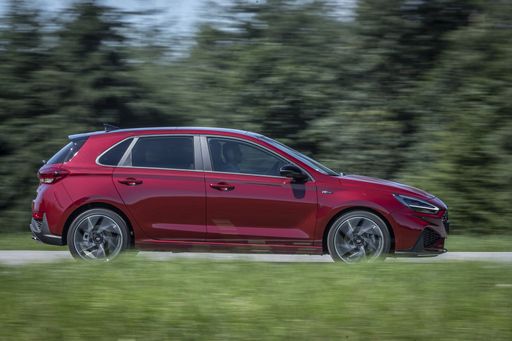
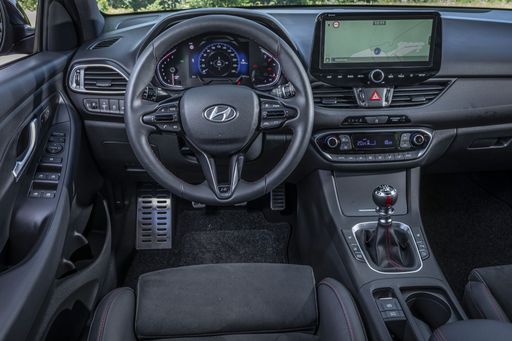
As the automotive world constantly evolves, the compact car segment continues to be fiercely competitive. In this confrontation, we delve into two prominent figures: the Hyundai i30 and the Kia XCeed. Both 2024 models offer unique features and innovations that highlight the strengths of their respective manufacturers. Let's explore how these two stack up in terms of design, performance, and practicality.
i30

Design and Dimensions

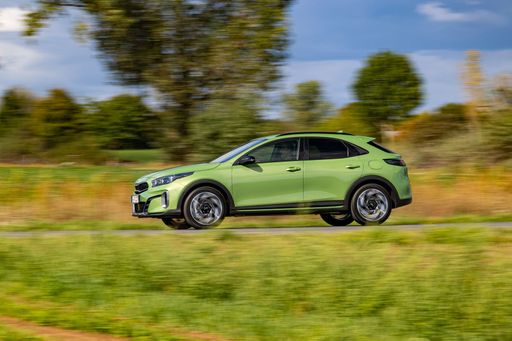
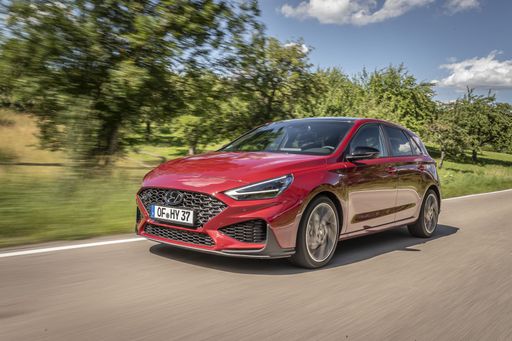
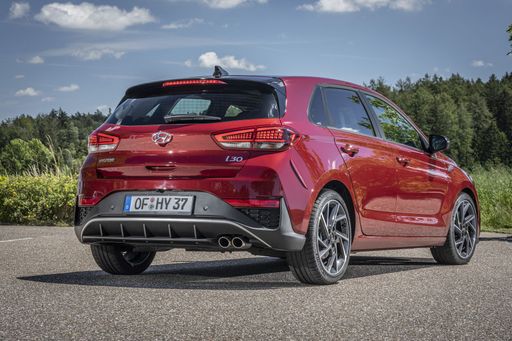
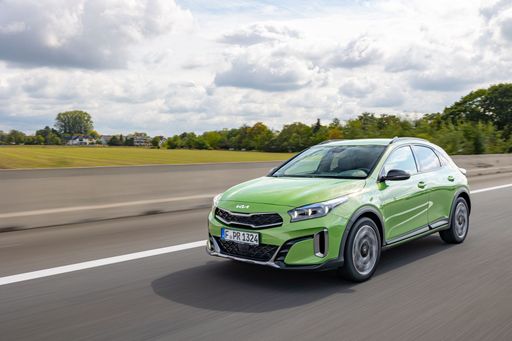
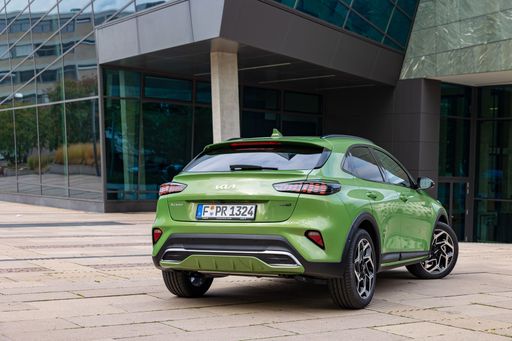
The Hyundai i30 is a sleek hatchback designed for urban and suburban commuting. With dimensions of 4340 mm in length, 1795 mm in width, and a height of 1455 mm, it offers a balanced silhouette ideal for city maneuverability. Meanwhile, the Kia XCeed, embodying the SUV body type, is slightly larger, measuring 4395 mm in length, 1826 mm in width, and 1495 mm in height, showcasing a more commanding road presence.

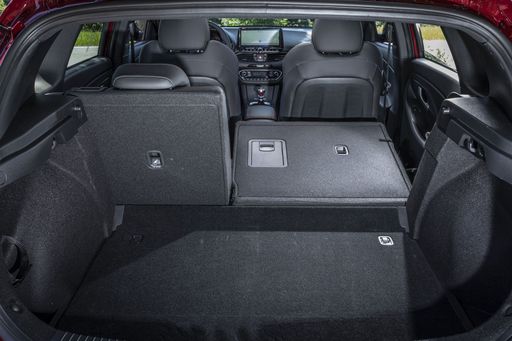
Both vehicles feature five doors and seats, focusing on practicality and space utilization. However, the XCeed's SUV frame allows for greater trunk capacity at 426 liters compared to the i30's 395 liters. This added space could be decisive for families or adventurous souls requiring more cargo room.

XCeed

Engine and Performance

When it comes to engines, both the Hyundai i30 and Kia XCeed provide similar offerings. The i30's petrol and mild hybrid engines produce power ratings from 100 to 140 HP, while the XCeed matches these figures. Despite sharing the same power output, it is crucial to note that the i30 offers slightly quicker acceleration times from 0 to 100 km/h at 9.6 seconds for its higher power engine, compared to XCeed's 10.2 seconds.

Both vehicles possess a front-wheel drive system, and drivers can choose between manual or automatic dual-clutch transmissions. However, the i30 has a slight edge in terms of fuel efficiency, with consumption ranging from 5.6 to 5.9 L/100 km. Comparatively, the XCeed's consumption runs higher, between 6.3 to 6.5 L/100 km, which could translate to more stops at the pump over time.

i30

Innovation and Technology

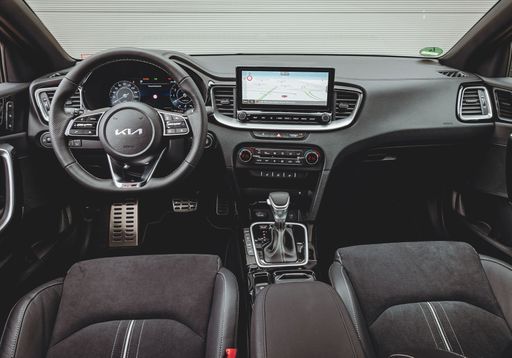
The 2024 Hyundai i30 and Kia XCeed are not just about performance; they integrate advanced technology for enhanced driving experiences. Offering intuitive infotainment systems, both models aim to keep drivers connected and entertained. The driving aids like lane assist, adaptive cruise control, and emergency braking contribute to safer travels.

However, the i30 leans towards a more environmentally friendly approach with a better CO2 efficiency class rated as 'D', against the XCeed's 'E'. This distinction shows Hyundai's commitment to manufacturing more sustainable vehicles.

XCeed

Conclusion

Deciding between the Hyundai i30 and the Kia XCeed largely depends on personal preferences and priorities. The i30 shines with slightly better acceleration, fuel efficiency, and CO2 emissions, making it a cost-effective yet dynamic choice. On the other hand, the XCeed’s spaciousness and rugged SUV appeal may attract those seeking more roominess and a higher driving position.

Both vehicles continue to reflect their brands' enduring commitment to quality and innovation, providing automotive enthusiasts with compelling reasons to consider both these impressive contenders in the compact segment.

Here’s where it gets real: The technical differences in detail

XCeed

Costs and Efficiency:

When it comes to price and running costs, the biggest differences usually appear. This is often where you see which car fits your budget better in the long run.

Kia XCeed is very slightly cheaper – starting at 23,100 £ , while the Hyundai i30 costs 24,600 £ . That’s a price difference of around 1,423 £.

Fuel consumption also shows a difference: the Hyundai i30 uses 5.9 L/100km and is very slightly more efficient than the Kia XCeed with 6.3 L/100km. The difference is about 0.4 L/100km.

i30

Engine and Performance:

Power, torque and acceleration say a lot about how a car feels on the road. This is where you see which model delivers more driving dynamics.

When it comes to engine power, the Kia XCeed offers moderately more power – delivering 180 HP compared to 150 HP. That’s roughly 30 HP more horsepower.

When accelerating from 0 to 100 km/h, the Kia XCeed is only slightly quicker – completing the sprint in 8.5 s, while the Hyundai i30 takes 8.9 s. That’s about 0.4 s quicker.

There’s also a difference in torque: the Kia XCeed delivers only slightly more torque with 265 Nm compared to 250 Nm. That’s about 15 Nm more.

XCeed

Space and Everyday Use:

Beyond pure performance, interior space and usability matter most in daily life. This is where you see which car is more practical and versatile.

Both vehicles offer seating for 5 people.

In terms of curb weight, Hyundai i30 is only slightly lighter – 1,315 kg compared to 1,351 kg. The difference is around 36 kg.

Looking at boot space, the Kia XCeed offers barely more boot space – 426 L compared to 395 L. That’s a difference of about 31 L.

Maximum payload is identical – both can carry up to 485 kg.

Who wins the race in the data check?

The Kia XCeed comes out clearly ahead in the objective data comparison.
This result only shows which model scores more points on paper – not which of the two cars feels right for you.

from £23,100
XCeed

Kia XCeed

  • Engine Type : Petrol, Petrol MHEV
  • Transmission : Manuel, Automatic
  • Drive Type : Front-Wheel Drive
  • Power HP : 115 - 180 HP
  • Consumption L/100km : 6.3 - 6.8 L/100km
Kia XCeed
Hyundai i30

Costs and Consumption

View detailed analysis

Engine and Performance

View detailed analysis

Dimensions and Body

View detailed analysis

Kia XCeed

Kia XCeed blends hatchback agility with a coupe-like stance, wrapping practical space in a handsome, modern package that punches above its class in style. It’s an easygoing everyday companion — comfy, well-equipped and priced to make sensible buyers smile — with just enough spark to keep weekend drives interesting.

details

Hyundai i30

The Hyundai i30 proves that sensible can also be stylish, offering a confident driving character wrapped in neat, modern design. It serves up a roomy, well-equipped cabin and composed ride that make everyday motoring feel like a clever purchase rather than a compromise.

details
Kia XCeed
Hyundai i30

Costs and Consumption

Price
23,100 - 33,000 £
Price
24,600 - 31,400 £
Consumption L/100km
6.3 - 6.8 L/100km
Consumption L/100km
5.9 - 6.3 L/100km
Consumption kWh/100km
-
Consumption kWh/100km
-
Electric Range
-
Electric Range
-
Battery Capacity
-
Battery Capacity
-
co2
143 - 155 g/km
co2
134 - 142 g/km
Fuel tank capacity
-
Fuel tank capacity
-

Dimensions and Body

Body Type
SUV
Body Type
Hatchback
Seats
5
Seats
5
Doors
-
Doors
-
Curb weight
1,351 - 1,419 kg
Curb weight
1,315 - 1,435 kg
Trunk capacity
426 L
Trunk capacity
395 L
Length
-
Length
-
Width
1,826 mm
Width
1,795 mm
Height
-
Height
-
Max trunk capacity
-
Max trunk capacity
-
Payload
471 - 485 kg
Payload
445 - 485 kg

Engine and Performance

Engine Type
Petrol, Petrol MHEV
Engine Type
Petrol
Transmission
Manuel, Automatic
Transmission
Manuel, Automatic
Transmission Detail
Manual Gearbox, Dual-Clutch Automatic
Transmission Detail
Manual Gearbox, Dual-Clutch Automatic
Drive Type
Front-Wheel Drive
Drive Type
Front-Wheel Drive
Power HP
115 - 180 HP
Power HP
115 - 150 HP
Acceleration 0-100km/h
8.5 - 12.2 s
Acceleration 0-100km/h
8.9 - 11.7 s
Max Speed
-
Max Speed
-
Torque
200 - 265 Nm
Torque
172 - 250 Nm
Number of Cylinders
3 - 4
Number of Cylinders
3 - 4
Power kW
85 - 132 kW
Power kW
85 - 110 kW
Engine capacity
998 - 1,598 cm3
Engine capacity
998 - 1,598 cm3

General

Model Year
2,025 - 2,026
Model Year
2,026
CO2 Efficiency Class
E
CO2 Efficiency Class
D, E
Brand
Kia
Brand
Hyundai
DriveDuel uses data analysis and artificial intelligence to evaluate vehicle data and create content. Content is regularly reviewed and improved. The displayed prices are estimates based on German list prices, adjusted to the respective country’s VAT. Country-specific registration taxes are not included. This information is not legally binding.