VS

Kia XCeed vs Mazda CX-30 - Differences and prices compared

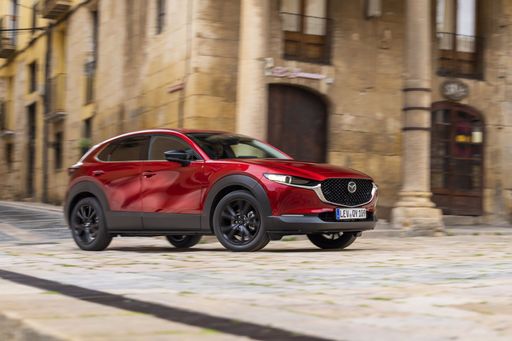
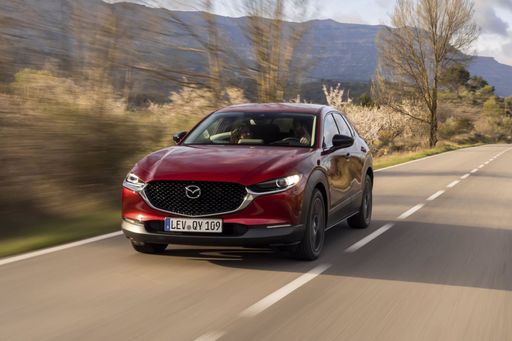
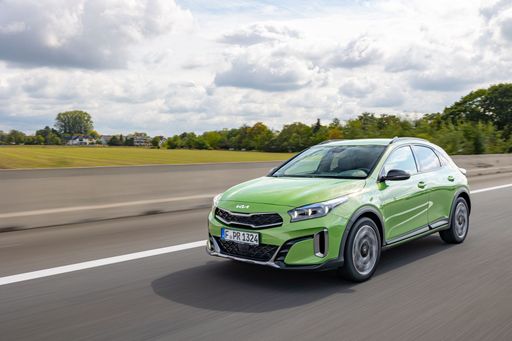
Compare performance (180 HP vs 186 HP), boot space and price (23100 £ vs 25200 £ ) at a glance. Find out which car is the better choice for you – Kia XCeed or Mazda CX-30?

XCeed

Compact SUV Clash: Kia XCeed vs. Mazda CX-30

As the market for compact SUVs heats up, the Kia XCeed and the Mazda CX-30 emerge as two formidable contenders vying for attention in the 2024 model year. Both vehicles offer a unique blend of performance, style, and practicality. In this article, we delve into the technical specifications and innovations that set these two models apart, helping you make an informed choice.
CX-30

Design and Dimensions

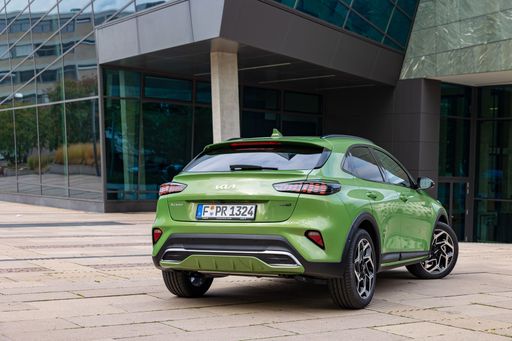
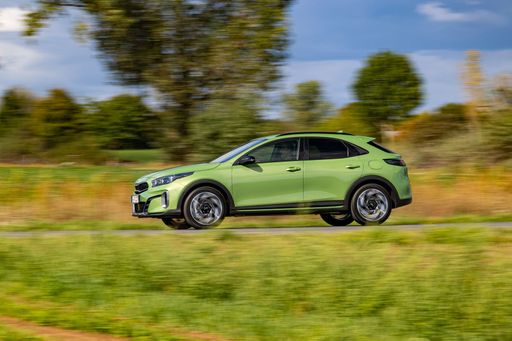
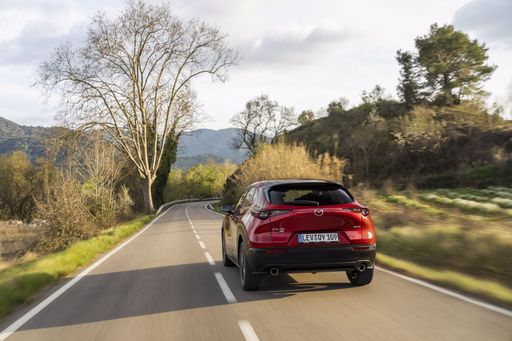
The Kia XCeed and Mazda CX-30 share similar dimensions, each boasting a length of 4395 mm. However, they diverge in width and height. The XCeed stretches across 1826 mm in width and stands 1495 mm tall, while the CX-30 measures a slightly narrower 1795 mm in width with a height of 1540 mm. Inside, both SUVs accommodate five passengers comfortably.

XCeed

Power and Performance

The powertrain options on these two models cater to diverse driving preferences. The Kia XCeed offers a choice between a 100 HP and a 140 HP petrol engine. The manual and dual-clutch automatic transmissions route power to the front wheels, delivering acceleration from 0 to 100 km/h in as swift as 10.2 seconds, with a top speed reaching up to 195 km/h.

In contrast, the CX-30 employs a more robust petrol mild hybrid (MHEV) system with a maximum output of 186 HP. Available in both front-wheel and all-wheel drive configurations, the CX-30 achieves 0 to 100 km/h in a brisk 8.3 seconds, hitting a top speed of 204 km/h. This extra power translates to a slightly more exhilarating driving experience.

CX-30

Fuel Efficiency and Environmental Impact

Fuel efficiency plays a crucial role in the buying decision for many SUV drivers. The Kia XCeed's consumption ranges between 6.3 to 6.5 liters per 100 km depending on the drivetrain, with CO2 emissions around 143-148 g/km. Classified under the CO2 efficiency class E, it represents a moderate impact on the environment.

Meanwhile, the Mazda CX-30 offers better fuel economy with consumption figures ranging from 5.7 to 6.6 liters per 100 km and CO2 emissions spanning 129-148 g/km, securing a CO2 efficiency class of D to E. This gives the CX-30 a slight edge in terms of environmental friendliness.

XCeed

Interior Comfort and Utility

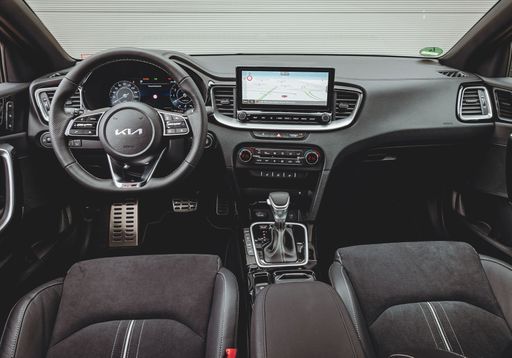
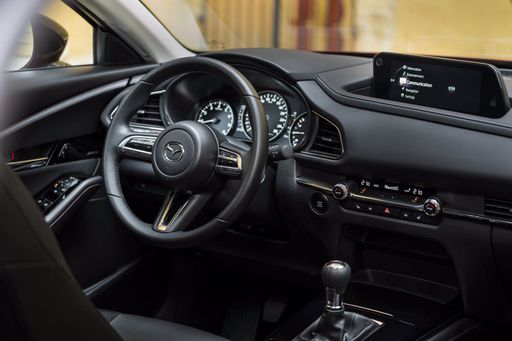
Both models prioritize passenger comfort with well-appointed interiors and an array of standard features. The Kia XCeed provides a trunk capacity of 426 liters, slightly undercutting the Mazda CX-30's 430 liters. Drivers will appreciate features like advanced infotainment systems, driver assistance technologies, and flexible seating configurations available in both vehicles.

CX-30

Conclusion

Choosing between the Kia XCeed and Mazda CX-30 often comes down to personal preference. The XCeed impresses with its dynamic styling, solid performance, and practical features, while the CX-30 offers a spirited drive backed by efficient hybrid technology and enhanced eco-friendly credentials. Ultimately, prospective buyers should consider their desired balance of power, efficiency, and comfort before making a decision.

Kia XCeed

4.5 (3 Reviews)
rate

Mazda CX-30

4.4 (2 Reviews)
rate

Here’s where it gets real: The technical differences in detail

XCeed

Costs and Efficiency:

Looking at overall running costs, both models reveal some interesting differences in everyday economy.

Kia XCeed has a barely noticeable advantage in terms of price – it starts at 23100 £ , while the Mazda CX-30 costs 25200 £ . That’s a price difference of around 2100 £.

Fuel consumption also shows a difference: Mazda CX-30 manages with 5.70 L and is therefore to a small extent more efficient than the Kia XCeed with 6.40 L. The difference is about 0.70 L per 100 km.

CX-30

Engine and Performance:

Under the bonnet, it becomes clear which model is tuned for sportiness and which one takes the lead when you hit the accelerator.

When it comes to engine power, the Mazda CX-30 has a hardly perceptible edge – offering 186 HP compared to 180 HP. That’s roughly 6 HP more horsepower.

In acceleration from 0 to 100 km/h, the Mazda CX-30 is barely noticeable quicker – completing the sprint in 8.30 s, while the Kia XCeed takes 8.50 s. That’s about 0.20 s faster.

There’s also a difference in torque: Kia XCeed pulls barely noticeable stronger with 265 Nm compared to 240 Nm. That’s about 25 Nm difference.

Space and Everyday Use:

Whether family car or daily driver – which one offers more room, flexibility and comfort?

Both vehicles offer seating for 5 people.

In curb weight, Kia XCeed is slight lighter – 1351 kg compared to 1455 kg. The difference is around 104 kg.

In terms of boot space, the Mazda CX-30 offers barely noticeable more room – 430 L compared to 426 L. That’s a difference of about 4 L.

When it comes to payload, Mazda CX-30 barely noticeable takes the win – 496 kg compared to 479 kg. That’s a difference of about 17 kg.

Who wins the race in the data check?

The Mazda CX-30 is clearly ahead overall in the objective data comparison.
This result only shows which model scores more points on paper – not which of the two cars feels right for you.

Kia XCeed
Mazda CX-30

Costs and Consumption

View detailed analysis

Engine and Performance

View detailed analysis

Dimensions and Body

View detailed analysis
from about £25,200
CX-30

Mazda CX-30

  • Engine Type : Petrol MHEV
  • Transmission : Manuel, Automatic
  • Drive Type : Front-Wheel Drive, All-Wheel Drive
  • Power HP : 140 - 186 HP
  • Consumption L/100km : 5.7 - 6.6 L

Kia XCeed

4.5 (3 Reviews)
rate

Kia XCeed blends hatchback agility with a coupe-like stance, wrapping practical space in a handsome, modern package that punches above its class in style. It’s an easygoing everyday companion — comfy, well-equipped and priced to make sensible buyers smile — with just enough spark to keep weekend drives interesting.

details

Mazda CX-30

4.4 (2 Reviews)
rate

The Mazda CX-30 blends sleek coupe-like lines with the practicality of a compact crossover, feeling more premium than its price tag suggests. It’s a joy to drive for anyone who likes a taut chassis and an interior that treats daily commutes like a small luxury escape.

details
Kia XCeed
Mazda CX-30

Costs and Consumption

Price
23100 - 33000 £
Price
25200 - 36800 £
Consumption L/100km
6.4 - 6.8 L
Consumption L/100km
5.7 - 6.6 L
Consumption kWh/100km
-
Consumption kWh/100km
-
Electric Range
-
Electric Range
-
Battery Capacity
-
Battery Capacity
-
co2
144 - 155 g/km
co2
129 - 148 g/km
Fuel tank capacity
-
Fuel tank capacity
-

Dimensions and Body

Body Type
SUV
Body Type
SUV
Seats
5
Seats
5
Doors
-
Doors
-
Curb weight
1351 - 1419 kg
Curb weight
1455 - 1587 kg
Trunk capacity
426 L
Trunk capacity
422 - 430 L
Length
-
Length
-
Width
1826 mm
Width
1795 mm
Height
-
Height
-
Max trunk capacity
-
Max trunk capacity
-
Payload
471 - 479 kg
Payload
458 - 496 kg

Engine and Performance

Engine Type
Petrol
Engine Type
Petrol MHEV
Transmission
Manuel, Automatic
Transmission
Manuel, Automatic
Transmission Detail
Manual Gearbox, Dual-Clutch Automatic
Transmission Detail
Manual Gearbox, Automatic Gearbox
Drive Type
Front-Wheel Drive
Drive Type
Front-Wheel Drive, All-Wheel Drive
Power HP
115 - 180 HP
Power HP
140 - 186 HP
Acceleration 0-100km/h
8.5 - 11.7 s
Acceleration 0-100km/h
8.3 - 10.3 s
Max Speed
-
Max Speed
-
Torque
200 - 265 Nm
Torque
238 - 240 Nm
Number of Cylinders
3 - 4
Number of Cylinders
4
Power kW
85 - 132 kW
Power kW
103 - 137 kW
Engine capacity
998 - 1598 cm3
Engine capacity
1998 - 2488 cm3

General

Model Year
2025
Model Year
2025
CO2 Efficiency Class
E
CO2 Efficiency Class
D, E
Brand
Kia
Brand
Mazda
Is the Kia XCeed offered with different drivetrains?

The Kia XCeed is available as Front-Wheel Drive.

The prices shown are estimates based on German list prices, adjusted for local VAT. Local registration taxes (e.g. NoVA, BPM or CO2 malus) are not included. This information is not legally binding.