VS

Kia XCeed vs Kia Sportage comparison

Compare performance (180 HP vs 288 HP), boot space and price (23,100 £ vs 29,100 £ ) at a glance. Find out which car is the better choice for you – Kia XCeed or Kia Sportage?

Kia XCeed vs Kia Sportage: Key differences

Kia XCeed

4.5 (3 Reviews)
rate
  • noticeably cheaper
  • moderately lighter
details

Kia Sportage

5 (3 Reviews)
rate
  • visibly more power
  • considerably more efficient
  • slightly quicker 0–100 km/h
  • noticeably more trunk space
details

All details on performance, efficiency, range and trunk space can be found in the technical comparison below – including user reviews for both models.

By Achim Sedelmaier

XCeed

A Battle Between Siblings: Kia Sportage VS Kia XCeed

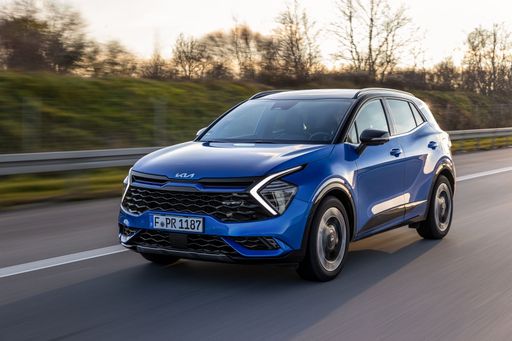
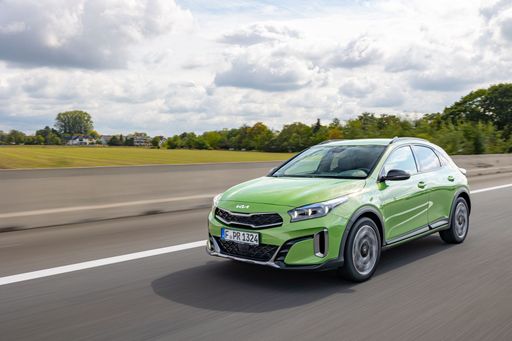
The Kia lineup has carved a niche for itself in the competitive automotive market by delivering both performance and style. The Kia Sportage and Kia XCeed represent two different yet compelling offerings from the brand, each catering to distinct needs and preferences. In this detailed comparison, we dive deep into the technical aspects and innovations that set them apart.
Sportage

Exterior and Design

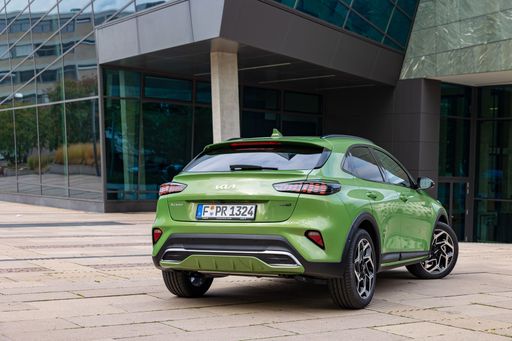
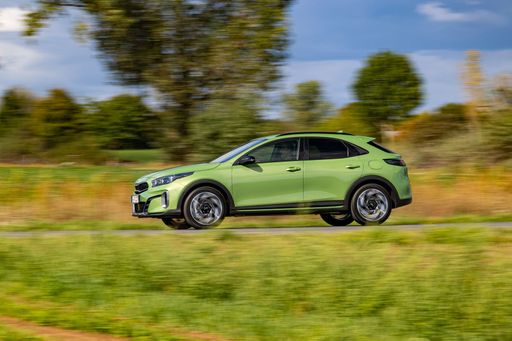
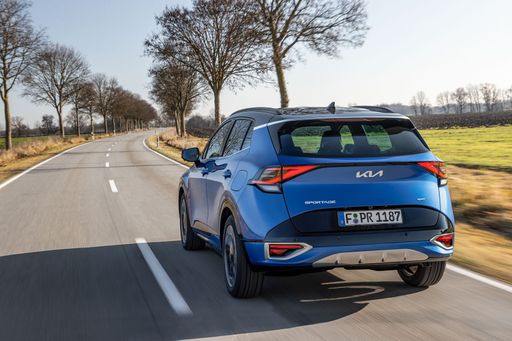
Both the Kia Sportage and XCeed boast the brand's signature style, yet they cater to different aesthetic tastes. The Sportage, with its dimensions of 4515 mm in length, 1865 mm in width, and 1650 mm in height, presents a robust and commanding SUV presence. In contrast, the XCeed, slightly more compact, measures 4395 mm in length, 1826 mm in width, and 1495 mm in height, making it more akin to a sporty crossover with a nimble silhouette. Both vehicles offer a 5-door configuration, enhancing accessibility and practicality.

XCeed

Power and Performance

When it comes to performance, the Kia Sportage offers a broader array of options under the hood. Buyers can choose from several engine types, including Diesel MHEV, Petrol MHEV, Full Hybrid, and Plugin Hybrid. This versatility translates into power outputs ranging from 136 HP to 252 HP, with maximum speeds between 180 km/h and 194 km/h. The Sportage's diverse powertrain lineup is complemented by options for both manual and automatic transmissions, as well as front-wheel and all-wheel drive systems.

The XCeed, on the other hand, offers more straightforward choices with its petrol engines, providing 100 HP and 140 HP variants. With a maximum speed of up to 195 km/h and front-wheel drive exclusively, the XCeed promises a nimble driving experience. In terms of acceleration, the XCeed sprints from 0-100 km/h in 10.2 to 13.4 seconds, whereas the Sportage achieves this feat in 8.3 to 11.6 seconds, depending on the chosen powertrain.

Sportage

Fuel Efficiency and Environmental Impact

The emphasis on fuel efficiency is evident in both models, although the Kia Sportage takes a lead with its hybrid and plugin hybrid options. The Sportage's fuel consumption ranges from a frugal 1.2 L/100km for plug-in hybrids to 7.2 L/100km for petrol engines, also offering an electric range of 64 km. The XCeed offers consistent fuel consumption figures, ranging from 6.3 L/100km to 6.5 L/100km, positioning it as a competent choice for urban commutes.

In terms of CO2 emissions, both models exhibit a conscientious approach, though the Sportage achieves a more extensive range, even reaching a remarkably low 28 g/km with the plugin hybrid variant. The XCeed maintains emissions between 143 g/km and 148 g/km, reflecting its efficiency-oriented build.

XCeed

Interior and Cargo Space

The interior space is a crucial factor for families and adventurers alike. The Kia Sportage impresses with a larger trunk capacity, ranging from 526 to 587 liters, making it ideal for those long road trips or family outings. The XCeed offers a slightly reduced trunk capacity of 426 liters, which still suffices for daily needs and weekend getaways.

Both models comfortably seat five occupants, providing practical and user-friendly cabin layouts. Attention to passenger comfort and utility underlines Kia's commitment to driver and passenger satisfaction.

Sportage

Conclusion: Choosing Between Two Titans

In sum, the choice between the Kia Sportage and Kia XCeed hinges on individual preferences and needs. The Sportage comes forth as a multi-faceted SUV with a wealth of engine options, including hybrid technology and a larger cargo capacity, appealing to families and eco-conscious drivers. On the other hand, the XCeed offers a sporty, urban-oriented crossover experience with efficient petrol performance and a sleek design.

Whichever model you choose, Kia ensures that innovation and quality remain at the forefront, delivering vehicles that promise reliability, efficiency, and style.

Here’s where it gets real: The technical differences in detail

XCeed

Costs and Efficiency:

When it comes to price and running costs, the biggest differences usually appear. This is often where you see which car fits your budget better in the long run.

Kia XCeed is noticeably cheaper – starting at 23,100 £ , while the Kia Sportage costs 29,100 £ . That’s a price difference of around 6,000 £.

Fuel consumption also shows a difference: the Kia Sportage uses 2.9 L/100km and is considerably more efficient than the Kia XCeed with 6.3 L/100km. The difference is about 3.4 L/100km.

Sportage

Engine and Performance:

Under the bonnet, it becomes clear which model is tuned for sportiness and which one takes the lead when you hit the accelerator.

When it comes to engine power, the Kia Sportage offers visibly more power – delivering 288 HP compared to 180 HP. That’s roughly 108 HP more horsepower.

When accelerating from 0 to 100 km/h, the Kia Sportage is slightly quicker – completing the sprint in 7.5 s, while the Kia XCeed takes 8.5 s. That’s about 1 s quicker.

There’s also a difference in torque: the Kia Sportage delivers clearly more torque with 380 Nm compared to 265 Nm. That’s about 115 Nm more.

XCeed

Space and Everyday Use:

Whether family car or daily driver – which one offers more room, flexibility and comfort?

Both vehicles offer seating for 5 people.

In terms of curb weight, Kia XCeed is moderately lighter – 1,351 kg compared to 1,552 kg. The difference is around 201 kg.

Looking at boot space, the Kia Sportage offers noticeably more boot space – 587 L compared to 426 L. That’s a difference of about 161 L.

When it comes to payload, the Kia Sportage carries a bit more – 580 kg compared to 485 kg. That’s a difference of about 95 kg.

Who wins the race in the data check?

The Kia Sportage holds a decisive overall lead in the objective data comparison.
This result only shows which model scores more points on paper – not which of the two cars feels right for you.

from £29,100
Sportage

Kia Sportage

  • Engine Type : Petrol, Full Hybrid, Diesel MHEV, Plugin Hybrid
  • Transmission : Manuel, Automatic
  • Drive Type : Front-Wheel Drive, All-Wheel Drive
  • Power HP : 136 - 288 HP
  • Consumption L/100km : 2.9 - 7.8 L/100km
  • Electric Range : 63 - 66 km
Kia XCeed
Kia Sportage

Costs and Consumption

View detailed analysis

Engine and Performance

View detailed analysis

Dimensions and Body

View detailed analysis

Kia XCeed

Kia XCeed blends hatchback agility with a coupe-like stance, wrapping practical space in a handsome, modern package that punches above its class in style. It’s an easygoing everyday companion — comfy, well-equipped and priced to make sensible buyers smile — with just enough spark to keep weekend drives interesting.

details

Kia Sportage

The Kia Sportage proves you don't have to choose between style and sensible family motoring, wrapping modern, confident looks around a roomy, well-equipped cabin. It's an easy car to live with — comfortable on daily runs, pleasantly engaging when you want a bit of fun, and kind to your wallet so you can keep smiling at the fuel pump.

details
Kia XCeed
Kia Sportage

Costs and Consumption

Price
23,100 - 33,000 £
Price
29,100 - 47,100 £
Consumption L/100km
6.3 - 6.8 L/100km
Consumption L/100km
2.9 - 7.8 L/100km
Consumption kWh/100km
-
Consumption kWh/100km
-
Electric Range
-
Electric Range
63 - 66 km
Battery Capacity
-
Battery Capacity
-
co2
143 - 155 g/km
co2
67 - 177 g/km
Fuel tank capacity
-
Fuel tank capacity
-

Dimensions and Body

Body Type
SUV
Body Type
SUV
Seats
5
Seats
5
Doors
-
Doors
-
Curb weight
1,351 - 1,419 kg
Curb weight
1,552 - 1,896 kg
Trunk capacity
426 L
Trunk capacity
526 - 587 L
Length
-
Length
-
Width
1,826 mm
Width
1,865 mm
Height
-
Height
-
Max trunk capacity
-
Max trunk capacity
-
Payload
471 - 485 kg
Payload
533 - 580 kg

Engine and Performance

Engine Type
Petrol, Petrol MHEV
Engine Type
Petrol, Full Hybrid, Diesel MHEV, Plugin Hybrid
Transmission
Manuel, Automatic
Transmission
Manuel, Automatic
Transmission Detail
Manual Gearbox, Dual-Clutch Automatic
Transmission Detail
Manual Gearbox, Dual-Clutch Automatic, Automatic Gearbox
Drive Type
Front-Wheel Drive
Drive Type
Front-Wheel Drive, All-Wheel Drive
Power HP
115 - 180 HP
Power HP
136 - 288 HP
Acceleration 0-100km/h
8.5 - 12.2 s
Acceleration 0-100km/h
7.5 - 11.6 s
Max Speed
-
Max Speed
-
Torque
200 - 265 Nm
Torque
250 - 380 Nm
Number of Cylinders
3 - 4
Number of Cylinders
4
Power kW
85 - 132 kW
Power kW
100 - 212 kW
Engine capacity
998 - 1,598 cm3
Engine capacity
1,598 cm3

General

Model Year
2,025 - 2,026
Model Year
2,025 - 2,026
CO2 Efficiency Class
E
CO2 Efficiency Class
F, D, E, G, B
Brand
Kia
Brand
Kia
DriveDuel uses data analysis and artificial intelligence to evaluate vehicle data and create content. Content is regularly reviewed and improved. The displayed prices are estimates based on German list prices, adjusted to the respective country’s VAT. Country-specific registration taxes are not included. This information is not legally binding.