
 Deutschland
 France
 Nederland
 Great Britain
 Sverige
 Danmark
 Suomi
Suomi Italia
 Polska
 Česko
Česko España
LBX
VS
Lexus LBX vs Jeep Avenger comparison
Compare performance (136 HP vs 156 HP), boot space and price (28,300 £ vs 22,500 £ ) at a glance. Find out which car is the better choice for you – Lexus LBX or Jeep Avenger?
Lexus LBX vs Jeep Avenger: Key differences
All details on performance, efficiency, range and trunk space can be found in the technical comparison below – including user reviews for both models.
Avenger
The Showdown: Jeep Avenger vs. Lexus LBX
As the automotive market continues to evolve towards sustainability, two distinct SUVs—the Jeep Avenger and the Lexus LBX—have emerged as frontrunners in their respective segments. While both vehicles share a commitment to performance and efficiency, they come equipped with unique technical specifications and innovations that set them apart. In this comparison, we’ll delve into the technical aspects and features of each model to help you choose the right SUV for your needs.
LBX
Performance and Powertrains
The Jeep Avenger offers a range of engine options, including electric, petrol MHEV, and petrol versions. The electric variant boasts a remarkable power output of 156 HP and a torque of 260 Nm, ensuring that it can accelerate from 0 to 100 km/h in just 9 seconds. With a battery capacity of 51 kWh and an electric range of up to 400 km, the Avenger stands out for its practicality in urban and suburban settings.
On the other hand, the Lexus LBX features a full hybrid engine with a power output of 136 HP and a torque of 185 Nm. This SUV reaches 100 km/h in 9.2 seconds, providing a competitive edge over its rival. However, it is important to note that the LBX's fuel consumption is more efficient, rated at 4.5 to 4.8 L/100 km.
Avenger
Dimensions and Interior Comfort
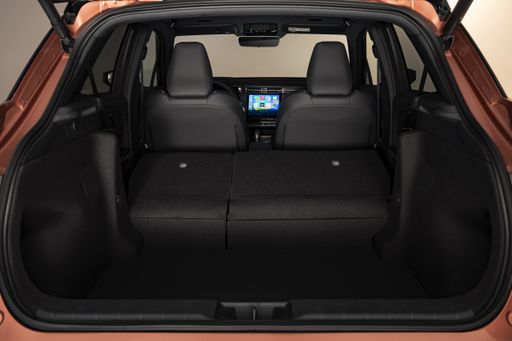
In terms of dimensions, the Jeep Avenger is slightly shorter, measuring 4084 mm in length compared to the LBX's 4190 mm. However, the Avenger maintains a comparable width of 1776 mm, whereas the LBX measures 1825 mm. The Jeep can seat five passengers comfortably and offers a trunk capacity ranging from 325 to 380 liters. Conversely, the Lexus LBX accommodates four passengers and has a trunk capacity of 255 to 332 liters, showing a slight disadvantage in cargo space.
LBX
Technical Innovations
Both vehicles are equipped with cutting-edge technology to enhance the driving experience. The Jeep Avenger features advanced driver-assist systems and connectivity options, including a user-friendly infotainment interface that supports both Apple CarPlay and Android Auto.
In contrast, the Lexus LBX offers its own suite of technological advancements, including an advanced multimedia system and a highly efficient CVT (Continuously Variable Transmission) that contributes to its fuel economy. Furthermore, Lexus emphasizes luxury with premium materials and intuitive controls that elevate the driving experience.
Avenger
Driving Dynamics and Handling
When it comes to driving dynamics, the Jeep Avenger is designed with versatility in mind. The availability of both front-wheel drive and all-wheel drive systems makes it adaptable for various road conditions and terrains, making it a suitable choice for adventurous drivers. The Avenger's curb weight, ranging between 1180 to 1520 kg, also contributes to its overall stability and handling in different environments.
The Lexus LBX, being a compact SUV, leans towards a sporty driving experience while ensuring comfort. With its slightly lower curb weight (1280 to 1365 kg), the LBX delivers responsive handling and a refined ride quality, making it ideal for urban driving.
LBX
Conclusion: Which SUV Takes the Crown?
Overall, the choice between the Jeep Avenger and the Lexus LBX boils down to personal preferences and driving styles. The Avenger excels in electric performance, passenger capacity, and off-road capability. Meanwhile, the Lexus LBX impresses with its hybrid efficiency, luxurious interior, and high-tech features. Both vehicles reflect a commitment to innovation and performance, making them worthy contenders in the ever-competitive SUV market.
Here’s where it gets real: The technical differences in detail
LBX
Costs and Efficiency:
Price and efficiency are often the first things buyers look at. Here it becomes clear which model has the long-term edge – whether at the pump, the plug, or in purchase price.
Jeep Avenger is markedly cheaper – starting at 22,500 £ , while the Lexus LBX costs 28,300 £ . That’s a price difference of around 5,735 £.
Fuel consumption also shows a difference: the Lexus LBX uses 4.5 L/100km and is barely more efficient than the Jeep Avenger with 4.9 L/100km. The difference is about 0.4 L/100km.
Avenger
Engine and Performance:
Power, torque and acceleration say a lot about how a car feels on the road. This is where you see which model delivers more driving dynamics.
When it comes to engine power, the Jeep Avenger offers a bit more power – delivering 156 HP compared to 136 HP. That’s roughly 20 HP more horsepower.
When accelerating from 0 to 100 km/h, the Jeep Avenger is marginally quicker – completing the sprint in 9 s, while the Lexus LBX takes 9.2 s. That’s about 0.2 s quicker.
There’s also a difference in torque: the Jeep Avenger delivers visibly more torque with 260 Nm compared to 185 Nm. That’s about 75 Nm more.
LBX
Space and Everyday Use:
Beyond pure performance, interior space and usability matter most in daily life. This is where you see which car is more practical and versatile.
Both vehicles offer seating for 5 people.
In terms of curb weight, Jeep Avenger is only slightly lighter – 1,180 kg compared to 1,280 kg. The difference is around 100 kg.
Looking at boot space, the Jeep Avenger offers slightly more boot space – 380 L compared to 332 L. That’s a difference of about 48 L.
When it comes to payload, the Jeep Avenger carries barely more – 502 kg compared to 475 kg. That’s a difference of about 27 kg.
Who wins the race in the data check?
The Jeep Avenger holds a decisive overall lead in the objective data comparison.
This result only shows which model scores more points on paper – not which of the two cars feels right for you.
from £22,500
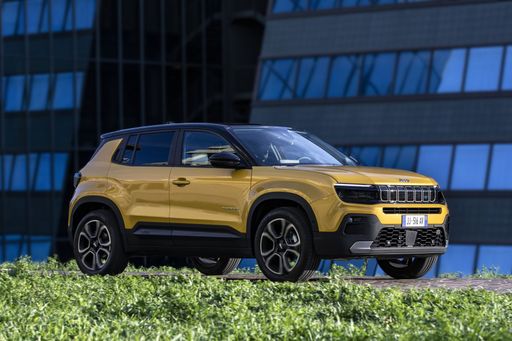
Jeep Avenger
Lexus LBX
Jeep Avenger
Costs and Consumption
View detailed analysis
View detailed analysis
Engine and Performance
View detailed analysis
View detailed analysis
Dimensions and Body
View detailed analysis
View detailed analysis
Lexus LBX
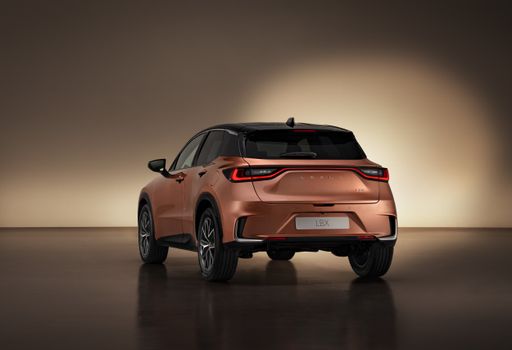
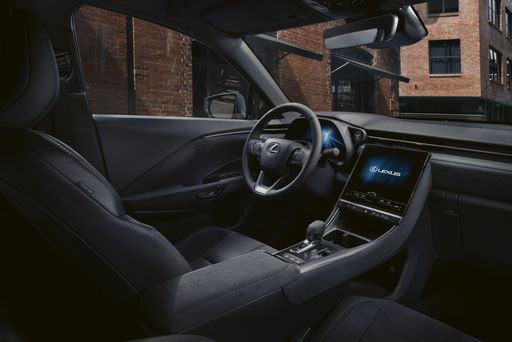
The Lexus LBX is a compact premium crossover that brings Lexus styling and craftsmanship to city driving, pairing a cozy interior with thoughtful tech and upscale materials. It focuses on a quiet, refined ride and fuel-efficient everyday usability while carrying the brand’s familiar emphasis on comfort and safety.
details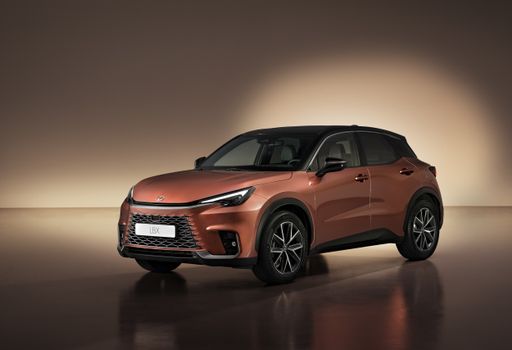
Jeep Avenger
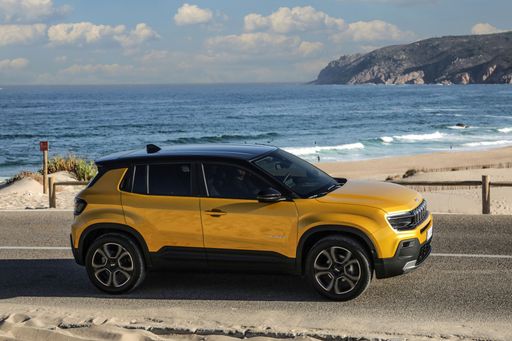
The Jeep Avenger mixes rugged styling with a compact, city‑friendly footprint that makes it easy to maneuver while keeping Jeep’s adventurous character. Inside it offers a practical, modern cabin with sensible tech and comfort aimed at everyday driving and light weekend getaways.
details


Lexus LBX
Jeep Avenger
Costs and Consumption |
|
|---|---|
|
Price
28,300 - 40,000 £
|
Price
22,500 - 36,800 £
|
|
Consumption L/100km
4.5 - 4.8 L/100km
|
Consumption L/100km
4.9 - 5.7 L/100km
|
|
Consumption kWh/100km
-
|
Consumption kWh/100km
15.5 kWh/100km
|
|
Electric Range
-
|
Electric Range
400 km
|
|
Battery Capacity
-
|
Battery Capacity
-
|
|
co2
102 - 110 g/km
|
co2
0 - 129 g/km
|
|
Fuel tank capacity
-
|
Fuel tank capacity
-
|
Dimensions and Body |
|
|---|---|
|
Body Type
SUV
|
Body Type
SUV
|
|
Seats
5
|
Seats
5
|
|
Doors
-
|
Doors
-
|
|
Curb weight
1,280 - 1,365 kg
|
Curb weight
1,180 - 1,520 kg
|
|
Trunk capacity
255 - 332 L
|
Trunk capacity
325 - 380 L
|
|
Length
-
|
Length
-
|
|
Width
1,825 mm
|
Width
1,776 mm
|
|
Height
-
|
Height
-
|
|
Max trunk capacity
-
|
Max trunk capacity
-
|
|
Payload
455 - 475 kg
|
Payload
490 - 502 kg
|
Engine and Performance |
|
|---|---|
|
Engine Type
Full Hybrid
|
Engine Type
Petrol MHEV, Electric, Petrol
|
|
Transmission
Automatic
|
Transmission
Automatic, Manuel
|
|
Transmission Detail
CVT
|
Transmission Detail
Dual-Clutch Automatic, Reduction Gearbox, Manual Gearbox
|
|
Drive Type
Front-Wheel Drive, All-Wheel Drive
|
Drive Type
Front-Wheel Drive, All-Wheel Drive
|
|
Power HP
136 HP
|
Power HP
100 - 156 HP
|
|
Acceleration 0-100km/h
9.2 - 9.6 s
|
Acceleration 0-100km/h
9 - 10.6 s
|
|
Max Speed
-
|
Max Speed
-
|
|
Torque
185 Nm
|
Torque
205 - 260 Nm
|
|
Number of Cylinders
3
|
Number of Cylinders
3
|
|
Power kW
100 kW
|
Power kW
74 - 115 kW
|
|
Engine capacity
1,490 cm3
|
Engine capacity
1,199 cm3
|
General |
|
|---|---|
|
Model Year
2025
|
Model Year
2026
|
|
CO2 Efficiency Class
C
|
CO2 Efficiency Class
C, A, D
|
|
Brand
Lexus
|
Brand
Jeep
|
DriveDuel uses data analysis and artificial intelligence to evaluate vehicle data and create content. Content is regularly reviewed and improved.
The displayed prices are estimates based on German list prices, adjusted to the respective country’s VAT. Country-specific registration taxes are not included. This information is not legally binding.