@ Mazda Motor Corporation
VS

Mazda CX-30 vs Mazda CX-5 – Performance, range & efficiency compared

Two cars, one duel: Mazda CX-30 meets Mazda CX-5.
Which one wins in performance, efficiency and value for money? Find out now!

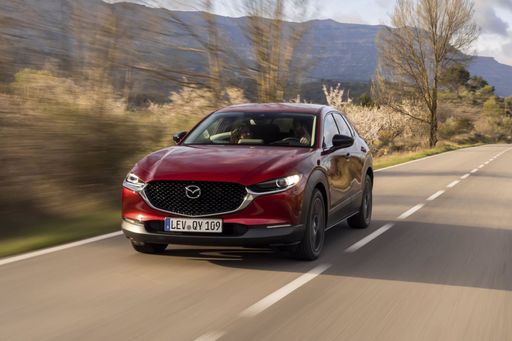
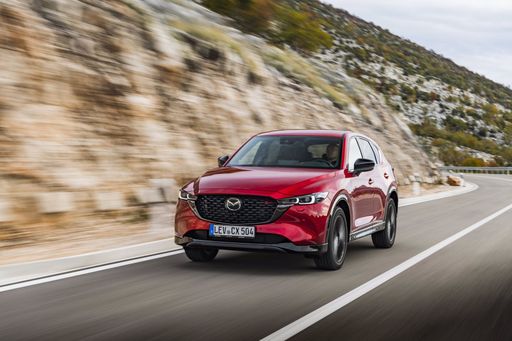
CX-30 @ Mazda Motor Corporation

Mazda CX-30 vs Mazda CX-5: A Comprehensive Comparison

The automotive landscape is continually evolving, offering consumers a plethora of choices. In the compact SUV segment, Mazda has made a name for itself with two standout models: the Mazda CX-30 and the Mazda CX-5. Both vehicles offer compelling features, but they cater to slightly different audiences and driving needs. This comparison will dive into their technical specifications, innovative features, and overall performance to help potential buyers determine which model suits them best.

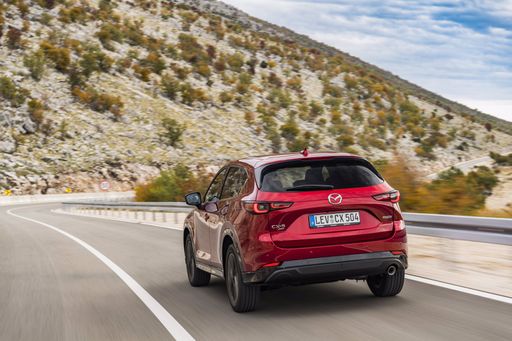
CX-5 @ Mazda Motor Corporation

Technical Specifications Overview

Both the Mazda CX-30 and CX-5 exhibit impressive craftsmanship, but they possess distinct characteristics defined by their dimensions, performance specs, and capabilities.

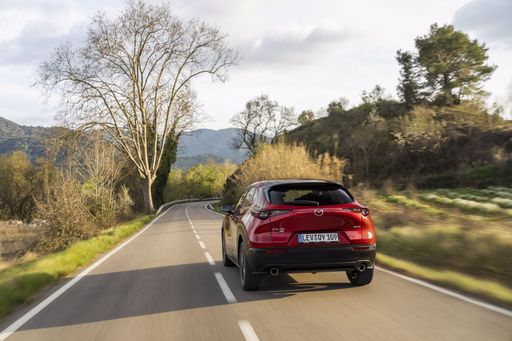
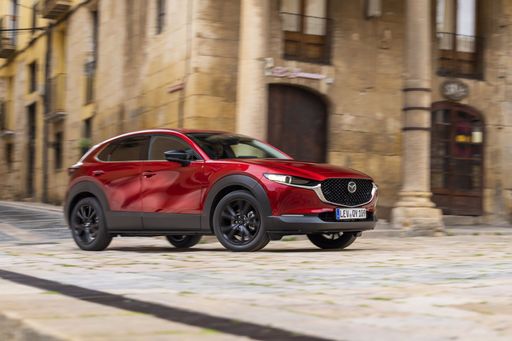
The Mazda CX-30 is smaller and sportier, boasting a length of 4395 mm, a width of 1795 mm, and a height of 1540 mm. It comes with a petrol MHEV engine, generating power outputs of 140 HP and 186 HP. The acceleration from 0-100 km/h ranges from 8.3 seconds to 10.3 seconds, all while managing a fuel consumption of 5.7 to 6.6 L/100km. Moreover, it offers both front-wheel and all-wheel drive options, making it versatile for varying terrains.

By contrast, the Mazda CX-5 is larger, with dimensions of 4575 mm in length, 1845 mm in width, and 1680 mm in height. The CX-5 is available with both petrol and diesel engine options, providing a broader range of power outputs that go up to 194 HP. The acceleration here is relatively moderate compared to the CX-30, with a range of 9.2 to 11.1 seconds. Fuel consumption for the CX-5 ranges from 5.6 to 7.6 L/100km, which is also competitive in its class.

CX-30 @ Mazda Motor Corporation

Performance and Handling

When it comes to performance and handling, both vehicles benefit from Mazda’s renowned engineering. The CX-30’s sportier design and lighter curb weight (starting at 1485 kg) enable a nimble driving experience, particularly appealing to those who prefer a more engaging ride. The maximum speed for the CX-30 reaches up to 204 km/h, offering a spirited performance sans the heft of larger SUVs.

The CX-5’s larger dimensions translate to a stable on-road presence but can sometimes feel less agile. It weighs between 1567 kg and 1800 kg depending on the variant, which may affect the sportiness compared to the CX-30. However, its all-wheel-drive option and advanced G-Vectoring Control technology provide impressive handling and cornering stability, making it a capable companion for mixed driving scenarios.

CX-5 @ Mazda Motor Corporation

Interior Space and Comfort

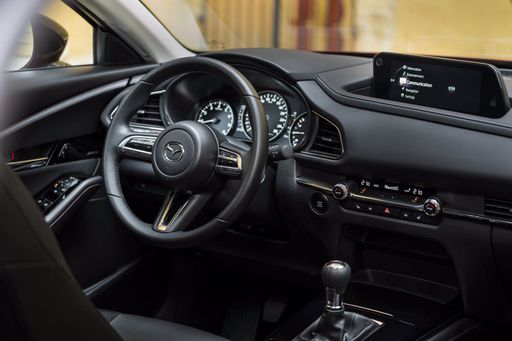
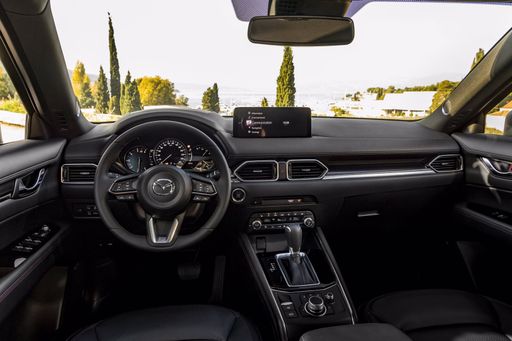
Interior design is one of Mazda's most celebrated traits, and both the CX-30 and CX-5 deliver a pleasant atmosphere. The CX-30 offers a trunk capacity of 430 L, sufficient for everyday needs, while the CX-5's trunk expands more significantly, offering 510 to 522 L depending on the variant. The interior setup in both models allows for comfortable seating for five passengers, featuring high-quality materials and ergonomic layouts.

The CX-5 leans towards a more spacious feel overall, making it an attractive option for families and road trips. However, the CX-30 impresses with its driver-oriented cockpit and refined aesthetics, catering to those who prioritize a sleek, modern look.

CX-30 @ Mazda Motor Corporation

Innovative Features

When discussing innovation, Mazda doesn't hold back in either model. The CX-30 is equipped with the latest infotainment features, including an intuitive Mazda Connect system that integrates seamlessly with smartphones. Notably, it comes with advanced safety features like adaptive cruise control, lane-keeping assistance, and a rear cross-traffic alert.

The CX-5, while slightly older in its design, also boasts a suite of safety technologies, alongside a more powerful audio system and additional driver convenience features, making it a strong contender for tech enthusiasts.

CX-5 @ Mazda Motor Corporation

Conclusion: Which One to Choose?

Choosing between the Mazda CX-30 and CX-5 ultimately comes down to individual preference and lifestyle needs. The CX-30 caters to those seeking a compact, sporty SUV with excellent fuel efficiency and a thrilling driving experience. Conversely, the CX-5 is perfect for families or individuals needing more space and versatility without sacrificing performance.

Both models emphasize Mazda’s commitment to quality, performance, and innovation, ensuring that whichever choice you make, you are in good hands.

Here’s where it gets real: The technical differences in detail

CX-30 @ Mazda Motor Corporation

Costs and Efficiency:

Price and efficiency are key factors when choosing a car – and this is often where the real differences emerge.

Mazda CX-30 has a to a small extent advantage in terms of price – it starts at 25200 £, while the Mazda CX-5 costs 30000 £. That’s a price difference of around 4766 £.

Fuel consumption also shows a difference: Mazda CX-30 manages with 5.70 L and is therefore clearly perceptible more efficient than the Mazda CX-5 with 7 L. The difference is about 1.30 L per 100 km.

Engine and Performance:

Under the bonnet, it becomes clear which model is tuned for sportiness and which one takes the lead when you hit the accelerator.

When it comes to engine power, the Mazda CX-30 has a noticeable edge – offering 186 HP compared to 141 HP. That’s roughly 45 HP more horsepower.

In acceleration from 0 to 100 km/h, the Mazda CX-30 is distinct quicker – completing the sprint in 8.30 s, while the Mazda CX-5 takes 10.50 s. That’s about 2.20 s faster.

In terms of top speed, the Mazda CX-30 performs barely noticeable better – reaching 204 km/h, while the Mazda CX-5 tops out at 195 km/h. The difference is around 9 km/h.

There’s also a difference in torque: Mazda CX-30 pulls barely noticeable stronger with 240 Nm compared to 238 Nm. That’s about 2 Nm difference.

Space and Everyday Use:

Beyond pure performance, interior space and usability matter most in daily life. This is where you see which car is more practical and versatile.

Both vehicles offer seating for 5 people.

In curb weight, Mazda CX-30 is a bit lighter – 1455 kg compared to 1629 kg. The difference is around 174 kg.

In terms of boot space, the Mazda CX-5 offers distinct more room – 583 L compared to 430 L. That’s a difference of about 153 L.

In maximum load capacity, the Mazda CX-5 performs clearly perceptible better – up to 2019 L, which is about 613 L more than the Mazda CX-30.

Who comes out on top?

Overall, the Mazda CX-30 shows itself to be outperforms in nearly all aspects and secures the title of DriveDuel Champion.
It convinces with the more balanced overall package and proves to be the more versatile choice for everyday use.

from about £25,200
CX-30 @ Mazda Motor Corporation

Mazda CX-30

  • Engine Type : Petrol MHEV
  • Transmission : Manuel, Automatic
  • Drive Type : Front-Wheel Drive, All-Wheel Drive
  • Power HP : 140 - 186 HP
  • Consumption L/100km : 5.7 - 6.6 L

Mazda CX-30

5 (1)
rate

The Mazda CX-30 blends sleek coupe-like lines with the practicality of a compact crossover, feeling more premium than its price tag suggests. It’s a joy to drive for anyone who likes a taut chassis and an interior that treats daily commutes like a small luxury escape.

details

Mazda CX-5

3 (1)
rate

The Mazda CX-5 blends elegant, athletic styling with a surprisingly engaging driving character, turning routine trips into small, satisfying adventures. Inside it feels thoughtfully built and comfortable, offering sensible practicality and a premium feel that punches above its price.

details
Mazda CX-30
Mazda CX-5
CX-30 @ Mazda Motor Corporation
CX-5 @ Mazda Motor Corporation

Costs and Consumption

Price
25200 - 36800 £
Price
30000 - 39500 £
Consumption L/100km
5.7 - 6.6 L
Consumption L/100km
7 - 7.4 L
Consumption kWh/100km
-
Consumption kWh/100km
-
Electric Range
-
Electric Range
-
Battery Capacity
-
Battery Capacity
-
co2
129 - 148 g/km
co2
157 - 168 g/km
Fuel tank capacity
48 - 51 L
Fuel tank capacity
56 - 58 L

Dimensions and Body

Body Type
SUV
Body Type
SUV
Seats
5
Seats
5
Doors
5
Doors
5
Curb weight
1455 - 1587 kg
Curb weight
1629 - 1671 kg
Trunk capacity
422 - 430 L
Trunk capacity
583 L
Length
4395 mm
Length
4690 mm
Width
1795 mm
Width
1860 mm
Height
1540 mm
Height
1695 mm
Max trunk capacity
1398 - 1406 L
Max trunk capacity
2019 L
Payload
458 - 496 kg
Payload
-

Engine and Performance

Engine Type
Petrol MHEV
Engine Type
Petrol MHEV
Transmission
Manuel, Automatic
Transmission
Automatic
Transmission Detail
Manual Gearbox, Automatic Gearbox
Transmission Detail
Automatic Gearbox
Drive Type
Front-Wheel Drive, All-Wheel Drive
Drive Type
Front-Wheel Drive, All-Wheel Drive
Power HP
140 - 186 HP
Power HP
141 HP
Acceleration 0-100km/h
8.3 - 10.3 s
Acceleration 0-100km/h
10.5 - 10.9 s
Max Speed
191 - 204 km/h
Max Speed
195 km/h
Torque
238 - 240 Nm
Torque
238 Nm
Number of Cylinders
4
Number of Cylinders
4
Power kW
103 - 137 kW
Power kW
104 kW
Engine capacity
1998 - 2488 cm3
Engine capacity
2488 cm3

General

Model Year
2025
Model Year
2025
CO2 Efficiency Class
D, E
CO2 Efficiency Class
F
Brand
Mazda
Brand
Mazda
What drive types are available for the Mazda CX-30?

The Mazda CX-30 is offered with Front-Wheel Drive or All-Wheel Drive.

The prices and data displayed are estimates based on German list prices and may vary by country. This information is not legally binding.