VS

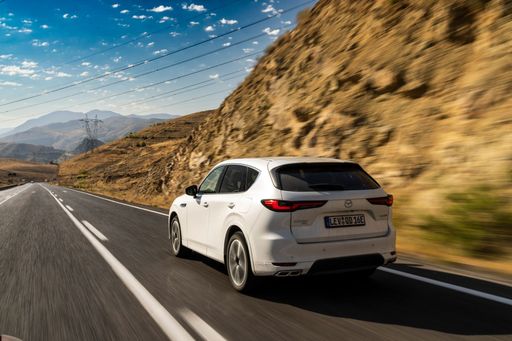
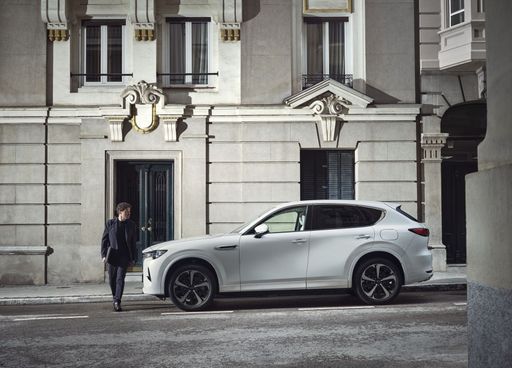
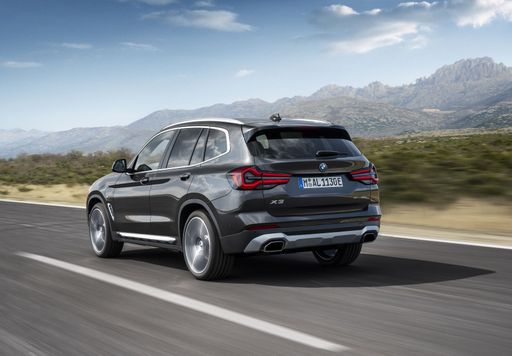
Mazda CX-60 vs BMW X3 comparison

Compare performance (327 HP vs 398 HP), boot space and price (43,700 £ vs 51,700 £ ) at a glance. Find out which car is the better choice for you – Mazda CX-60 or BMW X3?

Mazda CX-60 vs BMW X3: Key differences

Mazda CX-60

4.7 (8 Reviews)
rate
  • moderately cheaper
  • very slightly lighter
details

BMW X3

4.6 (1 Reviews)
rate
  • somewhat more power
  • visibly more efficient
  • markedly more electric range
  • markedly quicker 0–100 km/h
details

All details on performance, efficiency, range and trunk space can be found in the technical comparison below – including user reviews for both models.

By Achim Sedelmaier

CX-60

Overview: BMW X3 and Mazda CX-60 in one glance

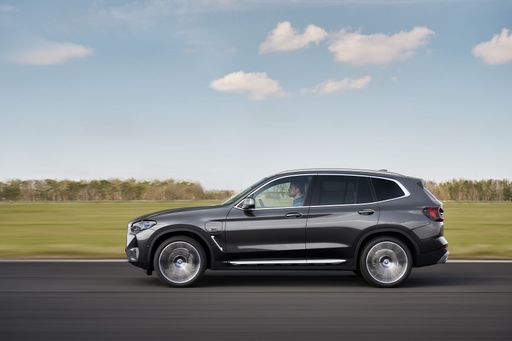
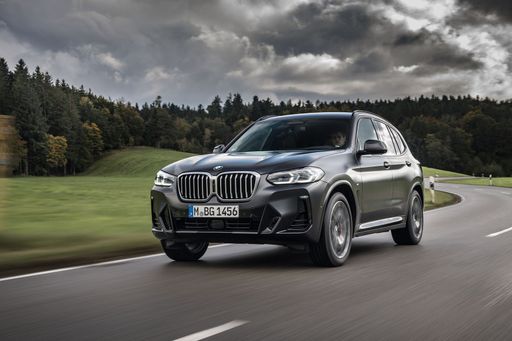
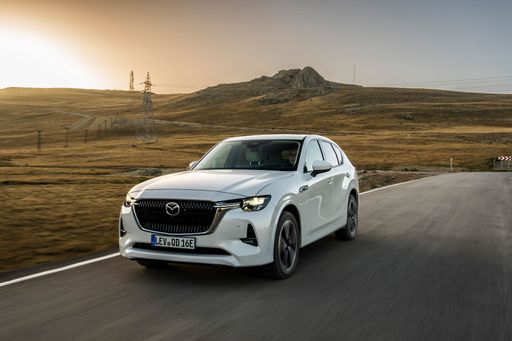
The BMW X3 and Mazda CX-60 take very different approaches to the same mid‑size SUV brief: one leans into driver‑centric dynamics and long‑distance calm, the other into crafted materials and everyday usefulness. This comparison — BMW X3 vs Mazda CX-60 — is about trade‑offs: sharper handling and tech polish against roomy practicality and tactile quality. The X3 feels like a driver’s tool that happens to be family‑friendly, while the CX‑60 comes across as a solid, quietly refined companion for luggage‑and‑towing duties. Which suits you depends less on badge prestige and more on whether you prioritise steering feel and highway composure or interior luxury and cargo usability.
X3

Driving character and real‑world performance

The BMW X3 drives with a lighter, more precise steering and a sharper throttle response that rewards active drivers and makes motorway passing effortless. The Mazda CX‑60 answers with a calmer, more planted personality that favours smooth progress and steady towing over sportiness. In everyday use that means the X3 feels more lively and confidence‑inspiring in twisty roads, whereas the CX‑60 soaks up steady high‑speed miles with a composed gait but can feel heavier when you hustle it. If you want crispness and a touch of sport, lean toward the X3; if you prefer steady, effortless cruising and towing stability, the CX‑60 is the more natural fit.

CX-60

Comfort, refinement and long‑distance behavior

On long trips the BMW X3 impresses with low cabin noise and a settled ride that makes extended motorway stints less tiring, especially with adaptive dampers fitted. The Mazda CX‑60 is also quiet at speed and gives a more luxurious first impression, but its suspension tuning is generally firmer and transmits sharper hits over poor surfaces. Practical consequences are straightforward: the X3 will feel more relaxed on very long drives while the CX‑60 rewards you with premium comfort details and better day‑to‑day robustness for heavy loads. Owners who spend a lot of miles on fast roads will notice the X3’s composure; those carrying lots of kit or towing will value the CX‑60’s steady behavior despite a firmer ride in town.

X3

Cabin feel, controls and perceived quality

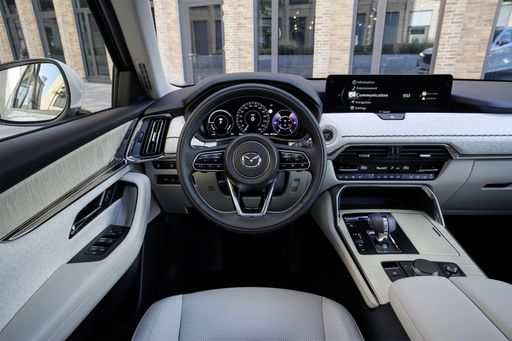
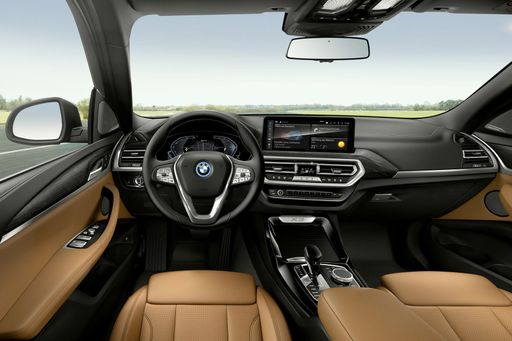
The Mazda CX‑60 clearly prioritises material quality and tactile detail — switchgear and trim feel closer to what buyers expect from a premium interior. The BMW X3, by contrast, aims for a modern interface with large displays but sacrifices some traditional haptic satisfaction, leaving a few areas feeling more utilitarian. That difference matters every day: the CX‑60’s surfaces and switches give a more reassuring, durable impression when you open doors and stow items, while the X3’s digital focus rewards those who prefer slick screens and advanced driver aids. If cabin warmth and perceived quality matter more than the latest graphical interface, the CX‑60 will please; if you want driver aids and a tech‑forward layout, the X3 pulls ahead.

CX-60

Usability, luggage and real‑world practicality

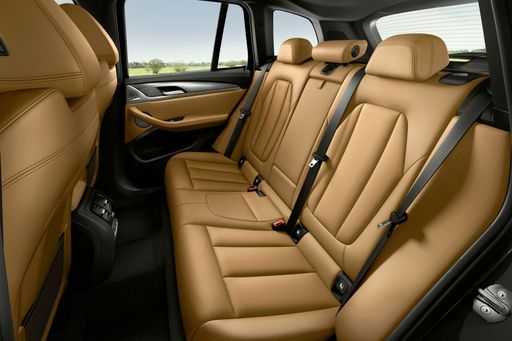
The Mazda CX‑60 wins on blunt, usable practicality: a low loading lip, easy‑to‑use boot space and generous towing capability make everyday loading and weekend trips simpler. The BMW X3 offers clever versatility with split folding rear seats and a tidy load floor, but in practice the higher sill and fiddly cover can make bulky items harder to manage. Families and active owners who regularly move bikes, crates or a caravan will find the CX‑60 more forgiving; buyers who prize modularity and thoughtful interior solutions will appreciate the X3’s layout despite the small nuisance points. Both carry five comfortably, but how you load them and what you tow is where the differences become tangible.

X3

Buyer fit — who should choose which car

Choose the BMW X3 if you value sharper steering, quieter high‑speed cruising and a tech ecosystem that supports long commuter miles and spirited driving. Opt for the Mazda CX‑60 if you want top‑notch materials, the most usable boot, stronger towing credentials and a fundamentally more traditional control layout. Urban buyers should note both are on the broad side: the X3’s wider stance and larger turning circle versus the CX‑60’s heavier low‑speed steering shape how each handles tight streets. Read on to the technical comparison to see how these real‑world differences map onto engines, ranges and load limits so you can match figures to the everyday experience you want.

Here’s where it gets real: The technical differences in detail

CX-60

Costs and Efficiency:

Price and efficiency are often the first things buyers look at. Here it becomes clear which model has the long-term edge – whether at the pump, the plug, or in purchase price.

Mazda CX-60 is moderately cheaper – starting at 43,700 £ , while the BMW X3 costs 51,700 £ . That’s a price difference of around 8,014 £.

Fuel consumption also shows a difference: the BMW X3 uses 2.8 L/100km and is visibly more efficient than the Mazda CX-60 with 3.8 L/100km. The difference is about 1 L/100km.

As for electric range, the BMW X3 offers markedly more range – reaching up to 88 km, about 25 km more than the Mazda CX-60.

X3

Engine and Performance:

Power, torque and acceleration say a lot about how a car feels on the road. This is where you see which model delivers more driving dynamics.

When it comes to engine power, the BMW X3 offers somewhat more power – delivering 398 HP compared to 327 HP. That’s roughly 71 HP more horsepower.

When accelerating from 0 to 100 km/h, the BMW X3 is markedly quicker – completing the sprint in 4.6 s, while the Mazda CX-60 takes 5.8 s. That’s about 1.2 s quicker.

There’s also a difference in torque: the BMW X3 delivers a bit more torque with 670 Nm compared to 550 Nm. That’s about 120 Nm more.

CX-60

Space and Everyday Use:

Cabin size, boot volume and payload all play a role in everyday practicality. Here, comfort and flexibility make the difference.

Both vehicles offer seating for 5 people.

In terms of curb weight, Mazda CX-60 is very slightly lighter – 1,890 kg compared to 1,930 kg. The difference is around 40 kg.

Boot capacity is identical – both offer 570 L of storage.

When it comes to payload, the Mazda CX-60 carries very slightly more – 612 kg compared to 570 kg. That’s a difference of about 42 kg.

Who wins the race in the data check?

The BMW X3 is decisively ahead in the objective data comparison.
This result only shows which model scores more points on paper – not which of the two cars feels right for you.

from £51,700
X3

BMW X3

  • Engine Type : Petrol MHEV, Diesel MHEV, Plugin Hybrid
  • Transmission : Automatic
  • Drive Type : All-Wheel Drive
  • Power HP : 197 - 398 HP
  • Consumption L/100km : 2.8 - 7.7 L/100km
  • Electric Range : 88 km
Mazda CX-60
BMW X3

Costs and Consumption

View detailed analysis

Engine and Performance

View detailed analysis

Dimensions and Body

View detailed analysis

Mazda CX-60

The Mazda CX-60 pairs sculpted, understated looks with poised handling and a cabin that punches above its class, making long drives feel unexpectedly civilized. For buyers who want a premium feel without the showroom swagger, it's the sort of car that earns respect quietly — and still manages a wink when you push on.

details

BMW X3

The BMW X3 mixes Bavarian poise with everyday practicality, delivering a composed ride and a cabin that feels both premium and lived-in. It’s the sort of SUV that lets you enjoy sporty handling without sacrificing family-friendly space, so you get fun and sense in one neat package.

details
Mazda CX-60
BMW X3

Costs and Consumption

Price
43,700 - 57,900 £
Price
51,700 - 73,000 £
Consumption L/100km
3.8 - 5.2 L/100km
Consumption L/100km
2.8 - 7.7 L/100km
Consumption kWh/100km
-
Consumption kWh/100km
-
Electric Range
63 km
Electric Range
88 km
Battery Capacity
-
Battery Capacity
-
co2
85 - 137 g/km
co2
64 - 175 g/km
Fuel tank capacity
-
Fuel tank capacity
-

Dimensions and Body

Body Type
SUV
Body Type
SUV
Seats
5
Seats
5
Doors
-
Doors
-
Curb weight
1,890 - 2,055 kg
Curb weight
1,930 - 2,140 kg
Trunk capacity
570 L
Trunk capacity
460 - 570 L
Length
-
Length
-
Width
1,890 mm
Width
1,920 mm
Height
-
Height
-
Max trunk capacity
-
Max trunk capacity
-
Payload
581 - 612 kg
Payload
570 kg

Engine and Performance

Engine Type
Plugin Hybrid, Diesel MHEV
Engine Type
Petrol MHEV, Diesel MHEV, Plugin Hybrid
Transmission
Automatic
Transmission
Automatic
Transmission Detail
Automatic Gearbox
Transmission Detail
Automatic Gearbox
Drive Type
All-Wheel Drive, Rear-Wheel Drive
Drive Type
All-Wheel Drive
Power HP
200 - 327 HP
Power HP
197 - 398 HP
Acceleration 0-100km/h
5.8 - 8.4 s
Acceleration 0-100km/h
4.6 - 7.8 s
Max Speed
-
Max Speed
-
Torque
450 - 550 Nm
Torque
330 - 670 Nm
Number of Cylinders
4 - 6
Number of Cylinders
4 - 6
Power kW
147 - 241 kW
Power kW
145 - 293 kW
Engine capacity
2,488 - 3,283 cm3
Engine capacity
1,995 - 2,998 cm3

General

Model Year
2025
Model Year
2,024 - 2,025
CO2 Efficiency Class
B, D, E
CO2 Efficiency Class
F, E, B
Brand
Mazda
Brand
BMW
DriveDuel uses data analysis and artificial intelligence to evaluate vehicle data and create content. Content is regularly reviewed and improved. The displayed prices are estimates based on German list prices, adjusted to the respective country’s VAT. Country-specific registration taxes are not included. This information is not legally binding.