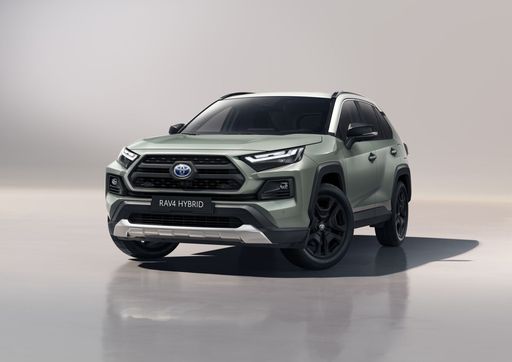
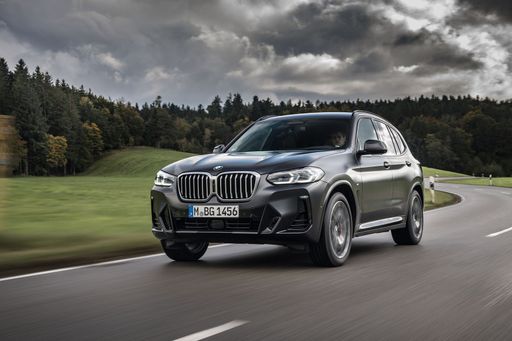
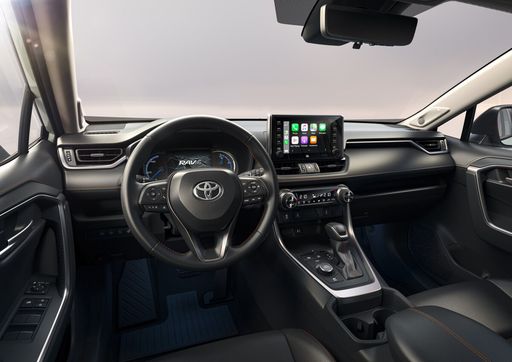
Compare performance (398 HP vs 306 HP), boot space and price (51,300 £ vs 35,100 £ ) at a glance. Find out which car is the better choice for you – BMW X3 or Toyota RAV4?
All details on performance, efficiency, range and trunk space can be found in the technical comparison below – including user reviews for both models.
Looking at overall running costs, both models reveal some interesting differences in everyday economy.
Toyota RAV4 is substantially cheaper – starting at 35,100 £ , while the BMW X3 costs 51,300 £ . That’s a price difference of around 16,123 £.
Fuel consumption also shows a difference: the Toyota RAV4 uses 1 L/100km and is substantially more efficient than the BMW X3 with 2.8 L/100km. The difference is about 1.8 L/100km.
As for electric range, the BMW X3 offers slightly more range – reaching up to 88 km, about 13 km more than the Toyota RAV4.
Power, torque and acceleration are the classic benchmarks for car enthusiasts – and here, some clear differences start to show.
When it comes to engine power, the BMW X3 offers markedly more power – delivering 398 HP compared to 306 HP. That’s roughly 92 HP more horsepower.
When accelerating from 0 to 100 km/h, the BMW X3 is clearly quicker – completing the sprint in 4.6 s, while the Toyota RAV4 takes 6 s. That’s about 1.4 s quicker.
Looking at top speed, the BMW X3 is clearly faster – reaching 250 km/h, while the Toyota RAV4 tops out at 180 km/h. The difference is around 70 km/h.
Cabin size, boot volume and payload all play a role in everyday practicality. Here, comfort and flexibility make the difference.
Both vehicles offer seating for 5 people.
In terms of curb weight, Toyota RAV4 is moderately lighter – 1,745 kg compared to 1,930 kg. The difference is around 185 kg.
Looking at boot space, the Toyota RAV4 offers marginally more boot space – 580 L compared to 570 L. That’s a difference of about 10 L.
For maximum load capacity, the BMW X3 offers marginally more capacity – up to 1,700 L, about 10 L more than the Toyota RAV4.
When it comes to payload, the Toyota RAV4 carries very slightly more – 600 kg compared to 570 kg. That’s a difference of about 30 kg.
The Toyota RAV4 is far ahead overall in the objective data comparison.
This result only shows which model scores more points on paper – not which of the two cars feels right for you.
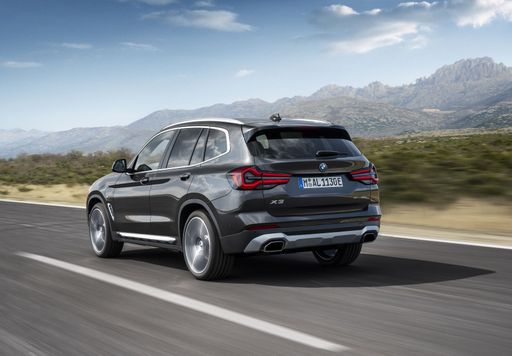
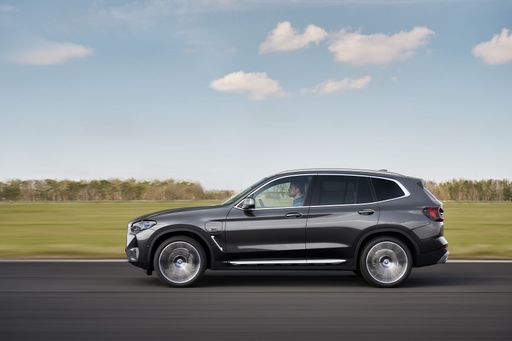
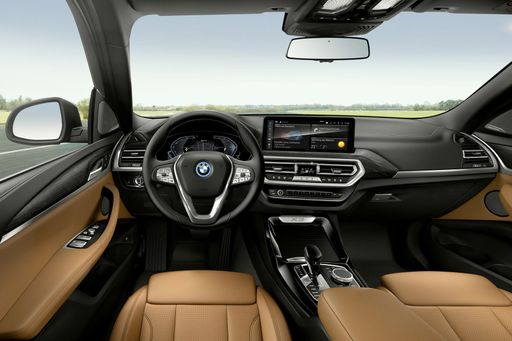
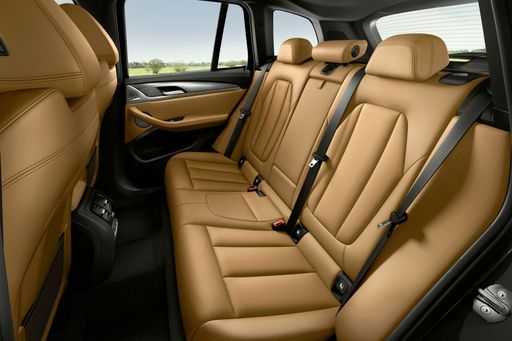
The BMW X3 mixes Bavarian poise with everyday practicality, delivering a composed ride and a cabin that feels both premium and lived-in. It’s the sort of SUV that lets you enjoy sporty handling without sacrificing family-friendly space, so you get fun and sense in one neat package.
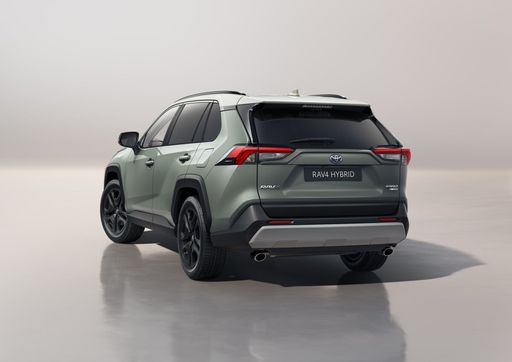
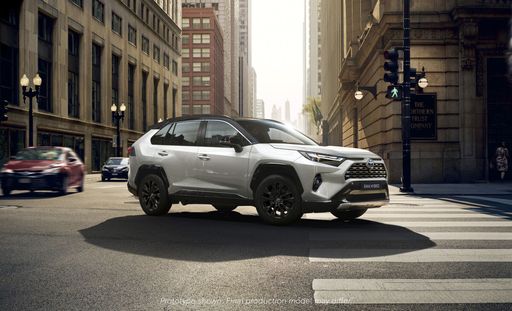
detailsThe Toyota RAV4 is a pragmatic, family-friendly SUV that pairs impressively low running costs in hybrid form with a relaxed, motorway-friendly ride and a generous rear seat and boot that make everyday life easy. Its cabin leans toward practicality rather than polish—expect plenty of hard plastics and a tidy infotainment system that’s quick to respond but buries some climate functions in a touchscreen and can nag with drive‑recorder popups, so buyers wanting a premium feel or sporty dynamics should look elsewhere.
detailsCosts and Consumption |
|
|---|---|
|
Price
51,300 - 72,400 £
|
Price
35,100 - 55,700 £
|
|
Consumption L/100km
2.8 - 7.7 L/100km
|
Consumption L/100km
1 - 5.6 L/100km
|
|
Consumption kWh/100km
-
|
Consumption kWh/100km
-
|
|
Electric Range
88 km
|
Electric Range
75 km
|
|
Battery Capacity
-
|
Battery Capacity
-
|
|
co2
64 - 175 g/km
|
co2
22 - 128 g/km
|
|
Fuel tank capacity
60 - 65 L
|
Fuel tank capacity
55 L
|
Dimensions and Body |
|
|---|---|
|
Body Type
SUV
|
Body Type
SUV
|
|
Seats
5
|
Seats
5
|
|
Doors
5
|
Doors
5
|
|
Curb weight
1,930 - 2,140 kg
|
Curb weight
1,745 - 1,910 kg
|
|
Trunk capacity
460 - 570 L
|
Trunk capacity
520 - 580 L
|
|
Length
4,755 mm
|
Length
4,600 mm
|
|
Width
1,920 mm
|
Width
1,855 mm
|
|
Height
1,660 mm
|
Height
1,685 mm
|
|
Max trunk capacity
1,700 L
|
Max trunk capacity
1,604 - 1,690 L
|
|
Payload
570 kg
|
Payload
390 - 600 kg
|
Engine and Performance |
|
|---|---|
|
Engine Type
Petrol MHEV, Diesel MHEV, Plugin Hybrid
|
Engine Type
Full Hybrid, Plugin Hybrid
|
|
Transmission
Automatic
|
Transmission
Automatic
|
|
Transmission Detail
Automatic Gearbox
|
Transmission Detail
CVT
|
|
Drive Type
All-Wheel Drive
|
Drive Type
Front-Wheel Drive, All-Wheel Drive
|
|
Power HP
197 - 398 HP
|
Power HP
218 - 306 HP
|
|
Acceleration 0-100km/h
4.6 - 7.8 s
|
Acceleration 0-100km/h
6 - 8.4 s
|
|
Max Speed
215 - 250 km/h
|
Max Speed
180 km/h
|
|
Torque
330 - 670 Nm
|
Torque
-
|
|
Number of Cylinders
4 - 6
|
Number of Cylinders
4
|
|
Power kW
145 - 293 kW
|
Power kW
160 - 225 kW
|
|
Engine capacity
1,995 - 2,998 cm3
|
Engine capacity
2,487 cm3
|
General |
|
|---|---|
|
Model Year
2,024 - 2,025
|
Model Year
2,024 - 2,025
|
|
CO2 Efficiency Class
F, E, B
|
CO2 Efficiency Class
D, B
|
|
Brand
BMW
|
Brand
Toyota
|