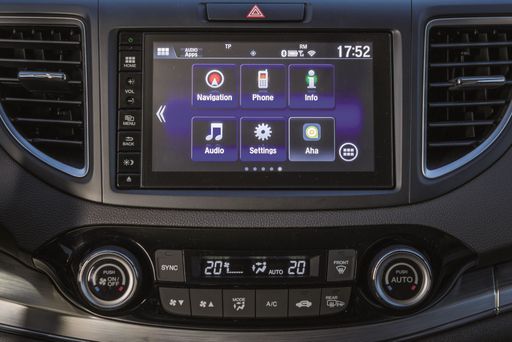
VS

Mazda CX-60 vs Honda CR-V comparison

Compare performance (327 HP vs 184 HP), boot space and price (43,700 £ vs 42,800 £ ) at a glance. Find out which car is the better choice for you – Mazda CX-60 or Honda CR-V?

Mazda CX-60 vs Honda CR-V: Key differences

Mazda CX-60

4.6 (7 Reviews)
rate
  • clearly more power
  • significantly quicker 0–100 km/h

Honda CR-V

4.8 (2 Reviews)
rate
  • marginally cheaper
  • considerably more efficient
  • moderately more electric range
  • barely lighter
  • barely more trunk space

All details on performance, efficiency, range and trunk space can be found in the technical comparison below – including user reviews for both models.

CX-60

SUV Showdown: Honda CR-V vs. Mazda CX-60

As SUVs continue to conquer the automotive market with their blend of practicality and performance, two models stand out for the 2024 season: the Honda CR-V and the Mazda CX-60. Both vehicles are equipped with advanced features and innovative technology, catering to the tastes of discerning drivers. But how do these two SUVs stack up against each other? Let’s delve into the intricacies of their design, performance, and technology.
CR-V

Performance and Engine Options

The Honda CR-V and Mazda CX-60 offer a variety of engine choices, catering to different driving styles and preferences. The Honda CR-V comes with either a full hybrid or a plug-in hybrid engine. Its engine has a power output of 135 kW (184 HP), with a torque of 335 Nm. Performance-wise, it completes the 0-100 km/h dash in 9.5 seconds and boasts a top speed of 194 km/h. With a consumption of 6 L/100 km and an electric range extending up to 79 km, the CR-V combines efficiency with practicality.

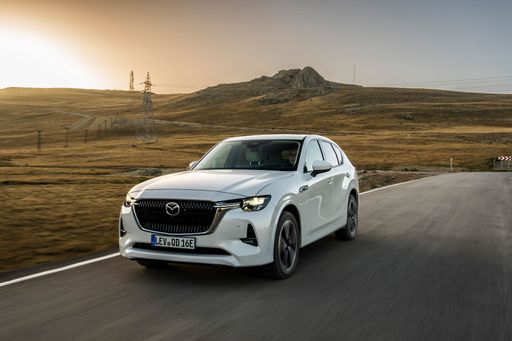
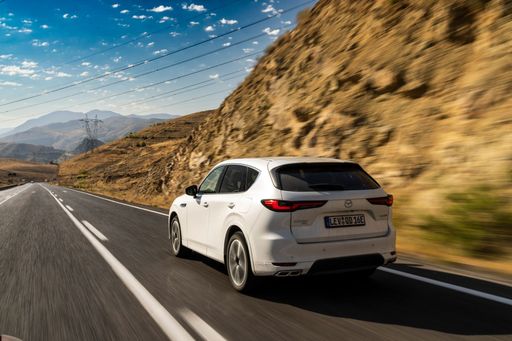
In contrast, the Mazda CX-60 offers a stronger punch with its engine options, including a plug-in hybrid and a diesel mild hybrid. The most powerful variant delivers 327 HP (241 kW) and a hefty torque of 550 Nm. Notably quicker off the line, the CX-60 reaches 100 km/h in just 5.8 seconds and pushes up to a maximum speed of 219 km/h. With fuel consumption as low as 1.4 L/100 km, the CX-60 also offers impressive efficiency, but its electric range is slightly less at 64 km.

CX-60

Transmission and Drive Type

Both SUVs come equipped with automatic transmission systems designed for smooth and effortless driving. The Honda CR-V features a Continuously Variable Transmission (CVT), available in all-wheel drive and front-wheel drive configurations, providing flexibility depending on driving needs.

The Mazda CX-60, on the other hand, uses a conventional automatic gearbox and offers both all-wheel drive and rear-wheel drive options. This flexibility allows drivers to tailor their driving experience, whether they prioritize traction or enjoy a more performance-oriented feel with rear-wheel drive.

CR-V

Design Dimensions and Capacity

In terms of dimensions, the Honda CR-V measures 4706 mm in length, 1866 mm in width, and up to 1684 mm in height. It offers a substantial trunk capacity ranging from 579 to 617 liters, ensuring adequate space for family travels or grocery hauls.

Conversely, the Mazda CX-60 is slightly larger, measuring 4745 mm in length, 1890 mm in width, and up to 1688 mm in height. It offers a trunk capacity of 570 liters, which, while slightly less than the CR-V’s maximum, is still ample for most needs.

CX-60

Weight and Payload

Weight is an essential factor for driving dynamics and fuel efficiency. The CR-V’s curb weight ranges from 1821 to 1988 kg, and it supports a payload capacity between 439 to 475 kg. In comparison, the Mazda CX-60 weighs in between 1890 to 2055 kg, with an impressive payload capacity of up to 612 kg, allowing it to handle heavier loads with ease.

CR-V

Environmental Impact

The CO2 efficiency of both vehicles reflects their commitment to reducing environmental impact. The Honda CR-V is efficient, with emissions ranging from 18 to 152 g/km, depending on the model specification, and it falls within CO2 efficiency classes B to E.

The Mazda CX-60 exhibits exceptional environmental performance in its plug-in hybrid configuration, boasting as low as 31 g/km of CO2 emissions and classification in efficiency classes B and D.

CX-60

Final Verdict

When comparing the Honda CR-V and Mazda CX-60, prospective buyers face a tough choice between these high-performance SUVs. The CR-V promises reliable efficiency, practicality, and a more conservative yet contemporary design. Meanwhile, the Mazda CX-60 stands out for its performance, luxury appeal, and exceptional payload capacity, all wrapped in a stylish package.

Ultimately, whether you choose the practical efficiency of the Honda CR-V or the high-octane charm of the Mazda CX-60, both models promise an elevated driving experience matched with innovative technology.

Here’s where it gets real: The technical differences in detail

CX-60

Costs and Efficiency:

Looking at overall running costs, both models reveal some interesting differences in everyday economy.

Honda CR-V is marginally cheaper – starting at 42,800 £ , while the Mazda CX-60 costs 43,700 £ . That’s a price difference of around 900 £.

Fuel consumption also shows a difference: the Honda CR-V uses 2.6 L/100km and is considerably more efficient than the Mazda CX-60 with 3.8 L/100km. The difference is about 1.2 L/100km.

As for electric range, the Honda CR-V offers moderately more range – reaching up to 78 km, about 15 km more than the Mazda CX-60.

CR-V

Engine and Performance:

Under the bonnet, it becomes clear which model is tuned for sportiness and which one takes the lead when you hit the accelerator.

When it comes to engine power, the Mazda CX-60 offers clearly more power – delivering 327 HP compared to 184 HP. That’s roughly 143 HP more horsepower.

When accelerating from 0 to 100 km/h, the Mazda CX-60 is significantly quicker – completing the sprint in 5.8 s, while the Honda CR-V takes 9 s. That’s about 3.2 s quicker.

There’s also a difference in torque: the Mazda CX-60 delivers noticeably more torque with 550 Nm compared to 335 Nm. That’s about 215 Nm more.

CX-60

Space and Everyday Use:

Beyond pure performance, interior space and usability matter most in daily life. This is where you see which car is more practical and versatile.

Both vehicles offer seating for 5 people.

In terms of curb weight, Honda CR-V is barely lighter – 1,821 kg compared to 1,890 kg. The difference is around 69 kg.

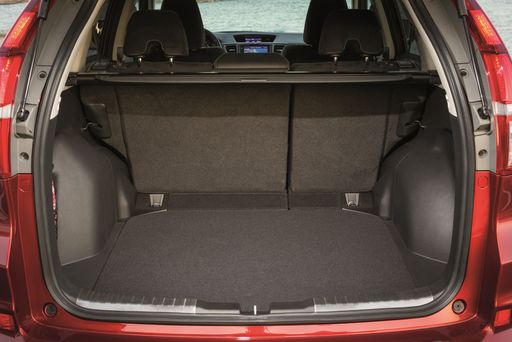
Looking at boot space, the Honda CR-V offers barely more boot space – 617 L compared to 570 L. That’s a difference of about 47 L.

When it comes to payload, the Mazda CX-60 carries noticeably more – 612 kg compared to 475 kg. That’s a difference of about 137 kg.

Who wins the race in the data check?

The Mazda CX-60 is decisively ahead in the objective data comparison.
This result only shows which model scores more points on paper – not which of the two cars feels right for you.

from £43,700
CX-60

Mazda CX-60

  • Engine Type : Plugin Hybrid, Diesel MHEV
  • Transmission : Automatic
  • Drive Type : All-Wheel Drive, Rear-Wheel Drive
  • Power HP : 200 - 327 HP
  • Consumption L/100km : 3.8 - 5.2 L/100km
  • Electric Range : 63 km
Mazda CX-60
Honda CR-V

Costs and Consumption

View detailed analysis

Engine and Performance

View detailed analysis

Dimensions and Body

View detailed analysis

Mazda CX-60

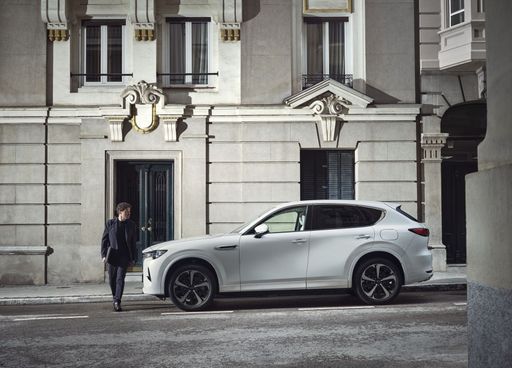
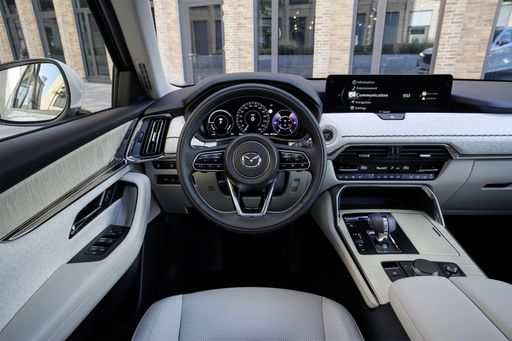
The Mazda CX-60 pairs sculpted, understated looks with poised handling and a cabin that punches above its class, making long drives feel unexpectedly civilized. For buyers who want a premium feel without the showroom swagger, it's the sort of car that earns respect quietly — and still manages a wink when you push on.

details

Honda CR-V

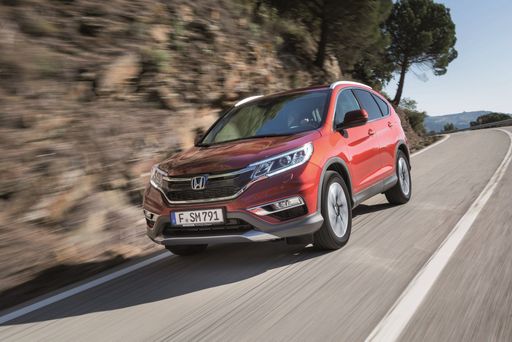
The Honda CR-V blends sensible practicality with a polished feel, offering roomy interiors and a confident ride that keeps commutes and weekend escapes equally comfortable. Its unshowy styling and reliable reputation make it a smart, low‑drama choice for buyers who want versatility without fuss — the kind of car that quietly makes everyday life a little easier.

details
Mazda CX-60
Honda CR-V

Costs and Consumption

Price
43,700 - 57,900 £
Price
42,800 - 52,100 £
Consumption L/100km
3.8 - 5.2 L/100km
Consumption L/100km
2.6 - 6.7 L/100km
Consumption kWh/100km
-
Consumption kWh/100km
-
Electric Range
63 km
Electric Range
78 km
Battery Capacity
-
Battery Capacity
-
co2
85 - 137 g/km
co2
59 - 152 g/km
Fuel tank capacity
-
Fuel tank capacity
-

Dimensions and Body

Body Type
SUV
Body Type
SUV
Seats
5
Seats
5
Doors
-
Doors
-
Curb weight
1,890 - 2,055 kg
Curb weight
1,821 - 1,988 kg
Trunk capacity
570 L
Trunk capacity
579 - 617 L
Length
-
Length
-
Width
1,890 mm
Width
1,866 mm
Height
-
Height
-
Max trunk capacity
-
Max trunk capacity
-
Payload
581 - 612 kg
Payload
439 - 475 kg

Engine and Performance

Engine Type
Plugin Hybrid, Diesel MHEV
Engine Type
Full Hybrid, Plugin Hybrid
Transmission
Automatic
Transmission
Automatic
Transmission Detail
Automatic Gearbox
Transmission Detail
CVT
Drive Type
All-Wheel Drive, Rear-Wheel Drive
Drive Type
Front-Wheel Drive, All-Wheel Drive
Power HP
200 - 327 HP
Power HP
184 HP
Acceleration 0-100km/h
5.8 - 8.4 s
Acceleration 0-100km/h
9 - 9.5 s
Max Speed
-
Max Speed
-
Torque
450 - 550 Nm
Torque
335 Nm
Number of Cylinders
4 - 6
Number of Cylinders
4
Power kW
147 - 241 kW
Power kW
135 kW
Engine capacity
2,488 - 3,283 cm3
Engine capacity
1,993 cm3

General

Model Year
2,025
Model Year
2,025
CO2 Efficiency Class
B, D, E
CO2 Efficiency Class
D, E, B
Brand
Mazda
Brand
Honda
DriveDuel uses data analysis and artificial intelligence to evaluate vehicle data and create content. Content is regularly reviewed and improved. The displayed prices are estimates based on German list prices, adjusted to the respective country’s VAT. Country-specific registration taxes are not included. This information is not legally binding.