VS

Mazda CX-60 vs Hyundai Tucson comparison

Compare performance (327 HP vs 288 HP), boot space and price (43,700 £ vs 20,900 £ ) at a glance. Find out which car is the better choice for you – Mazda CX-60 or Hyundai Tucson?

Mazda CX-60 vs Hyundai Tucson: Key differences

Mazda CX-60

4.6 (7 Reviews)
rate
  • moderately more power
  • clearly quicker 0–100 km/h

Hyundai Tucson

4.6 (4 Reviews)
rate
  • considerably cheaper
  • considerably more efficient
  • barely more electric range
  • markedly lighter
  • marginally more trunk space

All details on performance, efficiency, range and trunk space can be found in the technical comparison below – including user reviews for both models.

CX-60

Hyundai Tucson vs. Mazda CX-60: A Comprehensive Comparison

The SUV market has seen explosive growth, with manufacturers vying for attention through innovation, efficiency, and performance. Two standout contenders in this segment are the Hyundai Tucson and the Mazda CX-60. Both vehicles boast impressive specifications and features, but which one truly offers the best value? This article dives deep into their technical aspects, innovations, and overall performance.

Tucson

Design and Interior Quality

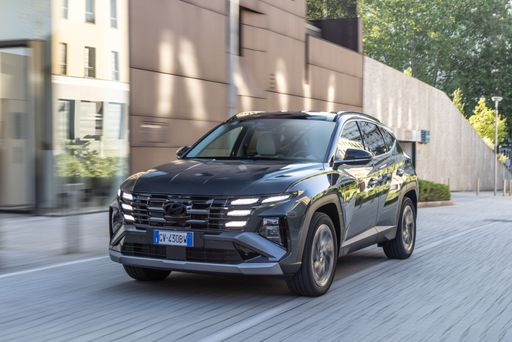
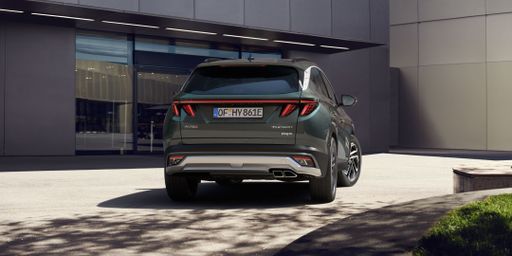
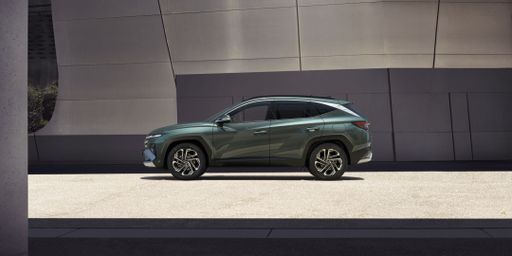
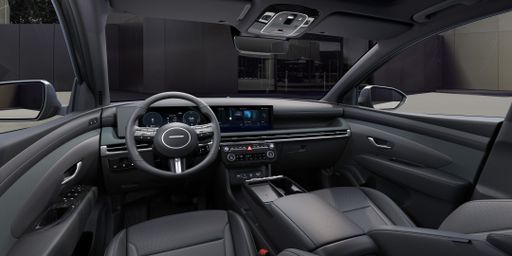
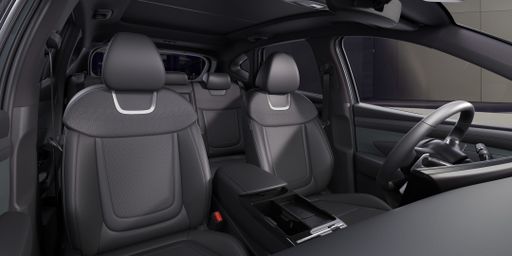
Both the Tucson and CX-60 showcase distinct design philosophies that reflect their brands. The Tucson features a bold aesthetic with sweeping lines, a signature cascading grille, and a robust stance. Inside, it offers a spacious cabin with high-quality materials, cutting-edge infotainment systems, and ample room for five passengers.

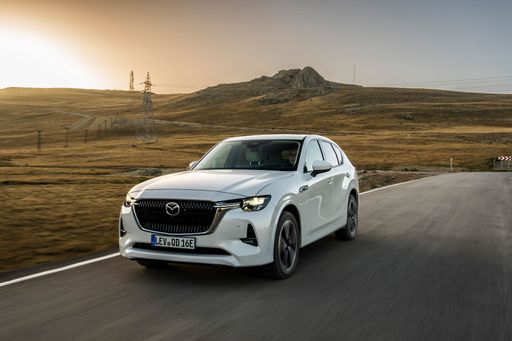
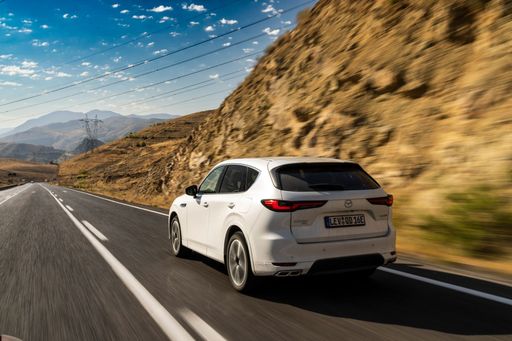
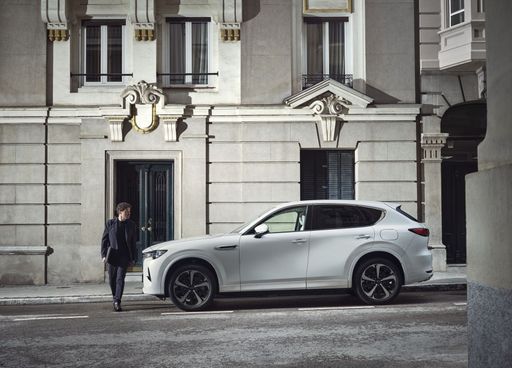
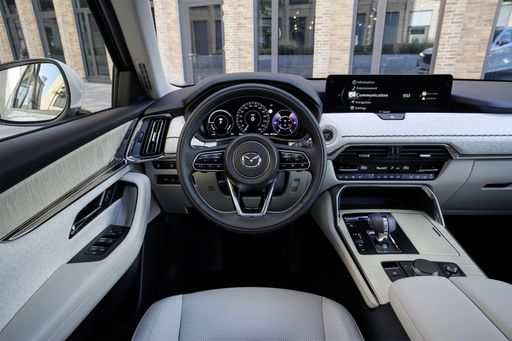
In contrast, the Mazda CX-60 embraces a more sophisticated and sporty design. Its aggressive front fascia, sleek body lines, and elegant rear end give it a premium appeal. The interior of the CX-60 mirrors this sophistication with high-grade materials, an intuitive layout, and refined finishes that enhance the overall driving experience.

CX-60

Engine Options and Performance

The engine lineup is where both vehicles begin to diverge. The Hyundai Tucson offers a range of engine types that include Petrol, Diesel MHEV, Full Hybrid, and Plug-in Hybrid. Its engine options vary from a 136 HP diesel to a potent 252 HP gas engine. The Tucson's remarkable fuel consumption ranges from 5.1 to 6.8 L/100km, while its electric range for hybrid models is up to 70 km. With acceleration times as quick as 7.9 seconds from 0-100 km/h, the Tucson provides a satisfying driving experience.

On the other hand, the Mazda CX-60’s engine portfolio includes a robust selection with outputs up to 327 HP from its Plug-in Hybrid variant. This enables impressive performance, with acceleration times as thrilling as 5.8 seconds for the plug-in hybrid configuration. Its diesel variants are efficient as well, achieving consumption rates around 5.4 L/100km, solidifying its reputation as a capable adventure vehicle.

Tucson

Transmission and Drive Dynamics

Both models excel in drivetrain configurations as well. The Hyundai Tucson is available in both Front-Wheel Drive and All-Wheel Drive, catering to varying driver preferences. Its transmission options include manual and automatic, featuring a dual-clutch system that enhances gear shifts for a more engaging drive.

In contrast, the Mazda CX-60 leans towards a more performance-oriented setup with an exclusive focus on All-Wheel Drive and an automatic transmission. This setup contributes to its dynamic handling and superior control, particularly in challenging driving conditions.

CX-60

Technological Innovations

When it comes to technology, both SUVs shine with an array of features. The Hyundai Tucson is equipped with a state-of-the-art infotainment system, including a sizable touchscreen interface compatible with Apple CarPlay and Android Auto. Safety features like comprehensive driving assistance systems highlight its commitment to driver and passenger safety.

The Mazda CX-60 also impresses with its in-car technology, which includes a highly praised infotainment system and standout safety features. Its unique approach to driving dynamics includes a driver-centric cockpit that enhances focus and control, making it an exhilarating drive.

Tucson

Conclusion: Which SUV Reigns Supreme?

Ultimately, the choice between the Hyundai Tucson and the Mazda CX-60 boils down to individual preferences. The Tucson is a versatile option with a wide array of engines and configurations, making it suitable for diverse driving needs. Meanwhile, the CX-60 excels in performance, with its powerful engine options and all-wheel-drive capabilities appealing to those who prioritize driving dynamics.

Both vehicles represent a blend of style, performance, and technology, making them formidable contenders in the SUV market. Whether you choose the Tucson for its flexibility or the CX-60 for its sporty appeal, you can expect an enriching driving experience from either model.

Here’s where it gets real: The technical differences in detail

CX-60

Costs and Efficiency:

When it comes to price and running costs, the biggest differences usually appear. This is often where you see which car fits your budget better in the long run.

Hyundai Tucson is considerably cheaper – starting at 20,900 £ , while the Mazda CX-60 costs 43,700 £ . That’s a price difference of around 22,774 £.

Fuel consumption also shows a difference: the Hyundai Tucson uses 2.7 L/100km and is considerably more efficient than the Mazda CX-60 with 3.8 L/100km. The difference is about 1.1 L/100km.

As for electric range, the Hyundai Tucson offers barely more range – reaching up to 70 km, about 7 km more than the Mazda CX-60.

Tucson

Engine and Performance:

Power, torque and acceleration say a lot about how a car feels on the road. This is where you see which model delivers more driving dynamics.

When it comes to engine power, the Mazda CX-60 offers moderately more power – delivering 327 HP compared to 288 HP. That’s roughly 39 HP more horsepower.

When accelerating from 0 to 100 km/h, the Mazda CX-60 is clearly quicker – completing the sprint in 5.8 s, while the Hyundai Tucson takes 7.5 s. That’s about 1.7 s quicker.

There’s also a difference in torque: the Mazda CX-60 delivers noticeably more torque with 550 Nm compared to 379 Nm. That’s about 171 Nm more.

CX-60

Space and Everyday Use:

Whether family car or daily driver – which one offers more room, flexibility and comfort?

Both vehicles offer seating for 5 people.

In terms of curb weight, Hyundai Tucson is markedly lighter – 1,542 kg compared to 1,890 kg. The difference is around 348 kg.

Looking at boot space, the Hyundai Tucson offers marginally more boot space – 620 L compared to 570 L. That’s a difference of about 50 L.

When it comes to payload, the Mazda CX-60 carries slightly more – 612 kg compared to 545 kg. That’s a difference of about 67 kg.

Who wins the race in the data check?

The Hyundai Tucson leads convincingly in the objective data comparison.
This result only shows which model scores more points on paper – not which of the two cars feels right for you.

from £20,900
Tucson

Hyundai Tucson

  • Engine Type : Petrol, Full Hybrid, Plugin Hybrid, Diesel MHEV
  • Transmission : Manuel, Automatic
  • Drive Type : Front-Wheel Drive, All-Wheel Drive
  • Power HP : 136 - 288 HP
  • Consumption L/100km : 2.7 - 7.6 L/100km
  • Electric Range : 63 - 70 km
Mazda CX-60
Hyundai Tucson

Costs and Consumption

View detailed analysis

Engine and Performance

View detailed analysis

Dimensions and Body

View detailed analysis

Mazda CX-60

The Mazda CX-60 pairs sculpted, understated looks with poised handling and a cabin that punches above its class, making long drives feel unexpectedly civilized. For buyers who want a premium feel without the showroom swagger, it's the sort of car that earns respect quietly — and still manages a wink when you push on.

details

Hyundai Tucson

Hyundai Tucson marries bold, sculpted looks with a clever, roomy cabin that feels smarter than its price tag suggests. It's composed on the road, easy to live with day-to-day, and a sensible choice for buyers who want SUV style without the showroom theatrics.

details
Mazda CX-60
Hyundai Tucson

Costs and Consumption

Price
43,700 - 57,900 £
Price
20,900 - 47,900 £
Consumption L/100km
3.8 - 5.2 L/100km
Consumption L/100km
2.7 - 7.6 L/100km
Consumption kWh/100km
-
Consumption kWh/100km
-
Electric Range
63 km
Electric Range
63 - 70 km
Battery Capacity
-
Battery Capacity
-
co2
85 - 137 g/km
co2
62 - 172 g/km
Fuel tank capacity
-
Fuel tank capacity
52 - 54 L

Dimensions and Body

Body Type
SUV
Body Type
SUV
Seats
5
Seats
5
Doors
-
Doors
5
Curb weight
1,890 - 2,055 kg
Curb weight
1,542 - 1,893 kg
Trunk capacity
570 L
Trunk capacity
546 - 620 L
Length
-
Length
4,525 - 4,535 mm
Width
1,890 mm
Width
1,865 mm
Height
-
Height
1,650 mm
Max trunk capacity
-
Max trunk capacity
1,795 - 1,799 L
Payload
581 - 612 kg
Payload
518 - 545 kg

Engine and Performance

Engine Type
Plugin Hybrid, Diesel MHEV
Engine Type
Petrol, Full Hybrid, Plugin Hybrid, Diesel MHEV
Transmission
Automatic
Transmission
Manuel, Automatic
Transmission Detail
Automatic Gearbox
Transmission Detail
Manual Gearbox, Dual-Clutch Automatic, Automatic Gearbox
Drive Type
All-Wheel Drive, Rear-Wheel Drive
Drive Type
Front-Wheel Drive, All-Wheel Drive
Power HP
200 - 327 HP
Power HP
136 - 288 HP
Acceleration 0-100km/h
5.8 - 8.4 s
Acceleration 0-100km/h
7.5 - 11.6 s
Max Speed
-
Max Speed
196 - 204 km/h
Torque
450 - 550 Nm
Torque
250 - 379 Nm
Number of Cylinders
4 - 6
Number of Cylinders
4
Power kW
147 - 241 kW
Power kW
100 - 212 kW
Engine capacity
2,488 - 3,283 cm3
Engine capacity
1,598 cm3

General

Model Year
2,025
Model Year
2,025
CO2 Efficiency Class
B, D, E
CO2 Efficiency Class
F, D, E, B
Brand
Mazda
Brand
Hyundai
DriveDuel uses data analysis and artificial intelligence to evaluate vehicle data and create content. Content is regularly reviewed and improved. The displayed prices are estimates based on German list prices, adjusted to the respective country’s VAT. Country-specific registration taxes are not included. This information is not legally binding.