VS

Mazda CX-60 vs Volvo XC60 comparison

Compare performance (327 HP vs 406 HP), boot space and price (43,700 £ vs 58,300 £ ) at a glance. Find out which car is the better choice for you – Mazda CX-60 or Volvo XC60?

Mazda CX-60 vs Volvo XC60: Key differences

Mazda CX-60

4.5 (9 Reviews)
rate
  • visibly cheaper
  • moderately lighter
details

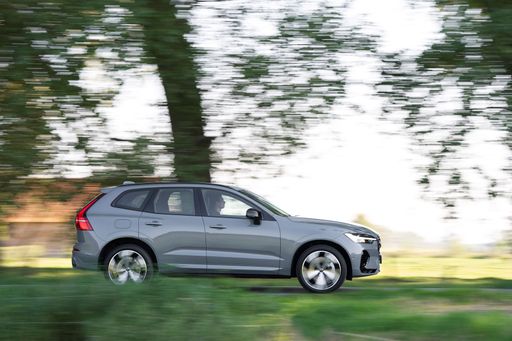
Volvo XC60

4.7 (7 Reviews)
rate
  • moderately more power
  • clearly more efficient
  • noticeably more electric range
  • slightly quicker 0–100 km/h
details

All details on performance, efficiency, range and trunk space can be found in the technical comparison below – including user reviews for both models.

By Achim Sedelmaier

CX-60

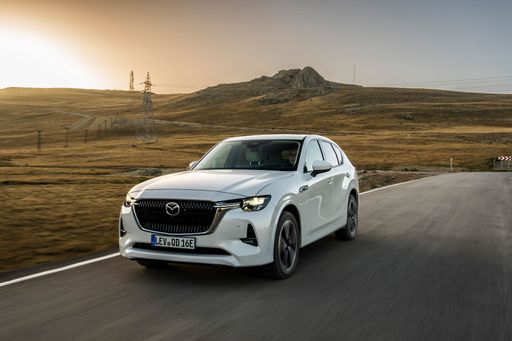
The automotive market has been rapidly evolving, with manufacturers continuously pushing the envelope in terms of technology, design, and performance. Today, we will explore a compelling comparison between the Mazda CX-60 and the Volvo XC60. Both SUVs stand out in their respective segments, but which one offers more value for money? Let’s dive into the details.
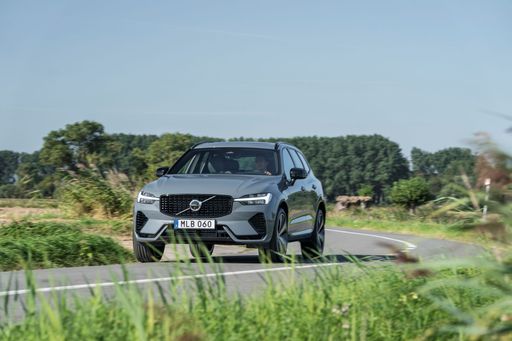
XC60

Design and Dimensions

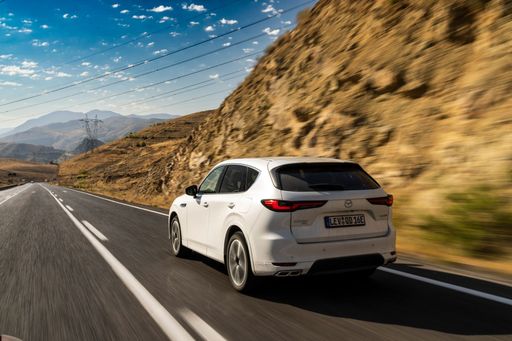
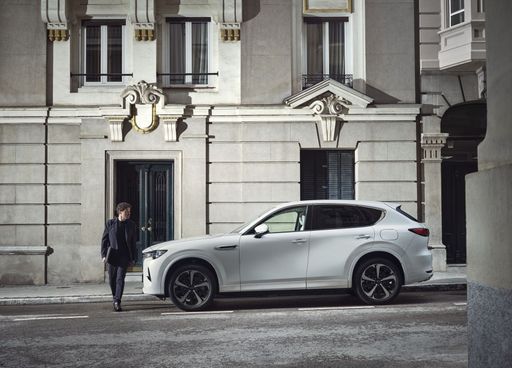
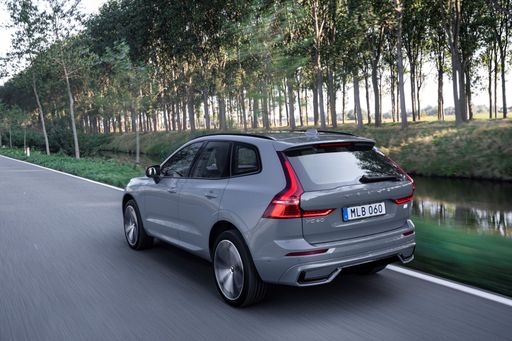
Starting with the aesthetics, both the Mazda CX-60 and Volvo XC60 boast modern and elegant designs. The CX-60 measures 4745 mm in length, 1890 mm in width, and 1680 mm in height, providing a robust presence on the road. The XC60, meanwhile, is slightly shorter at 4688 mm, with a width of 1902 mm and a height of 1658 mm. While the CX-60 offers a more muscular look, the Volvo presents a sleek and sophisticated profile that is unmistakably Scandinavian.

CX-60

Powertrains and Performance

Under the hood, the Mazda CX-60 provides a range of engine options, including a 2.5-liter plugin hybrid generating up to 327 HP and a diesel MHEV option with 200 HP. With acceleration times ranging from 5.8 seconds for the hybrid to 8.4 seconds for the diesel variant, the CX-60 prioritizes both performance and efficiency. Offering an all-wheel or rear-wheel-drive system, it caters to diverse driving preferences.

In stark contrast, the Volvo XC60 showcases a formidable lineup, highlighted by a plugin hybrid variant with a maximum output of 455 HP. Its range of engines also includes petrol MHEV options that deliver robust performance, with the fastest variant achieving 0-100 km/h in just 4.9 seconds. While the XC60 is known for its spirited performance, it sacrifices some fuel efficiency compared to its Mazda counterpart, especially with a consumption figure that goes up to 7.7 L/100km.

XC60

Innovations and Technology

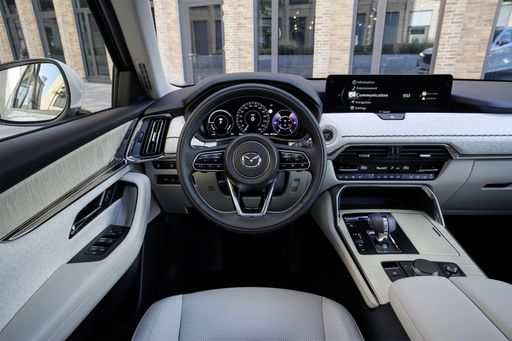
When it comes to technological advancements, both models shine in different ways. The Mazda CX-60 introduces an intuitive infotainment system seamlessly integrated into its elegant cabin. With a focus on driver engagement, features such as a head-up display, adaptive cruise control, and comprehensive safety systems like Mazda’s i-Activsense are part of the offering.

On the other hand, the Volvo XC60 prides itself on an extensive array of safety features, backed by Volvo’s renowned commitment to occupant protection. Its Sensus Connect system provides a user-friendly interface while delivering cutting-edge connectivity. Notably, the XC60 also offers pilot assist technology, enhancing both safety and the driving experience.

CX-60

Interior Comfort and Space

Inside the CX-60, you are met with premium materials and a spacious ambience, with a trunk capacity of 570 liters, ideal for families and long trips. The vehicle seats five comfortably, with excellent legroom and headroom throughout.

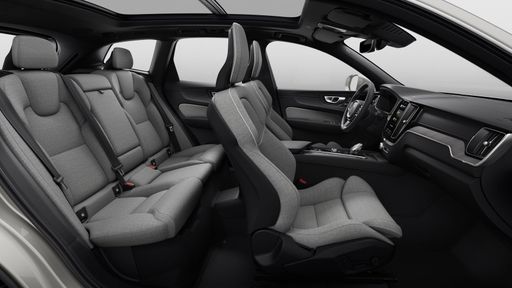
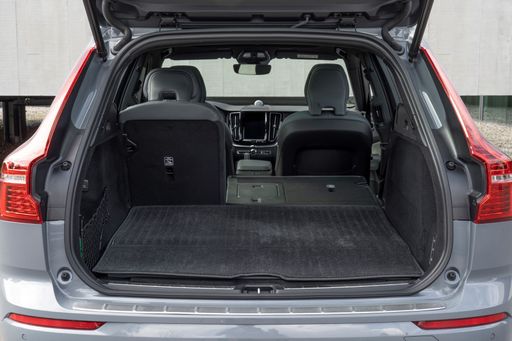
The XC60, while slightly less capacious with a trunk capacity of 483 liters, provides an equally luxurious interior setting. Known for its ergonomic design and high-quality finishes, it excels in offering both comfort and practicality, making it a great choice for those who prioritize a sophisticated travel experience.

XC60

Efficiency and Sustainability

Efficiency is a crucial factor in today’s automotive landscape. The Mazda CX-60 hybrid variant boasts an impressive electric range of 64 km, with CO2 emissions as low as 31 g/km, aligning with modern environmental standards. Its hybrid technology showcases Mazda’s commitment to sustainability without compromising on performance.

Conversely, the Volvo XC60 leads in electric range with its hybrid version reaching up to 80 km, and CO2 emissions as low as 22 g/km in selected configurations. With a 14.7 kWh battery capacity for its hybrids, Volvo emphasizes both efficiency and the use of innovative technologies in their offerings.

CX-60

Final Verdict

Choosing between the Mazda CX-60 and Volvo XC60 ultimately comes down to personal preference and priorities. The CX-60 shines with its performance and innovative features at a more attractive price point, making it an outstanding value proposition. In contrast, the XC60 excels in luxury, safety, and cutting-edge technology, catering to those who seek a premium SUV experience.

Whichever SUV you choose, both the Mazda CX-60 and Volvo XC60 present exceptional options that combine innovation, safety, and performance in the ever-competitive automotive market.

Here’s where it gets real: The technical differences in detail

CX-60

Costs and Efficiency:

Price and efficiency are key factors when choosing a car – and this is often where the real differences emerge.

Mazda CX-60 is visibly cheaper – starting at 43,700 £ , while the Volvo XC60 costs 58,300 £ . That’s a price difference of around 14,606 £.

Fuel consumption also shows a difference: the Volvo XC60 uses 1.6 L/100km and is clearly more efficient than the Mazda CX-60 with 3.8 L/100km. The difference is about 2.2 L/100km.

As for electric range, the Volvo XC60 offers noticeably more range – reaching up to 79 km, about 16 km more than the Mazda CX-60.

XC60

Engine and Performance:

Under the bonnet, it becomes clear which model is tuned for sportiness and which one takes the lead when you hit the accelerator.

When it comes to engine power, the Volvo XC60 offers moderately more power – delivering 406 HP compared to 327 HP. That’s roughly 79 HP more horsepower.

When accelerating from 0 to 100 km/h, the Volvo XC60 is slightly quicker – completing the sprint in 4.9 s, while the Mazda CX-60 takes 5.8 s. That’s about 0.9 s quicker.

There’s also a difference in torque: the Volvo XC60 delivers somewhat more torque with 669 Nm compared to 550 Nm. That’s about 119 Nm more.

CX-60

Space and Everyday Use:

Cabin size, boot volume and payload all play a role in everyday practicality. Here, comfort and flexibility make the difference.

Both vehicles offer seating for 5 people.

In terms of curb weight, Mazda CX-60 is moderately lighter – 1,890 kg compared to 2,150 kg. The difference is around 260 kg.

When it comes to payload, the Mazda CX-60 carries moderately more – 612 kg compared to 510 kg. That’s a difference of about 102 kg.

Who wins the race in the data check?

The Volvo XC60 is far ahead overall in the objective data comparison.
This result only shows which model scores more points on paper – not which of the two cars feels right for you.

from £58,300
XC60

Volvo XC60

  • Engine Type Plugin Hybrid
  • Transmission Automatic
  • Drive Type All-Wheel Drive
  • Power HP 335 - 406 HP
  • Consumption L/100km 1.6 L/100km
  • Electric Range 79 km
Mazda CX-60
Volvo XC60

Costs and Consumption

View detailed analysis

Engine and Performance

View detailed analysis

Dimensions and Body

View detailed analysis

Mazda CX-60

The Mazda CX-60 pairs sculpted, understated looks with poised handling and a cabin that punches above its class, making long drives feel unexpectedly civilized. For buyers who want a premium feel without the showroom swagger, it's the sort of car that earns respect quietly — and still manages a wink when you push on.

details

Volvo XC60

The Volvo XC60 blends Scandinavian elegance with a strong focus on occupant safety, delivering a calm, composed ride and a well-crafted, user-friendly cabin. It’s a practical yet premium compact SUV that balances comfort with confident road manners, ideal for buyers who value refinement and everyday usability.

details
Mazda CX-60
Volvo XC60

Costs and Consumption

Price
43,700 - 57,900 £
Price
58,300 - 71,400 £
Consumption L/100km
3.8 - 5.2 L/100km
Consumption L/100km
1.6 L/100km
Consumption kWh/100km
-
Consumption kWh/100km
-
Electric Range
63 km
Electric Range
79 km
Battery Capacity
-
Battery Capacity
-
co2
85 - 137 g/km
co2
59 g/km
Fuel tank capacity
-
Fuel tank capacity
-

Dimensions and Body

Body Type
SUV
Body Type
SUV
Seats
5
Seats
5
Doors
-
Doors
-
Curb weight
1,890 - 2,055 kg
Curb weight
2,150 kg
Trunk capacity
570 L
Trunk capacity
-
Length
-
Length
-
Width
1,890 mm
Width
1,902 mm
Height
-
Height
-
Max trunk capacity
-
Max trunk capacity
-
Payload
581 - 612 kg
Payload
510 kg

Engine and Performance

Engine Type
Plugin Hybrid, Diesel MHEV
Engine Type
Plugin Hybrid
Transmission
Automatic
Transmission
Automatic
Transmission Detail
Automatic Gearbox
Transmission Detail
Automatic Gearbox
Drive Type
All-Wheel Drive, Rear-Wheel Drive
Drive Type
All-Wheel Drive
Power HP
200 - 327 HP
Power HP
335 - 406 HP
Acceleration 0-100km/h
5.8 - 8.4 s
Acceleration 0-100km/h
4.9 - 5.7 s
Max Speed
-
Max Speed
-
Torque
450 - 550 Nm
Torque
589 - 669 Nm
Number of Cylinders
4 - 6
Number of Cylinders
4
Power kW
147 - 241 kW
Power kW
247 - 299 kW
Engine capacity
2,488 - 3,283 cm3
Engine capacity
1,969 cm3

General

Model Year
2025
Model Year
2026
CO2 Efficiency Class
B, D, E
CO2 Efficiency Class
B
Brand
Mazda
Brand
Volvo
DriveDuel uses data analysis and artificial intelligence to evaluate vehicle data and create content. Content is regularly reviewed and improved. The displayed prices are estimates based on German list prices, adjusted to the respective country’s VAT. Country-specific registration taxes are not included. This information is not legally binding.