VS

Mazda CX-80 vs Kia Sorento comparison

Compare performance (327 HP vs 288 HP), boot space and price (49,300 £ vs 47,300 £ ) at a glance. Find out which car is the better choice for you – Mazda CX-80 or Kia Sorento?

Mazda CX-80 vs Kia Sorento: Key differences

Mazda CX-80

4 (2 Reviews)
rate
  • slightly more power
  • very slightly more electric range
  • somewhat quicker 0–100 km/h
details

Kia Sorento

4.9 (3 Reviews)
rate
  • barely cheaper
  • only slightly more efficient
  • slightly lighter
  • considerably more trunk space
details

All details on performance, efficiency, range and trunk space can be found in the technical comparison below – including user reviews for both models.

By Achim Sedelmaier

CX-80

As families and adventure-seekers alike look for reliable and versatile SUVs, the competition in this segment heats up. In this article, we take a closer look at two standout models: the Kia Sorento and the Mazda CX-80. With their striking features and innovative technologies, both SUVs promise an exceptional driving experience. Let’s dive into the technical aspects that make these vehicles appealing.
Sorento

Powertrain and Performance

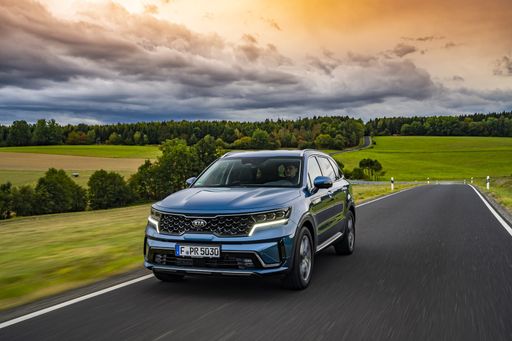
The Kia Sorento offers a versatile range of engine options, including plugin hybrid, full hybrid, and diesel variants. The power outputs range from 194 HP to an impressive 252 HP, along with torque figures reaching up to 440 Nm. Its various configurations allow for both front-wheel drive and all-wheel drive capabilities, providing suitable options for different terrains and driving needs. The Sorento also boasts decent acceleration with times between 8.8 and 9.7 seconds for the 0-100 km/h sprint, depending on the chosen engine.

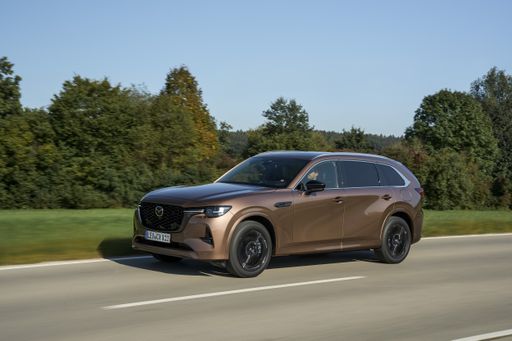
On the other hand, the Mazda CX-80 comes equipped with a more powerful engine, with a plugin hybrid option and a diesel MHEV engine configuration that generates up to 327 HP, providing a whopping 550 Nm of torque. The CX-80 accelerates from 0-100 km/h in just 6.8 seconds, highlighting its sporty edge over the Sorento. Both vehicles are available with all-wheel drive and come with an automatic gearbox for a seamless driving experience.

CX-80

Fuel Efficiency and Emissions

Fuel consumption is an essential factor for many consumers. The Kia Sorento offers impressive fuel efficiency, with its hybrid models consuming as little as 1.6 L/100km in certain configurations, while its diesel engines maintain competitive numbers around 6.8 L/100km. The CO2 emissions for the Sorento vary, but the efficient hybrid options fall under class B, helping to reduce the vehicle’s environmental impact.

The Mazda CX-80 also excels in this category, with a commendable 1.6 L/100km fuel consumption figure for its hybrid variant. Its diesel models post ratings of around 5.7 L/100km and CO2 emissions as low as 35 g/km, reinforcing Mazda's commitment to sustainability and efficiency.

Sorento

Interior Space and Comfort

There’s no denying that both SUVs emphasize passenger comfort and space. The Kia Sorento, with seating for up to seven, offers a flexible cabin layout with sufficient room for families. The trunk capacity ranges from 175 to an impressive 705 liters, depending on the configuration, accommodating various cargo needs.

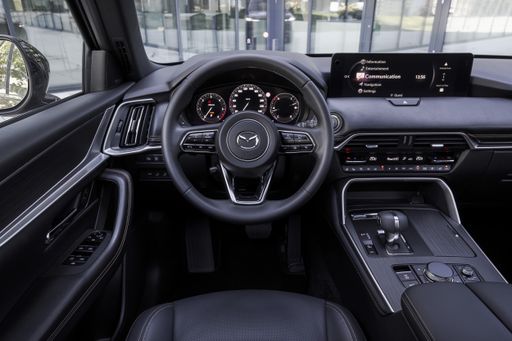
In comparison, the Mazda CX-80 also seats seven passengers but has a smaller trunk capacity of 258 liters, which may be a consideration for those needing ample cargo space. However, Mazda focuses greatly on premium materials and ergonomic design, creating a cozy cabin feel for all occupants. Both SUVs come equipped with state-of-the-art infotainment systems that enhance the driving experience.

CX-80

Technological Innovations

In today’s automotive landscape, technology plays a pivotal role. The Kia Sorento includes innovative features such as advanced safety systems, user-friendly infotainment, and connectivity options supporting smartphone integration. Moreover, its hybrid technology provides significant reductions in fuel consumption without sacrificing performance.

Conversely, the Mazda CX-80 is noted for its engaging driving dynamics and premium technology. It showcases Mazda’s latest advancements in driver-assistance systems, ensuring enhanced safety and convenience for all passengers. The infotainment interface is intuitive, allowing drivers easy access to navigation, media, and communication features.

Sorento

Conclusion

In the face of increasing competition in the SUV segment, both the Kia Sorento and Mazda CX-80 present strong cases for family-oriented buyers. The Sorento shines with its flexible seating arrangements and impressive range of engine options, while the CX-80 stands out with its sharp performance and engaging driving experience. Ultimately, the choice depends on individual priorities, be it fuel efficiency, space, performance, or advanced technology. Both vehicles undoubtedly cater to a wide range of consumer needs, solidifying their places in the competitive SUV market.

Here’s where it gets real: The technical differences in detail

CX-80

Costs and Efficiency:

Price and efficiency are key factors when choosing a car – and this is often where the real differences emerge.

Kia Sorento is barely cheaper – starting at 47,300 £ , while the Mazda CX-80 costs 49,300 £ . That’s a price difference of around 2,023 £.

Fuel consumption also shows a difference: the Kia Sorento uses 3.9 L/100km and is only slightly more efficient than the Mazda CX-80 with 4 L/100km. The difference is about 0.1 L/100km.

As for electric range, the Mazda CX-80 offers very slightly more range – reaching up to 60 km, about 5 km more than the Kia Sorento.

Sorento

Engine and Performance:

Power, torque and acceleration are the classic benchmarks for car enthusiasts – and here, some clear differences start to show.

When it comes to engine power, the Mazda CX-80 offers slightly more power – delivering 327 HP compared to 288 HP. That’s roughly 39 HP more horsepower.

When accelerating from 0 to 100 km/h, the Mazda CX-80 is somewhat quicker – completing the sprint in 6.8 s, while the Kia Sorento takes 8 s. That’s about 1.2 s quicker.

There’s also a difference in torque: the Mazda CX-80 delivers a bit more torque with 550 Nm compared to 440 Nm. That’s about 110 Nm more.

CX-80

Space and Everyday Use:

Whether family car or daily driver – which one offers more room, flexibility and comfort?

Both vehicles offer seating for 7 people.

In terms of curb weight, Kia Sorento is slightly lighter – 1,855 kg compared to 2,131 kg. The difference is around 276 kg.

Looking at boot space, the Kia Sorento offers considerably more boot space – 705 L compared to 258 L. That’s a difference of about 447 L.

When it comes to payload, the Kia Sorento carries very slightly more – 685 kg compared to 650 kg. That’s a difference of about 35 kg.

Who wins the race in the data check?

The Mazda CX-80 is clearly ahead overall in the objective data comparison.
This result only shows which model scores more points on paper – not which of the two cars feels right for you.

from £49,300
CX-80

Mazda CX-80

  • Engine Type Plugin Hybrid, Diesel MHEV
  • Transmission Automatic
  • Drive Type All-Wheel Drive
  • Power HP 254 - 327 HP
  • Consumption L/100km 4 - 5.6 L/100km
  • Electric Range 60 km
Mazda CX-80
Kia Sorento

Costs and Consumption

View detailed analysis

Engine and Performance

View detailed analysis

Dimensions and Body

View detailed analysis

Mazda CX-80

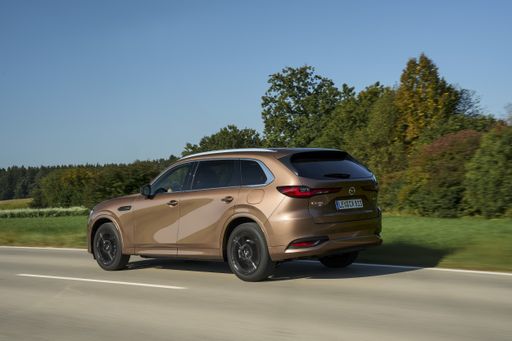
The Mazda CX-80 brings polished, near-premium styling and a cabin that feels far classier than its badge might imply. It steers with a composed, engaging character and packs the sensible practicality families want — with just enough flair to make school runs feel a little less ordinary.

details

Kia Sorento

The Kia Sorento blends roomy practicality with smart tech and an unexpectedly composed highway manner, making it an easy choice for families who want comfort without fuss. It presents classy interior touches and sensible packaging at a realistic price, proving you don't need to shout to be noticed in the SUV crowd.

details
Mazda CX-80
Kia Sorento

Costs and Consumption

Price
49,300 - 61,400 £
Price
47,300 - 60,500 £
Consumption L/100km
4 - 5.6 L/100km
Consumption L/100km
3.9 - 7 L/100km
Consumption kWh/100km
-
Consumption kWh/100km
-
Electric Range
60 km
Electric Range
55 km
Battery Capacity
-
Battery Capacity
-
co2
91 - 146 g/km
co2
87 - 174 g/km
Fuel tank capacity
-
Fuel tank capacity
-

Dimensions and Body

Body Type
SUV
Body Type
SUV
Seats
7
Seats
5 - 7
Doors
-
Doors
-
Curb weight
2,131 - 2,240 kg
Curb weight
1,855 - 2,110 kg
Trunk capacity
258 L
Trunk capacity
175 - 705 L
Length
-
Length
-
Width
1,890 mm
Width
1,900 mm
Height
-
Height
-
Max trunk capacity
-
Max trunk capacity
-
Payload
649 - 650 kg
Payload
162 - 685 kg

Engine and Performance

Engine Type
Plugin Hybrid, Diesel MHEV
Engine Type
Full Hybrid, Diesel, Plugin Hybrid
Transmission
Automatic
Transmission
Automatic
Transmission Detail
Automatic Gearbox
Transmission Detail
Automatic Gearbox, Dual-Clutch Automatic
Drive Type
All-Wheel Drive
Drive Type
Front-Wheel Drive, All-Wheel Drive
Power HP
254 - 327 HP
Power HP
194 - 288 HP
Acceleration 0-100km/h
6.8 - 8.4 s
Acceleration 0-100km/h
8 - 9.7 s
Max Speed
-
Max Speed
-
Torque
500 - 550 Nm
Torque
380 - 440 Nm
Number of Cylinders
4 - 6
Number of Cylinders
4
Power kW
187 - 241 kW
Power kW
142 - 212 kW
Engine capacity
2,488 - 3,283 cm3
Engine capacity
1,598 - 2,151 cm3

General

Model Year
2025
Model Year
2,025 - 2,026
CO2 Efficiency Class
B, E
CO2 Efficiency Class
E, F, B
Brand
Mazda
Brand
Kia
DriveDuel uses data analysis and artificial intelligence to evaluate vehicle data and create content. Content is regularly reviewed and improved. The displayed prices are estimates based on German list prices, adjusted to the respective country’s VAT. Country-specific registration taxes are not included. This information is not legally binding.