VS

Mazda CX-80 vs XPeng G9 comparison

Compare performance (327 HP vs 575 HP), boot space and price (49,300 £ vs 51,100 £ ) at a glance. Find out which car is the better choice for you – Mazda CX-80 or XPeng G9?

Mazda CX-80 vs XPeng G9: Key differences

Mazda CX-80

  • only slightly cheaper
  • marginally lighter

XPeng G9

4.6 (3 Reviews)
rate
  • significantly more power
  • substantially more electric range
  • substantially quicker 0–100 km/h
  • clearly more trunk space

All details on performance, efficiency, range and trunk space can be found in the technical comparison below – including user reviews for both models.

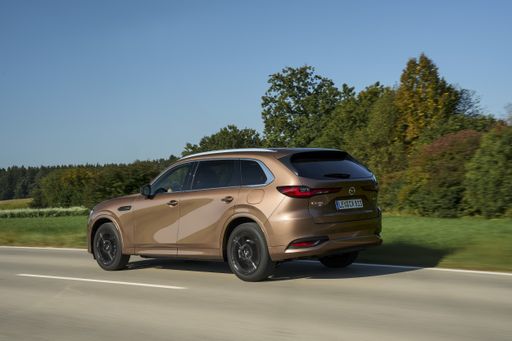
CX-80

The automotive landscape is rapidly evolving, particularly in the SUV segment where demand for versatility, efficiency, and innovation continues to rise. In this comparison, we pit the Mazda CX-80 against the XPeng G9, two models that embody the shift towards hybrid and electric powertrains in the SUV market. Join us as we dive into their technical specifications, innovative features, and driving experiences.
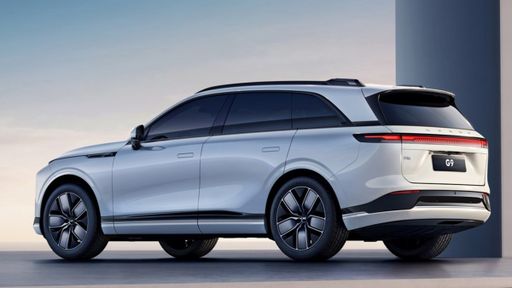
G9

Design and Features

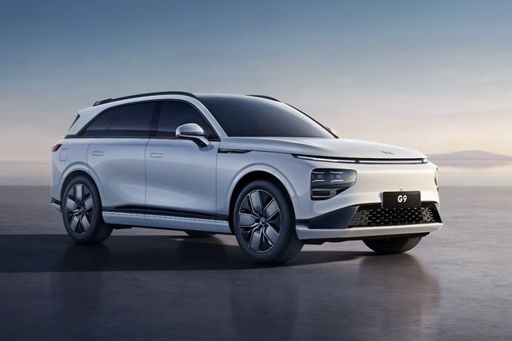
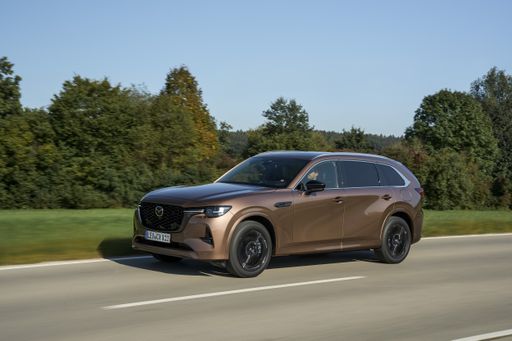
Starting with the body type, both the Mazda CX-80 and XPeng G9 are designed as SUVs, catering to families and adventure seekers alike. The CX-80 features a robust build measuring 4,995 mm in length, 1,890 mm in width, and 1,714 mm in height. The XPeng G9, while slightly shorter at 4,891 mm, is wider at 1,937 mm and has a lower height of 1,680 mm. This difference in dimensions gives the G9 a more sporty appearance, while the CX-80 emphasizes a more traditional SUV silhouette.

CX-80

Powertrains and Performance

When it comes to performance, both vehicles offer a range of engine options suited to different driving preferences. The Mazda CX-80 provides choices between a powerful 327 HP plug-in hybrid and a 254 HP diesel mild-hybrid engine. Both variants are equipped with all-wheel drive and feature an automatic transmission, offering a smooth driving experience. The CX-80 accelerates from 0 to 100 km/h in 6.8 seconds with the plug-in hybrid, boasting a torque of 500 Nm.

On the other hand, the XPeng G9 shines with its fully electric powertrains, producing up to 551 HP in its top variant, delivering an exhilarating acceleration time of just 3.9 seconds from 0 to 100 km/h. With torque figures reaching 717 Nm, the G9 promises an incredibly responsive and dynamic driving feel. Additionally, its rear-wheel and all-wheel drive options cater to varying preferences in handling and performance.

G9

Driving Range and Efficiency

Fuel efficiency and driving range are crucial factors for many consumers today. The Mazda CX-80 offers a respectable electric range of 60 km paired with a conventional fuel tank range that yields consumption figures of 1.6 L/100km for the hybrid, and 5.7 L/100km for the diesel variant. Its CO2 emissions are also noteworthy, with a rating of 35 g/km for the hybrid.

In contrast, the XPeng G9 excels in electric range, offering variants that extend from 460 km up to an impressive 570 km on a single charge, depending on the battery capacity (75.8 kWh and 93.1 kWh). The electric consumption ranges from 19.4 to 21.3 kWh/100km, making it a strong contender for eco-conscious drivers.

CX-80

Interior and Space

Space is a key advantage of both models. The Mazda CX-80 accommodates up to seven passengers, making it an ideal choice for larger families or those who prioritize passenger capacity. Its trunk capacity stands at 258 liters, which is adequate for cargo but may feel limited compared to the G9.

The XPeng G9, while seating five, compensates with a substantially larger trunk capacity of 660 liters, providing ample space for luggage or outdoor gear. This makes it a more practical option for adventurous outings or road trips.

G9

Technological Innovations

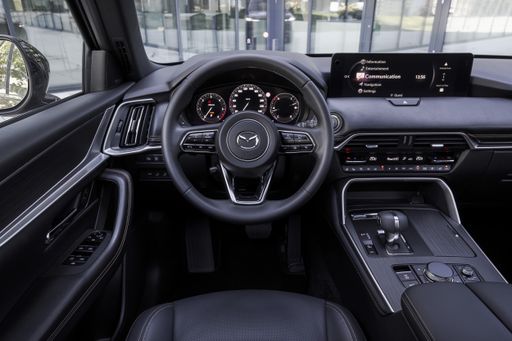
Both SUVs are packed with cutting-edge technology aimed at enhancing the driving experience. The Mazda CX-80 comes equipped with advanced safety features, including adaptive cruise control, lane keeping assistance, and a comprehensive infotainment system designed for driver-centric usability.

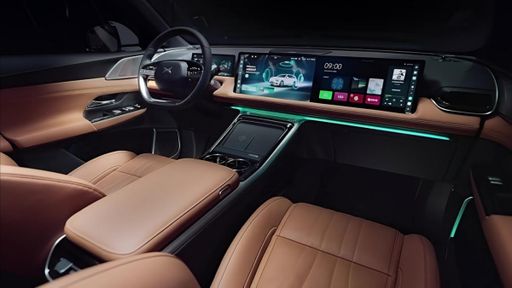
Meanwhile, the XPeng G9 takes a bold step into the future with its smart technology integration. It features advanced driver assistance systems, over-the-air updates, and a sophisticated autonomous driving system that aims to redefine convenience. The G9’s user interface is designed intuitively to handle all driving functions while prioritizing driver and passenger comfort.

Conclusion

In summary, the Mazda CX-80 and XPeng G9 are both compelling choices in the SUV market, each excelling in different areas. The CX-80 distinguishes itself with its spacious interior and versatile hybrid engine options, making it suitable for families. In contrast, the XPeng G9 caters to tech-savvy drivers looking for performance and cutting-edge electric technology. Ultimately, the choice between these two formidable SUVs will depend on individual preferences and lifestyle needs.

Here’s where it gets real: The technical differences in detail

CX-80

Costs and Efficiency:

Looking at overall running costs, both models reveal some interesting differences in everyday economy.

Mazda CX-80 is only slightly cheaper – starting at 49,300 £ , while the XPeng G9 costs 51,100 £ . That’s a price difference of around 1,757 £.

As for electric range, the XPeng G9 offers substantially more range – reaching up to 585 km, about 525 km more than the Mazda CX-80.

G9

Engine and Performance:

Power, torque and acceleration are the classic benchmarks for car enthusiasts – and here, some clear differences start to show.

When it comes to engine power, the XPeng G9 offers significantly more power – delivering 575 HP compared to 327 HP. That’s roughly 248 HP more horsepower.

When accelerating from 0 to 100 km/h, the XPeng G9 is substantially quicker – completing the sprint in 4.2 s, while the Mazda CX-80 takes 6.8 s. That’s about 2.6 s quicker.

There’s also a difference in torque: the XPeng G9 delivers noticeably more torque with 695 Nm compared to 550 Nm. That’s about 145 Nm more.

CX-80

Space and Everyday Use:

Whether family car or daily driver – which one offers more room, flexibility and comfort?

Seats: Mazda CX-80 offers more seats – 7 vs 5.

In terms of curb weight, Mazda CX-80 is marginally lighter – 2,131 kg compared to 2,210 kg. The difference is around 79 kg.

Looking at boot space, the XPeng G9 offers clearly more boot space – 660 L compared to 258 L. That’s a difference of about 402 L.

When it comes to payload, the Mazda CX-80 carries a bit more – 650 kg compared to 520 kg. That’s a difference of about 130 kg.

Who wins the race in the data check?

The XPeng G9 holds a decisive overall lead in the objective data comparison.
This result only shows which model scores more points on paper – not which of the two cars feels right for you.

from £51,100
G9

XPeng G9

  • Engine Type : Electric
  • Transmission : Automatic
  • Drive Type : Rear-Wheel Drive, All-Wheel Drive
  • Power HP : 351 - 575 HP
  • Consumption kWh/100km : 18.4 - 20.1 kWh/100km
  • Electric Range : 502 - 585 km
Mazda CX-80
XPeng G9

Costs and Consumption

View detailed analysis

Engine and Performance

View detailed analysis

Dimensions and Body

View detailed analysis

Mazda CX-80

The Mazda CX-80 brings polished, near-premium styling and a cabin that feels far classier than its badge might imply. It steers with a composed, engaging character and packs the sensible practicality families want — with just enough flair to make school runs feel a little less ordinary.

details

XPeng G9

The XPeng G9 feels like a confident leap into the electric SUV world, with sleek, purposeful styling and an interior that mixes modern tech with everyday comfort. On the road it’s calm and composed, serving up effortless pace and hushed refinement that turns long commutes into something you might actually enjoy — a strong pick for buyers who want electric convenience without compromise.

details
Mazda CX-80
XPeng G9

Costs and Consumption

Price
49,300 - 61,400 £
Price
51,100 - 62,200 £
Consumption L/100km
4 - 5.6 L/100km
Consumption L/100km
-
Consumption kWh/100km
-
Consumption kWh/100km
18.4 - 20.1 kWh/100km
Electric Range
60 km
Electric Range
502 - 585 km
Battery Capacity
-
Battery Capacity
-
co2
91 - 146 g/km
co2
0 g/km
Fuel tank capacity
-
Fuel tank capacity
-

Dimensions and Body

Body Type
SUV
Body Type
SUV
Seats
7
Seats
5
Doors
-
Doors
-
Curb weight
2,131 - 2,240 kg
Curb weight
2,210 - 2,395 kg
Trunk capacity
258 L
Trunk capacity
660 L
Length
-
Length
-
Width
1,890 mm
Width
1,937 mm
Height
-
Height
-
Max trunk capacity
-
Max trunk capacity
-
Payload
649 - 650 kg
Payload
515 - 520 kg

Engine and Performance

Engine Type
Plugin Hybrid, Diesel MHEV
Engine Type
Electric
Transmission
Automatic
Transmission
Automatic
Transmission Detail
Automatic Gearbox
Transmission Detail
Reduction Gearbox
Drive Type
All-Wheel Drive
Drive Type
Rear-Wheel Drive, All-Wheel Drive
Power HP
254 - 327 HP
Power HP
351 - 575 HP
Acceleration 0-100km/h
6.8 - 8.4 s
Acceleration 0-100km/h
4.2 - 6.6 s
Max Speed
-
Max Speed
-
Torque
500 - 550 Nm
Torque
465 - 695 Nm
Number of Cylinders
4 - 6
Number of Cylinders
-
Power kW
187 - 241 kW
Power kW
258 - 423 kW
Engine capacity
2,488 - 3,283 cm3
Engine capacity
-

General

Model Year
2,025
Model Year
2,025
CO2 Efficiency Class
B, E
CO2 Efficiency Class
A
Brand
Mazda
Brand
XPeng
DriveDuel uses data analysis and artificial intelligence to evaluate vehicle data and create content. Content is regularly reviewed and improved. The displayed prices are estimates based on German list prices, adjusted to the respective country’s VAT. Country-specific registration taxes are not included. This information is not legally binding.