
 Deutschland
 France
 Nederland
 Great Britain
 Sverige
 Norge
Norge Danmark
 Suomi
Suomi Italia
 Polska
 España
VS
Mercedes Citan vs Skoda Octavia Combi – Which model is better for everyday use?
Two cars, one duel: Mercedes Citan meets Skoda Octavia Combi.
Which one wins in performance, efficiency and value for money? Find out now!
Octavia Combi
@ Škoda Auto a.s. / Škoda Storyboard
Costs and Efficiency:
Price and efficiency are key factors when choosing a car – and this is often where the real differences emerge.
Mercedes Citan has a minimal advantage in terms of price – it starts at 22400 £, while the Skoda Octavia Combi costs 24400 £. That’s a price difference of around 1977 £.
Fuel consumption also shows a difference: Skoda Octavia Combi manages with 4.40 L and is therefore somewhat more efficient than the Mercedes Citan with 5.20 L. The difference is about 0.80 L per 100 km.
Octavia Combi
@ Škoda Auto a.s. / Škoda Storyboard
Engine and Performance:
Power, torque and acceleration say a lot about how a car feels on the road. This is where you see which model delivers more driving dynamics.
When it comes to engine power, the Skoda Octavia Combi has a convincingly edge – offering 265 HP compared to 131 HP. That’s roughly 134 HP more horsepower.
In acceleration from 0 to 100 km/h, the Skoda Octavia Combi is decisively quicker – completing the sprint in 6.50 s, while the Mercedes Citan takes 13 s. That’s about 6.50 s faster.
In terms of top speed, the Skoda Octavia Combi performs noticeable better – reaching 250 km/h, while the Mercedes Citan tops out at 183 km/h. The difference is around 67 km/h.
There’s also a difference in torque: Skoda Octavia Combi pulls evident stronger with 370 Nm compared to 270 Nm. That’s about 100 Nm difference.
Octavia Combi
@ Škoda Auto a.s. / Škoda Storyboard
Space and Everyday Use:
Beyond pure performance, interior space and usability matter most in daily life. This is where you see which car is more practical and versatile.
Both vehicles offer seating for 5 people.
In curb weight, Skoda Octavia Combi is a bit lighter – 1366 kg compared to 1556 kg. The difference is around 190 kg.
In terms of boot space, the Skoda Octavia Combi offers a bit more room – 640 L compared to 551 L. That’s a difference of about 89 L.
In maximum load capacity, the Mercedes Citan performs significantly better – up to 3660 L, which is about 1960 L more than the Skoda Octavia Combi.
When it comes to payload, Mercedes Citan to a small extent takes the win – 644 kg compared to 534 kg. That’s a difference of about 110 kg.
Who comes out on top?
Overall, the Skoda Octavia Combi shows itself to be leaves the rival little chance and secures the title of DriveDuel Champion.
It convinces with the more balanced overall package and proves to be the more versatile choice for everyday use.
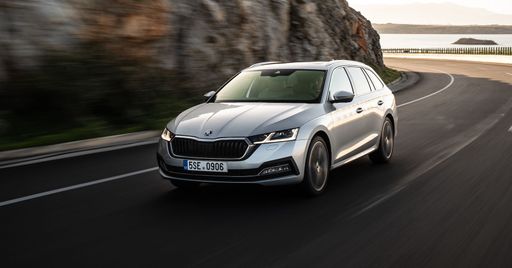
from about £24,400
 @ Škoda Auto a.s. / Škoda Storyboard
Skoda Octavia Combi
Mercedes Citan
The Mercedes-Benz Citan High Roof Van is a versatile option in the compact van segment, offering a perfect blend of practicality and style. Its sleek design combined with the brand's hallmark attention to detail ensures that it stands out on city streets and motorways alike. Inside, the spacious cabin provides ample room for passengers or cargo, making it an ideal choice for both urban professionals and families seeking flexibility.
detailsSkoda Octavia Combi
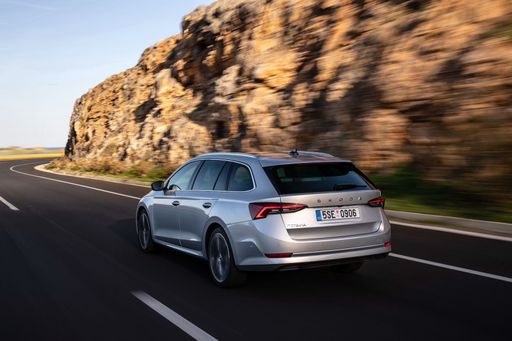
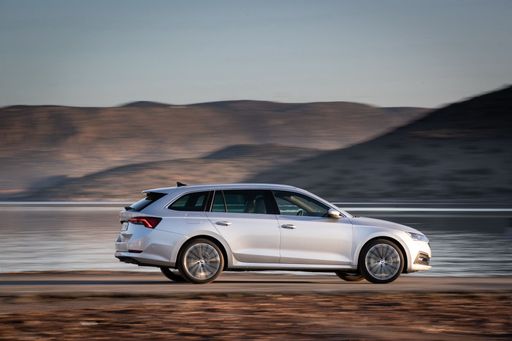
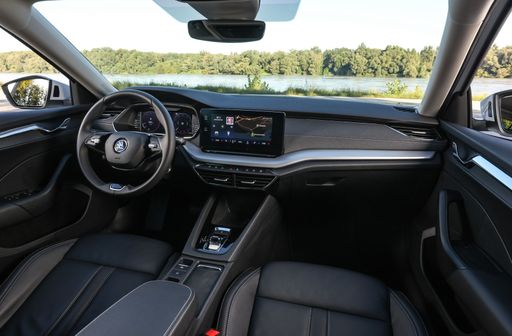
The Skoda Octavia Combi is the sensible family wagon that somehow turns grocery runs and long trips into a pleasant, unshowy experience — spacious, practical and built like it prefers reliability over flash. With smart touches, clever storage and a cabin that feels grown-up rather than frugal, it’s an easy recommendation for buyers who want maximum utility without sacrificing comfort or style.
details
@ Škoda Auto a.s. / Škoda Storyboard
 @ Škoda Auto a.s. / Škoda Storyboard
 @ Škoda Auto a.s. / Škoda Storyboard
 @ Škoda Auto a.s. / Škoda Storyboard
Mercedes Citan
Skoda Octavia Combi
|
@ Škoda Auto a.s. / Škoda Storyboard
|
|
|
|
|
Costs and Consumption |
|
|---|---|
|
Price
22400 - 30100 £
|
Price
24400 - 42300 £
|
|
Consumption L/100km
5.2 - 7.4 L
|
Consumption L/100km
4.4 - 6.9 L
|
|
Consumption kWh/100km
19.3 - 20.7 kWh
|
Consumption kWh/100km
-
|
|
Electric Range
265 - 280 km
|
Electric Range
-
|
|
Battery Capacity
45 kWh
|
Battery Capacity
-
|
|
co2
0 - 167 g/km
|
co2
113 - 157 g/km
|
|
Fuel tank capacity
54 L
|
Fuel tank capacity
45 - 55 L
|
Dimensions and Body |
|
|---|---|
|
Body Type
High Roof Estate
|
Body Type
Estate
|
|
Seats
5
|
Seats
5
|
|
Doors
5
|
Doors
5
|
|
Curb weight
1556 - 2010 kg
|
Curb weight
1366 - 1553 kg
|
|
Trunk capacity
0 - 551 L
|
Trunk capacity
640 L
|
|
Length
4498 - 4922 mm
|
Length
4698 - 4709 mm
|
|
Width
1859 mm
|
Width
1829 mm
|
|
Height
1811 - 1830 mm
|
Height
1455 - 1468 mm
|
|
Max trunk capacity
1979 - 3660 L
|
Max trunk capacity
1700 L
|
|
Payload
485 - 644 kg
|
Payload
471 - 534 kg
|
Engine and Performance |
|
|---|---|
|
Engine Type
Petrol, Diesel, Electric
|
Engine Type
Petrol, Petrol MHEV, Diesel
|
|
Transmission
Manuel, Automatic
|
Transmission
Automatic, Manuel
|
|
Transmission Detail
Manual Gearbox, Dual-Clutch Automatic, Reduction Gearbox
|
Transmission Detail
Dual-Clutch Automatic, Manual Gearbox
|
|
Drive Type
Front-Wheel Drive
|
Drive Type
Front-Wheel Drive, All-Wheel Drive
|
|
Power HP
95 - 131 HP
|
Power HP
116 - 265 HP
|
|
Acceleration 0-100km/h
13 - 15.5 s
|
Acceleration 0-100km/h
6.5 - 10.7 s
|
|
Max Speed
132 - 183 km/h
|
Max Speed
203 - 250 km/h
|
|
Torque
200 - 270 Nm
|
Torque
220 - 370 Nm
|
|
Number of Cylinders
4
|
Number of Cylinders
4
|
|
Power kW
70 - 96 kW
|
Power kW
85 - 195 kW
|
|
Engine capacity
1332 - 1461 cm3
|
Engine capacity
1498 - 1984 cm3
|
General |
|
|---|---|
|
Model Year
2021 - 2024
|
Model Year
2024 - 2025
|
|
CO2 Efficiency Class
F, E, A
|
CO2 Efficiency Class
E, F, D, C
|
|
Brand
Mercedes-Benz
|
Brand
Skoda
|
What drive types are available for the Mercedes Citan?
Available configurations include Front-Wheel Drive.
The prices and data displayed are estimates based on German list prices and may vary by country. This information is not legally binding.