@ Mercedes-Benz Group Media
@ Tesla, Inc.
VS

Mercedes E Class vs Tesla Model Y – Performance, range & efficiency compared

Compare performance, boot capacity, efficiency and price at a glance.
Find out which car is the better choice for you – Mercedes E Class or Tesla Model Y?

Mercedes E Class

Tesla Model Y

4.3 (3 Reviews)
rate
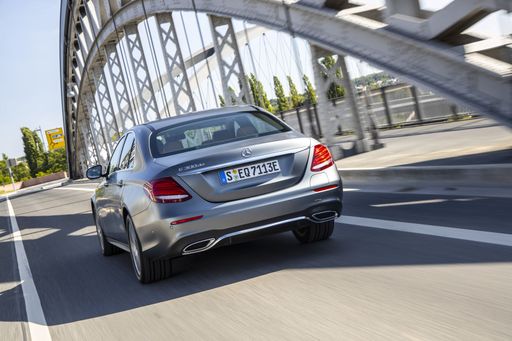
E Class @ Mercedes-Benz Group Media

The automotive landscape is rapidly evolving, with electric vehicles (EVs) becoming increasingly popular alongside traditional combustion engine vehicles. In this article, we will compare the Mercedes E-Class and the Tesla Model Y, two distinct vehicles representing different philosophies in automotive design and technology.
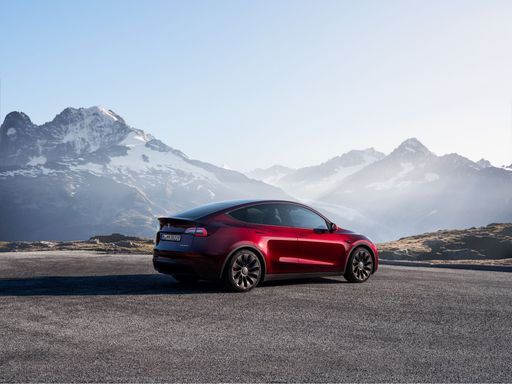
Model Y @ Tesla, Inc.

Overview: Luxury vs. Innovation

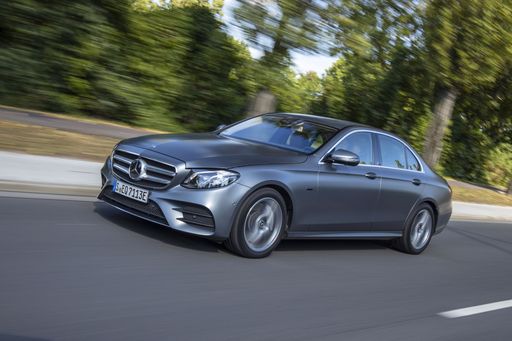
The Mercedes E-Class is a storied nameplate from one of the oldest luxury car manufacturers, renowned for its blend of performance, comfort, and cutting-edge technology. The E-Class offers various engine options, including plugin hybrids and MHEVs, which cater to a discerning clientele seeking both power and efficiency.

On the other hand, the Tesla Model Y is an all-electric SUV that embodies innovation and sustainability. With a strong focus on electric range and high-tech features, the Model Y attracts a younger, more environmentally conscious audience. This comparison will delve into key technical aspects, innovations, and performance in both models.

E Class @ Mercedes-Benz Group Media

Powertrains: Versatility vs. Electricity

The E-Class boasts a range of power options, including petrol hybrid and diesel hybrid models, with power outputs ranging from 186 HP to a staggering 585 HP. The plugin hybrid versions feature a battery capacity of 21.2 kWh, offering an electric range of up to 114 km, making it suitable for short commutes while still providing the option for longer journeys without relying solely on electric power.

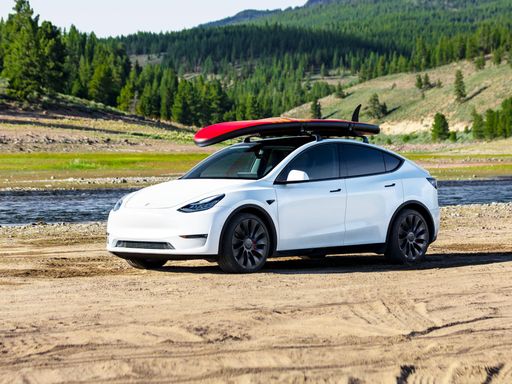
Conversely, the Tesla Model Y is equipped with fully electric powertrains, offering a range of 455 km to a maximum of 600 km, thanks to its battery capacities of 62 kWh and 79 kWh. With power outputs from 299 HP to an impressive 534 HP in the Performance version, the Model Y provides instant torque and impressive acceleration, going from 0-100 km/h in as little as 3.7 seconds.

Model Y @ Tesla, Inc.

Performance and Handling: Precision Engineering vs. Instant Torque

Performance-wise, the Mercedes E-Class features all-wheel drive options and rear-wheel drive configurations, ensuring a dynamic driving experience across different terrains. Acceleration from 0-100 km/h varies from 4.5 seconds for the performance-oriented models, showcasing Mercedes-Benz’s engineering prowess and focus on a refined ride.

In contrast, the Tesla Model Y offers a more raw, exhilarating performance, with its electric motor providing immediate torque delivery. This results in acceleration figures that rival high-performance sports cars, and the all-wheel drive versions further enhance grip and handling, especially in adverse weather conditions.

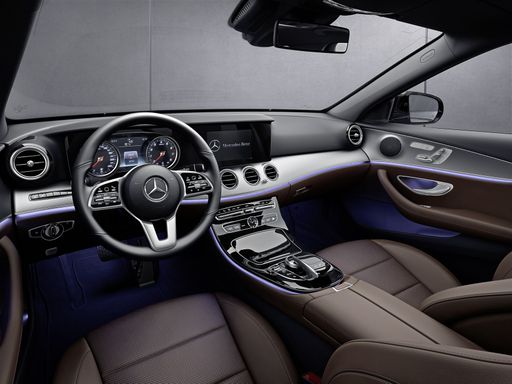
E Class @ Mercedes-Benz Group Media

Interior Quality and Technology: Luxury Finish vs. Minimalist Design

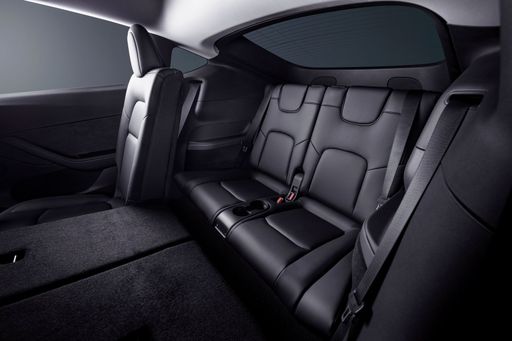
The Mercedes E-Class is renowned for its luxurious interior, featuring high-quality materials, sophisticated ambient lighting, and the latest MBUX infotainment system, which includes voice recognition and a multitude of features within a user-friendly interface. The focus here is on comfort, with spacious seats and advanced technology designed to enhance the driving experience.

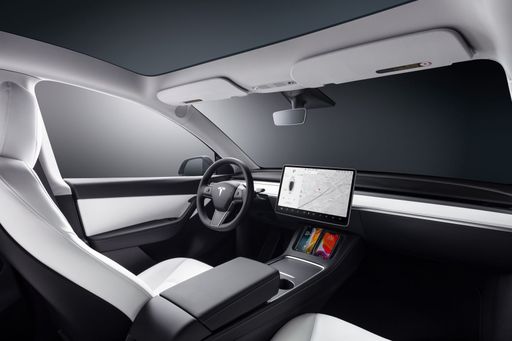
On the other hand, the Tesla Model Y takes a minimalist approach to its interior design. The central touchscreen controls most of the vehicle's functions, and while it may appear sparse compared to the E-Class, it integrates cutting-edge technology seamlessly. Advanced features such as Autopilot and over-the-air software updates highlight Tesla's commitment to innovation and user experience.

Model Y @ Tesla, Inc.

Range and Efficiency: Traditional Consumption vs. Electric Savings

The Mercedes E-Class, depending on the engine type, showcases fuel consumption figures that vary significantly, with diesel variants at around 4.7 L/100 km to plugin hybrids at an impressive 0.4 L/100 km in electric mode. However, the overall efficacy is rooted in its conventional combustion engines alongside hybrid technology.

Conversely, the Tesla Model Y’s electric powertrains boast energy consumption rates between 14.9 to 17.3 kWh/100 km. With CO2 emissions of 0 g/km, it presents a compelling case for eco-friendliness and reduced operational costs. The long electric range combined with home charging options makes it a practical choice for daily use.

Conclusion: Which One Should You Choose?

The decision between the Mercedes E-Class and Tesla Model Y ultimately comes down to personal preference. If you prioritize luxury, a rich driving experience, and the backing of a prestigious automotive brand, the E-Class would be a compelling choice. However, if you are drawn towards innovative EV technology, sustainability, and cutting-edge features, the Tesla Model Y stands out as a strong contender.

Both vehicles offer distinct advantages, appealing to different customer bases while representing the future of automotive excellence. Whichever you choose, you’re assured of a sophisticated driving experience that reflects the advancements in car design and technology.

Here’s where it gets real: The technical differences in detail

Costs and Efficiency:

When it comes to price and running costs, the biggest differences usually appear. This is often where you see which car fits your budget better in the long run.

Tesla Model Y has a significantly advantage in terms of price – it starts at 34300 £, while the Mercedes E Class costs 50500 £. That’s a price difference of around 16213 £.

As for range, the Tesla Model Y performs convincingly better – achieving up to 622 km, about 506 km more than the Mercedes E Class.

Engine and Performance:

Under the bonnet, it becomes clear which model is tuned for sportiness and which one takes the lead when you hit the accelerator.

When it comes to engine power, the Tesla Model Y has a barely noticeable edge – offering 627 HP compared to 585 HP. That’s roughly 42 HP more horsepower.

In acceleration from 0 to 100 km/h, the Tesla Model Y is a bit quicker – completing the sprint in 3.50 s, while the Mercedes E Class takes 4 s. That’s about 0.50 s faster.

There’s no difference in top speed – both reach 250 km/h.

There’s also a difference in torque: Mercedes E Class pulls noticeable stronger with 750 Nm compared to 493 Nm. That’s about 257 Nm difference.

Space and Everyday Use:

Cabin size, boot volume and payload all play a role in everyday practicality. Here, comfort and flexibility make the difference.

Both vehicles offer seating for 5 people.

In curb weight, Mercedes E Class is barely noticeable lighter – 1810 kg compared to 1976 kg. The difference is around 166 kg.

In terms of boot space, the Tesla Model Y offers evident more room – 822 L compared to 540 L. That’s a difference of about 282 L.

When it comes to payload, Mercedes E Class clearly perceptible takes the win – 640 kg compared to 472 kg. That’s a difference of about 168 kg.

Who wins the race?

The Tesla Model Y proves to be outperforms in nearly all aspects and therefore becomes our DriveDuel Champion!
Tesla Model Y is the better all-rounder in this comparison.

Mercedes E Class
Tesla Model Y

Costs and Consumption

View detailed analysis

Engine and Performance

View detailed analysis

Dimensions and Body

View detailed analysis
from about £34,300
Model Y @ Tesla, Inc.

Tesla Model Y

  • Engine Type : Electric
  • Transmission : Automatic
  • Drive Type : All-Wheel Drive, Rear-Wheel Drive
  • Power HP : 299 - 627 HP
  • Consumption kWh/100km : 13.1 - 16.2 kWh
  • Electric Range : 534 - 622 km

Mercedes E Class

The Mercedes E‑Class is the executive saloon that balances calm refinement with a hint of sporting intent, wrapping luxury in tasteful understatement. It pampers occupants with a composed ride and intuitive tech while quietly reminding you that it’s still very much a Mercedes — authoritative, polished, and unwilling to shout for attention.

details

Tesla Model Y

4.3 (3 Reviews)
rate

The Tesla Model Y blends SUV practicality with sports-car poke, wrapping a roomy, minimalist cabin and handy hatch into a slick, aerodynamic package that feels more Silicon Valley gadget than garage ornament. It’s an ideal pick for buyers who want effortless electric driving, regular software improvements and access to Tesla’s convenient charging network, though style-conscious shoppers should know it’s more about tech and efficiency than classic luxury.

details
Mercedes E Class
Tesla Model Y
E Class @ Mercedes-Benz Group Media
Model Y @ Tesla, Inc.

Costs and Consumption

Price
50500 - 119700 £
Price
34300 - 53100 £
Consumption L/100km
1.5 - 7.5 L
Consumption L/100km
-
Consumption kWh/100km
-
Consumption kWh/100km
13.1 - 16.2 kWh
Electric Range
101 - 116 km
Electric Range
534 - 622 km
Battery Capacity
21.20 kWh
Battery Capacity
64.5 - 85 kWh
co2
39 - 172 g/km
co2
0 g/km
Fuel tank capacity
50 - 66 L
Fuel tank capacity
-

Dimensions and Body

Body Type
Sedan
Body Type
SUV
Seats
5
Seats
5
Doors
4
Doors
5
Curb weight
1810 - 2390 kg
Curb weight
1976 - 2108 kg
Trunk capacity
370 - 540 L
Trunk capacity
822 L
Length
4949 - 4959 mm
Length
4790 - 4797 mm
Width
1880 mm
Width
1921 mm
Height
1468 - 1480 mm
Height
1611 - 1624 mm
Max trunk capacity
-
Max trunk capacity
2022 - 2138 L
Payload
530 - 640 kg
Payload
440 - 472 kg

Engine and Performance

Engine Type
Petrol MHEV, Plugin Hybrid, Diesel MHEV
Engine Type
Electric
Transmission
Automatic
Transmission
Automatic
Transmission Detail
Automatic Gearbox
Transmission Detail
Reduction Gearbox
Drive Type
Rear-Wheel Drive, All-Wheel Drive
Drive Type
All-Wheel Drive, Rear-Wheel Drive
Power HP
186 - 585 HP
Power HP
299 - 627 HP
Acceleration 0-100km/h
4 - 8.5 s
Acceleration 0-100km/h
3.5 - 7.2 s
Max Speed
222 - 250 km/h
Max Speed
201 - 250 km/h
Torque
320 - 750 Nm
Torque
420 - 493 Nm
Number of Cylinders
4 - 6
Number of Cylinders
-
Power kW
137 - 430 kW
Power kW
220 - 461 kW
Engine capacity
1993 - 2999 cm3
Engine capacity
-

General

Model Year
2024 - 2025
Model Year
2025
CO2 Efficiency Class
E, F, B, D
CO2 Efficiency Class
A
Brand
Mercedes-Benz
Brand
Tesla
Is the Mercedes E Class offered with different drivetrains?

The Mercedes E Class is offered with Rear-Wheel Drive or All-Wheel Drive.

The prices and data displayed are estimates based on German list prices and may vary by country. This information is not legally binding.