VS

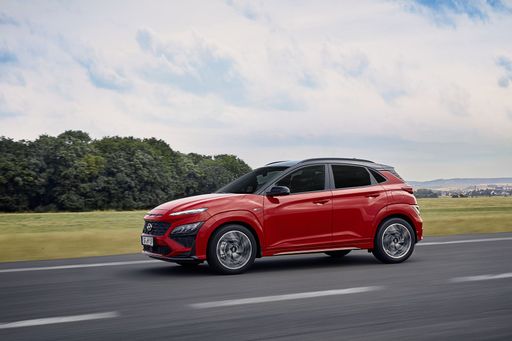
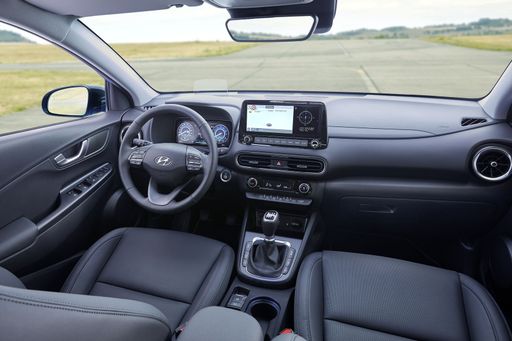
Mercedes EQA vs Hyundai Kona comparison

Compare performance (228 HP vs 204 HP), boot space and price (45,900 £ vs 23,600 £ ) at a glance. Find out which car is the better choice for you – Mercedes EQA or Hyundai Kona?

Mercedes EQA vs Hyundai Kona: Key differences

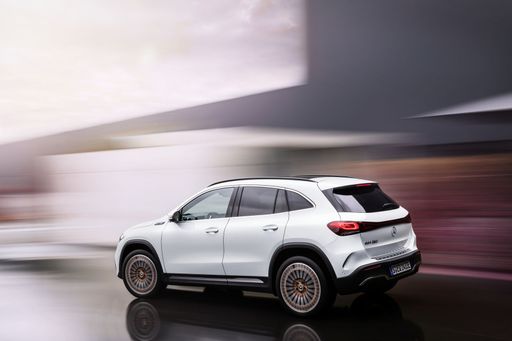
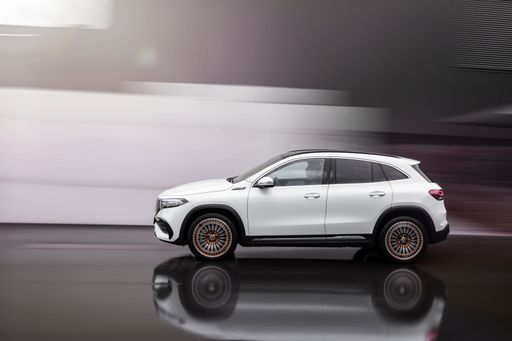
Mercedes EQA

4.7 (2 Reviews)
rate
  • slightly more power
  • very slightly quicker 0–100 km/h
details

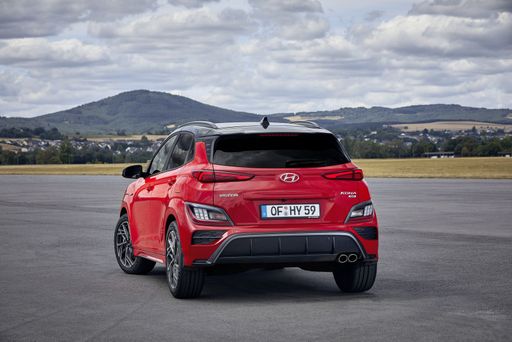
Hyundai Kona

4.6 (10 Reviews)
rate
  • significantly cheaper
  • somewhat more efficient
  • barely more electric range
  • substantially lighter
  • noticeably more trunk space
details

All details on performance, efficiency, range and trunk space can be found in the technical comparison below – including user reviews for both models.

By Achim Sedelmaier

EQA

Electric Warriors: Hyundai Kona vs. Mercedes EQA

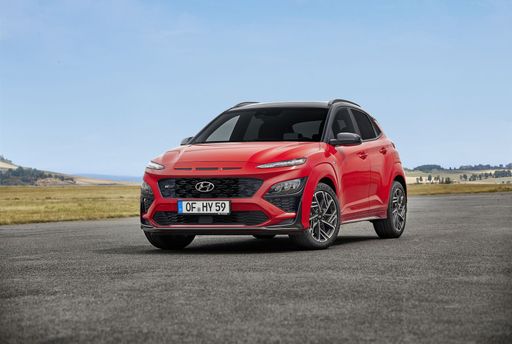
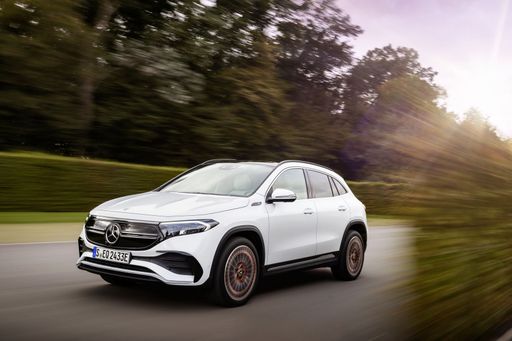
In the evolving arena of electric SUVs, the Hyundai Kona and the Mercedes EQA are two contenders that stand out with their blend of style, performance, and innovation. Each caters to a distinct demographic, delivering unique features that suit both urban commutes and leisurely getaways. But how do these electric warriors stack up against each other in the key areas that matter? Let's delve into the specifics.
Kona

Engine and Performance: Powerhouse Comparisons

The Hyundai Kona offers a diverse lineup, with engine options ranging from petrol to full hybrid and fully electric configurations. The all-electric version shines with a power output of 218 HP and offers impressive torque figures, ensuring a lively drive. Notably, the Kona accelerates from 0-100 km/h in as little as 7.8 seconds for the powerful electric variants, showcasing its adeptness at providing quick acceleration when required.

On the other hand, the Mercedes EQA, a purely electric SUV, delivers a serene and powerful drive, thanks to its advanced electric motors available in 190 HP, 228 HP, and a punchy 292 HP versions. With an acceleration time from 0-100 km/h of just 6 seconds in its most robust variant, the EQA is engineered for drivers who value performance tightly wrapped in luxury and precision.

EQA

Range and Consumption: Driving the Distance

Range anxiety is a common concern among potential electric vehicle owners. Both manufacturers have addressed these concerns by offering substantial driving ranges. The Hyundai Kona EV offers an electric range between 377 km to an impressive 514 km, backed by a battery capacity of up to 65.4 kWh. Its energy-efficient consumption ranges from 14.6 to 16.8 kWh per 100 km.

The Mercedes EQA, meanwhile, takes precedence in range with figures extending from 458 km to a notable 561 km, depending on the model. Its consumption rates hover between 14.4 and 16.9 kWh/100 km, underlining its efficiency in energy use. Equipped with up to a 70.5 kWh battery, the EQA is well-suited for longer journeys with fewer stops.

Kona

Dimensions and Practicality: Space and Comfort

Practicality is a key factor for SUV buyers, and both the Hyundai Kona and Mercedes EQA come well-prepared. The Kona is designed compactly for urban maneuverability with a length of 4355 mm, while still offering a spacious trunk capacity of 466 liters. With a curb weight of up to 1773 kg, it strikes a fair balance between agility and stability on the road.

The Mercedes EQA, slightly larger, measures 4463 mm in length and carries a trunk volume of 340 liters. Despite being heavier, with weights ranging up to 2115 kg, the EQA ensures a premium feel and comfort for all five passengers it can accommodate, aligning with the expectations of the luxury segment.

EQA

Innovations and Technology: Tech-Driven Journeys

When it comes to cutting-edge technology, both models flaunt an array of features. The Kona offers an intuitive dual-clutch automatic transmission for its petrol and hybrid models, alongside a user-friendly interface for its electric variants, ensuring every drive is seamless.

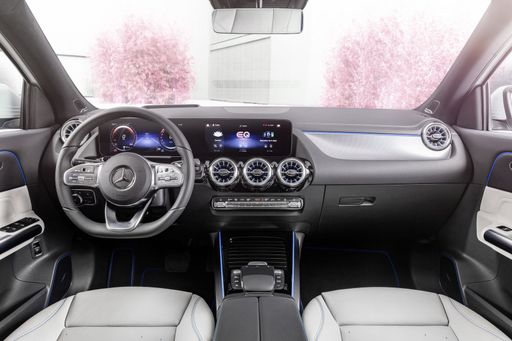
Mercedes, renowned for its forward-thinking innovations, equips the EQA with its latest MBUX infotainment system, providing a sophisticated soundtrack to every journey. Coupled with state-of-the-art driver-assistance technologies, the EQA stands as a beacon of safety and connectivity, ideal for the modern driver.

Kona

Conclusion: Tailored for Different Tastes

The Hyundai Kona and the Mercedes EQA, while both electric SUVs, cater to different segments of the market. The Kona is perfect for those seeking versatility and efficiency without sacrificing performance. It is more wallet-friendly while offering a high degree of practicality and functionality.

The EQA, however, is tailored for those with an appetite for luxury and cutting-edge technology, seeking a sophisticated companion for their daily commutes and extended travels. Its superior performance benchmarks offer a glimpse into the future of Mercedes-Benz's electric endeavors.

In essence, buyers are spoiled for choice, with each car presenting its own array of compelling attributes. Whether it's the practical efficiency of the Hyundai Kona or the luxurious prowess of the Mercedes EQA, the future of electric SUVs has never seemed more promising.

Here’s where it gets real: The technical differences in detail

EQA

Costs and Efficiency:

When it comes to price and running costs, the biggest differences usually appear. This is often where you see which car fits your budget better in the long run.

Hyundai Kona is significantly cheaper – starting at 23,600 £ , while the Mercedes EQA costs 45,900 £ . That’s a price difference of around 22,303 £.

In terms of energy consumption, the Hyundai Kona is somewhat more efficient: consuming 14.6 kWh/100km compared to 16.9 kWh/100km for the Mercedes EQA. That’s a difference of about 2.3 kWh/100km.

As for electric range, the Hyundai Kona offers barely more range – reaching up to 510 km, about 34 km more than the Mercedes EQA.

Kona

Engine and Performance:

Power, torque and acceleration say a lot about how a car feels on the road. This is where you see which model delivers more driving dynamics.

When it comes to engine power, the Mercedes EQA offers slightly more power – delivering 228 HP compared to 204 HP. That’s roughly 24 HP more horsepower.

When accelerating from 0 to 100 km/h, the Mercedes EQA is very slightly quicker – completing the sprint in 7.7 s, while the Hyundai Kona takes 8.1 s. That’s about 0.4 s quicker.

There’s also a difference in torque: the Mercedes EQA delivers noticeably more torque with 390 Nm compared to 265 Nm. That’s about 125 Nm more.

EQA

Space and Everyday Use:

Cabin size, boot volume and payload all play a role in everyday practicality. Here, comfort and flexibility make the difference.

Both vehicles offer seating for 5 people.

In terms of curb weight, Hyundai Kona is substantially lighter – 1,370 kg compared to 2,115 kg. The difference is around 745 kg.

Looking at boot space, the Hyundai Kona offers noticeably more boot space – 466 L compared to 340 L. That’s a difference of about 126 L.

When it comes to payload, the Hyundai Kona carries slightly more – 490 kg compared to 425 kg. That’s a difference of about 65 kg.

Who wins the race in the data check?

The Hyundai Kona is far ahead overall in the objective data comparison.
This result only shows which model scores more points on paper – not which of the two cars feels right for you.

from £23,600
Kona

Hyundai Kona

  • Engine Type Petrol, Full Hybrid, Electric
  • Transmission Manuel, Automatic
  • Drive Type Front-Wheel Drive, All-Wheel Drive
  • Power HP 115 - 204 HP
  • Consumption L/100km 4.6 - 7 L/100km
  • Consumption kWh/100km 14.6 - 16.1 kWh/100km
  • Electric Range 380 - 510 km
Mercedes EQA
Hyundai Kona

Costs and Consumption

View detailed analysis

Engine and Performance

View detailed analysis

Dimensions and Body

View detailed analysis

Mercedes EQA

The Mercedes EQA slips into the electric crossover ranks with the brand’s familiar luxury polish, offering a quiet, fuss-free drive that feels perfectly at home in the city or on a country escape. Inside it’s neatly finished and tech-forward, projecting grown-up refinement even if it plays things a bit safe for anyone chasing outright excitement.

details

Hyundai Kona

The Hyundai Kona is a compact crossover that pairs bold styling with practical everyday usability, offering a comfortable cabin and intuitive tech for modern drivers. Available in both conventional and electrified versions, Kona brings lively handling and strong value for buyers who want crossover versatility and standout character.

details
Mercedes EQA
Hyundai Kona

Costs and Consumption

Price
45,900 - 54,900 £
Price
23,600 - 41,900 £
Consumption L/100km
-
Consumption L/100km
4.6 - 7 L/100km
Consumption kWh/100km
16.9 kWh/100km
Consumption kWh/100km
14.6 - 16.1 kWh/100km
Electric Range
476 km
Electric Range
380 - 510 km
Battery Capacity
-
Battery Capacity
-
co2
0 g/km
co2
0 - 163 g/km
Fuel tank capacity
-
Fuel tank capacity
-

Dimensions and Body

Body Type
SUV
Body Type
SUV
Seats
5
Seats
5
Doors
-
Doors
-
Curb weight
2,115 kg
Curb weight
1,370 - 1,773 kg
Trunk capacity
340 L
Trunk capacity
466 L
Length
-
Length
-
Width
1,834 mm
Width
1,825 mm
Height
-
Height
-
Max trunk capacity
-
Max trunk capacity
-
Payload
425 kg
Payload
420 - 490 kg

Engine and Performance

Engine Type
Electric
Engine Type
Petrol, Full Hybrid, Electric
Transmission
Automatic
Transmission
Manuel, Automatic
Transmission Detail
Reduction Gearbox
Transmission Detail
Manual Gearbox, Dual-Clutch Automatic, Reduction Gearbox
Drive Type
All-Wheel Drive
Drive Type
Front-Wheel Drive, All-Wheel Drive
Power HP
228 HP
Power HP
115 - 204 HP
Acceleration 0-100km/h
7.7 s
Acceleration 0-100km/h
8.1 - 11.9 s
Max Speed
-
Max Speed
-
Torque
390 Nm
Torque
200 - 265 Nm
Number of Cylinders
-
Number of Cylinders
3 - 4
Power kW
168 kW
Power kW
85 - 150 kW
Engine capacity
-
Engine capacity
998 - 1,598 cm3

General

Model Year
2025
Model Year
2025
CO2 Efficiency Class
A
CO2 Efficiency Class
D, C, E, F, A
Brand
Mercedes-Benz
Brand
Hyundai
DriveDuel uses data analysis and artificial intelligence to evaluate vehicle data and create content. Content is regularly reviewed and improved. The displayed prices are estimates based on German list prices, adjusted to the respective country’s VAT. Country-specific registration taxes are not included. This information is not legally binding.