VS

Mercedes EQA vs Nissan Qashqai comparison

Compare performance (228 HP vs 205 HP), boot space and price (45,900 £ vs 29,600 £ ) at a glance. Find out which car is the better choice for you – Mercedes EQA or Nissan Qashqai?

Mercedes EQA vs Nissan Qashqai: Key differences

Mercedes EQA

5 (1 Reviews)
rate
  • slightly more power
details

Nissan Qashqai

4.9 (4 Reviews)
rate
  • substantially cheaper
  • barely quicker 0–100 km/h
  • considerably lighter
  • visibly more trunk space
details

All details on performance, efficiency, range and trunk space can be found in the technical comparison below – including user reviews for both models.

By Achim Sedelmaier

EQA

Electrifying Elegance vs. Hybrid Utility: Mercedes EQA vs. Nissan Qashqai

In the ever-evolving landscape of SUVs, the Mercedes EQA and Nissan Qashqai stand as formidable contenders, each offering distinct technology and design philosophies. For those on the hunt for a new ride, balancing luxury with efficiency or versatility with affordability, this comparison sheds light on how each vehicle holds its ground.
Qashqai

Design and Body Type

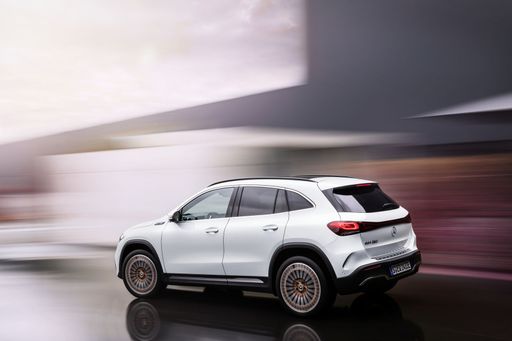
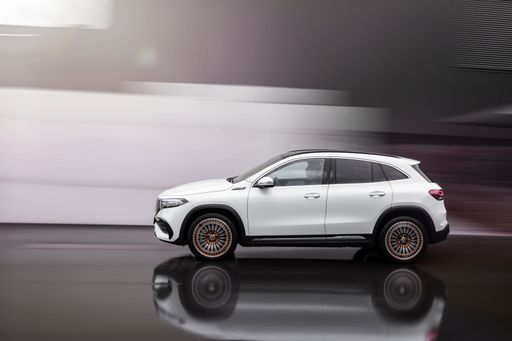
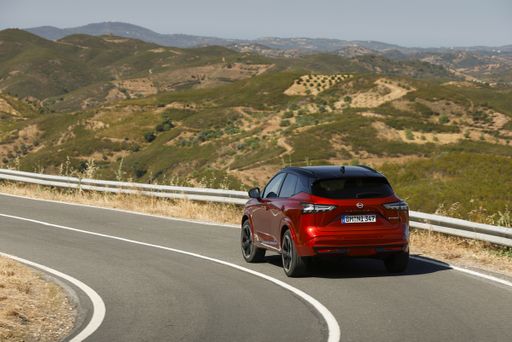
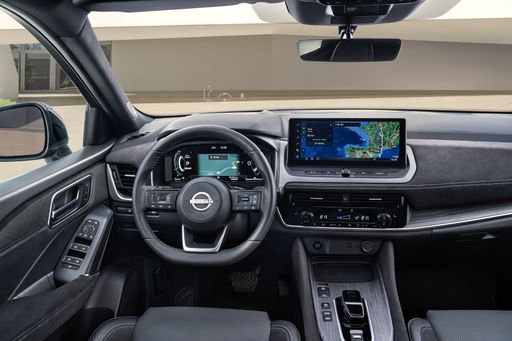
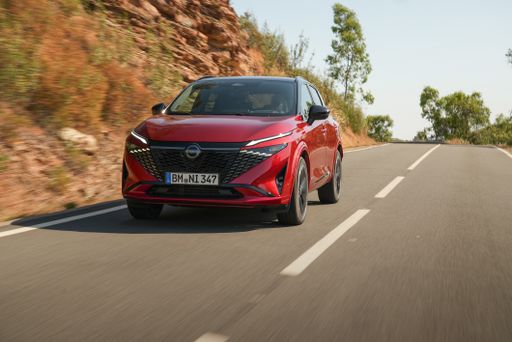
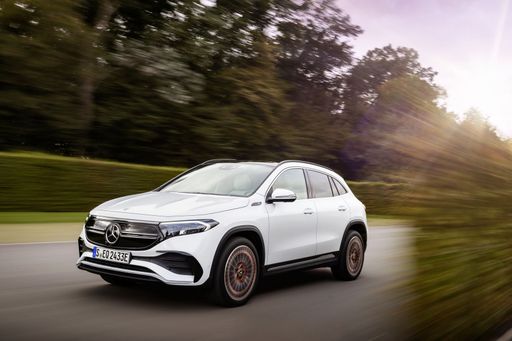
Both the Mercedes EQA and Nissan Qashqai fall under the SUV category, yet they bring different stylistic appeals. The EQA, with its sleek and futuristic aesthetic, emphasizes premium design synonymous with its brand, making use of smooth lines and LED lighting. Meanwhile, the Qashqai presents a robust and modern exterior, showcasing Nissan's approach to combining utility with contemporary design.

EQA

Powertrain and Performance

The powertrains of these SUVs showcase their distinct engineering goals. The Mercedes EQA is an all-electric SUV boasting power outputs ranging from 190 HP to 292 HP, with torque ranging from 385 Nm to 520 Nm. This culminates in spirited accelerations, the quickest reaching from 0 to 100 km/h in just 6 seconds. Additionally, it operates with impressive CO2 efficiency class A, ensuring an emissions-free journey.

In contrast, the Nissan Qashqai is offered with petrol MHEV and full hybrid powertrains. The power ranges from 140 HP to 190 HP with a torque spectrum of 240 Nm to 330 Nm. While the Qashqai features slightly slower acceleration times, starting from 7.9 seconds to 10.2 seconds, its expeditious handling and maximum speeds reaching 206 km/h cater to agile city driving and open road efficiency.

Qashqai

Efficiency and Range

Innovative efficiency is a hallmark of the Mercedes EQA, with its kWh/100km consumption ranging between 14.4 and 16.9, offering an electric range between 458 km to 561 km. This electric SUV not only prioritizes long-distance driving efficiency but also eco-friendly operation with zero emissions.

Nissan's Qashqai introduces hybrid technology, achieving fuel consumption from 5.1 L/100km to 6.8 L/100km. Despite its CO2 emissions being higher than the EQA, this hybrid setup still aims to bridge conventional fuel efficiency with lower environmental impacts. With a fuel tank capacity of 55 liters, the Qashqai asserts its stature in the realm of everyday practicality.

EQA

Interior and Tech Innovations

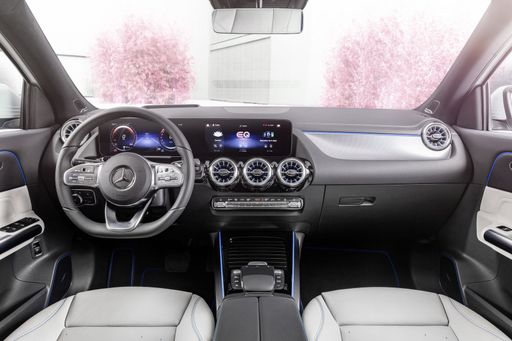
Inside the EQA, passengers are treated to a carefully curated interior with a focus on modern luxury, accommodating up to five passengers. The integration of digital interfaces, ambient lighting, and ergonomic design emphasizes a technology-forward experience.

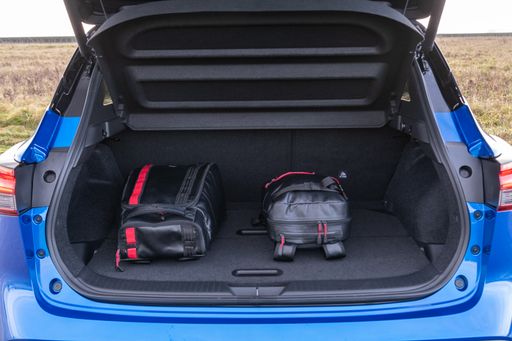
The Qashqai’s interior excels in functionality and space, with a slightly larger trunk capacity, ranging up to 504 liters compared to the EQA's 340 liters. It offers an ergonomic layout with advanced infotainment systems and comfort, appealing to those looking for utility and family-friendly features.

Qashqai

Conclusion: Choosing Your Ideal Companion

Choosing between the Mercedes EQA and Nissan Qashqai often comes down to personal preferences. The EQA appeals to those who prioritize luxury, electric innovation, and zero emissions. If you value practicality, affordability, and hybrid efficiency, the Qashqai represents a reliable option blending modern design with day-to-day usability.

In the vibrant world of SUVs, both models offer fascinating innovations and experiences. Whichever you choose, remember to align your choice with lifestyle and priorities for a rewarding journey ahead.

Here’s where it gets real: The technical differences in detail

EQA

Costs and Efficiency:

Price and efficiency are key factors when choosing a car – and this is often where the real differences emerge.

Nissan Qashqai is substantially cheaper – starting at 29,600 £ , while the Mercedes EQA costs 45,900 £ . That’s a price difference of around 16,269 £.

Qashqai

Engine and Performance:

Power, torque and acceleration are the classic benchmarks for car enthusiasts – and here, some clear differences start to show.

When it comes to engine power, the Mercedes EQA offers slightly more power – delivering 228 HP compared to 205 HP. That’s roughly 23 HP more horsepower.

When accelerating from 0 to 100 km/h, the Nissan Qashqai is barely quicker – completing the sprint in 7.6 s, while the Mercedes EQA takes 7.7 s. That’s about 0.1 s quicker.

There’s also a difference in torque: the Mercedes EQA delivers moderately more torque with 390 Nm compared to 330 Nm. That’s about 60 Nm more.

EQA

Space and Everyday Use:

Beyond pure performance, interior space and usability matter most in daily life. This is where you see which car is more practical and versatile.

Both vehicles offer seating for 5 people.

In terms of curb weight, Nissan Qashqai is considerably lighter – 1,420 kg compared to 2,115 kg. The difference is around 695 kg.

Looking at boot space, the Nissan Qashqai offers visibly more boot space – 504 L compared to 340 L. That’s a difference of about 164 L.

When it comes to payload, the Nissan Qashqai carries moderately more – 516 kg compared to 425 kg. That’s a difference of about 91 kg.

Who wins the race in the data check?

The Nissan Qashqai is narrowly ahead in the objective data comparison.
This result only shows which model scores more points on paper – not which of the two cars feels right for you.

from £29,600
Qashqai

Nissan Qashqai

  • Engine Type Petrol MHEV, Full Hybrid
  • Transmission Manuel, Automatic
  • Drive Type Front-Wheel Drive, All-Wheel Drive
  • Power HP 158 - 205 HP
  • Consumption L/100km 4.3 - 6.8 L/100km
Mercedes EQA
Nissan Qashqai

Costs and Consumption

View detailed analysis

Engine and Performance

View detailed analysis

Dimensions and Body

View detailed analysis

Mercedes EQA

The Mercedes EQA slips into the electric crossover ranks with the brand’s familiar luxury polish, offering a quiet, fuss-free drive that feels perfectly at home in the city or on a country escape. Inside it’s neatly finished and tech-forward, projecting grown-up refinement even if it plays things a bit safe for anyone chasing outright excitement.

details

Nissan Qashqai

The Nissan Qashqai is a compact crossover that blends everyday practicality with a comfortable, composed driving experience and a smart, well finished interior. It feels sensible and versatile for city life and longer trips, appealing to buyers who want a reliable, low fuss family car.

details
Mercedes EQA
Nissan Qashqai

Costs and Consumption

Price
45,900 - 54,900 £
Price
29,600 - 39,900 £
Consumption L/100km
-
Consumption L/100km
4.3 - 6.8 L/100km
Consumption kWh/100km
16.9 kWh/100km
Consumption kWh/100km
-
Electric Range
476 km
Electric Range
-
Battery Capacity
-
Battery Capacity
-
co2
0 g/km
co2
98 - 152 g/km
Fuel tank capacity
-
Fuel tank capacity
-

Dimensions and Body

Body Type
SUV
Body Type
SUV
Seats
5
Seats
5
Doors
-
Doors
-
Curb weight
2,115 kg
Curb weight
1,420 - 1,624 kg
Trunk capacity
340 L
Trunk capacity
479 - 504 L
Length
-
Length
-
Width
1,834 mm
Width
1,835 mm
Height
-
Height
-
Max trunk capacity
-
Max trunk capacity
-
Payload
425 kg
Payload
446 - 516 kg

Engine and Performance

Engine Type
Electric
Engine Type
Petrol MHEV, Full Hybrid
Transmission
Automatic
Transmission
Manuel, Automatic
Transmission Detail
Reduction Gearbox
Transmission Detail
Manual Gearbox, CVT, Reduction Gearbox
Drive Type
All-Wheel Drive
Drive Type
Front-Wheel Drive, All-Wheel Drive
Power HP
228 HP
Power HP
158 - 205 HP
Acceleration 0-100km/h
7.7 s
Acceleration 0-100km/h
7.6 - 9.9 s
Max Speed
-
Max Speed
-
Torque
390 Nm
Torque
260 - 330 Nm
Number of Cylinders
-
Number of Cylinders
3 - 4
Power kW
168 kW
Power kW
116 - 151 kW
Engine capacity
-
Engine capacity
1,332 - 1,498 cm3

General

Model Year
2025
Model Year
2,025 - 2,026
CO2 Efficiency Class
A
CO2 Efficiency Class
E, C
Brand
Mercedes-Benz
Brand
Nissan
DriveDuel uses data analysis and artificial intelligence to evaluate vehicle data and create content. Content is regularly reviewed and improved. The displayed prices are estimates based on German list prices, adjusted to the respective country’s VAT. Country-specific registration taxes are not included. This information is not legally binding.