VS

Mercedes EQS vs Tesla Model 3 comparison

Compare performance (544 HP vs 460 HP), boot space and price (93,900 £ vs 31,700 £ ) at a glance. Find out which car is the better choice for you – Mercedes EQS or Tesla Model 3?

Mercedes EQS vs Tesla Model 3: Key differences

Mercedes EQS

  • a bit more power
  • barely more electric range
  • very slightly more trunk space

Tesla Model 3

3.8 (4 Reviews)
rate
  • significantly cheaper
  • clearly more efficient
  • clearly quicker 0–100 km/h
  • significantly lighter

All details on performance, efficiency, range and trunk space can be found in the technical comparison below – including user reviews for both models.

EQS

The Electric Titans: Mercedes EQS vs. Tesla Model 3

In the rapidly growing universe of electric vehicles, two models have captivated attention with their avant-garde technology and seamless blend of performance and luxury: the Mercedes EQS and the Tesla Model 3. Both vehicles embody the peak of automotive innovation, each with its own set of unique features and advantages. Let's delve into a comparative exploration of these electric titans, analyzing their technical prowess and groundbreaking capabilities.
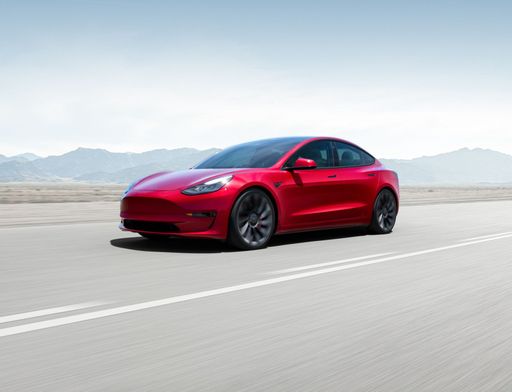
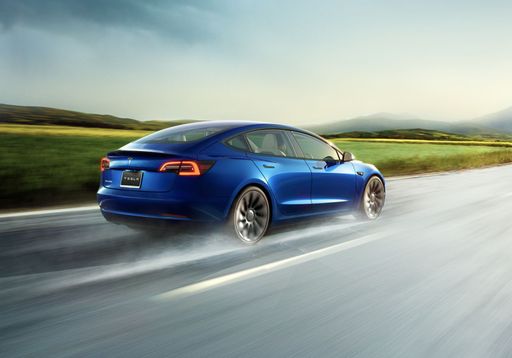
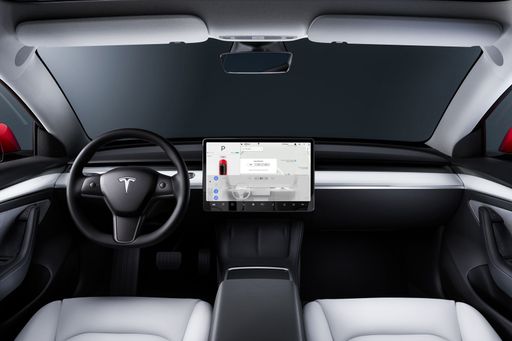
Model 3

Power and Performance

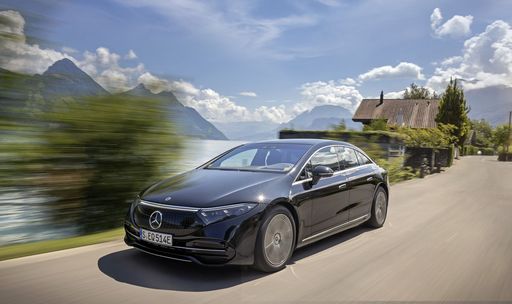
The Mercedes EQS stands as a beacon of power with engine options delivering between 360 to 761 horsepower, on either an all-wheel drive or rear-wheel drive platform. The EQS can sprint from 0 to 100 km/h in as little as 3.4 seconds, depending on the variant you choose, with a top speed stretching up to 250 km/h. This impressive combination of speed and power comes courtesy of its advanced electric drivetrain, which also ensures smooth and near-silent operation.

On the other end, the Tesla Model 3 offers a power output ranging from 283 to 460 horsepower. The vehicle's acceleration capabilities shine, with the most robust variant accelerating from 0 to 100 km/h in a blistering 3.1 seconds. The Model 3, like the EQS, provides a choice between rear-wheel drive and all-wheel drive. Its max speed reaches 262 km/h, signifying that it is no slouch on the freeway.

EQS

Range and Efficiency

Range anxiety, a frequent concern among potential EV buyers, is a non-issue with the Mercedes EQS. With an electric range that extends up to an impressive 816 kilometers on a full charge, and a battery capacity of 118 kWh, the EQS ensures a long drive without constant recharging. The consumption varies between 16.5 to 21 kWh per 100 km, illustrating its efficiency despite its size.

Meanwhile, the Tesla Model 3 flaunts an electric range of up to 702 kilometers in its long-range variant. With battery capacities ranging from 62 to 79 kWh, its consumption is remarkably efficient, varying between 12.5 to 16.5 kWh per 100 km. The Model 3 is designed for those who prioritize economy without sacrificing performance.

Model 3

Dimensions and Practicality

Size-wise, the Mercedes EQS is a substantial vehicle measuring 5223 mm in length, providing ample interior space and comfort. The trunk boasts a capacity of 610 liters, accommodating plenty of luggage for extended journeys. It carries the elegance synonymous with Mercedes-Benz, packaged into a stylish body that stands 1520 mm tall and 1926 mm wide.

Conversely, the Tesla Model 3 is more compact, with a length of 4720 mm, width of 1850 mm, and a height of 1440 mm. The Model 3's trunk provides a capacity of 594 liters, promising practicality in a more compact form factor. It's engineered for urban maneuverability yet spacious enough to ensure comfort during long road trips.

EQS

Conclusion: The Choice is Yours

Choosing between the Mercedes EQS and the Tesla Model 3 comes down to personal preference and priorities. The EQS symbolizes the pinnacle of luxury, performance, and uncompromised range for those seeking a high-end, long-range electric experience. On the other hand, the Tesla Model 3 offers a blend of performance, efficiency, and cutting-edge technology at a more accessible level, perfect for tech-savvy drivers looking for practicality and futuristic features.

Whether it's the opulence and extended range of the EQS or the agile dynamism and economic efficiency of the Model 3, both vehicles represent the future of electric mobility and showcase the remarkable advancements in today's automotive industry.

Here’s where it gets real: The technical differences in detail

EQS

Costs and Efficiency:

Looking at overall running costs, both models reveal some interesting differences in everyday economy.

Tesla Model 3 is significantly cheaper – starting at 31,700 £ , while the Mercedes EQS costs 93,900 £ . That’s a price difference of around 62,195 £.

In terms of energy consumption, the Tesla Model 3 is clearly more efficient: consuming 13 kWh/100km compared to 16.5 kWh/100km for the Mercedes EQS. That’s a difference of about 3.5 kWh/100km.

As for electric range, the Mercedes EQS offers barely more range – reaching up to 816 km, about 66 km more than the Tesla Model 3.

Model 3

Engine and Performance:

Power, torque and acceleration are the classic benchmarks for car enthusiasts – and here, some clear differences start to show.

When it comes to engine power, the Mercedes EQS offers a bit more power – delivering 544 HP compared to 460 HP. That’s roughly 84 HP more horsepower.

When accelerating from 0 to 100 km/h, the Tesla Model 3 is clearly quicker – completing the sprint in 3.1 s, while the Mercedes EQS takes 4.4 s. That’s about 1.3 s quicker.

Looking at top speed, the Tesla Model 3 is slightly faster – reaching 262 km/h, while the Mercedes EQS tops out at 210 km/h. The difference is around 52 km/h.

There’s also a difference in torque: the Mercedes EQS delivers clearly more torque with 858 Nm compared to 660 Nm. That’s about 198 Nm more.

EQS

Space and Everyday Use:

Cabin size, boot volume and payload all play a role in everyday practicality. Here, comfort and flexibility make the difference.

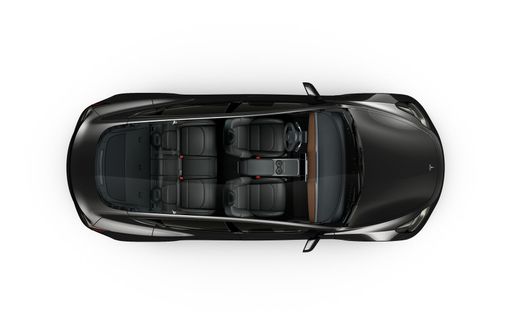
Both vehicles offer seating for 5 people.

In terms of curb weight, Tesla Model 3 is significantly lighter – 1,772 kg compared to 2,545 kg. The difference is around 773 kg.

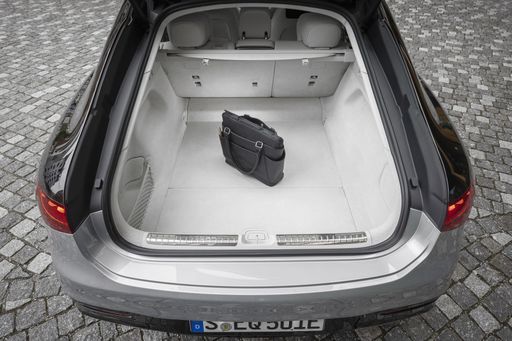
Looking at boot space, the Mercedes EQS offers very slightly more boot space – 610 L compared to 594 L. That’s a difference of about 16 L.

When it comes to payload, the Mercedes EQS carries noticeably more – 565 kg compared to 377 kg. That’s a difference of about 188 kg.

Who wins the race in the data check?

The Tesla Model 3 holds a decisive overall lead in the objective data comparison.
This result only shows which model scores more points on paper – not which of the two cars feels right for you.

from £31,700
Model 3

Tesla Model 3

  • Engine Type : Electric
  • Transmission : Automatic
  • Drive Type : All-Wheel Drive, Rear-Wheel Drive
  • Power HP : 283 - 460 HP
  • Consumption kWh/100km : 13 - 16.7 kWh/100km
  • Electric Range : 534 - 750 km
Mercedes EQS
Tesla Model 3

Costs and Consumption

View detailed analysis

Engine and Performance

View detailed analysis

Dimensions and Body

View detailed analysis

Mercedes EQS

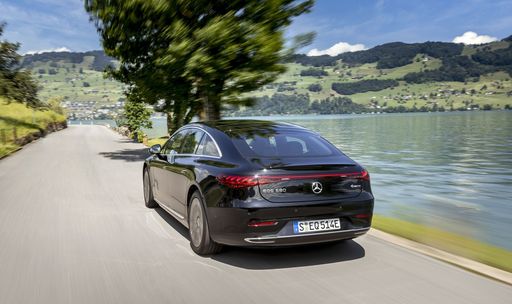
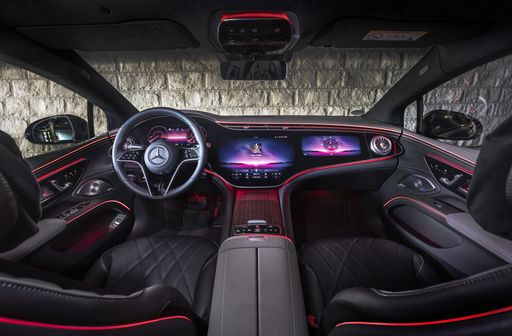
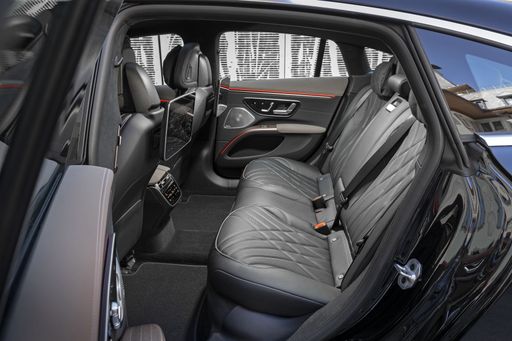
The Mercedes EQS is a silent, spaceship-like flagship that turns electric luxury into zen on wheels, wrapped in a swooping design that insists on being admired. Inside it’s all glassy screens and soft-touch surfaces that make long trips feel like first class, and the driving experience is composed and effortless — like a courteous butler with an electric heart.

details

Tesla Model 3

The Tesla Model 3 slices through daily commuting with a silent, confident shove that makes petrolheads reassess their life choices, while its minimalist cabin feels more like a slick gadget gallery than a traditional car interior. For buyers after a fuss-free, tech-forward electric with plenty of grin factor and low running drama, it’s hard to beat—just don't be surprised when the car updates itself overnight.

details
Mercedes EQS
Tesla Model 3

Costs and Consumption

Price
93,900 - 123,500 £
Price
31,700 - 50,100 £
Consumption L/100km
-
Consumption L/100km
-
Consumption kWh/100km
16.5 - 17.2 kWh/100km
Consumption kWh/100km
13 - 16.7 kWh/100km
Electric Range
790 - 816 km
Electric Range
534 - 750 km
Battery Capacity
118 kWh
Battery Capacity
83 kWh
co2
0 g/km
co2
0 g/km
Fuel tank capacity
-
Fuel tank capacity
-

Dimensions and Body

Body Type
Hatchback
Body Type
Sedan
Seats
5
Seats
5
Doors
5
Doors
4
Curb weight
2,545 - 2,655 kg
Curb weight
1,772 - 1,929 kg
Trunk capacity
610 L
Trunk capacity
594 L
Length
5,223 mm
Length
4,724 mm
Width
1,926 mm
Width
1,850 mm
Height
1,512 mm
Height
1,431 mm
Max trunk capacity
1,770 L
Max trunk capacity
-
Payload
550 - 565 kg
Payload
303 - 377 kg

Engine and Performance

Engine Type
Electric
Engine Type
Electric
Transmission
Automatic
Transmission
Automatic
Transmission Detail
Reduction Gearbox
Transmission Detail
Reduction Gearbox
Drive Type
All-Wheel Drive, Rear-Wheel Drive
Drive Type
All-Wheel Drive, Rear-Wheel Drive
Power HP
360 - 544 HP
Power HP
283 - 460 HP
Acceleration 0-100km/h
4.4 - 6.2 s
Acceleration 0-100km/h
3.1 - 6.2 s
Max Speed
210 km/h
Max Speed
262 km/h
Torque
568 - 858 Nm
Torque
420 - 660 Nm
Number of Cylinders
-
Number of Cylinders
-
Power kW
265 - 400 kW
Power kW
208 - 338 kW
Engine capacity
-
Engine capacity
-

General

Model Year
2,024
Model Year
2,025
CO2 Efficiency Class
A
CO2 Efficiency Class
A
Brand
Mercedes-Benz
Brand
Tesla
DriveDuel uses data analysis and artificial intelligence to evaluate vehicle data and create content. Content is regularly reviewed and improved. The displayed prices are estimates based on German list prices, adjusted to the respective country’s VAT. Country-specific registration taxes are not included. This information is not legally binding.