VS

Tesla Model 3 vs Leapmotor B05 comparison

Compare performance (460 HP vs 218 HP), boot space and price (31,700 £ vs 23,900 £ ) at a glance. Find out which car is the better choice for you – Tesla Model 3 or Leapmotor B05?

Tesla Model 3 vs Leapmotor B05: Key differences

Tesla Model 3

4.3 (8 Reviews)
rate
  • clearly more power
  • markedly more efficient
  • visibly more electric range
  • clearly quicker 0–100 km/h
  • substantially more trunk space
details

Leapmotor B05

  • markedly cheaper
  • barely lighter
details

All details on performance, efficiency, range and trunk space can be found in the technical comparison below – including user reviews for both models.

By Achim Sedelmaier

Model 3

Quick take: Tesla Model 3 vs Leapmotor B05 — what this comparison covers

Tesla Model 3 and Leapmotor B05 represent two different routes into modern electric motoring: one is focused on efficiency, performance and software polish, the other on value, rear‑seat comfort and rapid public charging. This comparison looks beyond spec sheets to how each car actually behaves in daily life — cabin feel, long‑distance temperament, city usability and practicality. You’ll read where the Model 3’s engineering and network advantage turn into real convenience, and where the B05’s packaging and price deliver smarter compromises. Think of it as a buyer’s map: which strengths matter to your routine and which trade‑offs you can live with. The technical comparison that follows will unpack exact numbers; this editorial explains what those numbers feel like on the road.
B05

Character and driving feel

The Tesla Model 3 drives with tautness and authority, showing off sharp steering and brisk performance that make it feel like a sporty sedan even on routine runs, while the Leapmotor B05 presents a calmer, more measured temperament that prioritises steadiness over drama. In city traffic both cars are quiet and predictable, but the Model 3 nips and responds with greater urgency when you ask for it, whereas the B05 rewards composed inputs and a neutral rear‑driven balance. On rougher surfaces the Model 3’s firmer manners can feel more controlled but a touch less plush, while the B05’s setup soaks things up in a way passengers will appreciate on longer back‑road stretches. Both deliver competent highway stability, yet the Model 3 leans sportier and the B05 leans comfortable — choose based on whether you want engagement or evenness. If you care about outright poke and razor‑sharp handling, the Model 3 will feel more satisfying; if you prefer a relaxed, steady cruiser, the B05 fits better.

Model 3

Cabin, controls and perceived quality

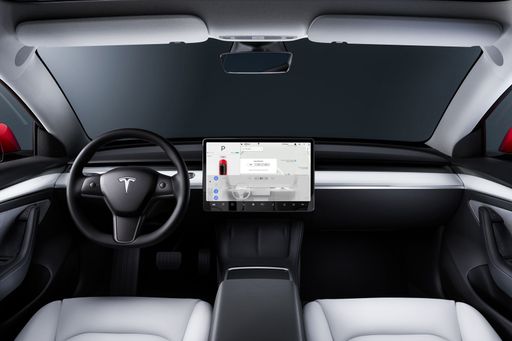
Tesla Model 3 continues to push a minimalist cabin language that feels more refined after recent updates, with tighter panel gaps, quieter glazing and an infotainment system that reacts faster than most rivals, while the Leapmotor B05 trades some of that high‑tech sheen for a roomier, more conventional layout with reassuring seat comfort in the rear. Both cars rely heavily on touchscreen controls, but the Model 3’s software integration and over‑the‑air improvements create a smoother, evolving user experience compared with the B05’s simpler but functional touchscreen and mobile app ecosystem. Materials in the Model 3 feel a touch more premium in key areas, yet the B05’s surfaces are tidy and convincing for a newcomer brand — long‑term durability is the remaining question. Visibility and ergonomic choices differ too: the B05 gives more legroom and a flatter floor for passengers, whereas the Model 3 offers a more cocooned, tech‑centric driver environment. In short, the Model 3 reads as the more polished, software‑led cabin while the B05 prioritises practical comfort and straightforward execution.

Practicality and everyday usability

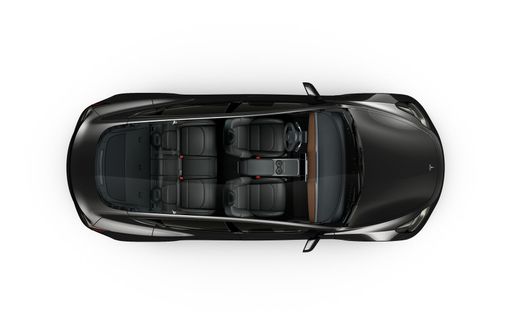
When it comes to everyday chores the Leapmotor B05’s hatchback packaging and generous rear legroom make it a user‑friendly family car, especially for passengers and for folding down seats to carry awkward luggage; the Tesla Model 3’s trunk volume is ample, but its sedan opening and boot geometry demand more careful packing. City life highlights different strengths: the B05’s compact footprint helps in tight spots but its width can be noticeable in narrow garages, while the Model 3 is easy to place and benefits from a low, planted stance that aids stability but offers less ground clearance and restricted rear visibility. Both cars push many controls into their screens, so tactile lovers will find compromises: Tesla’s implementation is sleeker and faster, the B05’s is more conventional and easier to understand at a glance. For families prioritising rear passenger comfort and simple loading, the B05 will often be the smarter daily tool; for buyers who want a roomy trunk plus a refined highway demeanour, the Model 3 still holds appeal.

Long‑distance behavior, charging and ownership practicalities

On long runs the Tesla Model 3’s efficiency and mature charging ecosystem translate into fewer range worries and a more relaxed planning experience, whereas the Leapmotor B05 keeps trip times competitive by virtue of very rapid public DC charging that shortens stops. In real driving the Model 3’s quieter cabin and strong steady‑state economy feel less fatiguing over long hours, while the B05’s fast top‑up capability makes it easy to maintain momentum even if absolute cruising reserves are smaller. Ownership trade‑offs are clear: the B05 starts from a lower purchase price and gives high equipment levels for the money, but the new‑brand factor and long‑term residuals remain open questions; the Model 3 brings a proven support network and frequent software improvements that smooth ownership. Noise and comfort differ at higher speeds too — Tesla leans toward a refined motorway experience, the B05 toward functional competence with occasional wind or tyre hush. Pick the Model 3 if long, uninterrupted range and a polished ecosystem are priorities; pick the B05 if shorter stops and lower upfront cost matter more.

Buyer fit: who should choose each car

If your life is dominated by long commutes, frequent fast‑charging on trusted networks, and a preference for sharper handling plus continual software refinement, the Tesla Model 3 will suit you better thanks to its efficiency, driving dynamics and mature digital ecosystem. If you are price conscious, need roomy rear seats for kids or passengers, value a practical hatchback layout and want very fast public charging that keeps journey times low, the Leapmotor B05 is the more pragmatic option. Both cars share a touch‑centric control philosophy, so buyers who demand lots of physical buttons should look elsewhere; similarly, urban drivers who worry about width or garage fit will want to measure the B05 carefully. Consider these ownership trade‑offs alongside personal priorities — the following technical comparison will make the numerical differences explicit so you can match them to the practical contrasts described here.

Here’s where it gets real: The technical differences in detail

Model 3

Costs and Efficiency:

When it comes to price and running costs, the biggest differences usually appear. This is often where you see which car fits your budget better in the long run.

Leapmotor B05 is markedly cheaper – starting at 23,900 £ , while the Tesla Model 3 costs 31,700 £ . That’s a price difference of around 7,791 £.

In terms of energy consumption, the Tesla Model 3 is markedly more efficient: consuming 13 kWh/100km compared to 15.8 kWh/100km for the Leapmotor B05. That’s a difference of about 2.8 kWh/100km.

As for electric range, the Tesla Model 3 offers visibly more range – reaching up to 750 km, about 268 km more than the Leapmotor B05.

B05

Engine and Performance:

Power, torque and acceleration are the classic benchmarks for car enthusiasts – and here, some clear differences start to show.

When it comes to engine power, the Tesla Model 3 offers clearly more power – delivering 460 HP compared to 218 HP. That’s roughly 242 HP more horsepower.

When accelerating from 0 to 100 km/h, the Tesla Model 3 is clearly quicker – completing the sprint in 3.1 s, while the Leapmotor B05 takes 6.7 s. That’s about 3.6 s quicker.

There’s also a difference in torque: the Tesla Model 3 delivers significantly more torque with 660 Nm compared to 240 Nm. That’s about 420 Nm more.

Model 3

Space and Everyday Use:

Beyond pure performance, interior space and usability matter most in daily life. This is where you see which car is more practical and versatile.

Both vehicles offer seating for 5 people.

In terms of curb weight, Leapmotor B05 is barely lighter – 1,775 kg compared to 1,822 kg. The difference is around 47 kg.

Looking at boot space, the Tesla Model 3 offers substantially more boot space – 594 L compared to 295 L. That’s a difference of about 299 L.

When it comes to payload, the Leapmotor B05 carries barely more – 370 kg compared to 333 kg. That’s a difference of about 37 kg.

Who wins the race in the data check?

The Tesla Model 3 is far ahead overall in the objective data comparison.
This result only shows which model scores more points on paper – not which of the two cars feels right for you.

from £31,700
Model 3

Tesla Model 3

  • Engine Type Electric
  • Transmission Automatic
  • Drive Type All-Wheel Drive, Rear-Wheel Drive
  • Power HP 283 - 460 HP
  • Consumption kWh/100km 13 - 16.5 kWh/100km
  • Electric Range 534 - 750 km
Tesla Model 3
Leapmotor B05

Costs and Consumption

View detailed analysis

Engine and Performance

View detailed analysis

Dimensions and Body

View detailed analysis

Tesla Model 3

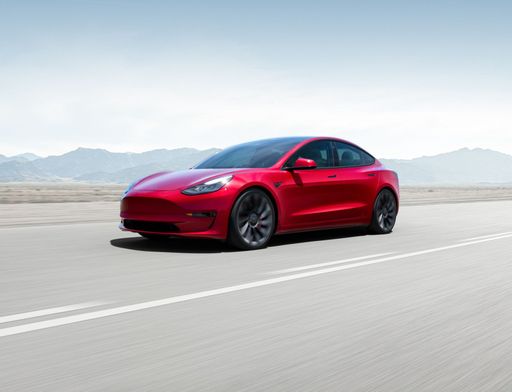
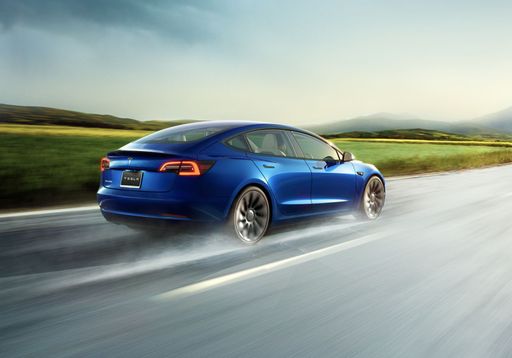
The Tesla Model 3 is a compact electric sedan that pairs brisk, responsive driving with a sleek, minimalist cabin and intuitive, software-led features. It makes a practical, modern choice for daily commutes and long-term ownership while emphasizing simplicity and advanced driver assistance.

details

Leapmotor B05

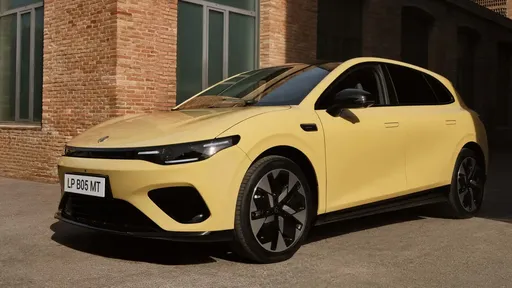
The Leapmotor B05 is a family-oriented electric compact that prioritizes interior space and everyday practicality, with flexible seating and a clean, modern cabin layout. It's tuned for comfortable, easy driving around town and brings a tech-forward experience that appeals to buyers looking for a straightforward, user-friendly EV.

details
Tesla Model 3
Leapmotor B05

Costs and Consumption

Price
31,700 - 50,100 £
Price
23,900 - 27,300 £
Consumption L/100km
-
Consumption L/100km
-
Consumption kWh/100km
13 - 16.5 kWh/100km
Consumption kWh/100km
15.8 - 15.9 kWh/100km
Electric Range
534 - 750 km
Electric Range
401 - 482 km
Battery Capacity
-
Battery Capacity
-
co2
0 g/km
co2
0 g/km
Fuel tank capacity
-
Fuel tank capacity
-

Dimensions and Body

Body Type
Sedan
Body Type
Hatchback
Seats
5
Seats
5
Doors
-
Doors
-
Curb weight
1,822 - 1,929 kg
Curb weight
1,775 - 1,855 kg
Trunk capacity
594 L
Trunk capacity
295 L
Length
-
Length
-
Width
1,850 mm
Width
1,880 mm
Height
-
Height
-
Max trunk capacity
-
Max trunk capacity
-
Payload
302 - 333 kg
Payload
363 - 370 kg

Engine and Performance

Engine Type
Electric
Engine Type
Electric
Transmission
Automatic
Transmission
Automatic
Transmission Detail
Reduction Gearbox
Transmission Detail
Reduction Gearbox
Drive Type
All-Wheel Drive, Rear-Wheel Drive
Drive Type
Rear-Wheel Drive
Power HP
283 - 460 HP
Power HP
218 HP
Acceleration 0-100km/h
3.1 - 6.2 s
Acceleration 0-100km/h
6.7 s
Max Speed
-
Max Speed
-
Torque
420 - 660 Nm
Torque
240 Nm
Number of Cylinders
-
Number of Cylinders
-
Power kW
208 - 338 kW
Power kW
160 kW
Engine capacity
-
Engine capacity
-

General

Model Year
2025
Model Year
2026
CO2 Efficiency Class
A
CO2 Efficiency Class
A
Brand
Tesla
Brand
Leapmotor
DriveDuel uses data analysis and artificial intelligence to evaluate vehicle data and create content. Content is regularly reviewed and improved. The displayed prices are estimates based on German list prices, adjusted to the respective country’s VAT. Country-specific registration taxes are not included. This information is not legally binding.