VS

Renault R5 vs Tesla Model 3 comparison

Compare performance (540 HP vs 460 HP), boot space and price (23,900 £ vs 31,700 £ ) at a glance. Find out which car is the better choice for you – Renault R5 or Tesla Model 3?

Renault R5 vs Tesla Model 3: Key differences

Renault R5

5 (1 Reviews)
rate
  • visibly cheaper
  • moderately more power
  • noticeably lighter

Tesla Model 3

3.8 (4 Reviews)
rate
  • a bit more efficient
  • substantially more electric range
  • somewhat quicker 0–100 km/h
  • clearly more trunk space

All details on performance, efficiency, range and trunk space can be found in the technical comparison below – including user reviews for both models.

By Achim Sedelmaier

R5

Renault R5 vs Tesla Model 3: A Battle of Electric Hatchbacks

The automotive landscape continues to witness a shift towards electric vehicles, with various manufacturers stepping up their game to deliver innovative options to consumers. In this article, we will closely examine two prominent contenders in the electric hatchback segment: the Renault R5 and the Tesla Model 3. Both vehicles boast cutting-edge features and performance, but the question remains: which one comes out on top? Let’s dive into their technical aspects and innovations to find out.
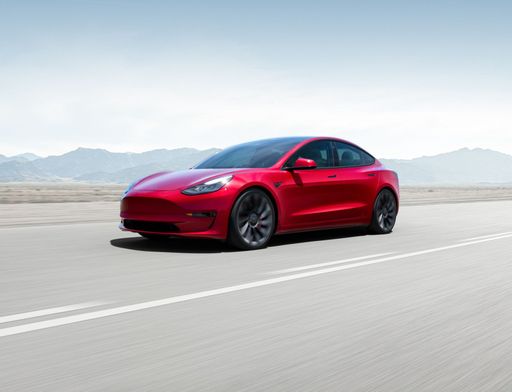
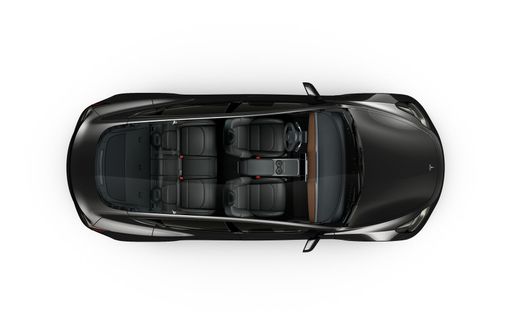
Model 3

Design and Body Type

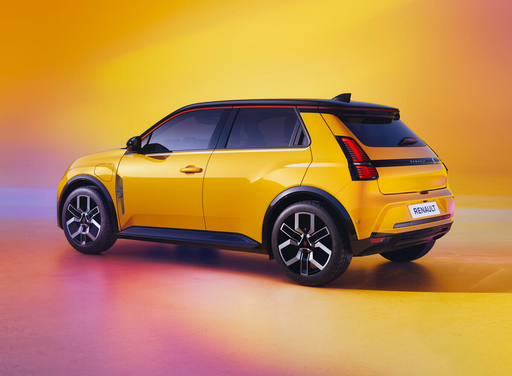
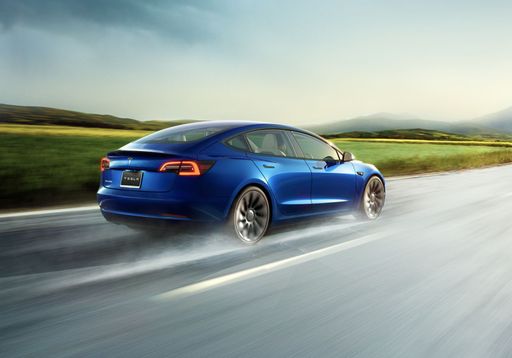
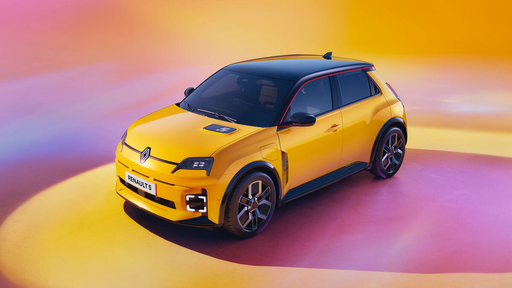
Both the Renault R5 and Tesla Model 3 are classified as hatchbacks, but they approach design from different angles. The R5 is a modern reimagining of the classic French hatchback; its sleek lines and compact dimensions (length 3922 mm, width 1744 mm, height 1498 mm) give it a sporty yet practical appearance. In contrast, the Tesla Model 3 is a larger vehicle with a more aerodynamic form, measuring 4720 mm in length, 1850 mm in width, and 1441 mm in height. The design language of the Model 3 leans toward minimalism, highlighting Tesla’s focus on functionality while maintaining an elegant aesthetic.

R5

Performance and Powertrains

When it comes to power, the Tesla Model 3 takes the lead with multiple variants offering between 283 to 460 HP and torque ratings reaching up to 723 Nm. Its acceleration capabilities are remarkable, with the top variant sprinting from 0-100 km/h in just 3.1 seconds. The Renault R5, on the other hand, provides a more modest performance profile with output levels ranging from 95 to 150 HP and torque figures peaking at 245 Nm, resulting in a 0-100 km/h time of approximately 8 to 9 seconds depending on the variant.

Model 3

Efficiency and Range

Both electric cars excel with commendable efficiency ratings. The Renault R5 boasts a consumption of 14.8 kWh/100 km and an electric range of up to 405 km, supported by a 40 kWh battery. In comparison, the Tesla Model 3 outperforms with consumption ranging from 12.5 to 16.5 kWh/100 km, depending on the configuration, and an impressive range of up to 702 km on the higher-end variants with a 79 kWh battery. This better range makes the Tesla Model 3 particularly appealing for long-distance travel.

R5

Technology and Innovations

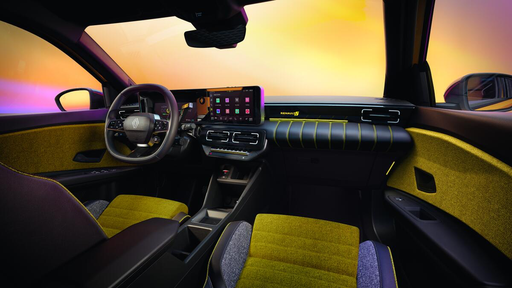
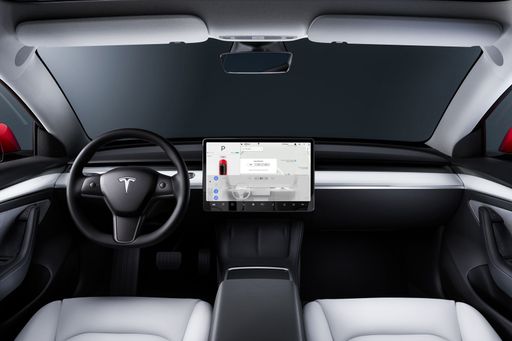
The Tesla Model 3 is renowned for its advanced technological features, including its Autopilot driver assistance system and a robust infotainment system centered around a large touchscreen display. The vehicle is also frequently updated over-the-air, enhancing its performance and features over time. Conversely, the Renault R5 focuses on practicality while integrating modern tech elements suitable for daily driving, offering features like a user-friendly infotainment system and a well-designed dashboard.

Model 3

Interior Comfort and Space

In terms of space and comfort, the Model 3 again places itself ahead with a trunk capacity of 594 liters compared to the R5’s 326 liters, providing ample storage for everyday needs. Both vehicles seat five passengers comfortably, but the increased interior room in the Model 3 enhances passenger comfort, especially on longer journeys. The interior quality in Tesla vehicles is often praised for its minimalist yet premium feel, while the R5 offers a more traditional setup with a focus on ergonomics.

Environmental Considerations

From an environmental standpoint, both vehicles feature zero carbon emissions (0 g/km CO2), aligning with the increasing consumer preference for eco-friendly options. They also belong to the CO2 efficiency class A, showcasing their commitment to sustainability without sacrificing performance.

The Verdict: Which is Right for You?

Choosing between the Renault R5 and the Tesla Model 3 ultimately depends on individual needs and preferences. If you seek performance, advanced technology, and longer range, the Tesla Model 3 clearly stands out as a premium option. However, for those looking for a stylish and compact hatchback that effectively serves urban mobility and everyday driving needs, the Renault R5 is a highly competent choice. As both vehicles continue to evolve, the competition in the electric vehicle market remains exciting, providing consumers with increasingly diverse options.

Here’s where it gets real: The technical differences in detail

R5

Costs and Efficiency:

When it comes to price and running costs, the biggest differences usually appear. This is often where you see which car fits your budget better in the long run.

Renault R5 is visibly cheaper – starting at 23,900 £ , while the Tesla Model 3 costs 31,700 £ . That’s a price difference of around 7,791 £.

In terms of energy consumption, the Tesla Model 3 is a bit more efficient: consuming 13 kWh/100km compared to 14.8 kWh/100km for the Renault R5. That’s a difference of about 1.8 kWh/100km.

As for electric range, the Tesla Model 3 offers substantially more range – reaching up to 750 km, about 345 km more than the Renault R5.

Model 3

Engine and Performance:

Power, torque and acceleration are the classic benchmarks for car enthusiasts – and here, some clear differences start to show.

When it comes to engine power, the Renault R5 offers moderately more power – delivering 540 HP compared to 460 HP. That’s roughly 80 HP more horsepower.

When accelerating from 0 to 100 km/h, the Tesla Model 3 is somewhat quicker – completing the sprint in 3.1 s, while the Renault R5 takes 3.5 s. That’s about 0.4 s quicker.

Looking at top speed, the Renault R5 is only slightly faster – reaching 270 km/h, while the Tesla Model 3 tops out at 262 km/h. The difference is around 8 km/h.

There’s also a difference in torque: the Renault R5 delivers significantly more torque with 4,800 Nm compared to 660 Nm. That’s about 4,140 Nm more.

R5

Space and Everyday Use:

Whether family car or daily driver – which one offers more room, flexibility and comfort?

Both vehicles offer seating for 5 people.

In terms of curb weight, Renault R5 is noticeably lighter – 1,447 kg compared to 1,772 kg. The difference is around 325 kg.

Looking at boot space, the Tesla Model 3 offers clearly more boot space – 594 L compared to 326 L. That’s a difference of about 268 L.

When it comes to payload, the Renault R5 carries marginally more – 418 kg compared to 377 kg. That’s a difference of about 41 kg.

Who wins the race in the data check?

The Renault R5 comes out modestly ahead in the objective data comparison.
This result only shows which model scores more points on paper – not which of the two cars feels right for you.

from £23,900
R5

Renault R5

  • Engine Type : Electric
  • Transmission : Automatic
  • Drive Type : Front-Wheel Drive, Rear-Wheel Drive
  • Power HP : 122 - 540 HP
  • Consumption kWh/100km : 14.8 - 15.2 kWh/100km
  • Electric Range : 307 - 405 km
Renault R5
Tesla Model 3

Costs and Consumption

View detailed analysis

Engine and Performance

View detailed analysis

Dimensions and Body

View detailed analysis

Renault R5

The Renault 5 is a cheeky city car that marries retro charm with modern flair, its playful looks promising smiles before you even start the engine. Practical enough for daily life yet lively enough to make short trips feel like mini adventures, it’s an irresistible choice for buyers who prefer personality to bland practicality.

details

Tesla Model 3

The Tesla Model 3 slices through daily commuting with a silent, confident shove that makes petrolheads reassess their life choices, while its minimalist cabin feels more like a slick gadget gallery than a traditional car interior. For buyers after a fuss-free, tech-forward electric with plenty of grin factor and low running drama, it’s hard to beat—just don't be surprised when the car updates itself overnight.

details
Renault R5
Tesla Model 3

Costs and Consumption

Price
23,900 - 137,100 £
Price
31,700 - 50,100 £
Consumption L/100km
-
Consumption L/100km
-
Consumption kWh/100km
14.8 - 15.2 kWh/100km
Consumption kWh/100km
13 - 16.7 kWh/100km
Electric Range
307 - 405 km
Electric Range
534 - 750 km
Battery Capacity
40 - 52 kWh
Battery Capacity
83 kWh
co2
0 g/km
co2
0 g/km
Fuel tank capacity
-
Fuel tank capacity
-

Dimensions and Body

Body Type
Hatchback
Body Type
Sedan
Seats
2 - 5
Seats
5
Doors
3 - 5
Doors
4
Curb weight
1,447 - 1,524 kg
Curb weight
1,772 - 1,929 kg
Trunk capacity
326 L
Trunk capacity
594 L
Length
3,922 - 4,080 mm
Length
4,724 mm
Width
1,744 - 2,030 mm
Width
1,850 mm
Height
1,380 - 1,498 mm
Height
1,431 mm
Max trunk capacity
1,106 L
Max trunk capacity
-
Payload
396 - 418 kg
Payload
303 - 377 kg

Engine and Performance

Engine Type
Electric
Engine Type
Electric
Transmission
Automatic
Transmission
Automatic
Transmission Detail
Reduction Gearbox
Transmission Detail
Reduction Gearbox
Drive Type
Front-Wheel Drive, Rear-Wheel Drive
Drive Type
All-Wheel Drive, Rear-Wheel Drive
Power HP
122 - 540 HP
Power HP
283 - 460 HP
Acceleration 0-100km/h
3.5 - 9 s
Acceleration 0-100km/h
3.1 - 6.2 s
Max Speed
150 - 270 km/h
Max Speed
262 km/h
Torque
225 - 4,800 Nm
Torque
420 - 660 Nm
Number of Cylinders
-
Number of Cylinders
-
Power kW
90 - 397 kW
Power kW
208 - 338 kW
Engine capacity
-
Engine capacity
-

General

Model Year
2,025 - 2,027
Model Year
2,025
CO2 Efficiency Class
A
CO2 Efficiency Class
A
Brand
Renault
Brand
Tesla
DriveDuel uses data analysis and artificial intelligence to evaluate vehicle data and create content. Content is regularly reviewed and improved. The displayed prices are estimates based on German list prices, adjusted to the respective country’s VAT. Country-specific registration taxes are not included. This information is not legally binding.