VS

Mercedes GLC vs Audi Q3 comparison

Compare performance (680 HP vs 272 HP), boot space and price (50,300 £ vs 38,200 £ ) at a glance. Find out which car is the better choice for you – Mercedes GLC or Audi Q3?

Mercedes GLC vs Audi Q3: Key differences

Mercedes GLC

4.4 (11 Reviews)
rate
  • clearly more power
  • barely more efficient
  • considerably more electric range
  • significantly quicker 0–100 km/h
  • markedly more trunk space

Audi Q3

5 (1 Reviews)
rate
  • markedly cheaper
  • somewhat lighter

All details on performance, efficiency, range and trunk space can be found in the technical comparison below – including user reviews for both models.

GLC

Introduction: The Battle of Compact Luxury SUVs

In the ever-expanding market of compact luxury SUVs, the Audi Q3 and Mercedes GLC are two heavyweight contenders that cater to drivers seeking a blend of performance, comfort, and cutting-edge technology. This comparison dives deep into their specifications, innovations, and overall driving experience to help potential buyers make informed decisions.
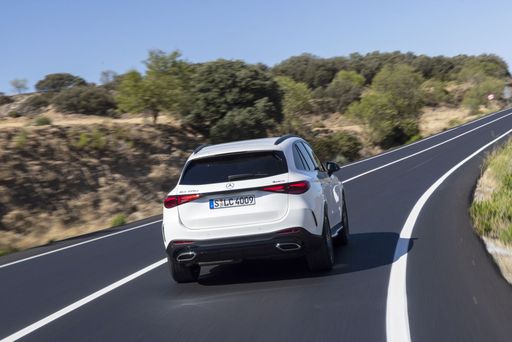
Q3

Dimensions and Design

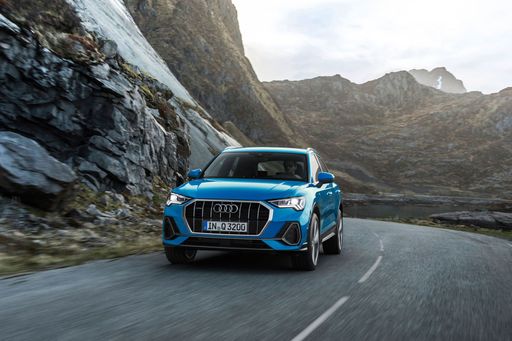
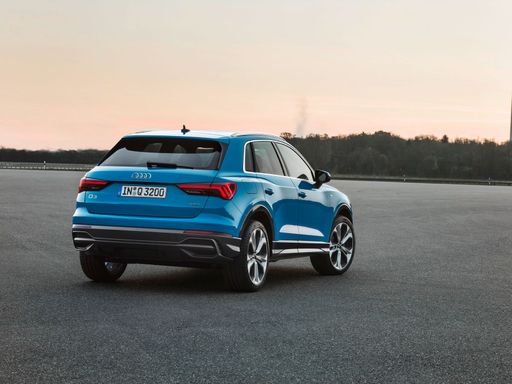
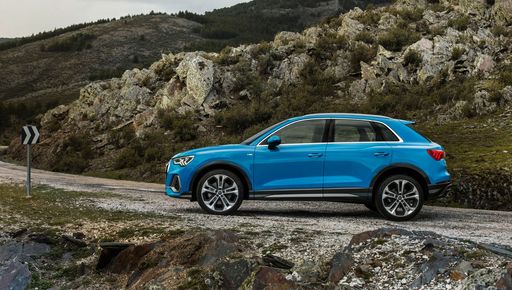
The dimensions of a vehicle can significantly influence its overall practicality and aesthetics. The Audi Q3 measures 4484 mm in length, 1849 mm in width, and stands 1585 mm tall. Its aggressive design and sleek lines maintain Audi's signature aesthetic, with a spacious trunk capacity of 530 liters, making it practical for everyday use.

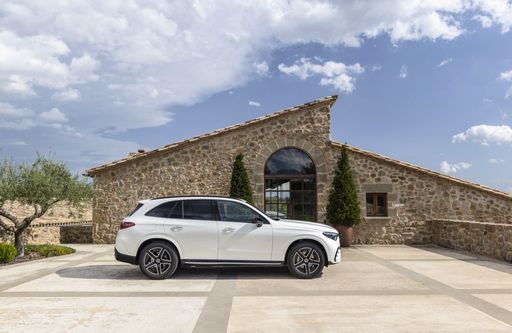
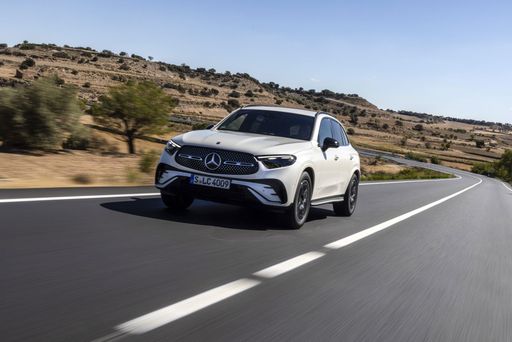
On the other hand, the Mercedes GLC is slightly larger, ranging from 4716 mm to 4792 mm in length, 1890 mm in width, and a height of approximately 1640 mm. The GLC offers a trunk capacity ranging between 390 liters to 620 liters, depending on the specific variant. The elegant lines and Mercedes' iconic grille exude sophistication, appealing to those who favor a more opulent design.

GLC

Powertrain Options

When it comes to engine options, the Audi Q3 provides a versatile selection of both petrol and diesel engines, with power outputs spanning from 150 HP to an impressive 245 HP. The Q3's engines are combined with either a manual or automatic transmission and feature a choice of front-wheel or all-wheel drive, showcasing its adaptability for various driving conditions.

The Mercedes GLC takes innovation a step further by offering petrol mild-hybrid, diesel mild-hybrid, and plug-in hybrid options. Power outputs range from 220 HP to a staggering 680 HP in the high-performance versions. The GLC exclusively features automatic transmissions and boasts an all-wheel-drive system, ensuring exceptional handling and traction.

Q3

Performance and Acceleration

Performance enthusiasts will appreciate the Audi Q3's acceleration capabilities. With the sportiest variant hitting 0-100 km/h in just 5.8 seconds, it delivers a thrilling driving experience. The various power outputs allow for customization based on driver preferences, with top speeds reaching up to 237 km/h.

Conversely, the Mercedes GLC also impresses with its acceleration, with certain models reaching 0-100 km/h in as little as 4.7 seconds and top speeds up to 275 km/h. The GLC’s diverse engine lineup ensures that there's a model for every type of driver, from efficiency seekers to performance aficionados.

GLC

Fuel Efficiency and Emissions

Fuel efficiency is a critical consideration for buyers conscious of their environmental impact and running costs. The Audi Q3 has commendable consumption figures ranging from 5.5 to 8.5 L/100 km, with CO2 emissions between 143 g/km and 192 g/km, depending on the chosen engine.

On the other hand, the GLC shines with its hybrid variants, achieving astonishing fuel economy as low as 0.4 L/100 km in electric mode and CO2 emissions as low as 10 g/km. This positions the GLC as a more environmentally friendly option, especially for urban driving.

Q3

Interior and Technology

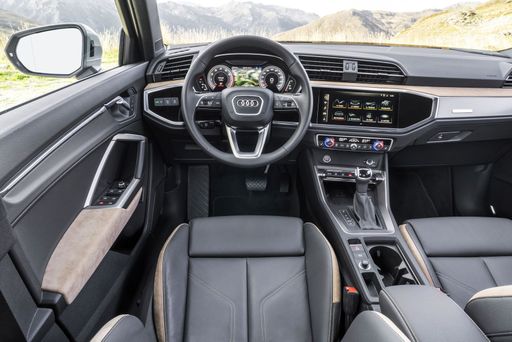
Inside, the Audi Q3 features a modern and intuitive layout with high-quality materials and advanced infotainment systems. It comes equipped with Audi’s MMI system, which integrates seamlessly with smartphone technologies and offers multiple connectivity options.

The Mercedes GLC, known for its luxurious interior, provides even more tech-savvy innovations, including the revised MBUX system, augmented reality features for navigation, and a larger selection of driver-assisted technologies. The ambient lighting and meticulous attention to detail create a premium atmosphere that is hard to match.

GLC

Conclusion: Which is the Better Choice?

Choosing between the Audi Q3 and the Mercedes GLC ultimately hinges on individual preferences and requirements. If you favor a sportier performance with a robust driving experience, the Audi Q3 is a strong contender. However, if you are leaning towards hybrid technology and luxurious amenities, the Mercedes GLC will likely win your heart.

Both vehicles offer a unique blend of style, innovation, and performance, making them top choices in the compact luxury SUV segment. It's advisable for prospective buyers to test drive both models to see which one aligns best with their lifestyle and driving style.

Here’s where it gets real: The technical differences in detail

GLC

Costs and Efficiency:

Price and efficiency are key factors when choosing a car – and this is often where the real differences emerge.

Audi Q3 is markedly cheaper – starting at 38,200 £ , while the Mercedes GLC costs 50,300 £ . That’s a price difference of around 12,099 £.

Fuel consumption also shows a difference: the Mercedes GLC uses 1.6 L/100km and is barely more efficient than the Audi Q3 with 1.7 L/100km. The difference is about 0.1 L/100km.

As for electric range, the Mercedes GLC offers considerably more range – reaching up to 714 km, about 595 km more than the Audi Q3.

Q3

Engine and Performance:

Power, torque and acceleration are the classic benchmarks for car enthusiasts – and here, some clear differences start to show.

When it comes to engine power, the Mercedes GLC offers clearly more power – delivering 680 HP compared to 272 HP. That’s roughly 408 HP more horsepower.

When accelerating from 0 to 100 km/h, the Mercedes GLC is significantly quicker – completing the sprint in 3.5 s, while the Audi Q3 takes 5.7 s. That’s about 2.2 s quicker.

There’s also a difference in torque: the Mercedes GLC delivers considerably more torque with 1,020 Nm compared to 400 Nm. That’s about 620 Nm more.

GLC

Space and Everyday Use:

Whether family car or daily driver – which one offers more room, flexibility and comfort?

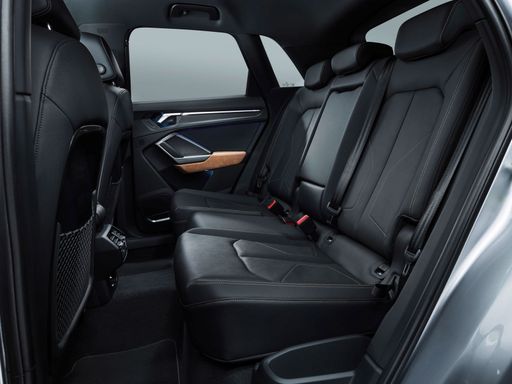
Both vehicles offer seating for 5 people.

In terms of curb weight, Audi Q3 is somewhat lighter – 1,635 kg compared to 1,910 kg. The difference is around 275 kg.

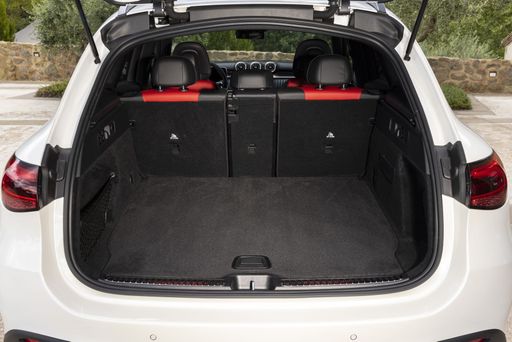
Looking at boot space, the Mercedes GLC offers markedly more boot space – 620 L compared to 488 L. That’s a difference of about 132 L.

When it comes to payload, the Mercedes GLC carries a bit more – 600 kg compared to 535 kg. That’s a difference of about 65 kg.

Who wins the race in the data check?

The Mercedes GLC stands well ahead of its rival in the objective data comparison.
This result only shows which model scores more points on paper – not which of the two cars feels right for you.

from £50,300
GLC

Mercedes GLC

  • Engine Type : Petrol MHEV, Plugin Hybrid, Diesel MHEV, Electric
  • Transmission : Automatic
  • Drive Type : All-Wheel Drive
  • Power HP : 186 - 680 HP
  • Consumption L/100km : 1.6 - 9.7 L/100km
  • Consumption kWh/100km : 14.9 - 16.6 kWh/100km
  • Electric Range : 12 - 714 km
Mercedes GLC
Audi Q3

Costs and Consumption

View detailed analysis

Engine and Performance

View detailed analysis

Dimensions and Body

View detailed analysis

Mercedes GLC

The Mercedes GLC blends plush cabin comfort and composed road manners into an SUV that feels more grown-up than it looks. It won’t shout for attention, but will quietly please buyers who want refinement, usable space and a touch of luxury without the drama.

details

Audi Q3

The Audi Q3 feels like a grown-up compact SUV with premium polish and city-friendly agility, the sort of car that makes weekend escapes and daily commutes equally satisfying. Inside, you get quality materials and smart packaging that keep things practical without skimping on style, so it’s an easy pick for buyers who want luxury without the drama.

details
Mercedes GLC
Audi Q3

Costs and Consumption

Price
50,300 - 126,600 £
Price
38,200 - 52,900 £
Consumption L/100km
1.6 - 9.7 L/100km
Consumption L/100km
1.7 - 8.6 L/100km
Consumption kWh/100km
14.9 - 16.6 kWh/100km
Consumption kWh/100km
-
Electric Range
12 - 714 km
Electric Range
118 - 119 km
Battery Capacity
94 kWh
Battery Capacity
-
co2
0 - 221 g/km
co2
39 - 195 g/km
Fuel tank capacity
62 - 65 L
Fuel tank capacity
-

Dimensions and Body

Body Type
SUV
Body Type
SUV
Seats
5
Seats
5
Doors
5
Doors
-
Curb weight
1,910 - 2,535 kg
Curb weight
1,635 - 1,900 kg
Trunk capacity
390 - 620 L
Trunk capacity
375 - 488 L
Length
4,716 - 4,845 mm
Length
-
Width
1,890 - 1,913 mm
Width
1,859 mm
Height
1,603 - 1,644 mm
Height
-
Max trunk capacity
1,490 - 1,740 L
Max trunk capacity
-
Payload
475 - 600 kg
Payload
505 - 535 kg

Engine and Performance

Engine Type
Petrol MHEV, Plugin Hybrid, Diesel MHEV, Electric
Engine Type
Petrol MHEV, Petrol, Plugin Hybrid, Diesel
Transmission
Automatic
Transmission
Automatic
Transmission Detail
Automatic Gearbox, Reduction Gearbox
Transmission Detail
Dual-Clutch Automatic
Drive Type
All-Wheel Drive
Drive Type
Front-Wheel Drive, All-Wheel Drive
Power HP
186 - 680 HP
Power HP
150 - 272 HP
Acceleration 0-100km/h
3.5 - 9 s
Acceleration 0-100km/h
5.7 - 9.2 s
Max Speed
210 - 275 km/h
Max Speed
-
Torque
320 - 1,020 Nm
Torque
250 - 400 Nm
Number of Cylinders
4 - 6
Number of Cylinders
4
Power kW
137 - 500 kW
Power kW
110 - 200 kW
Engine capacity
1,991 - 2,989 cm3
Engine capacity
1,498 - 1,984 cm3

General

Model Year
2,025 - 2,026
Model Year
2,025
CO2 Efficiency Class
F, G, D, B, E, A
CO2 Efficiency Class
E, G, B
Brand
Mercedes-Benz
Brand
Audi
DriveDuel uses data analysis and artificial intelligence to evaluate vehicle data and create content. Content is regularly reviewed and improved. The displayed prices are estimates based on German list prices, adjusted to the respective country’s VAT. Country-specific registration taxes are not included. This information is not legally binding.