VS

Mercedes GLC vs BMW X5 comparison

Compare performance (680 HP vs 625 HP), boot space and price (50,300 £ vs 77,100 £ ) at a glance. Find out which car is the better choice for you – Mercedes GLC or BMW X5?

Mercedes GLC vs BMW X5: Key differences

Mercedes GLC

4.4 (11 Reviews)
rate
  • clearly cheaper
  • marginally more power
  • substantially more efficient
  • considerably more electric range
  • slightly quicker 0–100 km/h
  • moderately lighter

BMW X5

  • barely more trunk space

All details on performance, efficiency, range and trunk space can be found in the technical comparison below – including user reviews for both models.

By Achim Sedelmaier

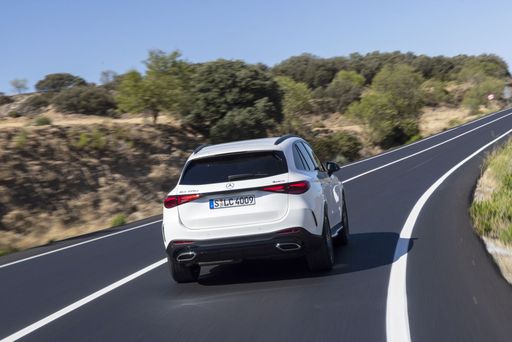
GLC

Dynamic Duo: BMW X5 vs. Mercedes-Benz GLC

The luxury SUV market has been witnessing an exciting rivalry between two German giants: the BMW X5 and the Mercedes-Benz GLC. Both vehicles blend performance, luxury, and technology, yet each has its distinct characteristics. Let's dive into a detailed comparison, considering their technical prowess and the innovative features they bring to the table.
X5

Design and Dimensions

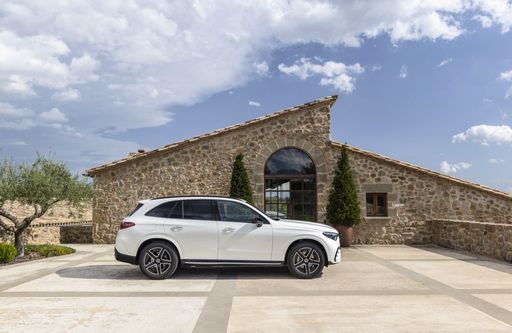
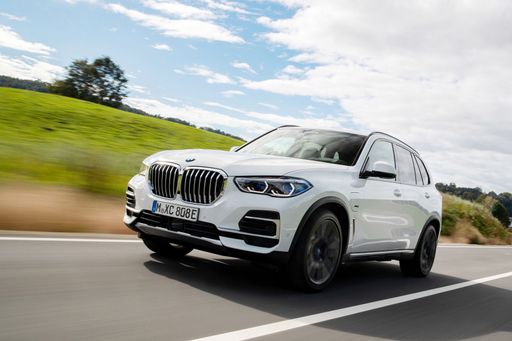
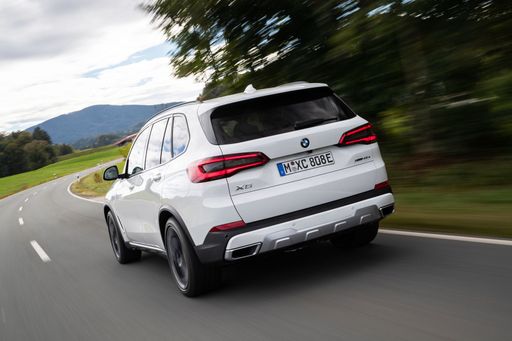
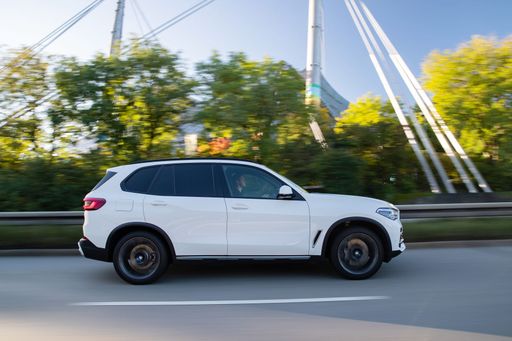
The BMW X5 and Mercedes-Benz GLC embody their brand's aesthetic philosophies, offering stylish and commanding road presences. The BMW X5 is slightly longer at 4948 mm compared to the GLC's maximum length of 4792 mm, providing an imposing stance complemented by its wider and taller frame. The X5's dimensions (Width: 2015 mm, Height: 1765 mm) offer a spacious cabin setting the stage for luxury.

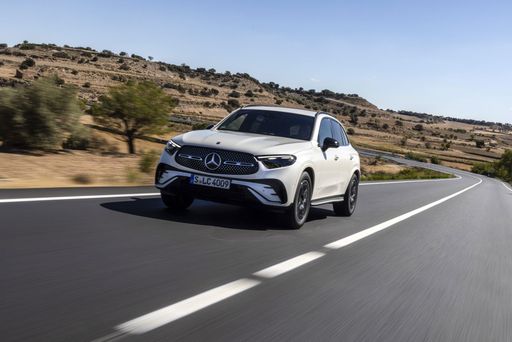
The Mercedes-Benz GLC, on the other hand, stands as a more agile offering. Despite its smaller size (Width: 1890 mm, Height: 1647 mm), the GLC doesn't compromise interior comfort, providing a practical luxury option without losing its sporty character.

GLC

Engine Performance and Efficiency

When it comes to engine offerings, both SUVs present a range of powertrains that cater to various preferences. The BMW X5 boasts a powerful lineup, featuring engines ranging from 298 HP to 625 HP. Its standout engine is the 4.4-liter V8, producing an exhilarating 625 HP, maxing out at a speed of 250 km/h and accelerating from 0-100 km/h in just 3.9 seconds.

The Mercedes-Benz GLC offers impressive versatility with its range of petrol and diesel MHEVs and plug-in hybrids, stretching from 227 HP to a notable 680 HP for the hybrid variant. The GLC 63 S E Performance model epitomizes peak power with supercar-like acceleration of 0-100 km/h in merely 3.5 seconds.

X5

Fuel Efficiency

On the efficiency frontier, the Mercedes-Benz GLC excels, particularly with its plug-in hybrid models offering an electric range of up to 130 km. This, combined with a consumption as low as 0.4 L/100km, truly shines in its eco-efficiency.

The BMW X5's plug-in hybrid powertrain also offers impressive figures, with an electric range of 97 km and a fuel consumption of 0.9 L/100km, making it a strong contender in the eco-friendly stakes.

GLC

Interior Space and Comfort

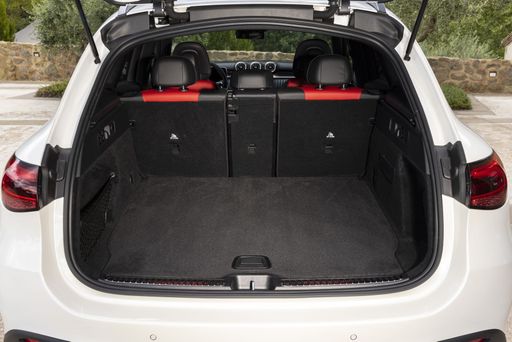
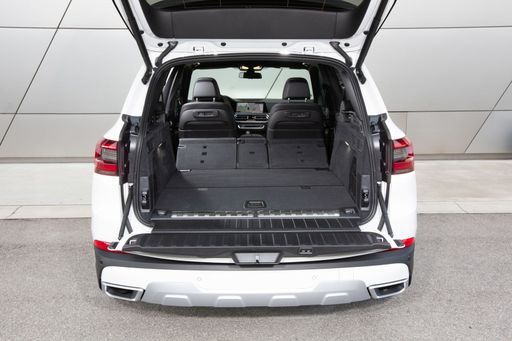
Both SUVs are designed to comfortably seat five passengers, serving up refined interiors that reflect their luxury positioning. The X5 offers a slightly larger trunk capacity at 650 liters, accommodating more luggage which is perfect for long hauls and family trips.

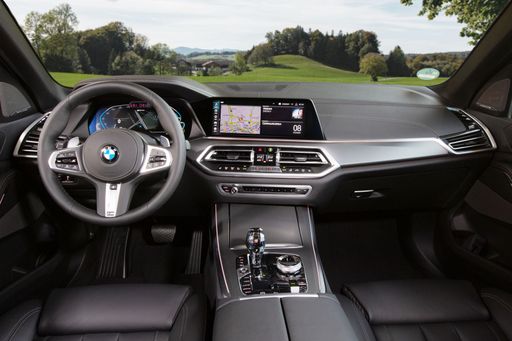
The GLC, however, compensates with a focus on innovative interior technology, offering dynamic infotainment systems alongside comfort. Despite a 620-liter trunk capacity, the GLC's design keeps it flexible for various storage needs.

X5

Conclusion

Choosing between the BMW X5 and Mercedes-Benz GLC comes down to personal preference and needs. The X5 delivers a powerful performance with undeniable robustness and luxurious space, while the GLC shines with its refined technology and impressive fuel efficiency.

Whether you prefer the refined power and space of the BMW X5 or the cutting-edge efficiency and agility of the Mercedes-Benz GLC, both SUVs set benchmarks in the luxury automotive landscape. The choice ultimately depends on whether your priority leans towards spirited driving dynamics or innovative efficiency and technology.

Here’s where it gets real: The technical differences in detail

GLC

Costs and Efficiency:

Looking at overall running costs, both models reveal some interesting differences in everyday economy.

Mercedes GLC is clearly cheaper – starting at 50,300 £ , while the BMW X5 costs 77,100 £ . That’s a price difference of around 26,730 £.

Fuel consumption also shows a difference: the Mercedes GLC uses 1.6 L/100km and is substantially more efficient than the BMW X5 with 3 L/100km. The difference is about 1.4 L/100km.

As for electric range, the Mercedes GLC offers considerably more range – reaching up to 714 km, about 609 km more than the BMW X5.

X5

Engine and Performance:

Under the bonnet, it becomes clear which model is tuned for sportiness and which one takes the lead when you hit the accelerator.

When it comes to engine power, the Mercedes GLC offers marginally more power – delivering 680 HP compared to 625 HP. That’s roughly 55 HP more horsepower.

When accelerating from 0 to 100 km/h, the Mercedes GLC is slightly quicker – completing the sprint in 3.5 s, while the BMW X5 takes 3.9 s. That’s about 0.4 s quicker.

Looking at top speed, the Mercedes GLC is only slightly faster – reaching 275 km/h, while the BMW X5 tops out at 250 km/h. The difference is around 25 km/h.

There’s also a difference in torque: the Mercedes GLC delivers clearly more torque with 1,020 Nm compared to 750 Nm. That’s about 270 Nm more.

GLC

Space and Everyday Use:

Beyond pure performance, interior space and usability matter most in daily life. This is where you see which car is more practical and versatile.

Both vehicles offer seating for 5 people.

In terms of curb weight, Mercedes GLC is moderately lighter – 1,910 kg compared to 2,240 kg. The difference is around 330 kg.

Looking at boot space, the BMW X5 offers barely more boot space – 650 L compared to 620 L. That’s a difference of about 30 L.

For maximum load capacity, the BMW X5 offers only slightly more capacity – up to 1,870 L, about 130 L more than the Mercedes GLC.

When it comes to payload, the BMW X5 carries somewhat more – 705 kg compared to 600 kg. That’s a difference of about 105 kg.

Who wins the race in the data check?

The Mercedes GLC is decisively ahead in the objective data comparison.
This result only shows which model scores more points on paper – not which of the two cars feels right for you.

from £50,300
GLC

Mercedes GLC

  • Engine Type : Petrol MHEV, Plugin Hybrid, Diesel MHEV, Electric
  • Transmission : Automatic
  • Drive Type : All-Wheel Drive
  • Power HP : 186 - 680 HP
  • Consumption L/100km : 1.6 - 9.7 L/100km
  • Consumption kWh/100km : 14.9 - 16.6 kWh/100km
  • Electric Range : 12 - 714 km
Mercedes GLC
BMW X5

Costs and Consumption

View detailed analysis

Engine and Performance

View detailed analysis

Dimensions and Body

View detailed analysis

Mercedes GLC

The Mercedes GLC blends plush cabin comfort and composed road manners into an SUV that feels more grown-up than it looks. It won’t shout for attention, but will quietly please buyers who want refinement, usable space and a touch of luxury without the drama.

details

BMW X5

The BMW X5 blends athletic handling with a roomy, premium interior, feeling equally at home on twisty country roads and the school-run car park. Its executive-lounge cabin and confident road presence make it a tempting choice for buyers who want comfort, capability and just a little bit of bragging rights.

details
Mercedes GLC
BMW X5

Costs and Consumption

Price
50,300 - 126,600 £
Price
77,100 - 143,500 £
Consumption L/100km
1.6 - 9.7 L/100km
Consumption L/100km
3 - 12.8 L/100km
Consumption kWh/100km
14.9 - 16.6 kWh/100km
Consumption kWh/100km
-
Electric Range
12 - 714 km
Electric Range
105 km
Battery Capacity
94 kWh
Battery Capacity
25.7 kWh
co2
0 - 221 g/km
co2
68 - 289 g/km
Fuel tank capacity
62 - 65 L
Fuel tank capacity
69 - 83 L

Dimensions and Body

Body Type
SUV
Body Type
SUV
Seats
5
Seats
5
Doors
5
Doors
5
Curb weight
1,910 - 2,535 kg
Curb weight
2,240 - 2,495 kg
Trunk capacity
390 - 620 L
Trunk capacity
500 - 650 L
Length
4,716 - 4,845 mm
Length
4,935 mm
Width
1,890 - 1,913 mm
Width
2,004 - 2,015 mm
Height
1,603 - 1,644 mm
Height
1,755 - 1,765 mm
Max trunk capacity
1,490 - 1,740 L
Max trunk capacity
1,720 - 1,870 L
Payload
475 - 600 kg
Payload
565 - 705 kg

Engine and Performance

Engine Type
Petrol MHEV, Plugin Hybrid, Diesel MHEV, Electric
Engine Type
Petrol MHEV, Diesel MHEV, Plugin Hybrid
Transmission
Automatic
Transmission
Automatic
Transmission Detail
Automatic Gearbox, Reduction Gearbox
Transmission Detail
Automatic Gearbox
Drive Type
All-Wheel Drive
Drive Type
All-Wheel Drive
Power HP
186 - 680 HP
Power HP
298 - 625 HP
Acceleration 0-100km/h
3.5 - 9 s
Acceleration 0-100km/h
3.9 - 6.1 s
Max Speed
210 - 275 km/h
Max Speed
250 km/h
Torque
320 - 1,020 Nm
Torque
540 - 750 Nm
Number of Cylinders
4 - 6
Number of Cylinders
6 - 8
Power kW
137 - 500 kW
Power kW
219 - 460 kW
Engine capacity
1,991 - 2,989 cm3
Engine capacity
2,993 - 4,395 cm3

General

Model Year
2,025 - 2,026
Model Year
2,025
CO2 Efficiency Class
F, G, D, B, E, A
CO2 Efficiency Class
G, B
Brand
Mercedes-Benz
Brand
BMW
DriveDuel uses data analysis and artificial intelligence to evaluate vehicle data and create content. Content is regularly reviewed and improved. The displayed prices are estimates based on German list prices, adjusted to the respective country’s VAT. Country-specific registration taxes are not included. This information is not legally binding.