VS

Mercedes Vito Bus vs Ford Tourneo Custom comparison

Compare performance (237 HP vs 286 HP), boot space and price (36,300 £ vs 52,900 £ ) at a glance. Find out which car is the better choice for you – Mercedes Vito Bus or Ford Tourneo Custom?

Mercedes Vito Bus vs Ford Tourneo Custom: Key differences

Mercedes Vito Bus

5 (1 Reviews)
rate
  • considerably cheaper
  • only slightly more electric range
  • visibly lighter
  • substantially more trunk space
details

Ford Tourneo Custom

3.9 (1 Reviews)
rate
  • slightly more power
  • a bit more efficient
details

All details on performance, efficiency, range and trunk space can be found in the technical comparison below – including user reviews for both models.

By Achim Sedelmaier

Vito Bus

Ford Tourneo Custom VS Mercedes Vito Bus — practical eight-seater showdown

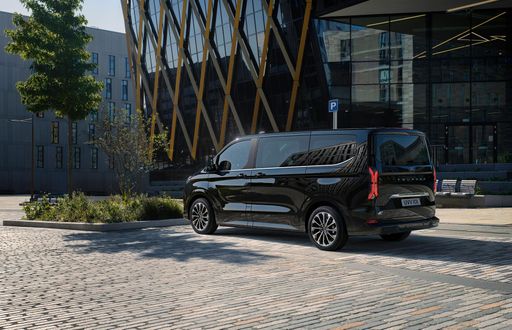
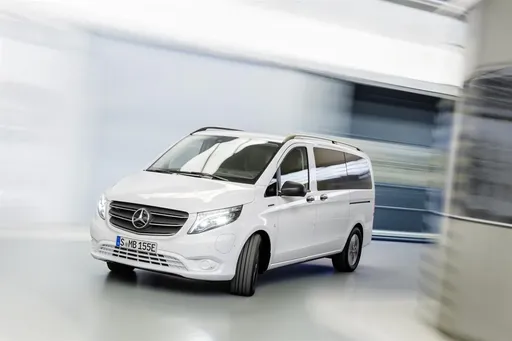
Ford Tourneo Custom VS Mercedes Vito Bus put a variable family shuttle against a no-nonsense Mercedes people‑mover and the differences are about use, not just badges. The Ford Tourneo Custom leans into flexible passenger arrangements and a more car-like driving feel, while the Mercedes Vito Bus trades a softer emotional finish for raw utility and heavier-duty practicality. Buyers will quickly notice the Tourneo’s focus on configurable comfort and tech options versus the Vito Bus’s emphasis on payload, simple robustness and easy maintenance. Read on to see which approach matters more for your day-to-day life before diving into the specs below.
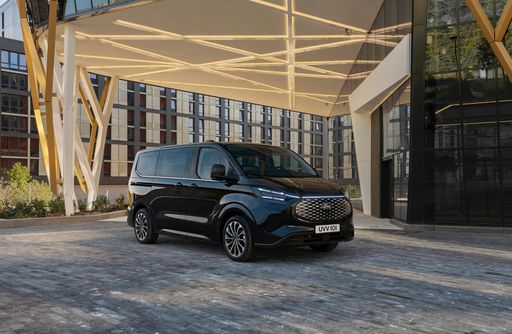
Tourneo Custom

Driving character: overtaking, long hauls and the feel behind the wheel

The Ford Tourneo Custom drives with a slightly more assertive, car-derived character that makes merging and overtaking feel confidence-inspiring for an eight-seater; it rewards light-footed drivers who want a bit of pep. The Mercedes Vito Bus, by contrast, settles into a steady, workmanlike rhythm where gearbox smoothness and composure matter more than outright shove—ideal for long, repetitive runs with a full load. On open motorways the Tourneo can feel livelier but sometimes lets more wind and road noise in, whereas the Vito Bus tends to mask speed with a firmer, slightly less refined suspension that soaks up weight well. That trade-off means the Tourneo suits drivers who want a more responsive van-like car, while the Vito Bus will suit operators prioritising calm, predictable hauling of people and luggage.

Comfort and cabin feel: materials, seats and how you live with them day-to-day

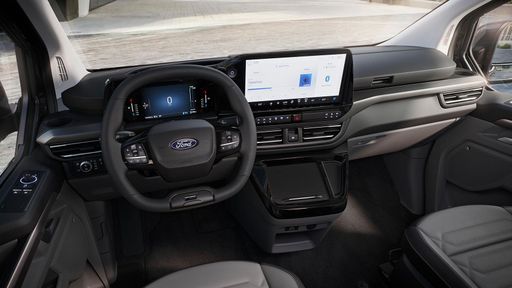
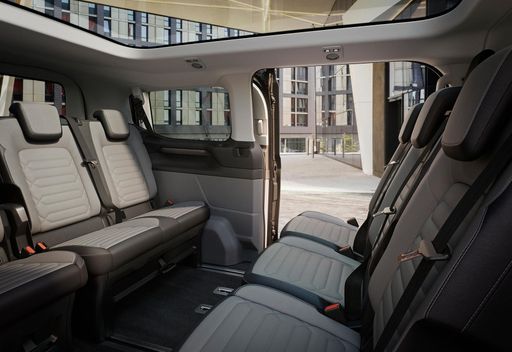
Inside, the Ford Tourneo Custom aims for a more welcoming, family-friendly atmosphere with individually movable and even rotating seats that make social layouts possible and make long trips less monotonous. The Mercedes Vito Bus feels tougher and less domestic: seats are comfortable for long distances but heavy to move, and the interior finishes are durable rather than plush, so it wears well under hard use but never feels as cosy. Where the Tourneo invites conversation and reconfiguration, the Vito Bus signals “professional transport” — easy to clean and resilient but with a utilitarian touch that some families will find less inviting. If passengers’ comfort and flexible seating arrangements are your priority, the Tourneo will feel like a better living space; if durability and straightforward long-distance seats top your list, the Vito Bus will be the more logical choice.

Usability and practicality: doors, luggage, payload and everyday chores

The Ford Tourneo Custom scores for everyday family practicality with multiple ISOFIX points, low load floors and beidseitige sliding doors that make child seats and strollers simple to handle; its modular rail system is genuinely useful for changing missions. The Mercedes Vito Bus counters with larger cargo capacity and a stronger payload mindset, so when you need to carry heavy loads or more luggage with full seating the Vito Bus takes the strain without complaint. Practical annoyances differ: Tourneo’s big rear tailgate can be cumbersome to handle and some controls sit deep in touch menus, while Vito Bus owners will grumble about the physical effort to remove or refit heavy bench seats. In short, pick the Tourneo for quick, family‑centric versatility and the Vito Bus if repeat heavy‑use hauling and maximum carried weight are more important.

City friendliness and day-to-day manoeuvring: parking, visibility and tight spaces

Both the Ford Tourneo Custom and the Mercedes Vito Bus are designed to fit into urban life with heights that clear most park decks, but they approach city driving differently. The Tourneo Custom feels surprisingly nimble for its size thanks to direct steering, large mirrors and available 360° cameras, which make kerbside school runs and supermarket slots less stressful. The Vito Bus offers excellent outward visibility and practical camera systems as well, yet its heavier benches and larger rear clearance needs punish tight parking and require more planning when unloading. If your week is full of tight drop-offs and solo manoeuvres, the Tourneo’s car‑like controls will make the everyday easier; if you’re shuttling full groups from terminals and can plan spaces in advance, the Vito Bus’s straight‑forward layout will work reliably.

Who should buy which: buyer fit, trade-offs and what to check next

If your priority is a family-first people carrier with configurable seating, easier child-seat access and a slightly more engaging driving feel, the Ford Tourneo Custom fits that brief and will appeal to buyers who value interior flexibility over pure refinement. If you run a shuttle, taxi, hotel transfer service or need a robust eight- or nine-seater that tolerates heavy daily use and carries larger payloads, the Mercedes Vito Bus delivers the pragmatic strengths most operators want. Consider whether you prefer modularity and a more family-oriented interior (Tourneo) or higher useful capacity and tougher hardware (Vito Bus), then look at options packages that change infotainment, seat handling and assistance levels. Next up: the technical comparison will break down the consequences of those choices in real-world terms such as range, load limits and consumption so you can match numbers to the lifestyle trade-offs above.

Here’s where it gets real: The technical differences in detail

Vito Bus

Costs and Efficiency:

Price and efficiency are key factors when choosing a car – and this is often where the real differences emerge.

Mercedes Vito Bus is considerably cheaper – starting at 36,300 £ , while the Ford Tourneo Custom costs 52,900 £ . That’s a price difference of around 16,557 £.

In terms of energy consumption, the Ford Tourneo Custom is a bit more efficient: consuming 24.1 kWh/100km compared to 26.7 kWh/100km for the Mercedes Vito Bus. That’s a difference of about 2.6 kWh/100km.

As for electric range, the Mercedes Vito Bus offers only slightly more range – reaching up to 370 km, about 31 km more than the Ford Tourneo Custom.

Tourneo Custom

Engine and Performance:

Power, torque and acceleration are the classic benchmarks for car enthusiasts – and here, some clear differences start to show.

When it comes to engine power, the Ford Tourneo Custom offers slightly more power – delivering 286 HP compared to 237 HP. That’s roughly 49 HP more horsepower.

There’s also a difference in torque: the Ford Tourneo Custom delivers noticeably more torque with 630 Nm compared to 500 Nm. That’s about 130 Nm more.

Space and Everyday Use:

Beyond pure performance, interior space and usability matter most in daily life. This is where you see which car is more practical and versatile.

Both vehicles offer seating for 8 people.

In terms of curb weight, Mercedes Vito Bus is visibly lighter – 2,023 kg compared to 2,660 kg. The difference is around 637 kg.

Looking at boot space, the Mercedes Vito Bus offers substantially more boot space – 1,390 L compared to 819 L. That’s a difference of about 571 L.

When it comes to payload, the Mercedes Vito Bus carries noticeably more – 1,077 kg compared to 690 kg. That’s a difference of about 387 kg.

Who wins the race in the data check?

The Mercedes Vito Bus is decisively ahead in the objective data comparison.
This result only shows which model scores more points on paper – not which of the two cars feels right for you.

from £36,300
Vito Bus

Mercedes Vito Bus

  • Engine Type Diesel, Electric, Petrol
  • Transmission Automatic
  • Drive Type Rear-Wheel Drive, All-Wheel Drive, Front-Wheel Drive
  • Power HP 136 - 237 HP
  • Consumption L/100km 6.7 - 10 L/100km
  • Consumption kWh/100km 26.7 - 26.9 kWh/100km
  • Electric Range 248 - 370 km
Mercedes Vito Bus
Ford Tourneo Custom

Costs and Consumption

View detailed analysis

Engine and Performance

View detailed analysis

Dimensions and Body

View detailed analysis

Mercedes Vito Bus

The Mercedes Vito is a sturdy, no-nonsense people carrier that blends commercial practicality with a surprisingly civilised cabin, making long shuttles feel less like a chore. If you need a dependable transporter that swallows luggage, forgives hard use and still looks a touch more premium than a plain van, the Vito is an easy, sensible pick.

details

Ford Tourneo Custom

The Ford Tourneo Custom is a practical and polished people‑carrier that turns hauling crew and weekend kit into something surprisingly pleasant, with a composed ride and a cabin built for real life rather than showroom gloss. With clever storage, flexible seating and tech that keeps everyone happy on the road, it’s the sensible choice for families or businesses that want function without sacrificing a bit of style — the van that learnt how to be nice to live with.

details
Mercedes Vito Bus
Ford Tourneo Custom

Costs and Consumption

Price
36,300 - 55,900 £
Price
52,900 - 69,700 £
Consumption L/100km
6.7 - 10 L/100km
Consumption L/100km
-
Consumption kWh/100km
26.7 - 26.9 kWh/100km
Consumption kWh/100km
24.1 - 26.6 kWh/100km
Electric Range
248 - 370 km
Electric Range
310 - 339 km
Battery Capacity
60 - 90 kWh
Battery Capacity
-
co2
0 - 228 g/km
co2
0 g/km
Fuel tank capacity
57 - 70 L
Fuel tank capacity
-

Dimensions and Body

Body Type
Bus
Body Type
Bus
Seats
8
Seats
8
Doors
4
Doors
-
Curb weight
2,023 - 2,739 kg
Curb weight
2,660 - 2,707 kg
Trunk capacity
580 - 1,390 L
Trunk capacity
672 - 819 L
Length
4,895 - 5,370 mm
Length
-
Width
1,928 mm
Width
2,032 mm
Height
1,890 mm
Height
-
Max trunk capacity
4,190 - 4,990 L
Max trunk capacity
-
Payload
726 - 1,077 kg
Payload
620 - 690 kg

Engine and Performance

Engine Type
Diesel, Electric, Petrol
Engine Type
Electric
Transmission
Automatic
Transmission
Automatic
Transmission Detail
Automatic Gearbox, Reduction Gearbox
Transmission Detail
Reduction Gearbox
Drive Type
Rear-Wheel Drive, All-Wheel Drive, Front-Wheel Drive
Drive Type
Rear-Wheel Drive, All-Wheel Drive
Power HP
136 - 237 HP
Power HP
218 - 286 HP
Acceleration 0-100km/h
-
Acceleration 0-100km/h
-
Max Speed
140 km/h
Max Speed
-
Torque
330 - 500 Nm
Torque
415 - 630 Nm
Number of Cylinders
4
Number of Cylinders
-
Power kW
100 - 174 kW
Power kW
160 - 210 kW
Engine capacity
1,950 - 1,999 cm3
Engine capacity
-

General

Model Year
2024
Model Year
2025
CO2 Efficiency Class
G, A
CO2 Efficiency Class
A
Brand
Mercedes-Benz
Brand
Ford
DriveDuel uses data analysis and artificial intelligence to evaluate vehicle data and create content. Content is regularly reviewed and improved. The displayed prices are estimates based on German list prices, adjusted to the respective country’s VAT. Country-specific registration taxes are not included. This information is not legally binding.