VS

MG HS vs Ford Kuga comparison

Compare performance (272 HP vs 243 HP), boot space and price (30,000 £ vs 34,200 £ ) at a glance. Find out which car is the better choice for you – MG HS or Ford Kuga?

MG HS vs Ford Kuga: Key differences

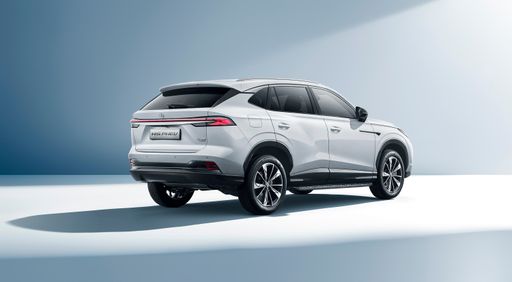
MG HS

4.8 (10 Reviews)
rate
  • somewhat cheaper
  • somewhat more power
  • significantly more efficient
  • clearly more electric range
  • marginally quicker 0–100 km/h
details

Ford Kuga

4.3 (7 Reviews)
rate
  • somewhat lighter
details

All details on performance, efficiency, range and trunk space can be found in the technical comparison below – including user reviews for both models.

By Achim Sedelmaier

HS

Ford Kuga VS MG HS — a practical clash of driver-focus and value-packed space

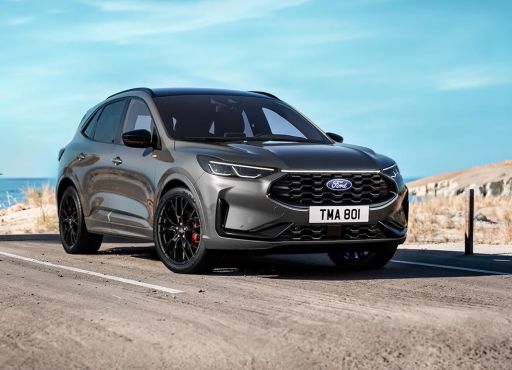
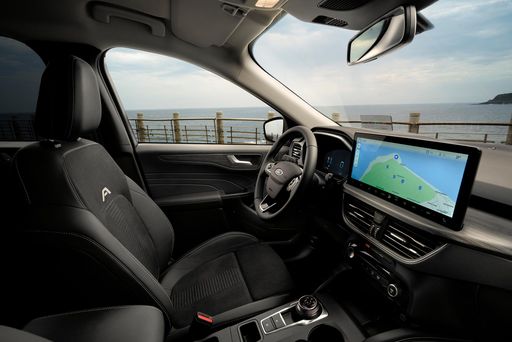
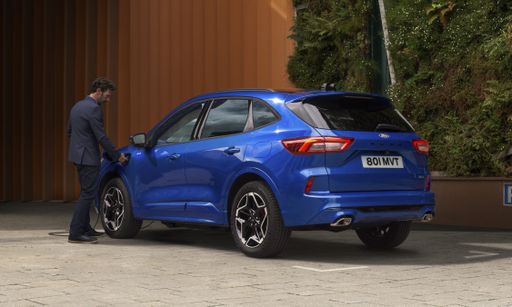
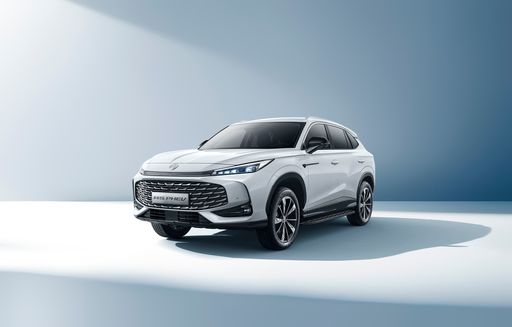
The Ford Kuga and MG HS face off as two very different answers to the same brief: a compact SUV for families and commuters. The Ford Kuga wears its driver-first intentions on its sleeve — keen steering, a nimble chassis and modern infotainment — while the MG HS trades that engagement for a more generous rear seat, fuller standard kit and notably long electric range in its PHEV form. That sets up a simple trade-off: choose sharper driving manners and a tech-forward cabin with the Kuga, or a cheaper, better-equipped package with the MG HS that stretches daily electric miles. Both are practical in their own right, but they aim at different kinds of buyers and priorities.
Kuga

Character and driving dynamics

The Ford Kuga feels like the more enthusiastic car to drive: it reacts quickly, corners with confidence and rewards a driver who likes to keep momentum through bends. The MG HS, by contrast, is composed but rather neutral — it steers with less feedback and won’t excite a driver looking for connection. That difference is meaningful on country roads where the Kuga makes journeys feel involving, whereas the MG HS keeps things relaxed but detached. Buyers who prioritise steering precision and a lively chassis will prefer the Kuga; those who want calm, predictable progress will lean toward the MG HS.

HS

Comfort and long‑distance behaviour

On long runs the Ford Kuga impresses with low wind and tyre noise and a generally composed ride at speed, though its suspension can feel firm over rougher surfaces. The MG HS soothes many motorway miles with an easy-going powertrain and comfortable seats, yet it reveals more road and tyre noise at cruising speeds and can feel unsettled over big bumps. In practice that means the Kuga will suit drivers who value a quieter high-speed experience and firmer control, while the MG HS suits those who prize a softer, more placid highway pace despite added background noise. If you travel a lot on poor back-roads, expect the Kuga’s taut setup to be more tiring than the MG HS’s softer approach — the trade-off is control versus composure.

Kuga

Cabin feel, tech and perceived quality

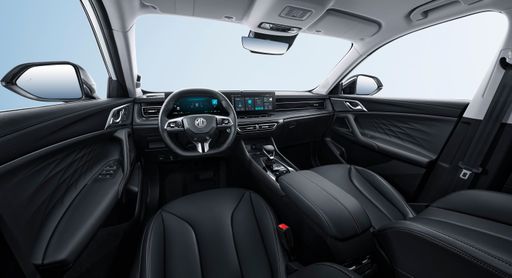
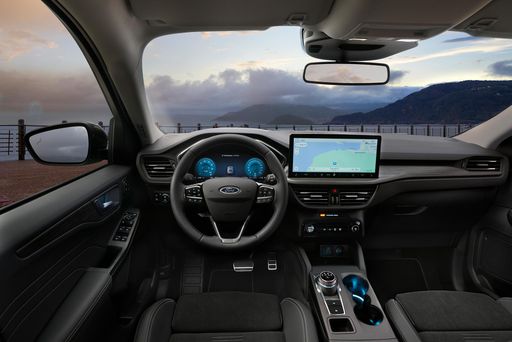
The Ford Kuga presents a modern tech package with a large, responsive infotainment system that feels a step up in polish, though the interior materials are functional rather than plush and some controls rely heavily on touch. The MG HS delivers impressive standard equipment and generous spec for the money, but its software can feel sluggish, icons are small and the interface sometimes frustrates compared with a more polished system. That makes the Kuga feel like the smarter, more contemporary cabin even if it doesn’t scream premium, while the MG HS underlines value with kit and warranty that appeal to budget-conscious buyers. Ergonomically, the Kuga’s touch-first climate controls are a practical annoyance for some, whereas the MG HS’s simpler approach occasionally sacrifices refinement for breadth of features.

HS

Practicality and everyday usability

Both cars are family-friendly, but they approach practicality differently: the Ford Kuga’s sliding rear bench and clever load solutions make day-to-day flexibility easier, whereas the MG HS offers more generous rear legroom and a sense of space that benefits passengers more than luggage. The MG HS’s PHEV is attractive for buyers who can charge regularly because it stretches daily electric miles and cuts running costs, but that PHEV packaging can raise the load lip and reduce usable boot space in practice. The Kuga’s hybrid options are efficient around town and deliver useful real-world economy, yet PHEV owners should note slower AC charging capability compared with full EV thinking. If you need easy family adaptability and driver-focused usability pick the Kuga, but if rear-seat comfort and immediate equipment value trump fiddly boot details, the MG HS makes sense.

Kuga

Who should choose which car — buyer fit and next steps

If you prioritise driving engagement, quieter high-speed cruising and a tech-forward cabin, the Ford Kuga will feel more satisfying day-to-day and suit a commuter or family that values handling and in-car tech. If your priority is maximum spec for the money, broad rear-seat space and a PHEV that routinely covers daily trips electrically, the MG HS is the pragmatic choice for budget-aware families with a home charger. Consider how often you’ll load bulky luggage, how much you drive on rough surfaces, and whether you can charge regularly — those real-world factors will push you toward one or the other. Read the technical comparison next to see how power, economy and boot practicality translate into the numbers behind these everyday differences.

Here’s where it gets real: The technical differences in detail

HS

Costs and Efficiency:

Price and efficiency are key factors when choosing a car – and this is often where the real differences emerge.

MG HS is somewhat cheaper – starting at 30,000 £ , while the Ford Kuga costs 34,200 £ . That’s a price difference of around 4,251 £.

Fuel consumption also shows a difference: the MG HS uses 0.5 L/100km and is significantly more efficient than the Ford Kuga with 2.8 L/100km. The difference is about 2.3 L/100km.

As for electric range, the MG HS offers clearly more range – reaching up to 100 km, about 32 km more than the Ford Kuga.

Kuga

Engine and Performance:

Power, torque and acceleration say a lot about how a car feels on the road. This is where you see which model delivers more driving dynamics.

When it comes to engine power, the MG HS offers somewhat more power – delivering 272 HP compared to 243 HP. That’s roughly 29 HP more horsepower.

When accelerating from 0 to 100 km/h, the MG HS is marginally quicker – completing the sprint in 6.8 s, while the Ford Kuga takes 7.3 s. That’s about 0.5 s quicker.

There’s also a difference in torque: the MG HS delivers visibly more torque with 350 Nm compared to 240 Nm. That’s about 110 Nm more.

HS

Space and Everyday Use:

Whether family car or daily driver – which one offers more room, flexibility and comfort?

Both vehicles offer seating for 5 people.

In terms of curb weight, Ford Kuga is somewhat lighter – 1,526 kg compared to 1,735 kg. The difference is around 209 kg.

When it comes to payload, the Ford Kuga carries markedly more – 550 kg compared to 400 kg. That’s a difference of about 150 kg.

Who wins the race in the data check?

The MG HS is far ahead overall in the objective data comparison.
This result only shows which model scores more points on paper – not which of the two cars feels right for you.

from £30,000
HS

MG HS

  • Engine Type Full Hybrid, Plugin Hybrid
  • Transmission Automatic
  • Drive Type Front-Wheel Drive
  • Power HP 224 - 272 HP
  • Consumption L/100km 0.5 - 5.5 L/100km
  • Electric Range 100 km
MG HS
Ford Kuga

Costs and Consumption

View detailed analysis

Engine and Performance

View detailed analysis

Dimensions and Body

View detailed analysis

MG HS

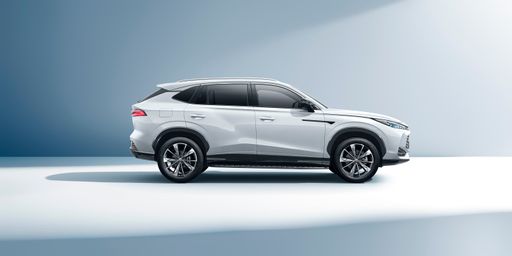
The MG HS, also known as the EHS in its hybrid variant, is a midsize SUV that combines modern design with a focus on comfort and technology. Its spacious interior offers a premium feel, enhanced by quality materials and an array of advanced features aimed at ensuring a smooth driving experience. Known for its efficiency, the MG HS/EHS delivers an enjoyable ride whether navigating city streets or taking on longer road trips.

details

Ford Kuga

The Ford Kuga is a practical and comfortable compact SUV that balances everyday usability with a composed ride and adaptable interior. It offers sensible tech and safety features, making it a solid choice for families or anyone seeking a versatile, easy-to-live-with crossover.

details
MG HS
Ford Kuga

Costs and Consumption

Price
30,000 - 36,000 £
Price
34,200 - 46,300 £
Consumption L/100km
0.5 - 5.5 L/100km
Consumption L/100km
2.8 - 6.8 L/100km
Consumption kWh/100km
-
Consumption kWh/100km
-
Electric Range
100 km
Electric Range
68 km
Battery Capacity
-
Battery Capacity
-
co2
14 - 126 g/km
co2
55 - 154 g/km
Fuel tank capacity
-
Fuel tank capacity
-

Dimensions and Body

Body Type
SUV
Body Type
SUV
Seats
5
Seats
5
Doors
-
Doors
-
Curb weight
1,735 - 1,930 kg
Curb weight
1,526 - 1,859 kg
Trunk capacity
441 - 507 L
Trunk capacity
-
Length
-
Length
-
Width
1,890 mm
Width
1,882 mm
Height
-
Height
-
Max trunk capacity
-
Max trunk capacity
-
Payload
400 kg
Payload
541 - 550 kg

Engine and Performance

Engine Type
Full Hybrid, Plugin Hybrid
Engine Type
Petrol, Full Hybrid, Plugin Hybrid
Transmission
Automatic
Transmission
Manuel, Automatic
Transmission Detail
Automatic Gearbox
Transmission Detail
Manual Gearbox, CVT, Automatic Gearbox
Drive Type
Front-Wheel Drive
Drive Type
Front-Wheel Drive, All-Wheel Drive
Power HP
224 - 272 HP
Power HP
150 - 243 HP
Acceleration 0-100km/h
6.8 - 7.9 s
Acceleration 0-100km/h
7.3 - 9.9 s
Max Speed
-
Max Speed
-
Torque
340 - 350 Nm
Torque
240 Nm
Number of Cylinders
4
Number of Cylinders
3 - 4
Power kW
165 - 200 kW
Power kW
111 - 178 kW
Engine capacity
1,496 cm3
Engine capacity
1,496 - 2,488 cm3

General

Model Year
2025
Model Year
2025
CO2 Efficiency Class
D, B
CO2 Efficiency Class
E, D, B
Brand
MG
Brand
Ford
DriveDuel uses data analysis and artificial intelligence to evaluate vehicle data and create content. Content is regularly reviewed and improved. The displayed prices are estimates based on German list prices, adjusted to the respective country’s VAT. Country-specific registration taxes are not included. This information is not legally binding.