@ MG Motor / SAIC Motor Corporation
@ Volkswagen AG / VW Media
VS

MG MG3 vs VW Golf – Which one offers the better deal?

Two cars, one duel: MG MG3 meets VW Golf.
Which one wins in performance, efficiency and value for money? Find out now!

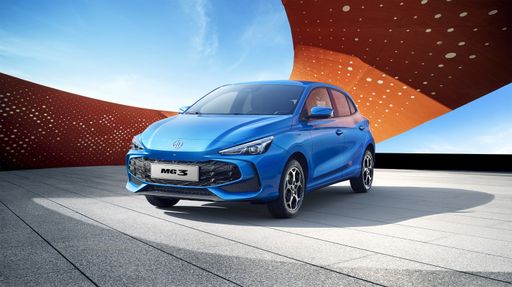
MG3 @ MG Motor / SAIC Motor Corporation

The Compact Hatchback Battle: MG3 versus VW Golf

In the world of compact hatchbacks, two models consistently stand out due to their appeal and impressive performances: the MG MG3 and the Volkswagen Golf. Known for their affordability and reliability, these vehicles offer ample technology and driving dynamics. Let's delve into a comparison of their features and innovations, aiding you in making an informed decision.

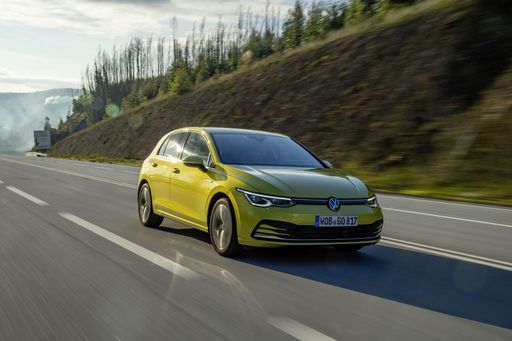
Golf @ Volkswagen AG / VW Media

Performance and Powertrain

The MG3 provides a viable option for those seeking a straightforward, no-nonsense hatchback. Offering a choice between a full hybrid and a petrol engine, the MG3 boasts a power output of up to 194 HP. The acceleration is fairly responsive, achieving 0-100 km/h in 8 seconds, and this performance is supported by either an automatic gearbox or a manual gearbox, all while maintaining reasonable fuel consumption ranging from 4.4 to 6.1 L/100 km. With a modest engine capacity of 1490 cm3, it effectively balances efficiency and power.

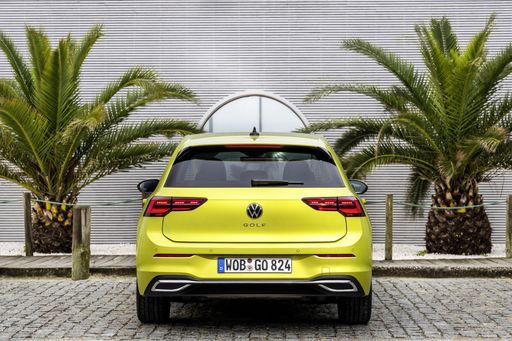
By contrast, the VW Golf offers a broader array of powertrains. The range includes petrol MHEV, plug-in hybrids, purely petrol, and diesel engines, covering power outputs from 116 HP all the way up to a notable 333 HP. The Golf's turbocharged engines offer varying acceleration times, with models like the GTI going from 0-100 km/h in as little as 5.6 seconds. The dual-clutch automatic transmission features prominently, known for smooth and quick gear changes, while some versions offer a manual gearbox option for traditionalists.


MG3 @ MG Motor / SAIC Motor Corporation

Fuel Efficiency and Environmental Impact

Designed with efficiency in mind, the MG3's petrol engines maintain a competitive CO2 emission range of 100 to 137 g/km, aligned with either C or E efficiency classes. This makes it an appealing choice for eco-minded drivers seeking to minimize their carbon footprint.

On the other hand, the VW Golf provides plug-in hybrid options with an electric range extending up to 143 km, drastically reducing the fuel consumption to as low as 0.3 L/100 km for hybrid models. Standard petrol and diesel models maintain an average of 4.3 to 8.5 L/100 km. The Golf's diverse engine lineup means its CO2 emissions vary considerably, from a remarkably low 6 g/km for plug-in models to 192 g/km for the higher performance variants, showcasing its adaptability to varying environmental concerns.

Golf @ Volkswagen AG / VW Media

Design and Dimensions

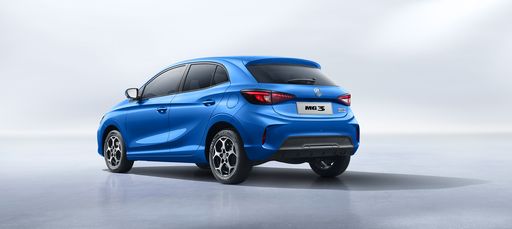
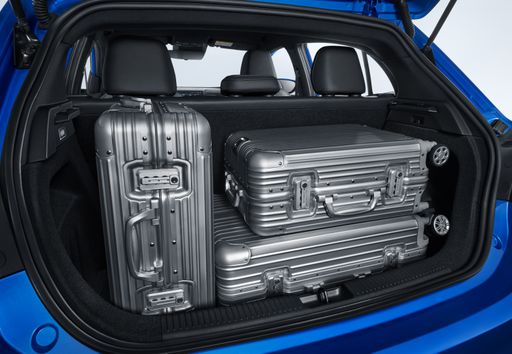
Both models embrace the five-door hatchback design, offering solid versatility for everyday use. The MG3 measures 4113 mm in length, making it slightly more compact than the Golf, whose length ranges between 4282 mm and 4292 mm. Despite its smaller frame, the MG3 offers a reasonably sized trunk capacity of 293 liters.

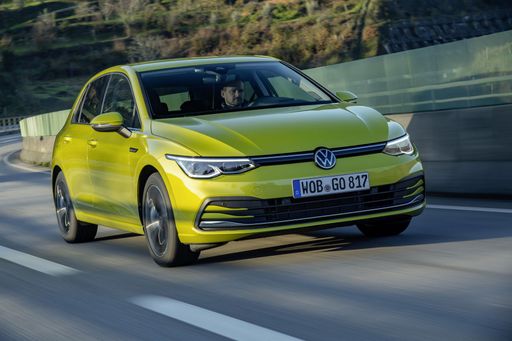
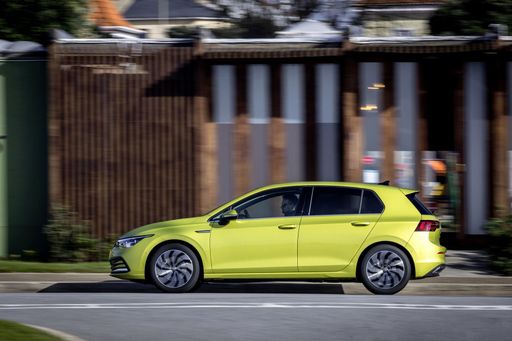
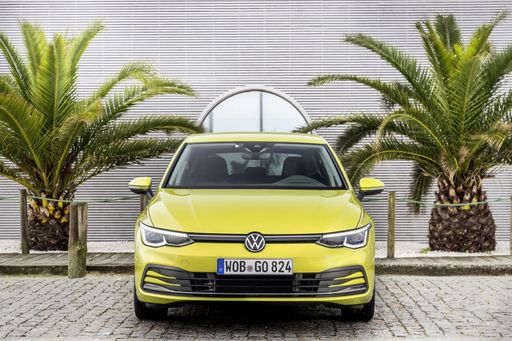
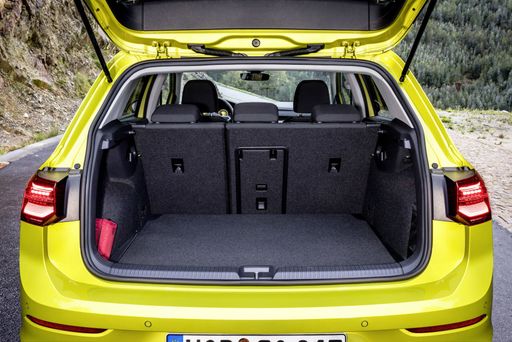
The VW Golf not only offers a larger boot space, with capacities ranging from 273 to 381 liters depending on the configuration, but also incorporates a more aerodynamic and sleek design. Additionally, the Golf's modest height of up to 1478 mm gives it a sportier appearance, complementing its dynamic driving experience.

MG3 @ MG Motor / SAIC Motor Corporation

Innovation and Technology

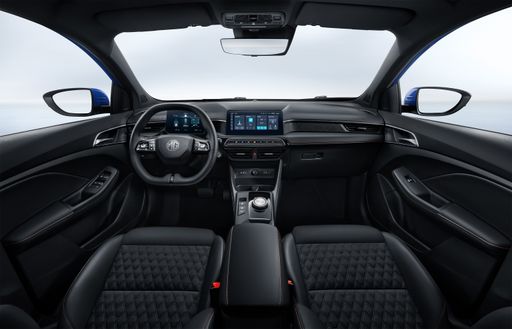
While the MG3 focuses primarily on delivering value, its latest iterations have made significant strides in integrating modern technology, particularly in driver assistance and infotainment systems.

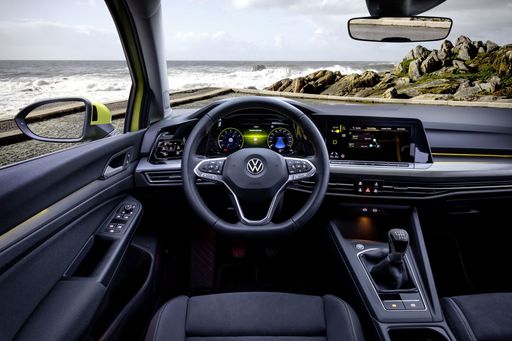
The VW Golf, long recognized for its technological edge, enhances its offerings with a digital cockpit and advanced driver assistance features such as adaptive cruise control, lane-keeping assist, and automatic emergency braking. These features keep the Golf at the forefront of innovative automotive technology.

Golf @ Volkswagen AG / VW Media

Price and Conclusion

Cost is invariably a crucial factor in any purchasing decision. The MG3's affordability, paired with its simple yet effective engineering, positions it as a great option for budget-conscious buyers. In contrast, the VW Golf, while tending to be on the higher end of the pricing spectrum, offers a more comprehensive range of choices, performance, and technology, which may justify the added cost for those seeking a more premium compact hatchback experience.

Both the MG3 and VW Golf stand out in their respective niches. The decision ultimately boils down to your personal preferences regarding performance, technology, and budget. Each car offers unique strengths that fulfill diverse consumer needs in the compact hatchback market.

Here’s where it gets real: The technical differences in detail

MG3 @ MG Motor / SAIC Motor Corporation

Costs and Efficiency:

Looking at overall running costs, both models reveal some interesting differences in everyday economy.

MG MG3 has a convincingly advantage in terms of price – it starts at 15400 £, while the VW Golf costs 25200 £. That’s a price difference of around 9775 £.

Fuel consumption also shows a difference: VW Golf manages with 1.10 L and is therefore significantly more efficient than the MG MG3 with 4.40 L. The difference is about 3.30 L per 100 km.

Golf @ Volkswagen AG / VW Media

Engine and Performance:

Under the bonnet, it becomes clear which model is tuned for sportiness and which one takes the lead when you hit the accelerator.

When it comes to engine power, the VW Golf has a clearly edge – offering 333 HP compared to 194 HP. That’s roughly 139 HP more horsepower.

In acceleration from 0 to 100 km/h, the VW Golf is decisively quicker – completing the sprint in 4.60 s, while the MG MG3 takes 8 s. That’s about 3.40 s faster.

In terms of top speed, the VW Golf performs evident better – reaching 270 km/h, while the MG MG3 tops out at 185 km/h. The difference is around 85 km/h.

There’s also a difference in torque: VW Golf pulls clearly stronger with 420 Nm compared to 148 Nm. That’s about 272 Nm difference.

Space and Everyday Use:

Cabin size, boot volume and payload all play a role in everyday practicality. Here, comfort and flexibility make the difference.

Both vehicles offer seating for 5 people.

In curb weight, MG MG3 is minimal lighter – 1237 kg compared to 1307 kg. The difference is around 70 kg.

In terms of boot space, the VW Golf offers distinct more room – 381 L compared to 293 L. That’s a difference of about 88 L.

In maximum load capacity, the VW Golf performs distinct better – up to 1237 L, which is about 254 L more than the MG MG3.

When it comes to payload, VW Golf to a small extent takes the win – 508 kg compared to 448 kg. That’s a difference of about 60 kg.

Who comes out on top?

Overall, the VW Golf shows itself to be dominates this comparison and secures the title of DriveDuel Champion.
It convinces with the more balanced overall package and proves to be the more versatile choice for everyday use.

from about £25,200
Golf @ Volkswagen AG / VW Media

VW Golf

  • Engine Type : Petrol MHEV, Petrol, Diesel, Plugin Hybrid
  • Transmission : Automatic, Manuel
  • Drive Type : Front-Wheel Drive, All-Wheel Drive
  • Power HP : 116 - 333 HP
  • Consumption L/100km : 1.1 - 8.1 L
  • Electric Range : 131 - 143 km

MG MG3

5 (1)
rate

The MG3 is a cheeky city hatch that pairs bold, youthful styling with sprightly handling for drivers who want personality on a budget. Its cabin is bright and cleverly packaged, offering sensible space and a fun-to-drive character that turns mundane commutes into something a bit more enjoyable.

details

VW Golf

The VW Golf remains the everyman’s favourite — cleverly balanced, composed and just posh enough to feel grown-up without pretending to be something it’s not. It slips through town and eats up longer trips with a refined cabin, practical layout and a kindly, capable character that turns everyday driving into something a little bit special.

details
MG MG3
VW Golf
MG3 @ MG Motor / SAIC Motor Corporation
Golf @ Volkswagen AG / VW Media

Costs and Consumption

Price
15400 - 21400 £
Price
25200 - 47600 £
Consumption L/100km
4.4 - 6.1 L
Consumption L/100km
1.1 - 8.1 L
Consumption kWh/100km
-
Consumption kWh/100km
-
Electric Range
-
Electric Range
131 - 143 km
Battery Capacity
-
Battery Capacity
19.70 kWh
co2
100 - 137 g/km
co2
25 - 184 g/km
Fuel tank capacity
36 - 45 L
Fuel tank capacity
40 - 55 L

Dimensions and Body

Body Type
Hatchback
Body Type
Hatchback
Seats
5
Seats
5
Doors
5
Doors
5
Curb weight
1237 - 1285 kg
Curb weight
1307 - 1662 kg
Trunk capacity
293 L
Trunk capacity
273 - 381 L
Length
4113 mm
Length
4282 - 4296 mm
Width
1797 mm
Width
1789 mm
Height
1502 mm
Height
1454 - 1483 mm
Max trunk capacity
983 L
Max trunk capacity
1129 - 1237 L
Payload
373 - 448 kg
Payload
438 - 508 kg

Engine and Performance

Engine Type
Full Hybrid, Petrol
Engine Type
Petrol MHEV, Petrol, Diesel, Plugin Hybrid
Transmission
Automatic, Manuel
Transmission
Automatic, Manuel
Transmission Detail
Automatic Gearbox, Manual Gearbox
Transmission Detail
Dual-Clutch Automatic, Manual Gearbox
Drive Type
Front-Wheel Drive
Drive Type
Front-Wheel Drive, All-Wheel Drive
Power HP
116 - 194 HP
Power HP
116 - 333 HP
Acceleration 0-100km/h
8 - 10.8 s
Acceleration 0-100km/h
4.6 - 10.2 s
Max Speed
170 - 185 km/h
Max Speed
202 - 270 km/h
Torque
148 Nm
Torque
220 - 420 Nm
Number of Cylinders
4
Number of Cylinders
4
Power kW
85 - 143 kW
Power kW
85 - 245 kW
Engine capacity
1490 - 1495 cm3
Engine capacity
1498 - 1984 cm3

General

Model Year
2024 - 2025
Model Year
2024 - 2025
CO2 Efficiency Class
C, E
CO2 Efficiency Class
D, F, G, C, B
Brand
MG
Brand
VW
What drivetrain options does the MG MG3 have?

The MG MG3 is offered with Front-Wheel Drive.

The prices and data displayed are estimates based on German list prices and may vary by country. This information is not legally binding.