VS

MINI Countryman vs MINI Aceman comparison

Compare performance (313 HP vs 258 HP), boot space and price (30,100 £ vs 27,000 £ ) at a glance. Find out which car is the better choice for you – MINI Countryman or MINI Aceman?

MINI Countryman vs MINI Aceman: Key differences

MINI Countryman

5 (1 Reviews)
rate
  • moderately more power
  • noticeably more electric range
  • a bit quicker 0–100 km/h
  • barely lighter
  • noticeably more trunk space
details

MINI Aceman

4.5 (2 Reviews)
rate
  • slightly cheaper
  • marginally more efficient
details

All details on performance, efficiency, range and trunk space can be found in the technical comparison below – including user reviews for both models.

By Achim Sedelmaier

Countryman

MINI Aceman VS MINI Countryman — compact family crossover comparison

MINI Aceman VS MINI Countryman sets up a clear split inside the same brand: one is a compact, characterful crossover tuned for city life, the other a more grown‑up compact‑SUV aimed at space and composure. The MINI Aceman presents itself as a design-forward, efficient choice that emphasises agility and personality. The MINI Countryman stretches MINI’s identity toward practicality and calm highway manners without abandoning the marque’s styling. This piece focuses on how those choices play out in real ownership — cabin feel, comfort, usability and who each car actually suits.
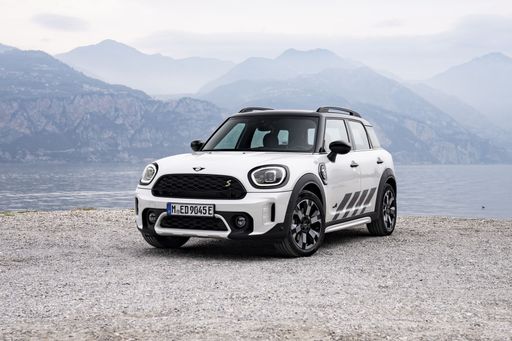
Aceman

Character and driving feel

The MINI Aceman feels lively and sharply steered, delivering the snappy, go‑kart sensation MINI buyers expect in town, while the MINI Countryman trades some of that immediacy for a steadier, more assured demeanor. In daily urban driving the Aceman’s quick turn‑in and compact dimensions make it easy to place and fun to hustle between tight gaps. The Countryman masks its weight better and gives a stronger, more composed shove when you need to overtake on faster roads, so it inspires confidence at speed. The result is a clear trade‑off: pick excitement and parking ease with the Aceman, or relaxed progress and grunt with the Countryman.

Countryman

Comfort and long‑distance behaviour

Ride comfort separates the two for many owners: the Aceman’s suspension is noticeably firmer, which sharpens handling but can feel jarring over rough city surfaces. The Countryman tends to smooth out motorway miles and wind noise, making longer journeys less tiring for driver and passengers. That calmer long‑distance behaviour softens turn‑in and reduces the sporty bite that the Aceman offers, so you lose a bit of the arcade feel. If most of your miles are on fast roads, the Countryman is the more comfortable companion; if you live and commute in town, the Aceman’s crispness will often feel like an asset.

Aceman

Practicality and everyday usability

On practicality the MINI Countryman pulls ahead: it offers noticeably more rear passenger space and a much more usable boot for strollers, sports kit or weekend luggage. The MINI Aceman’s smaller cargo bay and higher loading lip make everyday loading more fiddly, even though its compact footprint helps in tight parking spots. Inside, the Countryman’s flexible rear seating and overall volume give you genuine utility that the Aceman sacrifices for style and a tighter city package. That means families or regular cargo haulers will find the Countryman better suited, while style‑led city drivers who rarely carry big loads will prefer the Aceman.

Countryman

Cabin feel, perceived quality and infotainment

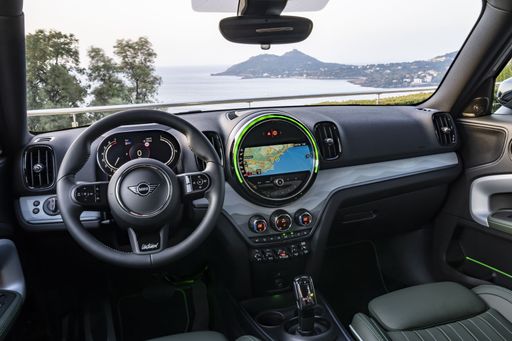
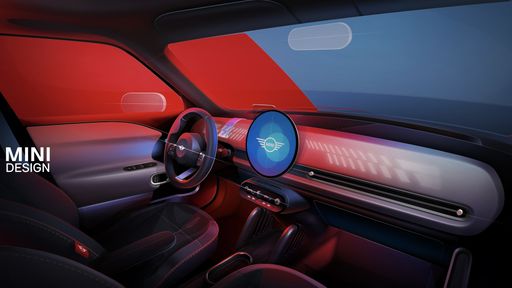
Both cars lean on MINI’s dramatic round display and playful design, but the atmosphere reads differently: the Aceman feels younger and more design‑centric, the Countryman more mature and roomier, with finishes that aim for everyday niceties. In both models the big circular screen creates flair, yet basic climate controls and shortcuts are often buried in menus, which many owners find fiddly compared with physical buttons. Up close, the Aceman’s interior can feel tailored and expressive, while the Countryman spreads higher‑quality materials over a larger area where it matters for daily use. If you prioritise tactile luxury and conventional usability, the Countryman feels more settled; if you buy into personality and a sculpted cabin, the Aceman rewards you at the cost of some convenience.

Aceman

Buyer fit and what to weigh next

Match usage to strengths: the MINI Aceman is best for design‑minded urbanites who want an efficient, agile electric crossover and care more about steering feel and style than luggage capacity. The MINI Countryman suits buyers who need true family practicality, quieter motorway cruising and a more forgiving cabin for longer trips. Both deliver MINI styling and strong safety credentials, so the choice is about trade‑offs between agility versus space and firm versus composed ride. The technical comparison that follows breaks down the concrete differences in range, power delivery, charging and cargo to help you translate these real‑world impressions into the spec decisions that matter.

Here’s where it gets real: The technical differences in detail

Countryman

Costs and Efficiency:

When it comes to price and running costs, the biggest differences usually appear. This is often where you see which car fits your budget better in the long run.

MINI Aceman is slightly cheaper – starting at 27,000 £ , while the MINI Countryman costs 30,100 £ . That’s a price difference of around 3,085 £.

In terms of energy consumption, the MINI Aceman is marginally more efficient: consuming 14.1 kWh/100km compared to 14.8 kWh/100km for the MINI Countryman. That’s a difference of about 0.7 kWh/100km.

As for electric range, the MINI Countryman offers noticeably more range – reaching up to 497 km, about 142 km more than the MINI Aceman.

Aceman

Engine and Performance:

Under the bonnet, it becomes clear which model is tuned for sportiness and which one takes the lead when you hit the accelerator.

When it comes to engine power, the MINI Countryman offers moderately more power – delivering 313 HP compared to 258 HP. That’s roughly 55 HP more horsepower.

When accelerating from 0 to 100 km/h, the MINI Countryman is a bit quicker – completing the sprint in 5.6 s, while the MINI Aceman takes 6.4 s. That’s about 0.8 s quicker.

There’s also a difference in torque: the MINI Countryman delivers markedly more torque with 494 Nm compared to 350 Nm. That’s about 144 Nm more.

Countryman

Space and Everyday Use:

Beyond pure performance, interior space and usability matter most in daily life. This is where you see which car is more practical and versatile.

Both vehicles offer seating for 5 people.

In terms of curb weight, MINI Countryman is barely lighter – 1,570 kg compared to 1,720 kg. The difference is around 150 kg.

Looking at boot space, the MINI Countryman offers noticeably more boot space – 460 L compared to 300 L. That’s a difference of about 160 L.

When it comes to payload, the MINI Aceman carries barely more – 530 kg compared to 500 kg. That’s a difference of about 30 kg.

Who wins the race in the data check?

The MINI Countryman is far ahead overall in the objective data comparison.
This result only shows which model scores more points on paper – not which of the two cars feels right for you.

from £30,100
Countryman

MINI Countryman

  • Engine Type : Petrol MHEV, Electric
  • Transmission : Automatic
  • Drive Type : Front-Wheel Drive, All-Wheel Drive
  • Power HP : 122 - 313 HP
  • Consumption L/100km : 5.9 - 6.5 L/100km
  • Consumption kWh/100km : 14.8 - 15.9 kWh/100km
  • Electric Range : 463 - 497 km
MINI Countryman
MINI Aceman

Costs and Consumption

View detailed analysis

Engine and Performance

View detailed analysis

Dimensions and Body

View detailed analysis

MINI Countryman

The MINI Countryman turns the cheeky charm of a classic MINI into a proper all-rounder, blending playful styling with surprisingly usable space for everyday life. It still grins at city lights but will happily tackle muddy lanes, perfect for buyers who want character without sacrificing practicality.

details

MINI Aceman

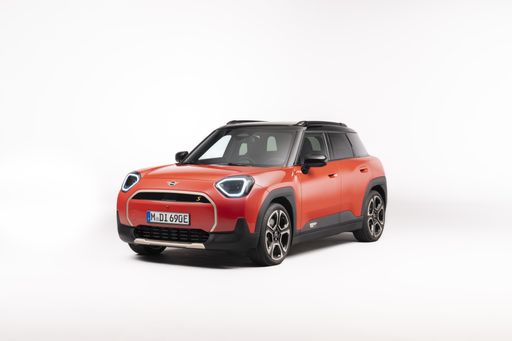
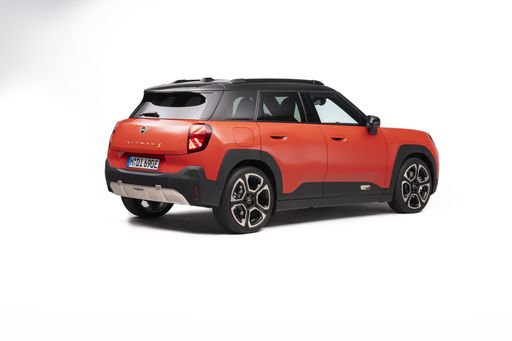
The MINI Aceman squeezes classic MINI charm into a sharper, more crossover-ready shape, trading some of the old curves for grown-up practicality while keeping the wink-and-grin personality buyers crave. Inside it's a surprisingly premium, customizable cabin that feels clever rather than cluttered, and on the road the Aceman is eager and nimble — ideal for city dwellers who want an SUV silhouette with proper fun behind the wheel.

details
MINI Countryman
MINI Aceman

Costs and Consumption

Price
30,100 - 39,900 £
Price
27,000 - 36,400 £
Consumption L/100km
5.9 - 6.5 L/100km
Consumption L/100km
-
Consumption kWh/100km
14.8 - 15.9 kWh/100km
Consumption kWh/100km
14.1 - 16 kWh/100km
Electric Range
463 - 497 km
Electric Range
309 - 355 km
Battery Capacity
-
Battery Capacity
-
co2
0 - 149 g/km
co2
0 g/km
Fuel tank capacity
-
Fuel tank capacity
-

Dimensions and Body

Body Type
SUV
Body Type
SUV
Seats
5
Seats
5
Doors
-
Doors
-
Curb weight
1,570 - 2,075 kg
Curb weight
1,720 - 1,825 kg
Trunk capacity
450 - 460 L
Trunk capacity
300 L
Length
-
Length
-
Width
1,843 mm
Width
1,754 mm
Height
-
Height
-
Max trunk capacity
-
Max trunk capacity
-
Payload
475 - 500 kg
Payload
450 - 530 kg

Engine and Performance

Engine Type
Petrol MHEV, Electric
Engine Type
Electric
Transmission
Automatic
Transmission
Automatic
Transmission Detail
Dual-Clutch Automatic, Reduction Gearbox
Transmission Detail
Reduction Gearbox
Drive Type
Front-Wheel Drive, All-Wheel Drive
Drive Type
Front-Wheel Drive
Power HP
122 - 313 HP
Power HP
184 - 258 HP
Acceleration 0-100km/h
5.6 - 10.5 s
Acceleration 0-100km/h
6.4 - 7.9 s
Max Speed
-
Max Speed
-
Torque
230 - 494 Nm
Torque
290 - 350 Nm
Number of Cylinders
3
Number of Cylinders
-
Power kW
90 - 230 kW
Power kW
135 - 190 kW
Engine capacity
1,499 cm3
Engine capacity
-

General

Model Year
2026
Model Year
2,025 - 2,026
CO2 Efficiency Class
D, A, E
CO2 Efficiency Class
A
Brand
MINI
Brand
MINI
DriveDuel uses data analysis and artificial intelligence to evaluate vehicle data and create content. Content is regularly reviewed and improved. The displayed prices are estimates based on German list prices, adjusted to the respective country’s VAT. Country-specific registration taxes are not included. This information is not legally binding.