@ MINI / BMW Group Press
@ Volkswagen AG / VW Media
VS

MINI Countryman vs VW ID.3 – Which one offers the better deal?

Everyday use, family trips or long-distance drives – here’s where the differences show.
Discover whether MINI Countryman or VW ID.3 fits your lifestyle better.

Countryman @ MINI / BMW Group Press

In the dynamic world of automotive innovation, two models stand out for their unique approach to blending style, performance, and technology: the MINI Countryman and the VW ID.3. With distinct characteristics and a shared drive towards sustainability, this comparison will explore these two intriguing vehicles.

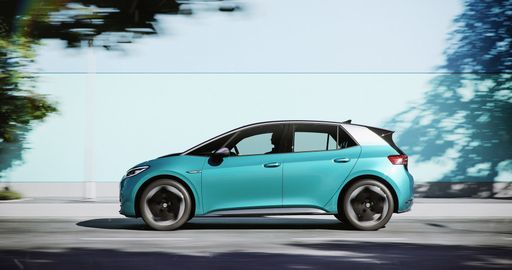
ID.3 @ Volkswagen AG / VW Media

A Closer Look at the Body Types

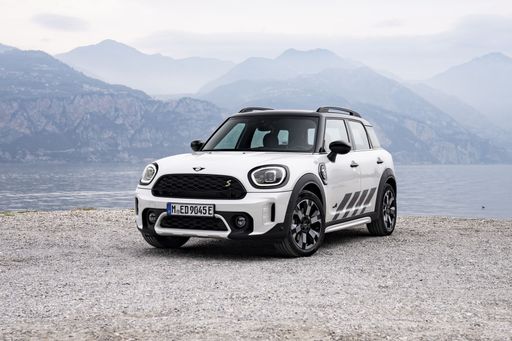
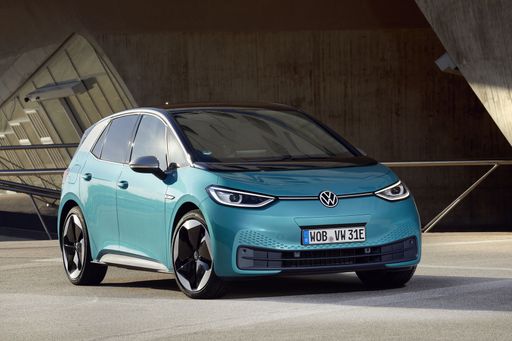
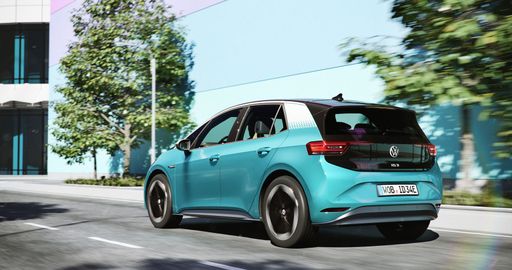
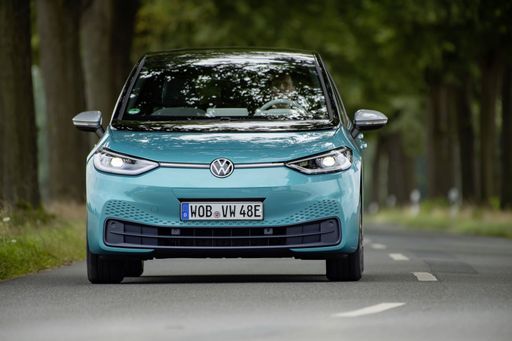
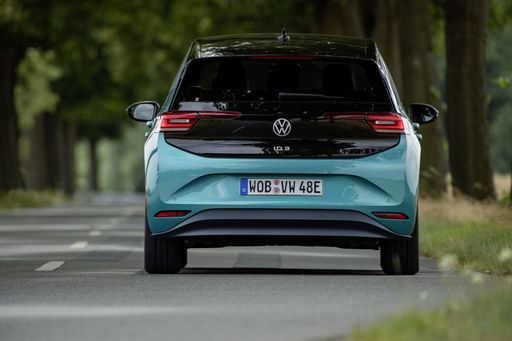
The MINI Countryman is classified as an SUV, offering the rugged appeal and elevated stance that many drivers appreciate. Its compact yet spacious design allows for an engaging driving experience while satisfying practical needs, including ample cargo space and seating for five. In contrast, the VW ID.3 is a hatchback, emphasizing a more streamlined and modern aesthetic. It offers versatility in urban environments and emphasizes eco-friendliness, thanks to its entirely electric powertrain.

Countryman @ MINI / BMW Group Press

Powertrain and Performance Features

Under the hood, the MINI Countryman offers a diverse range of powertrains, including petrol, diesel, hybrid electric, and fully electric options. The most powerful version boasts a remarkable 313 HP and can accelerate from 0-100 km/h in just 5.4 seconds. These engine options allow drivers to choose between engaging driving dynamics while maintaining versatility.

On the other hand, the VW ID.3 shines with its fully electric offerings. The ID.3 serves up engaging power levels, starting from 170 HP to a robust 326 HP in the higher trims. Notably, it can sprint from 0-100 km/h in as low as 5.7 seconds, showcasing its capability to deliver spirited performance while remaining environmentally conscious. With its rear-wheel-drive configuration and advanced electric drivetrain, the ID.3 promises an exhilarating yet smooth driving experience.

ID.3 @ Volkswagen AG / VW Media

Technological Innovations and Efficiency

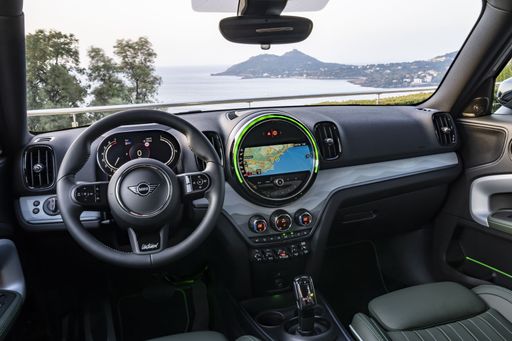
MINI integrates cutting-edge technology within the Countryman, including advanced infotainment features and optional all-wheel-drive capabilities for enhanced traction and control. Noteworthy is its fuel efficiency, ranging from 4.6 to 7.8 L/100 km, depending on the engine variant. For electric vehicles, the Countryman offers up to 462 km of electric range, aided by a battery capacity of 64.6 kWh.

In comparison, the VW ID.3 employs the latest innovations in electric vehicle technology, with a battery capacity that ranges from 52 kWh to an impressive 79 kWh, resulting in an electric driving range of up to 604 km. Its energy consumption is highly efficient, averaging between 14.5 and 15.8 kWh/100 km. The ID.3 also features a user-friendly interface and connectivity options that enhance the driving experience.

Countryman @ MINI / BMW Group Press

Interior Comfort and Practicality

When it comes to interior design, the MINI Countryman boasts a distinctive charm, combining retro aesthetics with modern functionality. With a trunk capacity ranging from 450 to 505 liters, it provides ample storage for everyday needs while catering to style enthusiasts with its customizable interior options.

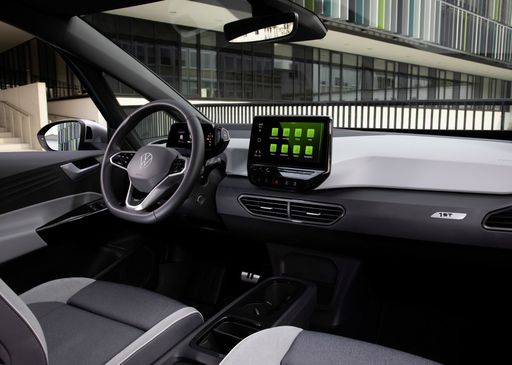
Conversely, the ID.3 emphasizes a minimalist and contemporary cabin design, maximizing space and creating an airy feel. Although its trunk capacity is smaller at 385 liters, VW's clever storage solutions and practical design make it a suitable choice for both urban commuting and adventure-filled weekends.

ID.3 @ Volkswagen AG / VW Media

Conclusion: Which One to Choose?

In essence, the decision between the MINI Countryman and the VW ID.3 comes down to personal preference and driving needs. The Countryman caters to those looking for a stylish SUV versatile enough for both city driving and weekend getaways, with the option of various engine types. Meanwhile, the ID.3 appeals to eco-conscious drivers seeking a modern electric vehicle that’s efficient and packed with innovative technology.

Each model represents a unique philosophy in automotive design. Whether it’s the spirited yet traditional charm of the Countryman or the groundbreaking efficiency of the ID.3, drivers are sure to find a vehicle that resonates with their lifestyle and values.

Here’s where it gets real: The technical differences in detail

Countryman @ MINI / BMW Group Press

Costs and Efficiency:

Price and efficiency are key factors when choosing a car – and this is often where the real differences emerge.

VW ID.3 has a to a small extent advantage in terms of price – it starts at 28600 £, while the MINI Countryman costs 31500 £. That’s a price difference of around 2974 £.

In terms of energy consumption, the advantage goes to the VW ID.3: with 14.50 kWh per 100 km, it’s hardly perceptible more efficient than the MINI Countryman with 15.70 kWh. That’s a difference of about 1.20 kWh.

As for range, the VW ID.3 performs distinct better – achieving up to 605 km, about 143 km more than the MINI Countryman.

ID.3 @ Volkswagen AG / VW Media

Engine and Performance:

Power, torque and acceleration are the classic benchmarks for car enthusiasts – and here, some clear differences start to show.

When it comes to engine power, the VW ID.3 has a slight edge – offering 326 HP compared to 313 HP. That’s roughly 13 HP more horsepower.

In acceleration from 0 to 100 km/h, the MINI Countryman is hardly perceptible quicker – completing the sprint in 5.40 s, while the VW ID.3 takes 5.70 s. That’s about 0.30 s faster.

In terms of top speed, the MINI Countryman performs slightly better – reaching 250 km/h, while the VW ID.3 tops out at 200 km/h. The difference is around 50 km/h.

There’s also a difference in torque: VW ID.3 pulls minimal stronger with 545 Nm compared to 494 Nm. That’s about 51 Nm difference.

Space and Everyday Use:

Beyond pure performance, interior space and usability matter most in daily life. This is where you see which car is more practical and versatile.

Both vehicles offer seating for 5 people.

In curb weight, MINI Countryman is slightly lighter – 1620 kg compared to 1787 kg. The difference is around 167 kg.

In terms of boot space, the MINI Countryman offers distinct more room – 505 L compared to 385 L. That’s a difference of about 120 L.

In maximum load capacity, the MINI Countryman performs slightly better – up to 1530 L, which is about 263 L more than the VW ID.3.

When it comes to payload, MINI Countryman hardly perceptible takes the win – 500 kg compared to 473 kg. That’s a difference of about 27 kg.

Who wins the race?

The MINI Countryman proves to be edges out slightly and therefore becomes our DriveDuel Champion!
MINI Countryman is the better all-rounder in this comparison.

from about £31,500
Countryman @ MINI / BMW Group Press

MINI Countryman

  • Engine Type : Petrol MHEV, Diesel MHEV, Electric, Petrol
  • Transmission : Automatic
  • Drive Type : Front-Wheel Drive, All-Wheel Drive
  • Power HP : 163 - 313 HP
  • Consumption L/100km : 4.6 - 7.8 L
  • Consumption kWh/100km : 15.7 - 16.8 kWh
  • Electric Range : 432 - 462 km

MINI Countryman

The MINI Countryman turns the cheeky charm of a classic MINI into a proper all-rounder, blending playful styling with surprisingly usable space for everyday life. It still grins at city lights but will happily tackle muddy lanes, perfect for buyers who want character without sacrificing practicality.

details

VW ID.3

5 (2)
rate

The VW ID.3 is a crisply styled electric hatch that masks serious practicality behind a friendly, modern face, making city runs and longer trips pleasantly fuss free. For buyers seeking a sensible, well-equipped EV that doesn't take itself too seriously, the ID.3 strikes a neat balance of comfort, tech and everyday usability with a cheeky smile.

details
MINI Countryman
VW ID.3
Countryman @ MINI / BMW Group Press
ID.3 @ Volkswagen AG / VW Media

Costs and Consumption

Price
31500 - 45300 £
Price
28600 - 49300 £
Consumption L/100km
4.6 - 7.8 L
Consumption L/100km
-
Consumption kWh/100km
15.7 - 16.8 kWh
Consumption kWh/100km
14.5 - 15.8 kWh
Electric Range
432 - 462 km
Electric Range
383 - 605 km
Battery Capacity
64.60 kWh
Battery Capacity
52 - 79 kWh
co2
0 - 177 g/km
co2
0 g/km
Fuel tank capacity
45 - 54 L
Fuel tank capacity
-

Dimensions and Body

Body Type
SUV
Body Type
Hatchback
Seats
5
Seats
5
Doors
5
Doors
5
Curb weight
1620 - 2075 kg
Curb weight
1787 - 1993 kg
Trunk capacity
450 - 505 L
Trunk capacity
385 L
Length
4444 - 4447 mm
Length
4264 mm
Width
1843 mm
Width
1809 mm
Height
1635 - 1661 mm
Height
1564 mm
Max trunk capacity
1450 - 1530 L
Max trunk capacity
1267 L
Payload
460 - 500 kg
Payload
437 - 473 kg

Engine and Performance

Engine Type
Petrol MHEV, Diesel MHEV, Electric, Petrol
Engine Type
Electric
Transmission
Automatic
Transmission
Automatic
Transmission Detail
Dual-Clutch Automatic, Automatic Gearbox, Reduction Gearbox
Transmission Detail
Reduction Gearbox
Drive Type
Front-Wheel Drive, All-Wheel Drive
Drive Type
Rear-Wheel Drive
Power HP
163 - 313 HP
Power HP
170 - 326 HP
Acceleration 0-100km/h
5.4 - 8.6 s
Acceleration 0-100km/h
5.7 - 8.2 s
Max Speed
170 - 250 km/h
Max Speed
160 - 200 km/h
Torque
250 - 494 Nm
Torque
310 - 545 Nm
Number of Cylinders
3 - 4
Number of Cylinders
-
Power kW
120 - 230 kW
Power kW
125 - 240 kW
Engine capacity
1499 - 1998 cm3
Engine capacity
-

General

Model Year
2024
Model Year
2024 - 2025
CO2 Efficiency Class
D, E, A, G
CO2 Efficiency Class
A
Brand
MINI
Brand
VW
What drive types are available for the MINI Countryman?

The MINI Countryman is available as Front-Wheel Drive or All-Wheel Drive.

The prices and data displayed are estimates based on German list prices and may vary by country. This information is not legally binding.