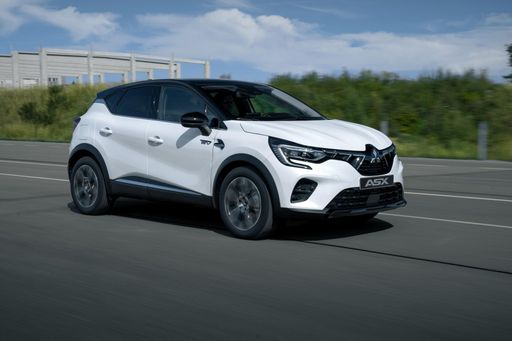
VS

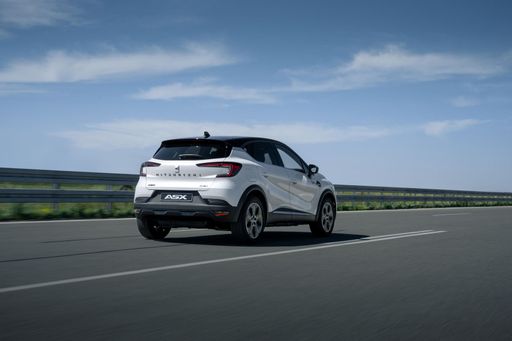
Mitsubishi ASX vs Ford Kuga comparison

Compare performance (158 HP vs 243 HP), boot space and price (21,800 £ vs 34,200 £ ) at a glance. Find out which car is the better choice for you – Mitsubishi ASX or Ford Kuga?

Mitsubishi ASX vs Ford Kuga: Key differences

Mitsubishi ASX

4.9 (2 Reviews)
rate
  • considerably cheaper
  • a bit lighter
details

Ford Kuga

4.3 (7 Reviews)
rate
  • visibly more power
  • substantially more efficient
  • noticeably quicker 0–100 km/h
details

All details on performance, efficiency, range and trunk space can be found in the technical comparison below – including user reviews for both models.

By Achim Sedelmaier

ASX

Ford Kuga vs Mitsubishi ASX: Which SUV Steals the Show?

The compact SUV segment has become increasingly competitive, with manufacturers constantly innovating to attract potential buyers. In this detailed comparison, we will explore the key technical aspects and innovations of the Ford Kuga and the Mitsubishi ASX, two popular choices among SUV enthusiasts.
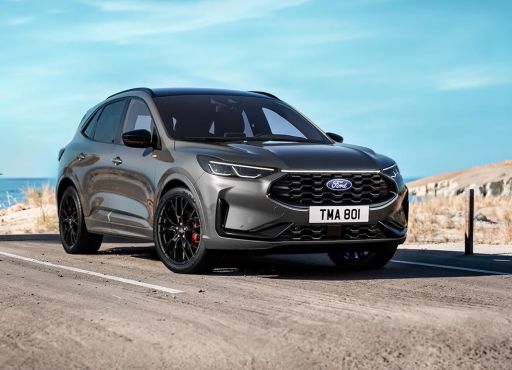
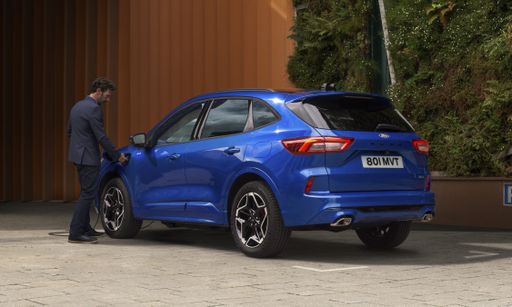
Kuga

Performance and Engine Options

The Ford Kuga shines with a versatile lineup of engine options, including petrol, full hybrid, and plug-in hybrid variants. The petrol engines offer a power range from 150 to 243 HP, ensuring that there is a suitable option for every driving style. Notably, the Kuga can accelerate from 0 to 100 km/h in as little as 7.3 seconds, making it one of the more spirited performers in its class.

In contrast, the Mitsubishi ASX features a more modest selection of engines. Its power output ranges from 91 to 158 HP, with a maximum acceleration time of 8.5 seconds for the quicker models. While still competent, the ASX’s performance does not quite match the Kuga’s more powerful options.

ASX

Fuel Efficiency and Sustainability

When it comes to fuel efficiency, the Ford Kuga boasts impressive figures across its various models, with consumption rates as low as 0.9 L/100 km for the hybrid variants. Additionally, its electric range of up to 69 km is a significant advantage for eco-conscious drivers.

The Mitsubishi ASX, on the other hand, delivers competitive fuel economy as well, with its most efficient petrol engine consuming approximately 4.7 L/100 km. While it does not offer the same level of hybrid capabilities as the Kuga, it still provides a sustainable option for buyers looking to minimize their carbon footprint.

Kuga

Dimensions and Interior Space

In terms of size, the Ford Kuga measures between 4604 and 4645 mm in length, providing ample room for passengers and cargo. With a trunk capacity of 412 liters, it strikes a commendable balance between utility and space. The vehicle's height of 1675 mm also contributes to a commanding driving position.

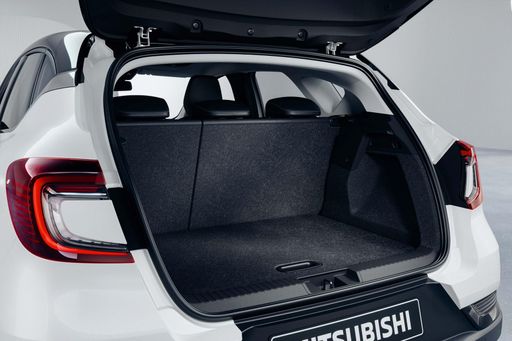
The Mitsubishi ASX is a more compact option at 4239 mm long, which can be beneficial for urban driving and parking. It offers a trunk capacity of 484 liters, slightly outweighing the Kuga in terms of storage space. However, its reduced height of 1575 mm may compromise some visibility compared to the Kuga.

ASX

Innovative Features and Technology

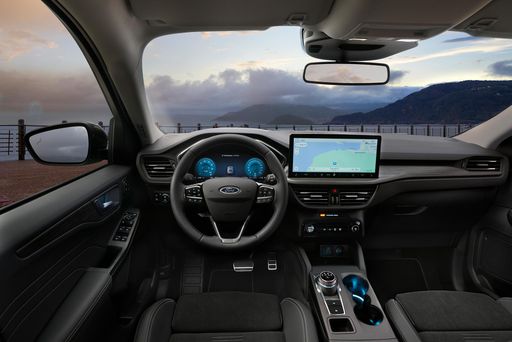
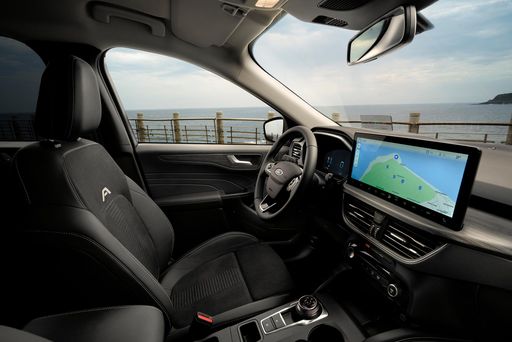
Both SUVs come loaded with a variety of technological features. The Ford Kuga includes advanced safety and driver-assistance systems, such as adaptive cruise control and lane-keeping assist, enhancing the overall driving experience. Furthermore, its infotainment system supports seamless smartphone integration, making it user-friendly and tech-savvy.

The Mitsubishi ASX also provides a range of modern features, including a dual-clutch automatic gearbox option and an intuitive infotainment system. However, it may lack some of the more advanced safety features found in the Kuga, which could be a deciding factor for safety-conscious consumers.

Kuga

Conclusion: Which SUV Is Right for You?

Both the Ford Kuga and Mitsubishi ASX have their unique strengths, catering to different consumer needs. The Kuga is ideal for drivers seeking high performance, hybrid technology, and cutting-edge safety features. In contrast, the ASX appeals to those looking for a compact SUV with decent performance and practicality.

Keen buyers should weigh their options based on personal preferences, lifestyle, and intended use. With both vehicles representing solid choices in the competitive SUV market, the decision ultimately comes down to which attributes matter most to the individual driver.

Here’s where it gets real: The technical differences in detail

ASX

Costs and Efficiency:

When it comes to price and running costs, the biggest differences usually appear. This is often where you see which car fits your budget better in the long run.

Mitsubishi ASX is considerably cheaper – starting at 21,800 £ , while the Ford Kuga costs 34,200 £ . That’s a price difference of around 12,480 £.

Fuel consumption also shows a difference: the Ford Kuga uses 2.8 L/100km and is substantially more efficient than the Mitsubishi ASX with 4.3 L/100km. The difference is about 1.5 L/100km.

Kuga

Engine and Performance:

Power, torque and acceleration are the classic benchmarks for car enthusiasts – and here, some clear differences start to show.

When it comes to engine power, the Ford Kuga offers visibly more power – delivering 243 HP compared to 158 HP. That’s roughly 85 HP more horsepower.

When accelerating from 0 to 100 km/h, the Ford Kuga is noticeably quicker – completing the sprint in 7.3 s, while the Mitsubishi ASX takes 8.9 s. That’s about 1.6 s quicker.

There’s also a difference in torque: the Mitsubishi ASX delivers marginally more torque with 245 Nm compared to 240 Nm. That’s about 5 Nm more.

ASX

Space and Everyday Use:

Beyond pure performance, interior space and usability matter most in daily life. This is where you see which car is more practical and versatile.

Both vehicles offer seating for 5 people.

In terms of curb weight, Mitsubishi ASX is a bit lighter – 1,296 kg compared to 1,526 kg. The difference is around 230 kg.

When it comes to payload, the Ford Kuga carries a bit more – 550 kg compared to 445 kg. That’s a difference of about 105 kg.

Who wins the race in the data check?

The Ford Kuga is decisively ahead in the objective data comparison.
This result only shows which model scores more points on paper – not which of the two cars feels right for you.

from £34,200
Kuga

Ford Kuga

  • Engine Type Petrol, Full Hybrid, Plugin Hybrid
  • Transmission Manuel, Automatic
  • Drive Type Front-Wheel Drive, All-Wheel Drive
  • Power HP 150 - 243 HP
  • Consumption L/100km 2.8 - 6.8 L/100km
  • Electric Range 68 km
Mitsubishi ASX
Ford Kuga

Costs and Consumption

View detailed analysis

Engine and Performance

View detailed analysis

Dimensions and Body

View detailed analysis

Mitsubishi ASX

The Mitsubishi ASX is a compact crossover that mixes practicality with a no-nonsense personality, making it an easy choice for buyers who want sensible space without the showroom theatrics. It won't set your pulse racing, but its composed ride and user-friendly kit make it a dependable companion for daily errands and weekend escapes — reliable rather than flashy.

details

Ford Kuga

The Ford Kuga is a practical and comfortable compact SUV that balances everyday usability with a composed ride and adaptable interior. It offers sensible tech and safety features, making it a solid choice for families or anyone seeking a versatile, easy-to-live-with crossover.

details
Mitsubishi ASX
Ford Kuga

Costs and Consumption

Price
21,800 - 32,700 £
Price
34,200 - 46,300 £
Consumption L/100km
4.3 - 6 L/100km
Consumption L/100km
2.8 - 6.8 L/100km
Consumption kWh/100km
-
Consumption kWh/100km
-
Electric Range
-
Electric Range
68 km
Battery Capacity
-
Battery Capacity
-
co2
99 - 136 g/km
co2
55 - 154 g/km
Fuel tank capacity
-
Fuel tank capacity
-

Dimensions and Body

Body Type
SUV
Body Type
SUV
Seats
5
Seats
5
Doors
-
Doors
-
Curb weight
1,296 - 1,493 kg
Curb weight
1,526 - 1,859 kg
Trunk capacity
348 - 484 L
Trunk capacity
-
Length
-
Length
-
Width
1,797 mm
Width
1,882 mm
Height
-
Height
-
Max trunk capacity
-
Max trunk capacity
-
Payload
397 - 445 kg
Payload
541 - 550 kg

Engine and Performance

Engine Type
Petrol, Petrol MHEV, Full Hybrid
Engine Type
Petrol, Full Hybrid, Plugin Hybrid
Transmission
Manuel, Automatic
Transmission
Manuel, Automatic
Transmission Detail
Manual Gearbox, Dual-Clutch Automatic, Automatic Gearbox
Transmission Detail
Manual Gearbox, CVT, Automatic Gearbox
Drive Type
Front-Wheel Drive
Drive Type
Front-Wheel Drive, All-Wheel Drive
Power HP
115 - 158 HP
Power HP
150 - 243 HP
Acceleration 0-100km/h
8.9 - 12.3 s
Acceleration 0-100km/h
7.3 - 9.9 s
Max Speed
-
Max Speed
-
Torque
190 - 245 Nm
Torque
240 Nm
Number of Cylinders
3 - 4
Number of Cylinders
3 - 4
Power kW
84 - 116 kW
Power kW
111 - 178 kW
Engine capacity
1,199 - 1,789 cm3
Engine capacity
1,496 - 2,488 cm3

General

Model Year
2,025 - 2,026
Model Year
2025
CO2 Efficiency Class
D, E, C
CO2 Efficiency Class
E, D, B
Brand
Mitsubishi
Brand
Ford
DriveDuel uses data analysis and artificial intelligence to evaluate vehicle data and create content. Content is regularly reviewed and improved. The displayed prices are estimates based on German list prices, adjusted to the respective country’s VAT. Country-specific registration taxes are not included. This information is not legally binding.