VS

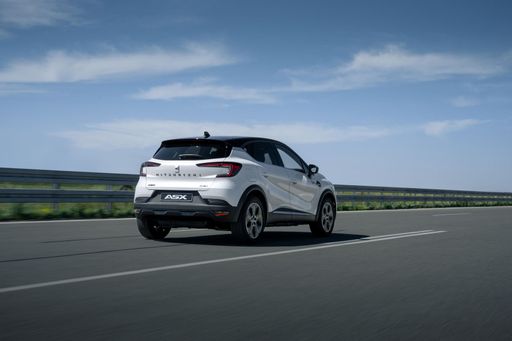
Mitsubishi ASX vs Vauxhall Frontera comparison

Compare performance (158 HP vs 145 HP), boot space and price (21,800 £ vs 20,700 £ ) at a glance. Find out which car is the better choice for you – Mitsubishi ASX or Vauxhall Frontera?

Mitsubishi ASX vs Vauxhall Frontera: Key differences

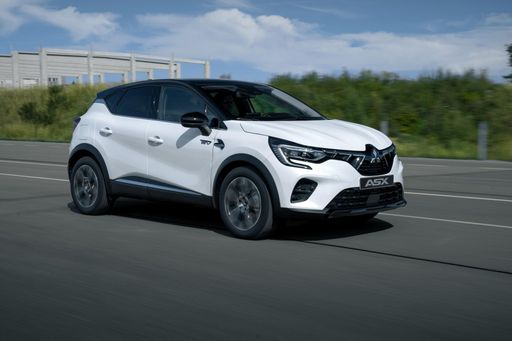
Mitsubishi ASX

4.9 (2 Reviews)
rate
  • barely more power
  • clearly more efficient
  • only slightly quicker 0–100 km/h
  • only slightly lighter
  • very slightly more trunk space
details

Vauxhall Frontera

4.1 (7 Reviews)
rate
  • barely cheaper
details

All details on performance, efficiency, range and trunk space can be found in the technical comparison below – including user reviews for both models.

By Achim Sedelmaier

ASX

The Rising Stars: Mitsubishi ASX vs. Opel Frontera

The SUV and off-road markets have been steadily growing, with each brand striving to leave a mark in this competitive segment. Today, we take a closer look at the Mitsubishi ASX and Opel Frontera, two formidable contenders in their categories. With the ASX leaning towards the traditional SUV charm and the Frontera exploring off-road capabilities, both vehicles offer unique strengths and innovations.
Frontera

Design and Dimensions

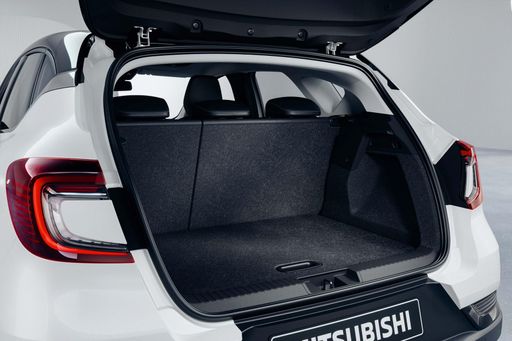
The Mitsubishi ASX embodies the quintessential SUV design with its compact yet elegant dimensions. Measuring 4239 mm in length, 1797 mm in width, and 1575 mm in height, it strikes a balance between style and functionality. The trunk capacity of 484 liters further underscores its practical appeal.

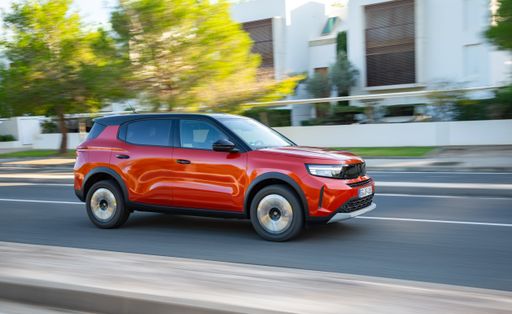
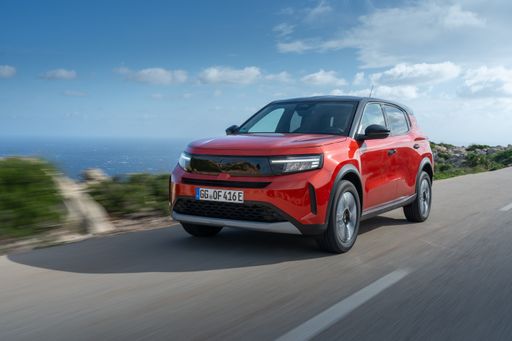
The Opel Frontera, on the other hand, challenges norms with its off-roader persona. With a length of 4385 mm, width of 1795 mm, and height of 1635 mm, the Frontera is slightly larger, promising more in terms of interior space. It offers a respectable trunk capacity of 460 liters, catering to adventure seekers.

ASX

Engine and Performance

The Mitsubishi ASX gives potential buyers a choice between several powertrains, including petrol, petrol mild hybrid electric vehicle (MHEV), and full hybrid options. Its power output ranges from 91 to 158 HP, with torque peaking at 270 Nm. Its top speed reaches up to 180 km/h, and it sprints from 0 to 100 km/h in as low as 8.5 seconds, offering both efficiency and agility.

Opel's Frontera specifies a variety of engine types as well, including petrol MHEV and fully electric options. It generates between 100 to 136 HP, with torque reaching 230 Nm. Notably, the electric variant boasts an impressive range of 305 km and a 0 to 100 km/h acceleration time of 9 seconds, underscoring its prowess in sustainable mobility.

Frontera

Fuel Efficiency

The ASX takes efficiency seriously, with consumption figures as low as 4.7 L/100 km. This makes it a dependable choice for those looking for economical daily driving without sacrificing performance.

The Frontera maintains competitive petrol consumption of 5.5 L/100 km but truly shines in its electric variant with consumption at 18.2 kWh/100 km, offering an eco-friendly and cost-effective alternative.

ASX

Innovations and Technology

The Mitsubishi ASX is equipped with cutting-edge technology that enhances driving experience, featuring intelligent gearbox options like manual, dual-clutch automatic, and standard automatics to suit varying driver needs.

The Opel Frontera is not just a traditional off-roader but a tech-savvy one too. The reduction gearbox in its electric variant shows a commitment to innovation, enabling seamless power delivery and superior control on rugged terrains.

Frontera

Comfort and Carrying Capacity

Inside, the ASX comfortably seats five passengers, while prioritizing comfort and convenience, making it an excellent choice for urban families or those who often travel with company.

The Frontera stands out with its versatility, offering configurations for both five and seven seats, accommodating larger groups and extended families with ease. The increased payload capacity of up to 644 kg further adds to its utility quotient.

ASX

Conclusion

Both the Mitsubishi ASX and Opel Frontera present distinct advantages, parameters, and innovations that cater to different market needs. The ASX excels in providing a versatile and economic SUV experience, while the Frontera expands boundaries in off-road proficiency, particularly with its electric offerings.

Ultimately, the choice between these two may rest heavily on personal preference and specific needs. Whether it's the urban-centric allure of the ASX or the adventurous spirit of the Frontera, each vehicle offers a unique proposition redefining the driving experience in their respective segments.

Here’s where it gets real: The technical differences in detail

ASX

Costs and Efficiency:

Price and efficiency are often the first things buyers look at. Here it becomes clear which model has the long-term edge – whether at the pump, the plug, or in purchase price.

Vauxhall Frontera is barely cheaper – starting at 20,700 £ , while the Mitsubishi ASX costs 21,800 £ . That’s a price difference of around 1,028 £.

Fuel consumption also shows a difference: the Mitsubishi ASX uses 4.3 L/100km and is clearly more efficient than the Vauxhall Frontera with 5.2 L/100km. The difference is about 0.9 L/100km.

Frontera

Engine and Performance:

Under the bonnet, it becomes clear which model is tuned for sportiness and which one takes the lead when you hit the accelerator.

When it comes to engine power, the Mitsubishi ASX offers barely more power – delivering 158 HP compared to 145 HP. That’s roughly 13 HP more horsepower.

When accelerating from 0 to 100 km/h, the Mitsubishi ASX is only slightly quicker – completing the sprint in 8.9 s, while the Vauxhall Frontera takes 9.1 s. That’s about 0.2 s quicker.

There’s also a difference in torque: the Mitsubishi ASX delivers marginally more torque with 245 Nm compared to 230 Nm. That’s about 15 Nm more.

ASX

Space and Everyday Use:

Whether family car or daily driver – which one offers more room, flexibility and comfort?

Seats: Vauxhall Frontera offers more seats – 7 vs 5.

In terms of curb weight, Mitsubishi ASX is only slightly lighter – 1,296 kg compared to 1,394 kg. The difference is around 98 kg.

Looking at boot space, the Mitsubishi ASX offers very slightly more boot space – 484 L compared to 460 L. That’s a difference of about 24 L.

When it comes to payload, the Vauxhall Frontera carries noticeably more – 570 kg compared to 445 kg. That’s a difference of about 125 kg.

Who wins the race in the data check?

The Vauxhall Frontera comes out modestly ahead in the objective data comparison.
This result only shows which model scores more points on paper – not which of the two cars feels right for you.

from £20,700
Frontera

Vauxhall Frontera

  • Engine Type Electric, Petrol MHEV
  • Transmission Automatic
  • Drive Type Front-Wheel Drive
  • Power HP 110 - 145 HP
  • Consumption L/100km 5.2 L/100km
  • Consumption kWh/100km 16.7 - 18.3 kWh/100km
  • Electric Range 308 - 400 km
Mitsubishi ASX
Vauxhall Frontera

Costs and Consumption

View detailed analysis

Engine and Performance

View detailed analysis

Dimensions and Body

View detailed analysis

Mitsubishi ASX

The Mitsubishi ASX is a compact crossover that mixes practicality with a no-nonsense personality, making it an easy choice for buyers who want sensible space without the showroom theatrics. It won't set your pulse racing, but its composed ride and user-friendly kit make it a dependable companion for daily errands and weekend escapes — reliable rather than flashy.

details

Vauxhall Frontera

The Opel Frontera is a rugged, no-nonsense SUV that balances off-road capability with comfortable everyday driving. It offers straightforward mechanics and a practical cabin, making it a sensible choice for buyers who value durability over flash.

details
Mitsubishi ASX
Vauxhall Frontera

Costs and Consumption

Price
21,800 - 32,700 £
Price
20,700 - 30,000 £
Consumption L/100km
4.3 - 6 L/100km
Consumption L/100km
5.2 L/100km
Consumption kWh/100km
-
Consumption kWh/100km
16.7 - 18.3 kWh/100km
Electric Range
-
Electric Range
308 - 400 km
Battery Capacity
-
Battery Capacity
-
co2
99 - 136 g/km
co2
0 - 118 g/km
Fuel tank capacity
-
Fuel tank capacity
-

Dimensions and Body

Body Type
SUV
Body Type
SUV
Seats
5
Seats
5 - 7
Doors
-
Doors
-
Curb weight
1,296 - 1,493 kg
Curb weight
1,394 - 1,610 kg
Trunk capacity
348 - 484 L
Trunk capacity
460 L
Length
-
Length
-
Width
1,797 mm
Width
1,795 mm
Height
-
Height
-
Max trunk capacity
-
Max trunk capacity
-
Payload
397 - 445 kg
Payload
436 - 570 kg

Engine and Performance

Engine Type
Petrol, Petrol MHEV, Full Hybrid
Engine Type
Electric, Petrol MHEV
Transmission
Manuel, Automatic
Transmission
Automatic
Transmission Detail
Manual Gearbox, Dual-Clutch Automatic, Automatic Gearbox
Transmission Detail
Reduction Gearbox, Dual-Clutch Automatic
Drive Type
Front-Wheel Drive
Drive Type
Front-Wheel Drive
Power HP
115 - 158 HP
Power HP
110 - 145 HP
Acceleration 0-100km/h
8.9 - 12.3 s
Acceleration 0-100km/h
9.1 - 14.2 s
Max Speed
-
Max Speed
-
Torque
190 - 245 Nm
Torque
125 - 230 Nm
Number of Cylinders
3 - 4
Number of Cylinders
3
Power kW
84 - 116 kW
Power kW
81 - 107 kW
Engine capacity
1,199 - 1,789 cm3
Engine capacity
1,199 cm3

General

Model Year
2,025 - 2,026
Model Year
2025
CO2 Efficiency Class
D, E, C
CO2 Efficiency Class
A, D
Brand
Mitsubishi
Brand
Vauxhall
DriveDuel uses data analysis and artificial intelligence to evaluate vehicle data and create content. Content is regularly reviewed and improved. The displayed prices are estimates based on German list prices, adjusted to the respective country’s VAT. Country-specific registration taxes are not included. This information is not legally binding.