VS

Ford Puma vs Vauxhall Frontera comparison

Compare performance (168 HP vs 145 HP), boot space and price (23,900 £ vs 20,700 £ ) at a glance. Find out which car is the better choice for you – Ford Puma or Vauxhall Frontera?

Ford Puma vs Vauxhall Frontera: Key differences

Ford Puma

3 (11 Reviews)
rate
  • a bit more power
  • visibly more efficient
  • barely more electric range
  • noticeably quicker 0–100 km/h
  • only slightly lighter

Vauxhall Frontera

4.5 (3 Reviews)
rate
  • somewhat cheaper
  • very slightly more efficient

All details on performance, efficiency, range and trunk space can be found in the technical comparison below – including user reviews for both models.

Puma

City Cat Meets Country Muscle

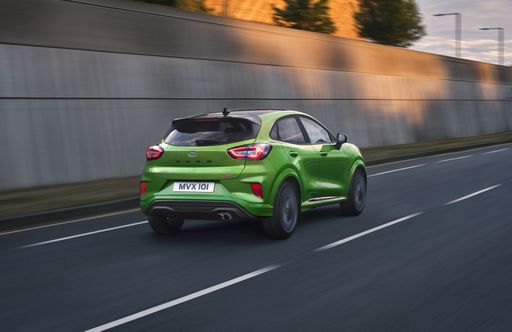
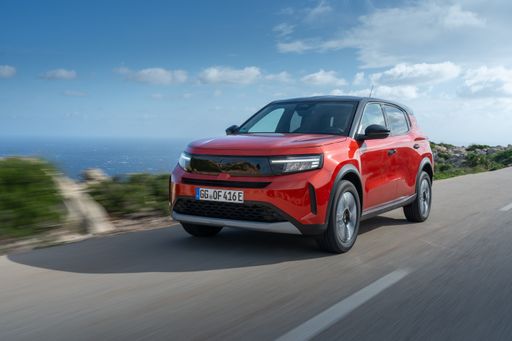
The contrast between the Ford Puma and the Opel Frontera is almost cinematic: one plays the nimble urban athlete, the other the more purposeful, burly utility player. The Puma sashays through tight streets and parking garages with a light-footed attitude, while the Frontera projects an assured, take-it-anywhere demeanour that suits weekend adventures. Neither is ambiguous about its intentions—buying either asks you to pick a lifestyle rather than just a car. If you crave city charisma or rugged pragmatism, each makes that choice very easy to live with.
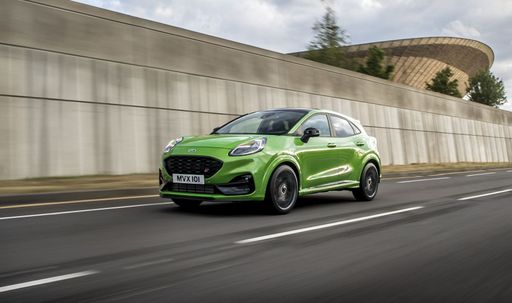
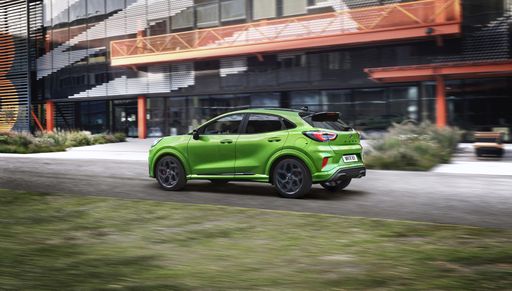
Frontera

Behind the Wheel Personality

On the road the Puma rewards quick inputs and feels eager to change direction, with a drivetrain that accentuates punch and responsiveness for drivers who want engagement. The Frontera leans toward a steadier, more composed delivery, smoothing out rough surfaces and favouring comfort over theatrical agility. Both instill confidence; it’s just a question of whether you prefer to play conductor or navigator. In everyday traffic their differing temperaments become a daily part of the experience rather than a technical note.

Puma

Cabin Comfort and Family Atmosphere

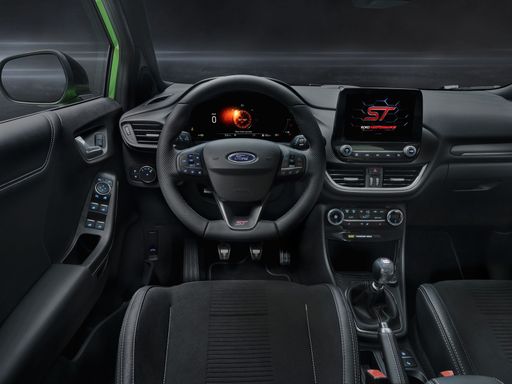
The Puma wraps occupants in a modern, driver-focused cabin that reads young and stylish, with materials and ergonomics aimed at short trips and commutes where neat packaging matters. The Frontera opts for a roomier, more utilitarian interior that prioritises space and long-haul comfort, making it the more forgiving companion for family duties or multiple passengers. Noise levels, seat comfort and perceived refinement each tilt the balance differently depending on whether you prize urban polish or spacious practicality. Both cabins succeed at serving particular daily needs rather than trying to be everything to everyone.

Frontera

Everyday Use and Loading Logic

Practicality is where character shows: the Puma hides clever storage and a fuss-free approach to daily chores, keeping routine trips tidy and predictable. The Frontera, meanwhile, feels built to swallow bulkier loads, handle weekend kit and shrug off the minor indignities of active lifestyles with less fuss. Access, visibility and the way each handles real-world cargo underline their differing priorities — one optimised for nimble living, the other for usefulness without drama. Choose the one that fits your weekly rituals rather than your idealised drive.

Puma

Looks That Talk

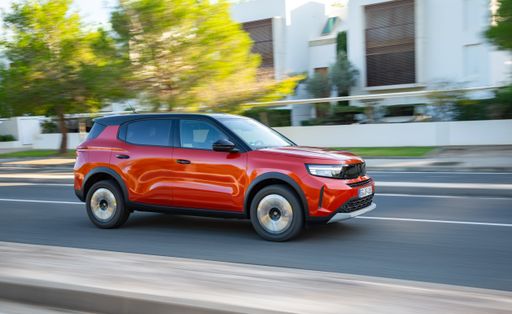
Styling is a loud part of the story: the Puma makes a statement with energetic proportions and youthful detailing that appeal to image-conscious buyers who want something playful. The Frontera prefers a more honest face — rugged, squared-off and unapologetically practical, which will attract owners who want presence and durability. Both designs send clear signals in parking lots and on approach, so the choice also says something about you to your neighbours. Taste will decide which language you prefer; neither is shy.

Frontera

Running Costs and the Ownership Mood

Buying and living with either car is as much about emotion as economics: the Puma carries a sense of modern convenience and refinement that can justify a premium in how it feels day-to-day. The Frontera projects value and utility, the kind of ownership experience that prioritises robustness over trend. Servicing, insurance and the way each car integrates into a routine will shape satisfaction more than any headline figures, so consider how you’ll use it across seasons. Think of this as choosing a partner for your typical week rather than a spec sheet exercise.

Puma

Who Should Walk Into the Dealership?

If your daily life is a mix of tight city chores, spirited driving and making an impression, the Ford Puma is crafted to please; if your priorities skew toward space, practicality and no-nonsense capability, the Opel Frontera will feel immediately sensible. Commuters, young professionals, style-conscious buyers and weekend warriors will each find a clear case for one or the other. Keep reading — the DriveDuel Champion will be revealed afterwards, and you won’t want to miss which car clinches the title.

Here’s where it gets real: The technical differences in detail

Puma

Costs and Efficiency:

When it comes to price and running costs, the biggest differences usually appear. This is often where you see which car fits your budget better in the long run.

Vauxhall Frontera is somewhat cheaper – starting at 20,700 £ , while the Ford Puma costs 23,900 £ . That’s a price difference of around 3,180 £.

Fuel consumption also shows a difference: the Vauxhall Frontera uses 5.2 L/100km and is very slightly more efficient than the Ford Puma with 5.4 L/100km. The difference is about 0.2 L/100km.

In terms of energy consumption, the Ford Puma is visibly more efficient: consuming 13 kWh/100km compared to 15.8 kWh/100km for the Vauxhall Frontera. That’s a difference of about 2.8 kWh/100km.

As for electric range, the Ford Puma offers barely more range – reaching up to 417 km, about 9 km more than the Vauxhall Frontera.

Frontera

Engine and Performance:

Power, torque and acceleration are the classic benchmarks for car enthusiasts – and here, some clear differences start to show.

When it comes to engine power, the Ford Puma offers a bit more power – delivering 168 HP compared to 145 HP. That’s roughly 23 HP more horsepower.

When accelerating from 0 to 100 km/h, the Ford Puma is noticeably quicker – completing the sprint in 7.4 s, while the Vauxhall Frontera takes 9.1 s. That’s about 1.7 s quicker.

There’s also a difference in torque: the Ford Puma delivers noticeably more torque with 290 Nm compared to 230 Nm. That’s about 60 Nm more.

Puma

Space and Everyday Use:

Whether family car or daily driver – which one offers more room, flexibility and comfort?

Seats: Vauxhall Frontera offers more seats – 7 vs 5.

In terms of curb weight, Ford Puma is only slightly lighter – 1,316 kg compared to 1,394 kg. The difference is around 78 kg.

When it comes to payload, the Vauxhall Frontera carries somewhat more – 570 kg compared to 469 kg. That’s a difference of about 101 kg.

Who wins the race in the data check?

The Ford Puma sits just ahead overall in the objective data comparison.
This result only shows which model scores more points on paper – not which of the two cars feels right for you.

from £23,900
Puma

Ford Puma

  • Engine Type : Petrol MHEV, Electric
  • Transmission : Manuel, Automatic
  • Drive Type : Front-Wheel Drive
  • Power HP : 125 - 168 HP
  • Consumption L/100km : 5.4 - 5.9 L/100km
  • Consumption kWh/100km : 13 - 13.7 kWh/100km
  • Electric Range : 404 - 417 km
Ford Puma
Vauxhall Frontera

Costs and Consumption

View detailed analysis

Engine and Performance

View detailed analysis

Dimensions and Body

View detailed analysis

Ford Puma

The Ford Puma is a cheeky compact crossover that blends sporty styling with city-friendly practicality, giving drivers a surprisingly fun and composed ride. With clever storage tricks and a lively personality, it’s a smart pick for buyers who want enjoyment without fuss.

details

Vauxhall Frontera

The Opel Frontera wears its rugged, go-anywhere intentions proudly, serving up a simple, no-nonsense package that feels as comfortable off the beaten track as it does at the supermarket. It won’t set hearts racing with glamour, but its honest practicality and rugged charm make it a smart pick for buyers who prefer substance over style.

details
Ford Puma
Vauxhall Frontera

Costs and Consumption

Price
23,900 - 36,300 £
Price
20,700 - 30,000 £
Consumption L/100km
5.4 - 5.9 L/100km
Consumption L/100km
5.2 - 5.3 L/100km
Consumption kWh/100km
13 - 13.7 kWh/100km
Consumption kWh/100km
15.8 - 18.3 kWh/100km
Electric Range
404 - 417 km
Electric Range
305 - 408 km
Battery Capacity
-
Battery Capacity
-
co2
0 - 135 g/km
co2
0 - 119 g/km
Fuel tank capacity
-
Fuel tank capacity
-

Dimensions and Body

Body Type
SUV
Body Type
SUV
Seats
5
Seats
5 - 7
Doors
-
Doors
5
Curb weight
1,316 - 1,563 kg
Curb weight
1,394 - 1,610 kg
Trunk capacity
-
Trunk capacity
460 L
Length
-
Length
4,385 mm
Width
1,805 mm
Width
1,795 mm
Height
-
Height
1,635 mm
Max trunk capacity
-
Max trunk capacity
1,600 L
Payload
367 - 469 kg
Payload
436 - 570 kg

Engine and Performance

Engine Type
Petrol MHEV, Electric
Engine Type
Electric, Petrol MHEV
Transmission
Manuel, Automatic
Transmission
Automatic
Transmission Detail
Manual Gearbox, Dual-Clutch Automatic, Reduction Gearbox
Transmission Detail
Reduction Gearbox, Dual-Clutch Automatic
Drive Type
Front-Wheel Drive
Drive Type
Front-Wheel Drive
Power HP
125 - 168 HP
Power HP
110 - 145 HP
Acceleration 0-100km/h
7.4 - 9.8 s
Acceleration 0-100km/h
9.1 - 14.2 s
Max Speed
-
Max Speed
143 km/h
Torque
170 - 290 Nm
Torque
125 - 230 Nm
Number of Cylinders
3
Number of Cylinders
3
Power kW
92 - 124 kW
Power kW
81 - 107 kW
Engine capacity
999 cm3
Engine capacity
1,199 cm3

General

Model Year
2,025 - 2,026
Model Year
2,024 - 2,025
CO2 Efficiency Class
D, A
CO2 Efficiency Class
A, D
Brand
Ford
Brand
Vauxhall
DriveDuel uses data analysis and artificial intelligence to evaluate vehicle data and create content. Content is regularly reviewed and improved. The displayed prices are estimates based on German list prices, adjusted to the respective country’s VAT. Country-specific registration taxes are not included. This information is not legally binding.